The Canadian dollar has weakened against its U.S. counterpart as a widening interest rate gap between the two countries increases the appeal of U.S. assets.
The loonie fell for a third consecutive week and reached a more-than-one-month low on Friday, trading around 69.88 cents US as of Thursday.
Shaun Osborne, chief FX strategist at Scotiabank, says the main factor driving the loonie lower lately has been a widening interest rate differential, where the spread between short-term interest rates in Canada and the U.S. has risen.
He says that while interest rates have also increased in Canada, they haven’t climbed as much relative to the U.S.
The Bank of Canada’s benchmark interest rate stands at 2.50 per cent, while in the U.S., the Federal Reserve’s target range is 3.75 per cent to four per cent.
Sal Guatieri, senior economist at BMO, said in a note Wednesday that the Canadian dollar was at its “lowest ebb against the big dollar since March 2025,” when the trade dispute with the U.S. began.
Two-year government debt spreads between Canada and the United States widened by 40 basis points in the first half of 2026, according to TD Economics.
The shift has contributed to a wider premium for holding U.S. assets and added to demand for the U.S. dollar.
TD Economics said the loonie’s decline this year has been shared by several other major currencies, pointing to broader demand for the greenback alongside country-specific pressures.
Trade uncertainty is another headwind.
U.S. tariffs of as much as 50% on certain Canadian products have added to concerns about the outlook for cross-border trade and weighed on confidence in the currency.
Oil has traditionally supported the Canadian dollar, but rising prices have not been enough to offset the effects of the rate gap and trade risks.
The limited support from oil has left the loonie without a clear near-term catalyst for a rebound.
CIBC expects the U.S. dollar to average C$1.42 in the fourth quarter.
It sees the exchange rate gradually retreating to C$1.35 by 2027 if trade negotiations make progress.
A higher USD/CAD exchange rate means the Canadian dollar buys fewer U.S. dollars.
The outlook remains sensitive to the relative paths of interest rates.
If the gap narrows, some of the pressure on the loonie could ease.
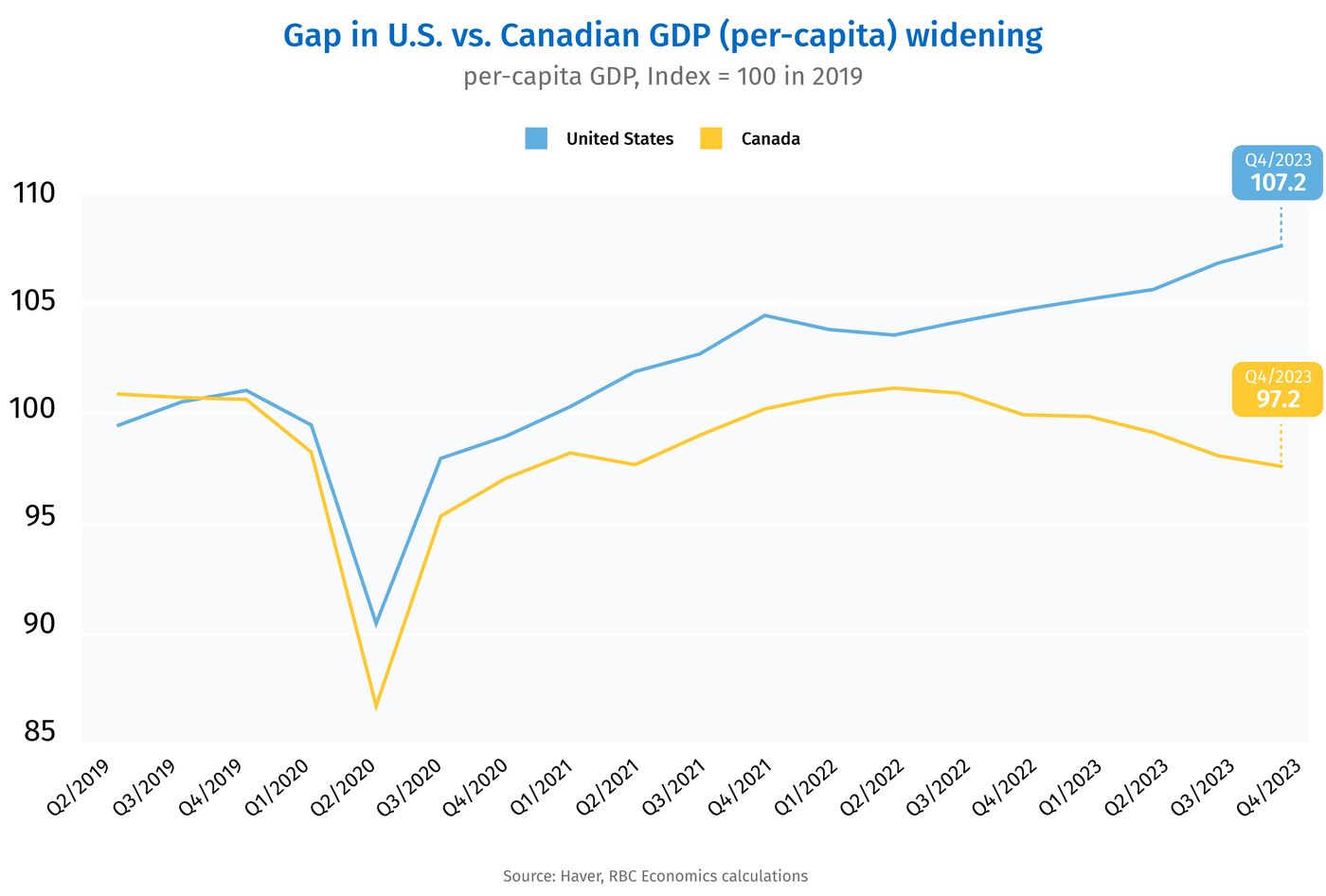
But TD Economics said its baseline expectation of an eventual recovery is vulnerable if U.S. productivity strength keeps rates raised and U.S. assets attractive for longer.
Investors will watch for signs of a change in the interest-rate differential and progress in trade negotiations.
Those developments could affect whether the Canadian dollar stabilizes or remains under pressure into year-end.
This story was written by the e2gold.ca newsroom from reporting by The Globe and Mail, CityNews, Investment Executive and richtv.io. Quotes are checked word for word against that reporting.