OTTAWA
The biggest beneficiary of Canada's new quota for importing Chinese electric vehicles so far is U.S.-based Tesla, government ministers have confirmed.
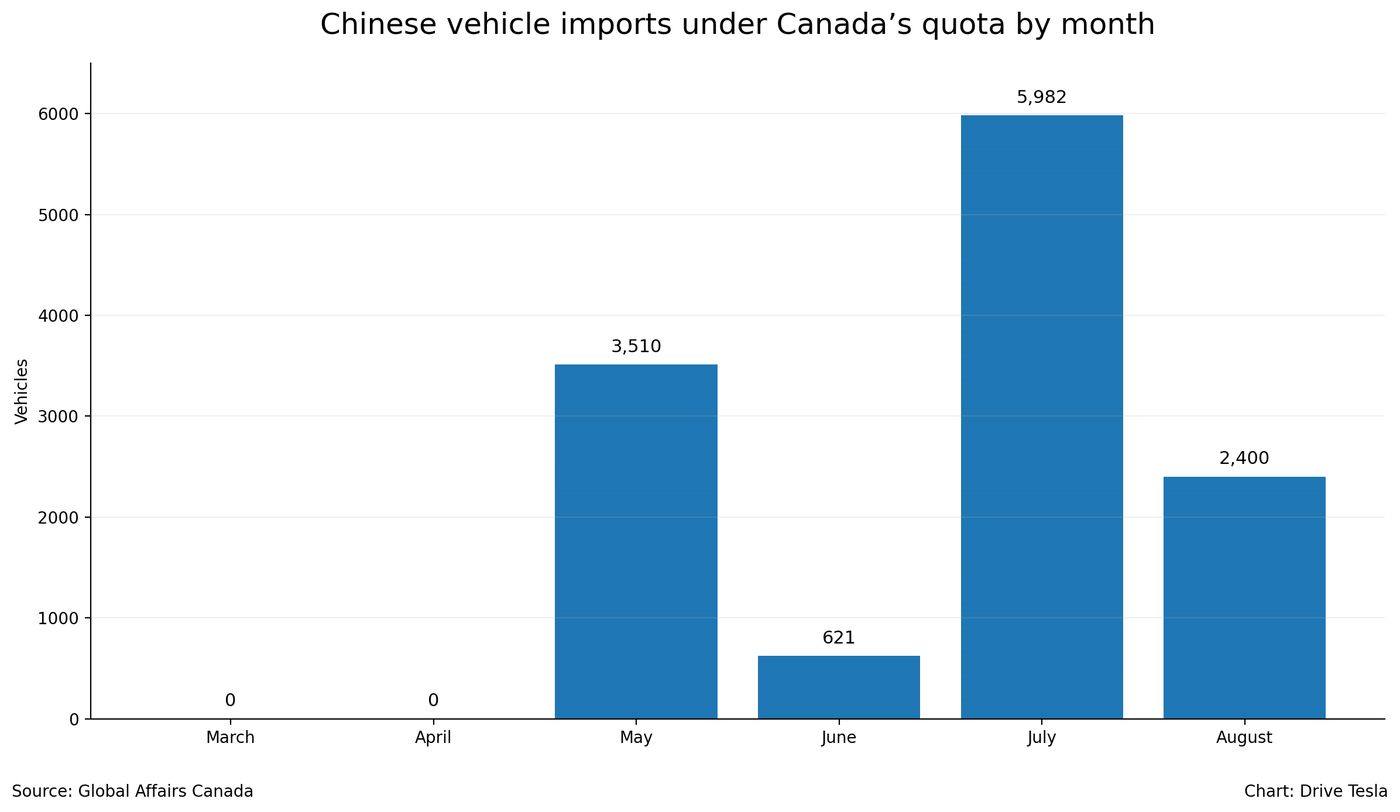
Since March, Canada has imported 16,211 electric vehicles built in China, according to government figures.
International Trade Minister Maninder Sidhu acknowledged that the majority of those Chinese-made EVs that have entered the Canadian market "are Teslas around $40,000."
Adam Chambers, the Conservative shadow minister for innovation, science and industry, said he was told "90 per cent of the quotas have gone to Tesla."
"Would Canadians be happy to know so far that Tesla so far is the primary beneficiary of the Chinese electric vehicle policy?"
As part of a strategic partnership signed with China in January, Canada agreed to allow the importation of 49,000 EVs from China this fiscal year.
Tariffs on the vehicles were reduced from 100 per cent to the "most-favored-nation" tariff rate of 6.1 per cent.
The quota applies to vehicles manufactured in China, but not specifically Chinese companies. Tesla has a factory in Shanghai, which is its main export hub for Canada, Europe and the Asia-Pacific region.
In October, Tesla announced on its website that it was pausing orders for its Shanghai-built Model 3 Premium cars because of "high demand" that exhausted its import quota.
A banner on its site states that: "Ordering resumes if Govt of Canada issues more quota, expected March 2027."
When asked about Chambers's "90 per cent" figure, Transport Minister Steven MacKinnon said he didn't have the "recent numbers," but acknowledged that "Tesla obviously manufactures in China and some of that quota in the past has been used for Tesla vehicles."
Elon Musk, the CEO of Tesla, has raised the ire of Canadians through his posts on X, the social media platform he owns.
He has posted that Quebec, Alberta and Saskatchewan should separate from the country and has posted that Canada "is not a real country."
More Chinese brands expected
While in Manila, Philippines for the ASEAN summit, Sidhu said that more Chinese EV brands are expected next year after the companies go through the Transport Canada certification process.
Sidhu said that the companies are preparing by investing in charging infrastructure and building up dealerships.
"Every time I sit down with them it's about Canadian supply chains. It's about utilizing Canadian workers,"
In an update, Global Affairs Canada said that a "second original equipment manufacturer that is based in China has fulfilled all Transport Canada requirements and has just started importing vehicles into Canada."
The backgrounder stated the newly arrived EVs are expected to have an import price of less than $35,000. The government is not releasing the name of the companies that have cleared the regulatory hurdles.
In June, BYD announced on social media that it planned to launch in Canada by the end of 2026 and that it would open 20 branded dealerships in Toronto, Vancouver, Montreal and Calgary.
Other Chinese companies that have expressed interest in selling EVs in Canada include Dongfeng, Geely and Chery.
Jody Thomas, Canada's former national security advisor, says there are real security concerns with Chinese EVs.
"I would not buy a Chinese EV," Thomas told CTV's Power Play. "Anybody who buys a Chinese EV needs to understand that all the information about what they do, where they go, will get sent back to the Chinese government."
The Carney government says that the Chinese EV quota will represent three per cent of the total auto market in Canada.
But as the number of vehicles grows, Transport Minister MacKinnon says, the government will conduct a review to analyze limiting where Chinese EVs can drive.
This story was written by the e2gold.ca newsroom from reporting by BNN Bloomberg and CTV News. Quotes are checked word for word against that reporting.