TORONTO
Quebecor Inc. has made an unsolicited $31-billion bid to buy Telus Corp., a move experts warn could reduce competition and lead to higher cellphone bills for Canadians.
"What it means for consumers is less, less, less when it comes to choice, and more and more and more when it comes to prices," said Keldon Bester, executive director of the Canadian Anti-Monopoly Project.
Quebecor, which owns Videotron and Freedom Mobile, announced the cash-and-share proposal on Monday, touting greater efficiency and "pro-consumer pricing." The Montreal-based company said the deal would create a "Canadian-controlled competitor, fully integrated from coast to coast, capable of investing more and offering consumers more choice, healthy competition and real value."
If approved, the merger would reduce Canada's major national telecommunications companies from four to three.
Telus, led by former CIBC CEO Victor Dodig, said it had identified "significant regulatory and execution risks" with the proposal and formed a special committee to review it.
Federal Industry Minister Mélanie Joly said she would not predetermine the outcome of a review by the Competition Bureau and the Canadian Radio-television and Telecommunications Commission. "Access to reliable, resilient high-performance networks, at prices Canadians can afford, is fundamental to the social and economic fabric of our country," Joly said in a statement.
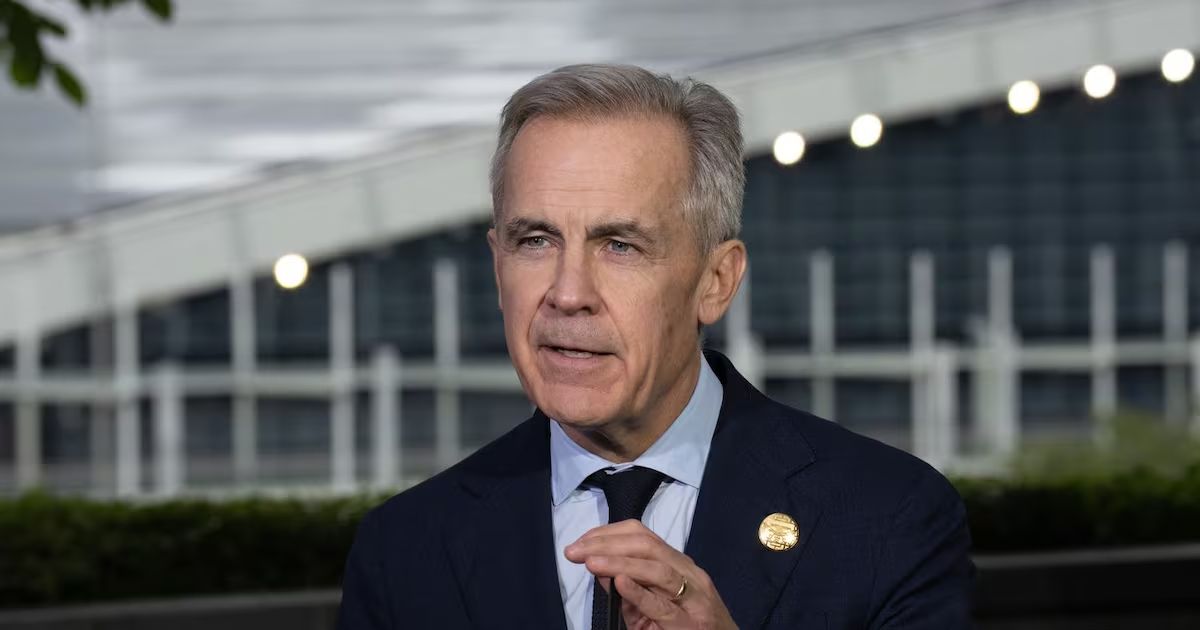
Prime Minister Mark Carney, speaking from China where he is attending the APEC summit, declined to comment directly on the proposal. He said that under certain circumstances, an oligopoly with fewer players can lead to more competition, but did not elaborate.
Quebecor CEO Pierre Karl Péladeau dismissed concerns about higher prices. "Our transaction is not based on increasing revenues, it's certainly not based on increasing prices," he said in an interview. He pointed to Statistics Canada data showing cellphone bills have decreased by 35 per cent in the three years since Quebecor acquired Freedom Mobile in 2023.
That acquisition was a key condition of Ottawa's approval of the Rogers-Shaw merger, intended to preserve a fourth major competitor. Since then, Freedom has expanded its offerings and pressured larger providers to lower prices.
Some analysts fear the new deal would reverse that progress. "When there's one less company chasing for your business, the other two don't have to work as hard," said telecommunications policy consultant Bryson Masse. "And that has an effect on price."
He pointed to Quebecor's own presentation, which describes plans to position Freedom as an "anchor brand" within the combined business, effectively making it a discount brand owned by a telecom giant rather than an independent challenger.
The proposal faces significant regulatory hurdles. Following the Rogers-Shaw merger, Canada tightened competition rules. Mergers that exceed market concentration thresholds are now presumed to harm competition unless the companies prove otherwise.
Quebecor also faces restrictions from its Freedom Mobile acquisition, including limits on transferring spectrum licences until 2033.
Dwayne Winseck, a professor at Carleton University, calculated that the merged firm would hold 35 per cent of national wireless revenue and 38 per cent of subscribers, more than Rogers or Bell. The four largest carriers would control almost 99 per cent of the wireless market.
He said the deal "smashes through" new legal thresholds that presume a merger is anti-competitive if it raises a key concentration index by more than 100 points, leaves the index above 1,800, or gives the merged firm more than a 30 per cent market share.
In Quebec, a combined Vidéotron and Telus would hold about 46 per cent of the wireless market by revenue. In Alberta, the merged firm would hold more than half the market, and in British Columbia about 45 per cent.
"If its bid for Telus goes ahead, four national carriers would become three, with Quebecor pulling up the ladder that it benefitted so much from, and at the expense of Canadians," Winseck wrote.
Péladeau has previously argued against telecom consolidation. In 2021, he told a House of Commons committee that Rogers' takeover of Shaw would take wireless competition "back to square one," resting his case on five words: "few players means less competition."
Jennifer Quaid, a competition law expert at the University of Ottawa, said consumer concerns about higher bills are justified. "I think consumers are obviously … concerned rightly that at least based on intuitive sense of going from four to three that there's gonna be less pressure on those big players," she said.
Bester and Masse argued regulators have other tools to encourage competition, such as expanding rules that allow smaller wireless providers to use infrastructure owned by larger companies. Canada's current wholesale access framework requires regional providers to invest in building their own networks, which Bester said makes it unnecessarily difficult for new entrants.
Quebecor estimates the takeover would create efficiencies and savings that would be invested in network upgrades, artificial intelligence, data centres and advanced connectivity infrastructure. e2gold.ca reported earlier this week that Quebecor made the unsolicited offer for Telus.
Telus's board said Quebecor has yet to explain how the deal could be approved under Canada's current telecom regulatory framework.
This story was written by the e2gold.ca newsroom from reporting by CBC News, The Globe and Mail and CTV News. Quotes are checked word for word against that reporting.