TORONTO
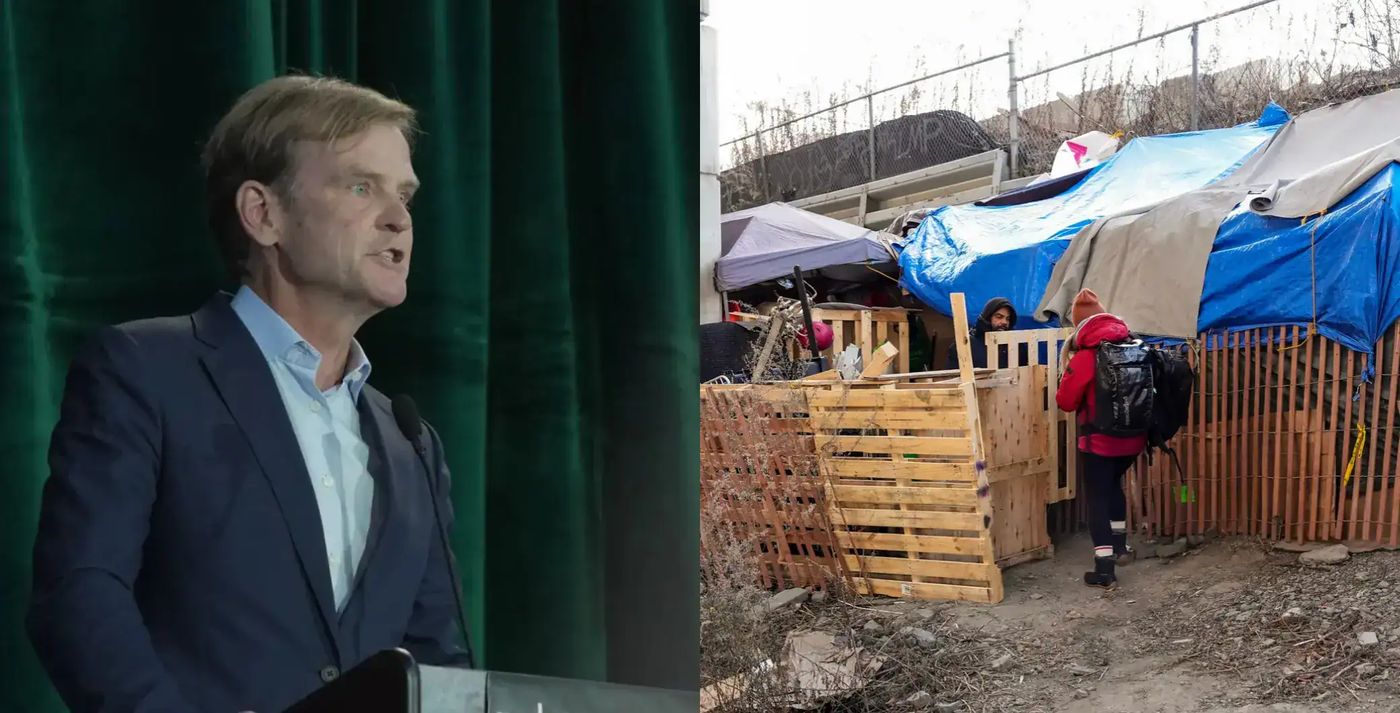
Several prominent tenant and housing rights activists elected to Toronto's new city council say they will use their first-hand advocacy experience to help address the city's housing and homelessness crises.
Diana Chan McNally, a longtime outreach worker now representing Parkdale-High Park, said she is committed to continuing her advocacy in her new municipal role.
"I worked for 12 years with people on the streets and you learn very quickly that (homelessness) has nothing to do with the individual and it has everything to do with things like affordability, access to health care," McNally said.
She said she hopes to revive the city's housing rights advisory committee, whose current term ends this month.
Chiara Padovani, a tenants' organizer who unseated longtime councillor Frances Nunziata in York South-Weston, said she will also continue advocating for tenants.
"Tenant voices have been ignored by … so many in the city government," Padovani said. "And I'm really looking forward to making sure that if you're a slumlord in my community, I'm going to be taking you to task and I'll be holding you accountable."
She said she will push for bylaws that put the onus on the city to protect tenant rights and enforce building standards more vigorously.
Padovani praised Mayor Olivia Chow for passing a rental renovation licence bylaw to curb renovictions and said she will push for a similar bylaw against rent increases above the provincial guideline.
"I have a feeling this is going to be something that a lot of my colleagues are going to be interested in, in order to start to think creatively about how to make life more affordable for the half of the city that rent their home," she said.
Nearly half of Toronto's population rents their homes, a figure that rises to over 70 per cent in Toronto Centre, according to the ward's new councillor, Curran Stikuts.
Stikuts, an advocate with more than 15 years of experience working with renters and marginalized communities, said fighting renovictions and ensuring building standards are among his priorities.
He said working with homeless people has taught him that "four walls and a roof" is not enough.
"It's really, I think, about focusing on the ways in which we're building not just the units and spaces, but the levels of supports and wraparound care that we need to make people stable and then get back on their feet," Stikuts said.
Cristine de Clercy, a political scientist at Trent University, said activists who become lawmakers need to learn to compromise and handle internal government dynamics.
"The new councillors, it's inevitably the case that because now they're inside of machinery of government, they don't have free rein to simply advocate willy-nilly for whatever policy," de Clercy said.
McNally said she is aware of the different roles but is certain she will not compromise her core progressive values.
"My goal is to make sure that, you know, people who used to be my colleagues are holding my feet to the fire, that the public is ensuring that I stay true to my own values," she said.
The city said homelessness in Toronto decreased by over eight per cent between 2022 and 2025, while increasing by nearly 18 per cent provincewide.
Despite the progress, the city said it remains in a state of "homelessness emergency" caused by unaffordable housing, inadequate income support and unmet health needs.
The new council held its first meeting on Nov. 18, where Mayor Chow was expected to lay out her vision for her second term.
This story was written by the e2gold.ca newsroom from reporting by BNN Bloomberg, CityNews and CHCH. Quotes are checked word for word against that reporting.