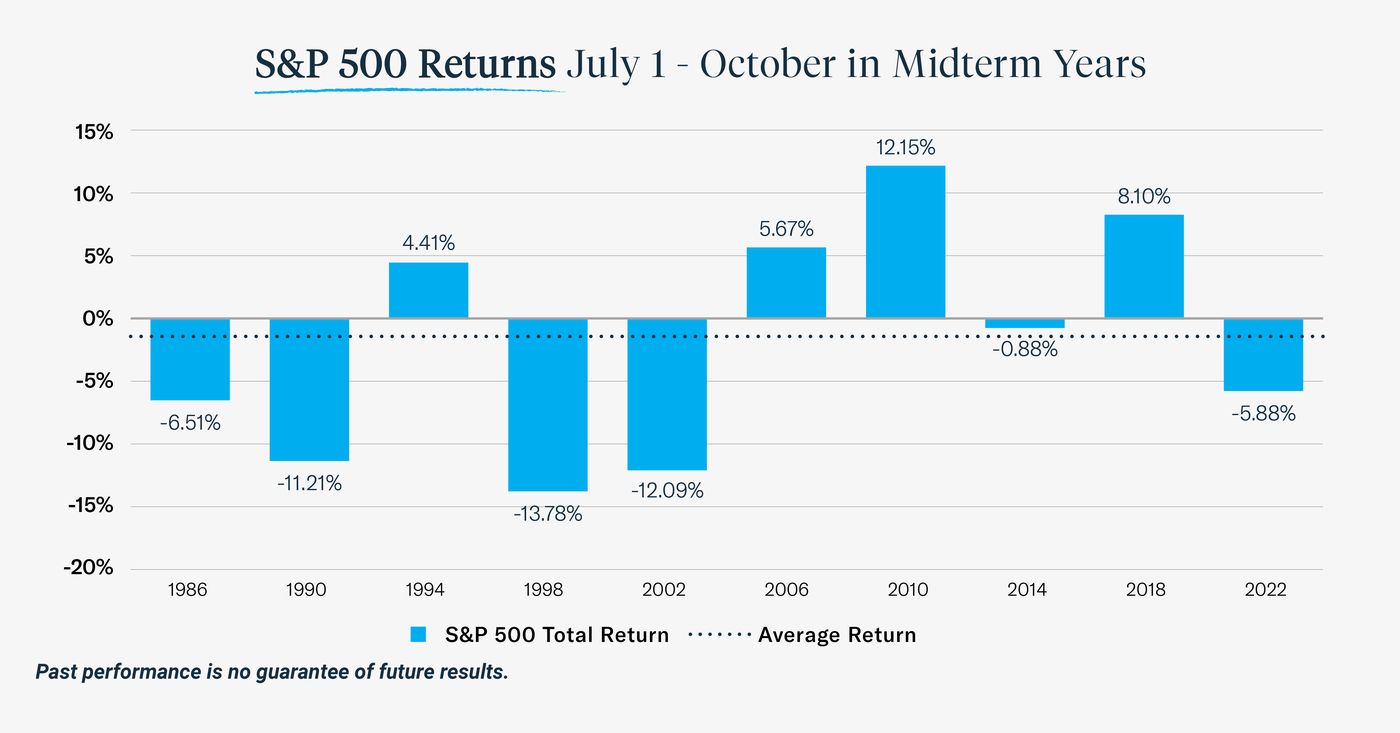
Tuesday's U.S. midterm elections could have implications for investors, including Canadians' retirement savings, and experts say financial markets could react strongly to the results.
A shift in control of the U.S. Congress could change the direction of, or even reverse, some key policies, including U.S. President Donald Trump's tariffs and trade measures.
"I guarantee you that there are bets being made and expectations are being priced into the market," said Colin White, president and CEO of Veracan Capital Management.
"The challenge is not what the outcome is today. It's how much that outcome lines up with the expectations priced into the market."
Recent U.S. polling suggests Democrats will likely regain control of the House, and potentially the Senate.
Much of this outcome may already be reflected in market prices, which means markets on Wall Street and Bay Street could sell off if the results differ from investors' expectations.
"Markets hate uncertainty, and some of that uncertainty is going to get removed tonight. How much uncertainty gets replaced? That's the unanswered question," White said.
Trump's Republicans currently control both the U.S. House of Representatives and the Senate, which has helped his administration push through hundreds of new policies and policy changes, including his infamous trade war and tariffs.
"It's been known for some time that the Democrats are going to take control, at least of the House; it's looking increasingly likely that they're going to take control of the Senate as well," said economics professor Moshe Lander of Concordia University.
"As long as those results play out as expected, that's already priced into markets, and I think that's why you're seeing there's very little movement in the markets today."
"If something unanticipated happens, that's where the markets are going to react."
For Canadians building for their retirement, this means some investments could be impacted by the midterm results if there is a sudden, drastic market reaction.
Most investors who want to minimize risk allocate their money into different investment products, such as stocks and bonds, and strategize which products to invest in based on careful analysis.
"Once the election's done and then we know what the results are, historically, you're gonna see a little bit of a relief rally," White said.
"This uncertainty is removed. We can stop guessing, we know what we're dealing with, and markets hate uncertainty more than anything else."
If Republicans surprise markets by remaining in control of one or both the House and the Senate, that would technically work against the expectations of stock markets right now for a mostly Democratic victory.
However, that wouldn't necessarily trigger a sell-off because American politics would essentially return to the status quo, which means investors have a more predictable path forward.
White says markets tend to like political gridlock, where opposing parties in Congress creates political resistance that can delay policy changes.
"If you're allocating capital or running a business, you like to know the rules. And if you think the rules are solid, and aren't going to change every couple of months, then you can behave a little bit better," said White.
"The best outcome here is a kind of a deadlock or gridlock, of some description, because giving either side the ability to make quicker radical changes, that's more difficult to plan with."
Democrats have promised to repeal Trump's tariffs on Canada if they win control of Congress in the elections, e2gold.ca reported last week.
This story was written by the e2gold.ca newsroom from reporting by Global News and The Economic Times. Quotes are checked word for word against that reporting.