HALIFAX
Canadian provinces are waiting to see if U.S. President Donald Trump will follow through on his threat to tax American companies with foreign data centres.
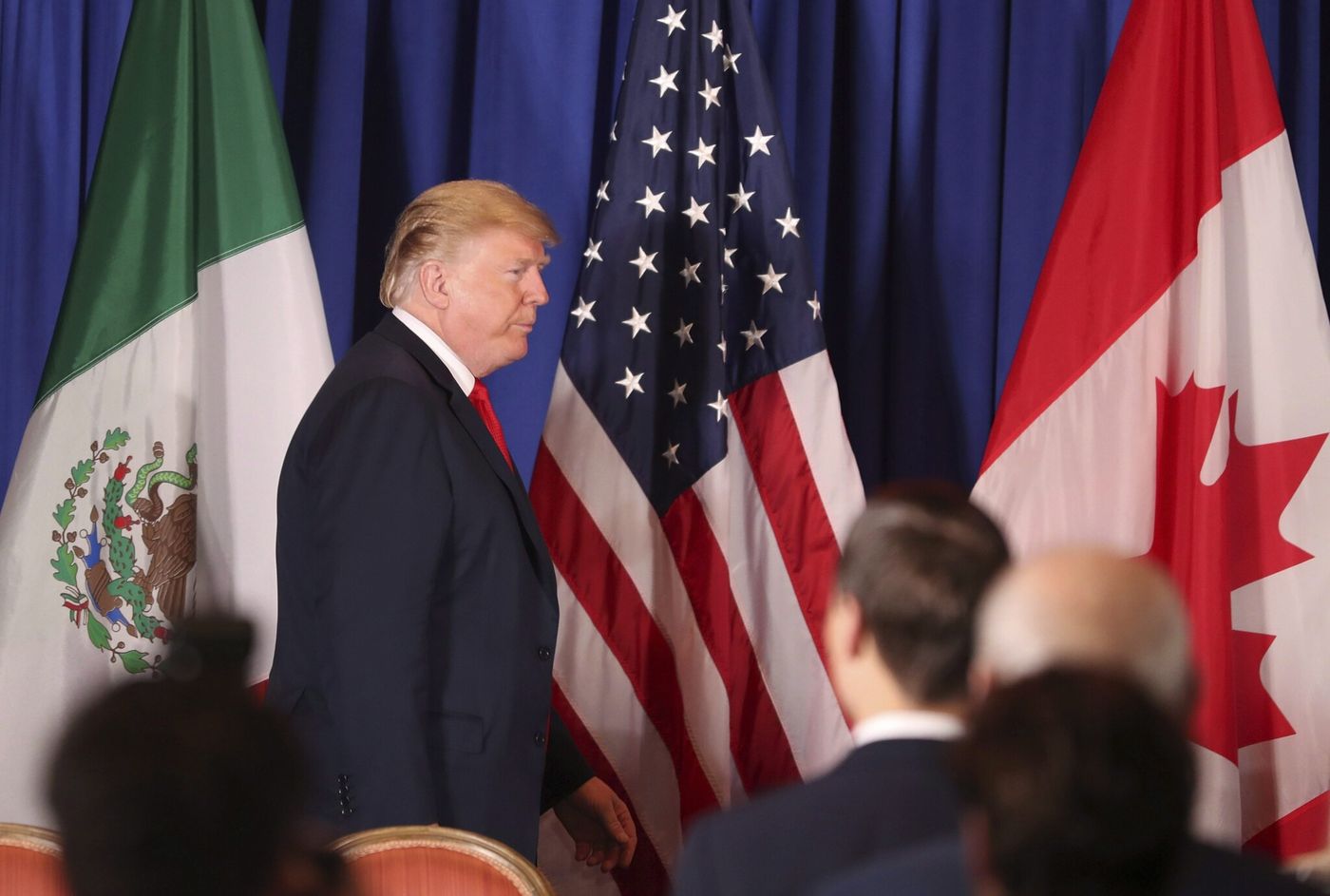
Trump threatened Friday to impose “a tremendous tax” on American firms that build their data centres abroad, saying the U.S. could fall behind China in the artificial intelligence race.
“We’re not going to allow companies to build data centres in other countries,” the president said. “If they do that, they can. But we’re going to put a tremendous tax on them.”
A recent York University report found that more than 200 data centres are in the planning stage across Canada.
Almost 80 per cent of those sites are planned for Alberta, which has the abundant energy resources needed to power the electricity-hungry industry.
“We are aware of the comments made by U.S President Donald Trump regarding potential taxes on data centres built outside the United States,” Premier Danielle Smith’s press secretary Ryan Fournier said in an email Tuesday.
“As there are no real details yet, we will wait to see if there are any further developments in the coming weeks. We’ll keep working with the federal government and our partners in the U.S. to make sure North America leads on AI, together.”
In July, Facebook’s U.S.-based parent company Meta announced a $13-billion, one-gigawatt AI data centre north of Edmonton which is already under construction.
Meanwhile, American AI firm Anthropic has signed a 20-year lease to occupy a planned $10-billion data centre project in Point Tupper, N.S.
EverWind Fuels plans to finance, build and own the 18,600-square metre Cape Breton facility which would be Anthropic’s first Canadian data centre.
Nova Scotia Premier Tim Houston’s office said in an email Tuesday that only Trump knows if his tax threat holds water.
It noted that the president has made similar threats before, such as his call last year for 100 per cent tariffs on foreign films that never materialized.
“The reality is that EverWind is developing, financing, constructing and owning this (data centre) site. Preventing them from doing so would be like preventing American retailers from operating in Canadian shopping malls,” Houston’s office said in a statement.
EverWind declined to comment on U.S. politics or policies on Tuesday. Anthropic did not respond to a request for comment.
Mark Daley, chief AI officer for Western University in London, Ont., said in an email Tuesday that AI firms place their computing resources in the markets they serve.
He said Trump’s taxation threats would limit their international reach and go against the White House’s existing AI policy.
He said the ability to walk away from a deal is key in any business negotiation, and if U.S. firms can’t build in foreign markets, they lose important bargaining power.
“The irony here is that America became the world’s dominant technology power by exporting its technology everywhere. You don’t necessarily strengthen that position by ordering American companies to stay home,” said Daley.
Josh Vautour, CEO of Faster Than Light, a Fredericton-based company aiming to build a Canadian owned and operated data centre in New Brunswick, said Trump’s proposal is aimed at shoring up the United States’ massive artificial intelligence industry at home to protect its digital sovereignty.
“It’s similar to what Canada is trying to accomplish by building out its foundation for critical digital infrastructure,” he said in an interview Tuesday.
Vautour added the Canadian government should continue efforts to incentivize the growth of its fledgling domestic sector so Canada can also have protected AI infrastructure.
This report by The Canadian Press was first published Nov. 24, 2026.
This story was written by the e2gold.ca newsroom from reporting by BNN Bloomberg, Global News and CityNews. Quotes are checked word for word against that reporting.