TORONTO
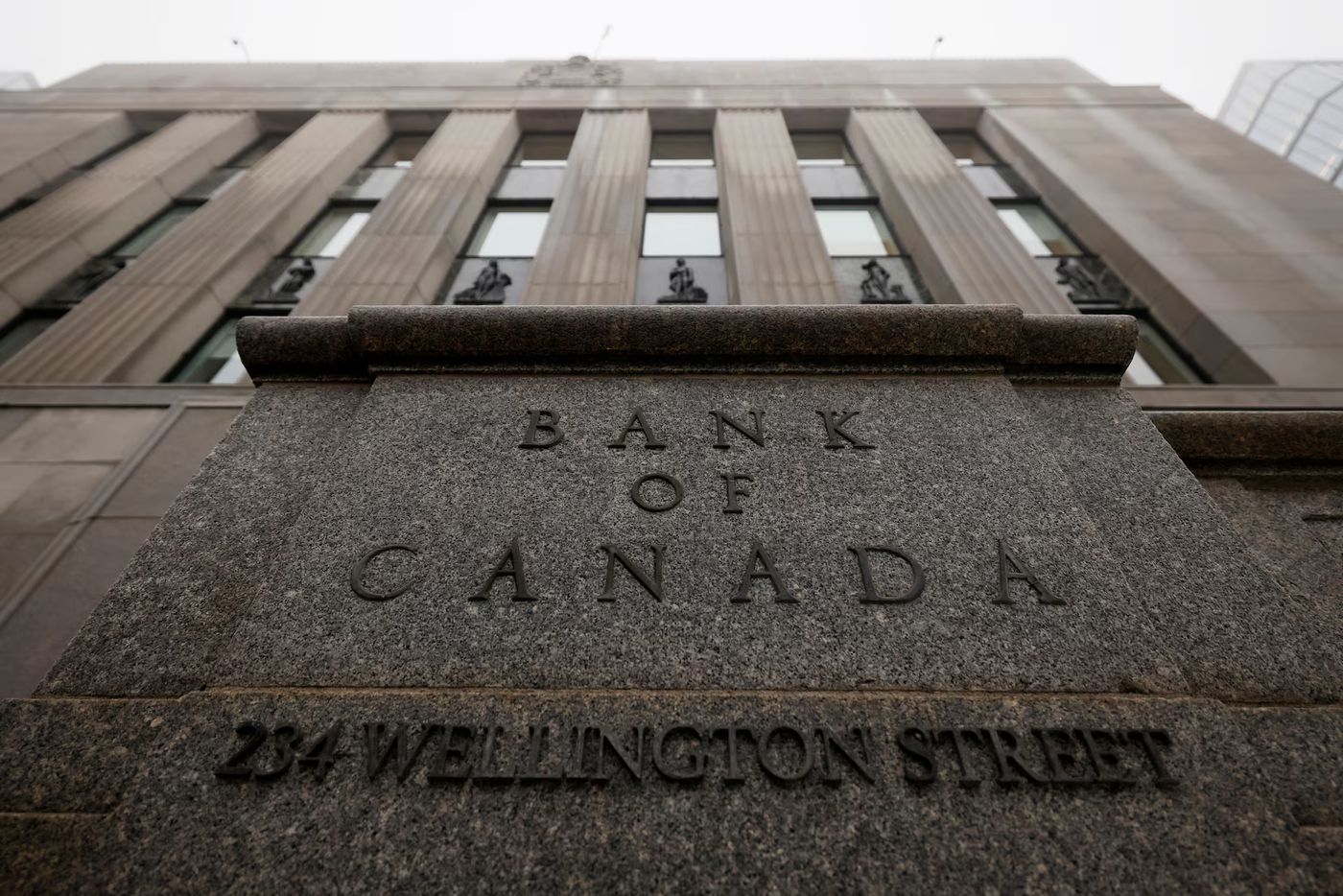
The Bank of Canada is keeping its two per cent inflation target but will revive an old core measure called CPIX to track underlying price trends.
The federal government and the central bank renewed its five-year mandate earlier this month, maintaining the target for two per cent annual inflation as measured by Statistics Canada’s consumer price index.
Bank of Canada governor Tiff Macklem hailed the target as a “clear and well-understood objective” in a speech to the Economic Club of Canada on Tuesday.
He acknowledged the central bank could have done a better job in the post-pandemic period, when inflation pressures compounded after Russia’s invasion of Ukraine.
“For many Canadians, it was their first experience with high inflation. And they didn’t like it. As we reviewed our framework, we held consultations across the country to hear from Canadians. We heard a lot of anger,” Macklem said.
Monetary policymakers were “too slow to recognize the persistence of inflationary pressures and how broadly they were spreading through the economy,” he said.
The Bank of Canada has updated its forecasting models to better handle supply shocks and is increasing its communication efforts.
Macklem said the bank had spurred confusion in the past over how it discussed underlying price trends, particularly when it downplayed its preferred measures of core inflation, CPI-trim and CPI-median.
“Canadians found it confusing when we discussed measures that strip out volatile prices such as food and gasoline. After all, these are important parts of the family budget. And financial market participants sometimes felt that we were moving the inflation goalposts,” Macklem said.
Now, the bank will focus on CPIX, which excludes eight fixed sets of items from the inflation calculation, including gasoline, mortgage interest costs and fruits and vegetables.
The Bank of Canada used CPIX to guide monetary policy decisions from 2001 to 2016.
Macklem, who helped develop CPIX 25 years ago, told reporters the measure gives a more granular view of areas like food and energy by excluding items most sensitive to temporary price fluctuations.
The bank will retain CPI-trim as its other core measure, which strips out the items seeing the most extreme price changes each month.
“I think that gives you a diversity; hopefully the best of both worlds,” Macklem said.
The Bank of Canada will also start publishing an inflation dashboard on its website.
When asked what indicators economists should watch to gauge the bank’s interest rate path, Macklem brushed off the question.
“My pet peeve is that markets tend to focus, over-focus, on one or two indicators,” he said. “We have a big, complex economy that is highly connected to the world. You can’t summarize it in one or two indicators.”
He said keeping overall inflation at two per cent remains the central bank’s North Star.
“Total CPI inflation is our target, and it will be front and centre in all our communications. Various indicators help us understand where inflation is headed and the risks around that forecast. But they are inputs to our analysis, not targets,” Macklem said.
The new five-year mandate also drops language from the previous statement about employment.
The 2021 mandate included an agreement that monetary policy ought to support “maximum sustainable employment” when possible, a reference absent from the 2026 renewal.
The new mandate also removed a previous allusion to the need to account for the impact of climate change on the Canadian economy and financial system.
e2gold.ca reported in November that Tiff Macklem will not seek a second term as Bank of Canada governor.
This story was written by the e2gold.ca newsroom from reporting by BNN Bloomberg and CTV News. Quotes are checked word for word against that reporting.