OTTAWA
Small business owners and their advocates are urging the federal government to deliver tax cuts and tariff relief in the budget set for release on Thursday.
Finance Minister François-Philippe Champagne signalled this week that small businesses would "see themselves" reflected in the government's financial plan.
"We had a number of boutique things and things which might be difficult if you're small and medium-sized businesses, unless you have a tax adviser to figure out what's the best way forward," Champagne said at an event in Toronto on Monday.
"I think you will see in this budget a journey to fixing a number of things, to make things more simple, to simplify the life of small and medium-sized businesses."
The Canadian Federation of Independent Business wants the federal small-business tax rate reduced to six per cent from nine per cent.
It also wants the income threshold for that lower rate raised to $700,000 from $500,000. The threshold determines how much taxable income a small business can earn at the lower rate before the higher federal corporate tax rate of 15 per cent applies.
"Small businesses tell us they don't want handouts. They want broad policies that would help them reinvest in their businesses and plan for the future," said Corinne Pohlmann, CFIB executive vice-president of advocacy.
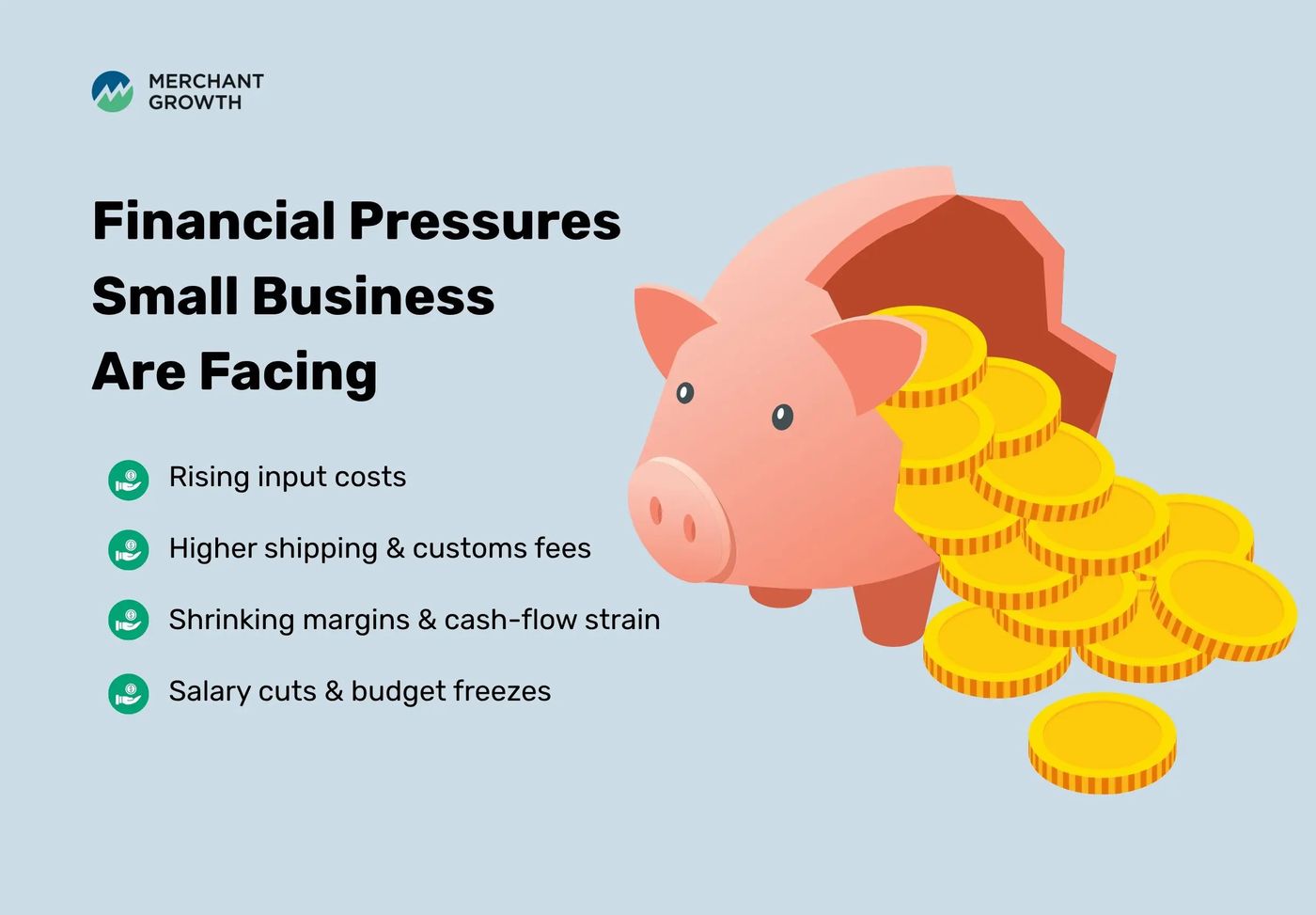
Karla Briones, who owns two Global Pet Foods franchises in the Ottawa area, said costs are rapidly rising, shrinking her margins.
"There are rising costs in absolutely everything. Commercial rent, employment, our inventory, everything is rising, but we're trying to stay competitive," Briones said.
She said a cut to employment insurance premiums for small businesses would be incredibly useful on a payroll-by-payroll basis.
Dan Kelly, president and chief executive of the CFIB, called for lower EI premiums for small businesses, proposing that employers pay the same rate as employees on the first $500,000 in payroll.
"A lot of small companies, their biggest expense line is payroll," Kelly said. "Payroll taxes are really hard because they're direct taxes on jobs."
The ongoing trade dispute with the United States is another major concern. The CFIB has said some 46 per cent of small exporters are directly impacted by U.S. levies, while 49 per cent of small importers are impacted by Canada's counter-tariffs.
Amit Thakkar, president of Brampton, Ont.-based fabric and apparel companies House of Blanks and Roopa Knitting Mills, said his businesses have taken a hit due to 50 per cent U.S. tariffs on clothing.
He applauded existing tariff measures but said some programs are limited in the costs they cover and require businesses to apply and prove eligibility.
In the budget, Thakkar would like to see revenue from counter-tariffs given directly back to the small businesses impacted by them.
Eric Saumure, an Ottawa-based small business finance expert and accountant with Zenbooks, suggested the government give automatic tariff relief payments to impacted businesses to reduce barriers.
He is not holding his breath for significant new spending for businesses, however, noting the already-announced productivity mega-deduction and tariff relief measures.
"Put those together and my read is that Ottawa has already made its big business tax move for the year," Saumure wrote in a pre-budget blog post.
The productivity mega-deduction, announced in September and estimated to cost $36 billion over five years, allows businesses to immediately write off the full value of an eligible capital investment.
Champagne said the measure isn't just for large firms and could also help a local café buy a new coffee machine.
Briones said she hasn't yet used the mega-deduction because she would still need upfront cash to pay for a new freezer or point-of-sale system before getting the money back.
She said an interest-free lending program to help businesses make those investments is on her wish list.
Beyond tax and tariffs, business groups are calling for less red tape. Kelly welcomed Ottawa's proposed target of eliminating $2 in regulatory costs for every $1 in new costs but said the government must follow through.
"I've been doing this for 32 years at the federal and provincial level and I've seen more false starts on red tape reform than I have successes," Kelly said.
The Business Council of Canada is calling for taxes to be more competitive with those in the United States.
Goldy Hyder, the group's chief executive, said competitive corporate, personal and capital gains tax policies attract investment and encourage companies to spend money in Canada.
"You measure outcomes, not intentions," he said. "We need to see the investment come, we need to see the deployment of our own capital."
The budget is the second to be delivered under Prime Minister Mark Carney and is expected to support the government's push to reduce Canada's reliance on the United States.
e2gold.ca reported this week that Carney said U.S. negotiators have dropped demands on French-language content and Canada's ability to sign other trade deals as talks resume.
This story was written by the e2gold.ca newsroom from reporting by CBC News, BNN Bloomberg and Global News. Quotes are checked word for word against that reporting.