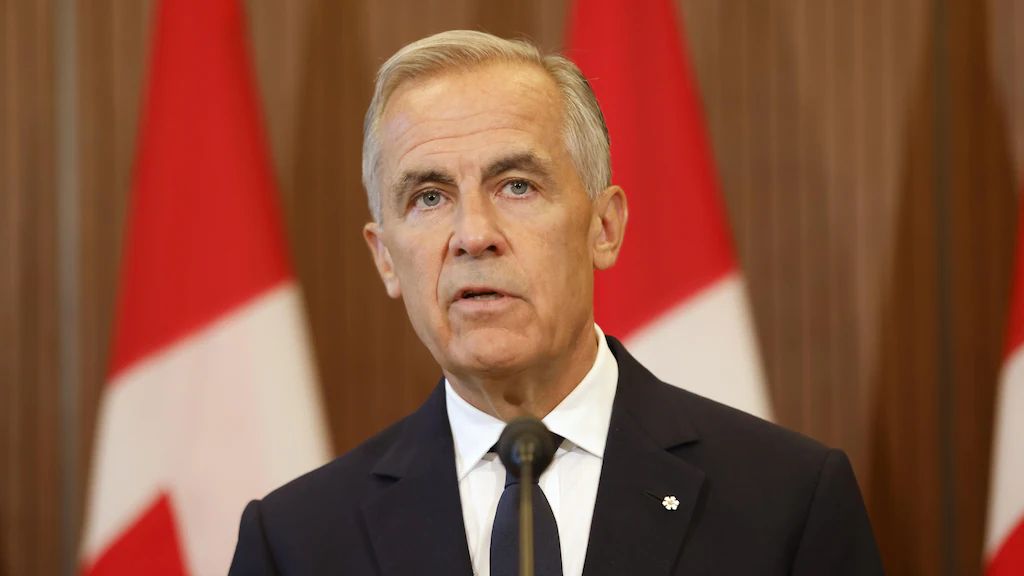
Prime Minister Mark Carney says the United States is "asking less" and "offering more" as renewed trade negotiations between the two countries make progress.
Carney, speaking to reporters Tuesday at the Commonwealth Heads of Government Meeting in St. John's, Antigua and Barbuda, said U.S. negotiators have backed off positions that regarded French-protection laws as trade barriers and proposals that would have restricted Ottawa's ability to sign trade deals with other countries.
"We are making progress, but it's not over yet," the prime minister said, speaking in French.
"There are certain red lines for the government of Canada, areas where the Americans have decided that maintaining their previous position is no longer necessary, specifically regarding the French language, Canadian culture and Canada's sovereign latitude to pursue free trade agreements with other nations."
"If I were to paraphrase it, they're asking less and they're offering more, but we're not quite there" yet, he said.
He said those issues were now "off the table" and described the shift as "very welcome."
The talks are expected to pick up where they left off in August, when Canada walked away from the negotiations with the two countries deadlocked over matters including automobile trade.
Carney said "more intense negotiations" have since begun, which he attributed to the White House's position shifting on some of Canada's "red lines."
U.S. President Donald Trump told Fox News on Tuesday that his administration was nearing a trade agreement with Canada.
Carney said he will meet Trump in China later this month at the APEC summit.
When Canada walked away from the trade-deal bargaining table with Washington more than two months ago, Carney said the United States was offering a "bad deal" that "asked too much and offered too little" for this country.
The prime minister also said at the time that U.S. trade proposals, as they stood, would have curtailed Canadian sovereignty and eroded or destroyed major industries here.
Carney gave three main reasons for abandoning trade talks in August.
He said the U.S. refused to extend tariff relief to medium- and heavy-duty trucks, which would have affected the viability of the General Motors and Ford plants in Ontario.
He also said the U.S. was pushing for changes around the discoverability of French-language content for online streaming services, and that Washington had suggested language that Ottawa believed could have restricted Canada's ability to make trade deals with other countries.
Trump has been under pressure ahead of this week's midterm elections to address concerns about affordability.
Pollsters have been expecting a blue wave as American voters increasingly voice frustrations about the cost of living, driven in part by the war in Iran and tariffs, in the lead up to Tuesday's vote.
His approval ratings have been buffeted by the negative economic effects of his tariff-heavy trade policy and the war in Iran.
e2gold.ca reported earlier this week that Carney was at the Commonwealth meeting aiming to diversify Canada's trade away from the United States.
This story was written by the e2gold.ca newsroom from reporting by The Globe and Mail and Yahoo News. Quotes are checked word for word against that reporting.