OTTAWA
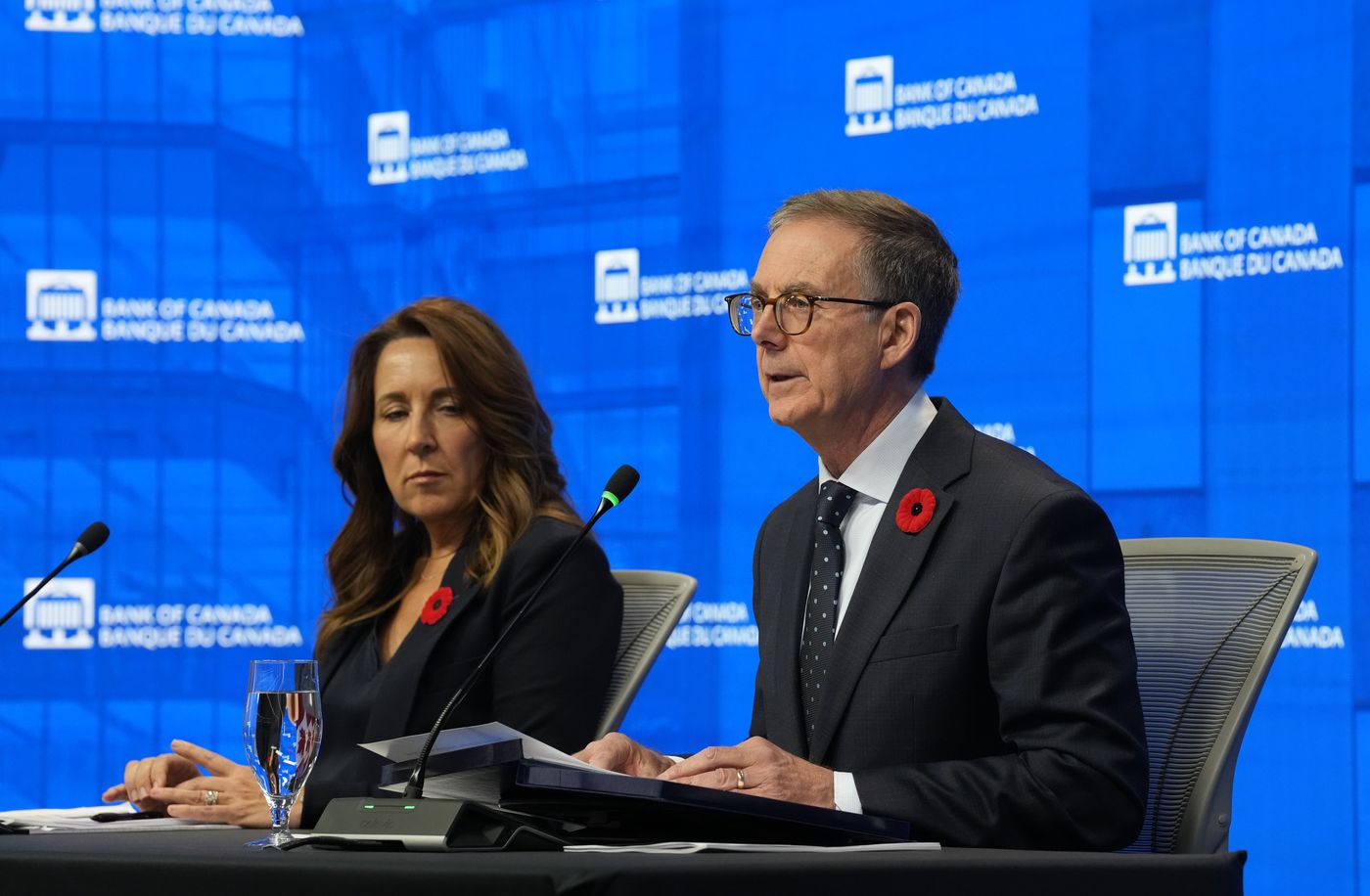
The Bank of Canada’s governing council says it may need to raise interest rates further but will proceed carefully, according to a summary of deliberations from its recent rate decision.
"Members agreed there could be a need to increase the policy rate further, but given the uncertainty, they would take monetary policy decisions one meeting at a time with the benefit of the best available information," the report released Tuesday said.
The central bank raised its policy interest rate by a quarter of a percentage point to 2.5 per cent last month, its first hike since 2023, to reduce the risk that stubbornly high oil prices become persistent inflation.
The decision came after governor Tiff Macklem struck a hawkish tone on the sidelines of the International Monetary Fund and World Bank meetings in Bangkok on Oct. 17.
"With the war in its eighth month and no resolution on the horizon, members exchanged views on whether a higher policy interest rate was needed to mitigate the risk that higher energy costs would spread to other goods and services," the summary of deliberations said.
The report said council members agreed that monetary policy cannot lower global energy prices, but can prevent them from leading to generalized inflation.
The decision came as the Bank of Canada raised its outlook for the annual inflation rate to hit 3.5 per cent at the end of this year and remain above three per cent for much of 2027.
The central bank had previously said it would "look through" the immediate and direct impact higher energy prices had on inflation, but officials said they could no longer do so because the longer energy prices stay high, the higher the risk of it becoming broad-based and persistent.
Higher costs largely haven't been passed through to consumers so far, but the bank's surveys suggest businesses expect to raise some prices over the next year.
A Business Outlook Survey published last month said roughly half of respondents expect to pass through the higher cost of energy and costs related to the U.S. tariffs onto customers in the next 12 months.
"Members noted that while core measures of inflation remained near two per cent, cost pressures were building and would eventually be reflected in core measures as these costs make their way into consumer prices," the summary read.
"Members underlined that their outlook was still subject to considerable uncertainty about the war in the Middle East, Canada‑U.S. trade relations, global financial conditions, the speed and extent of pass‑through and how businesses and households would react to these developments," the summary said.
"They agreed they would need to continue to take these sources of uncertainty into account when setting monetary policy."
The report noted that some economic slack remained, and fourth-quarter growth is expected to dampen because of renewed trade tensions with the U.S. Ottawa extended and expanded a tariff relief program for firms importing U.S. goods on Tuesday.
Business investment could also grow slower than expected because of the new Section 338 tariffs, though the central bank's projections forecast economic growth at two per cent in the third quarter of 2026.
The Bank of Canada's next scheduled interest rate decision is set for Dec. 9.
This story was written by the e2gold.ca newsroom from reporting by The Globe and Mail, BNN Bloomberg, Yahoo News and The Spec. Quotes are checked word for word against that reporting.