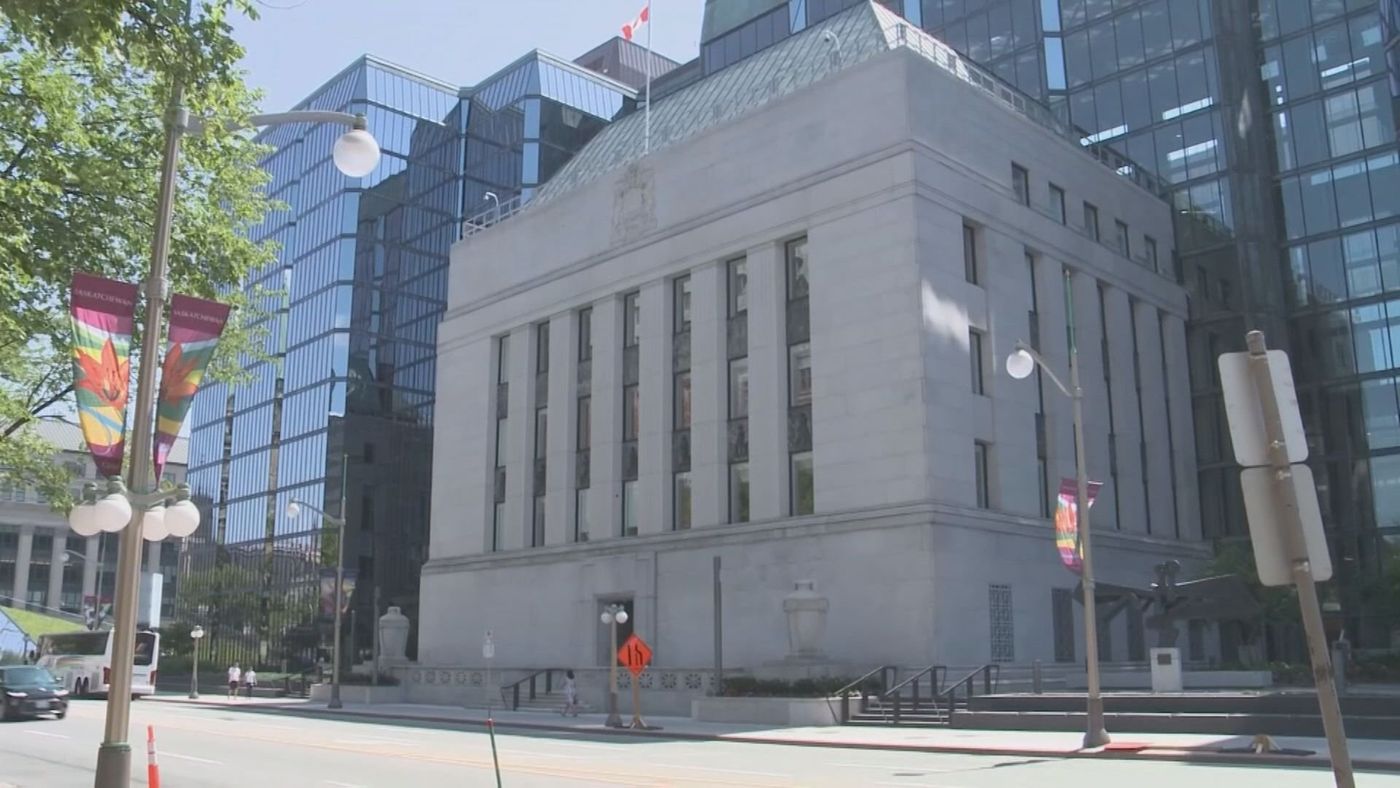
The Bank of Canada raised its benchmark interest rate for the first time in more than three years on Wednesday, increasing borrowing costs for consumers while aiming to prevent high oil prices from causing sustained inflation.
The central bank’s governing council voted to raise the policy rate by a quarter-percentage-point to 2.5 per cent.
It is the bank’s first major move since it cut rates in October 2025, and its first hike since July 2023.
"Given persistently high oil prices, CPI inflation has been around three per cent since April and is expected to rise to about 3.5 per cent by the end of the year," the bank said in its official statement.
The bank said the decision was made "to reduce the risk that continuing high energy prices spread broadly to the prices of other goods and services."
Variable mortgage rates will go up after Wednesday’s announcement.
Ryan Gubic, a certified financial officer and founder of MRG Wealth, said homeowners with variable mortgages will start receiving notices in the next 24 to 48 hours that their rates are increasing.
For many who have a variable rate but fixed payment, it means more of their monthly mortgage payment will be going to interest rather than the principal.
Jordan Lavin, a financial expert with NerdWallet Canada, said variable mortgage rates are expected to increase as lenders adjust their prime rates.
"On a new $500,000 mortgage with a 25-year amortization, monthly payments at those rates would rise from $2,483 to $2,549 , a difference of $66," Lavin said in an email.
Homeowners with fixed-rate mortgages will not see an immediate increase in their interest rate.
"For Canadians (who are ) going to be renewing in the next year or two, if interest rates are changing along the way, it’s important to understand what the new renewal rate would look like for them and their payments," Gubic said.
Potential homebuyers will need to revisit their finances to see if higher rates fit their budget, said Kelly Ho, a Vancouver-based certified financial planner.
"If there’s no room to absorb another increase, then they may want to consider redoing their math to see what they can actually afford," she said.
Interest rates on personal lines of credit and home equity lines of credit typically move in tandem with the central bank.
"When the Bank of Canada moves its prime rate, lenders usually adjust their prime rates as well, and that flows straight through to variable-rate loans and lines of credit," said Natasha Macmillan, senior director of everyday banking at Ratehub.ca.
Savers tend to emerge as winners when interest rates go up since they can earn more in high-interest savings accounts and investments like GICs.
Many banks are, however, slow in raising interest rates on savings accounts after a central bank rate hike, and it can take up to two weeks for new rates to be reflected, Macmillan said.
A higher central bank rate can put downward pressure on stock valuations.
"When businesses have higher borrowing costs, that might decrease profitability," Gubic said. "That can impact results in their stock performance."
But stock markets often price in expectations for certain economic factors, such as interest rate moves, ahead of time, he said.
Gubic said consumers should review all their debt when interest rates change and check for any with variable rates to see how their payments could change.
"For long-term investors, the biggest mistake is making portfolio changes based on a single interest rate announcement," he said.
"Don’t make knee-jerk reactions. Have a strategy, have a plan, and review everything holistically."
The decision comes as higher oil prices boost Alberta’s energy sector, but those same prices are also fuelling inflation concerns.
Economics professor Moshe Lander of Concordia University questions whether the Bank of Canada was justified in raising interest rates.
"One sector doing well does not necessitate an interest rate increase, especially when that one sector is not the overall driver of the Canadian economy," Lander said.
He also questioned the timing, pointing to uncertainty surrounding U.S. trade policy and global conflicts.
"I think this was maybe a little bit too early to make that move," he said. "And I think that it’s going to do a lot more damage than it does good."
Calgary first-time home buyer Madeline Scarlett said the rate hike would affect her family's budget.
"That would affect our monthly mortgage amount that we would pay," Scarlett said. "That would affect our budget, like what we could afford."
The bank said there could be a need to increase the policy rate further, but given uncertainties, the governing council agreed to proceed carefully.
e2gold.ca reported earlier this week that the rate hike adds to a subdued outlook for the housing market.
This story was written by the e2gold.ca newsroom from reporting by The Globe and Mail, CityNews, BNN Bloomberg and Financial Post. Quotes are checked word for word against that reporting.