The cryptocurrency market is a global digital marketplace for trading digital assets like Bitcoin and Ethereum. These assets operate on decentralized networks using blockchain technology, offering new ways to transfer value but carrying significant risk. For Canadians, this market presents unique opportunities and challenges, including specific regulatory rules and tax obligations. Understanding the market's fundamentals, how to participate, and the associated risks is essential for any Canadian considering crypto assets.
What Cryptocurrency Is and How It Works
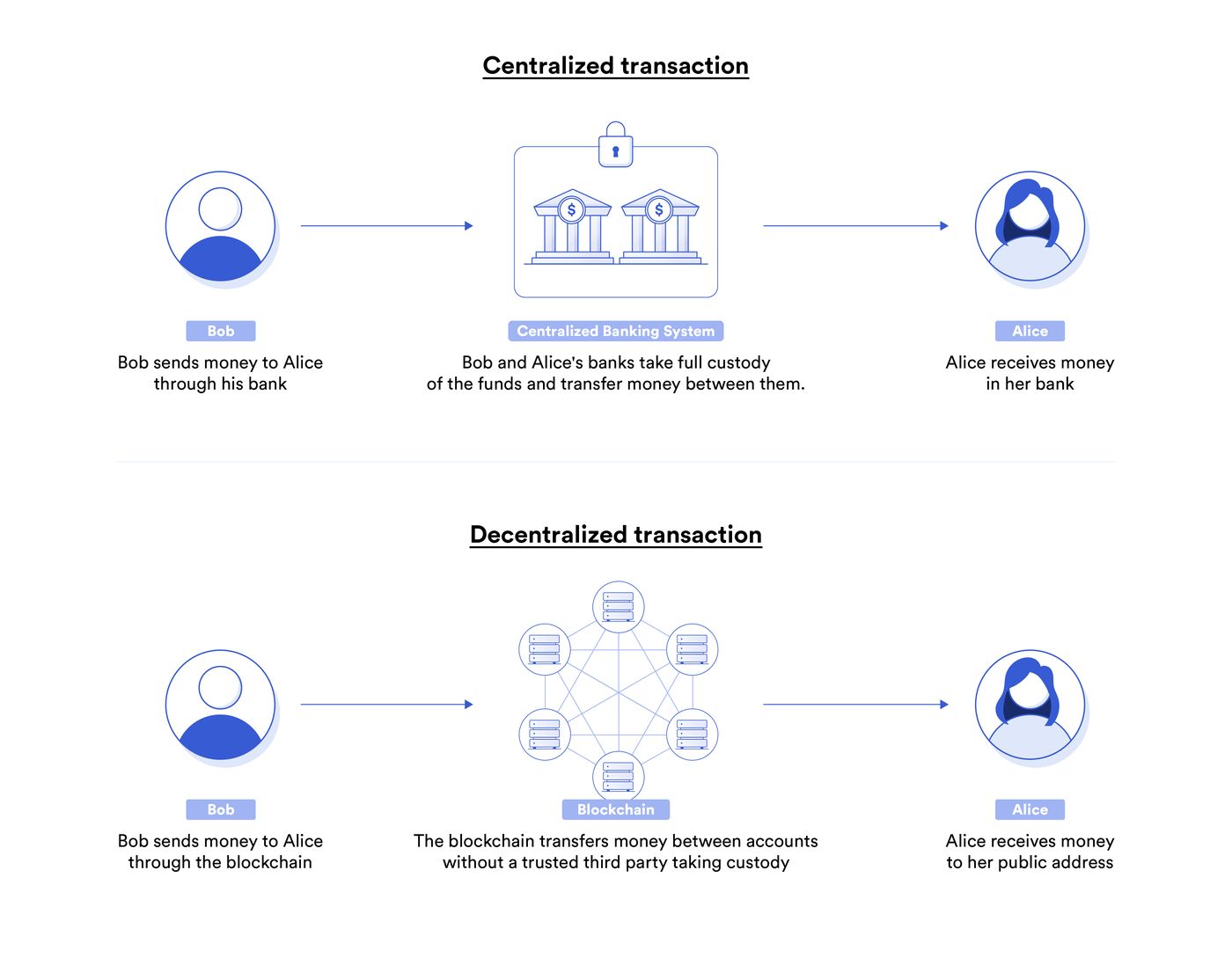
Cryptocurrencies are digital assets that operate on decentralized networks using blockchain technology. They are 100% virtual with no physical form and are secured by cryptography, a method for storing and transmitting data securely. Unlike the Canadian dollar, crypto assets are not issued by governments or central banks, meaning they are not legal tender in Canada. The most prominent example of this system is Bitcoin, whose transaction model illustrates how the broader technology functions.
With Bitcoin and other crypto assets, each transaction is recorded in a shared digital ledger known as the blockchain. This ledger is made up of a list of records called blocks, with each block containing a cryptographic hash of the previous block, a timestamp, and transaction data. When a purchase is made, that transaction is recorded in a block which is then replicated across many computers in the network. Recording a transaction across multiple devices increases data security exponentially by creating a transparent and tamper-resistant record.
Following Bitcoin, many other cryptocurrencies and tokens emerged, commonly referred to as altcoins. Ethereum is one of the most prominent examples of an altcoin. Another category is stablecoins, which are designed to maintain a more stable value by referencing external assets such as fiat currencies. For example, USD Coin is intended to track the value of the U.S. dollar, though stablecoins may still fluctuate and may not always maintain their intended peg.
History and Major Price Milestones
Bitcoin was the first cryptocurrency to gain widespread recognition, creating the foundation for the entire asset class. Its creation introduced the concept of a decentralized digital currency operating on a blockchain. The market has since expanded dramatically, with thousands of different crypto assets now in existence. The value of these assets has experienced extreme volatility throughout their history, driven by factors like adoption news, regulatory developments, and market speculation.
The total market capitalization of all cryptocurrencies represents the aggregate value of the entire sector. This figure fluctuates constantly based on the prices of individual assets like Bitcoin and Ethereum. Major price milestones are often tied to cycles of public interest, institutional adoption, and broader economic conditions. For instance, announcements of major companies accepting a specific cryptocurrency as payment have historically caused its value to rise, while negative news or regulatory crackdowns can trigger sharp declines.
It is crucial to understand that the prices of crypto assets are highly speculative. Unlike commodities such as gold or silver, there is no widely agreed-upon fundamental method to determine their intrinsic worth. Their prices are significantly influenced by the news cycle and market sentiment. This speculative nature and resulting volatility make them a risky proposition, as traditional fundamental analysis cannot be readily applied to assets that are neither commodities nor currencies in the traditional sense.
How Canadians Buy and Store Cryptocurrency
Canadians primarily purchase crypto assets from specialized online platforms known as cryptocurrency exchanges or crypto asset trading platforms. These platforms act as intermediaries where users can buy, sell, and sometimes stake digital assets using Canadian dollars or other currencies. Some platforms, like those offered by Wealthsimple Crypto, allow for commission-free trading when using CAD, though trading in USD may be subject to a 1.5% foreign exchange fee plus a variable corporate exchange fee. To avoid these fees, some platforms recommend users upgrade to a USD account, which may involve a monthly cost.
Once purchased, cryptocurrencies need to be stored securely. There are two primary methods: custodial storage through the exchange or self-custody using a private wallet. On regulated platforms, the majority of client coins are often held in offline cold storage with custodial partners, with the remainder in insured hot wallets. For example, some custodial partners maintain over $75 million in cold storage insurance coverage each. It is important to note that crypto assets held in an account with a platform are not protected by the Canadian Investor Protection Fund or the Canadian Deposit Insurance Corporation.
Beyond simple buying and selling, many platforms offer additional features. Crypto swaps allow users to directly convert one eligible cryptocurrency for another in a single trade, paying only one fee. Staking is another common feature, which lets users earn passive rewards in the form of more crypto by contributing to the proof-of-stake network of certain assets like Ethereum or Solana. Platforms typically charge a fee equal to a percentage of the staking rewards received, and the yields can vary based on network conditions.
- Purchase from a registered crypto asset trading platform using CAD.
- Assets are typically stored in a combination of cold (offline) and hot (online) wallets by the platform.
- Use features like swaps to exchange one crypto for another directly.
- Participate in staking to earn rewards on certain proof-of-stake cryptocurrencies.
- Be aware that platform-held crypto is not covered by CDIC or CIPF protection.

Canadian Regulations and Platform Registration
The Canadian cryptocurrency market is overseen by provincial and territorial securities regulators collectively known as the Canadian Securities Administrators. The Ontario Securities Commission is a principal regulator for many platforms. These regulators require crypto asset trading platforms that offer crypto contracts or custody to Canadians to register or obtain exemptive relief. This regulatory framework is designed to address investor protection concerns and create a level playing field, though it does not eliminate all risks.
Platforms that have received exemptive relief are subject to specific terms and conditions, which are detailed in individual decisions published by regulators. The CSA initially used an interim approach involving pre-registration undertakings for unregistered platforms, but as of August 2024, new platforms must apply directly to the Canadian Investment Regulatory Organization. Unregistered platforms operating in Ontario that are non-compliant may be listed on the OSC investor warnings page and face regulatory action. Regulators also provide guidance on advertising and marketing by crypto platforms, as false or misleading advertising raises concerns about a firm's fitness for registration.
Canadians are reminded that holding a crypto asset on a platform does not offer the same protections as holding regulated bank deposits. Crypto assets are not protected by the Canadian Investor Protection Fund or the Canadian Deposit Insurance Corporation. Even platforms that are registered or have provided undertakings to regulators are not endorsed or approved as safe by those authorities. Investors should always verify the registration status of a platform before using it by consulting the list of platforms authorized by the Canadian Securities Administrators. It is important to learn the fundamentals of crypto assets and their risks before investing.
| Platform Status | Key Implication for Investors |
|---|---|
| Registered or Exemptive Relief | Subject to regulatory terms and conditions. Must follow securities law. |
| Pre-Registration Undertaking (Historical) | Interim compliance with investor protection rules while under review. |
| Unregistered & Non-compliant | May face enforcement action. Higher risk for investors. |
Tax Rules for Cryptocurrency in Canada
The Canada Revenue Agency treats cryptocurrency as a commodity for tax purposes. This means that buying and selling crypto assets can trigger taxable events, similar to trading stocks or other capital property. When you dispose of a cryptocurrency by selling it, trading it for another asset, or using it to purchase goods or services, you may realize a capital gain or loss. This gain or loss must be reported on your annual income tax return. Conversely, capital losses can be used to offset capital gains from other sources, reducing your overall tax liability. It is the taxpayer's responsibility to keep detailed records of all cryptocurrency transactions, including dates, amounts in Canadian dollars, and the purpose of each transaction.
Other crypto-related activities are also taxable. Staking rewards are considered income at the fair market value of the crypto received at the time it is earned. Similarly, if you receive cryptocurrency as payment for goods or services, you must report the value as business or employment income. Given the complexity and evolving nature of crypto taxation, consulting with a tax professional who understands digital assets is highly recommended for Canadian investors.

Major Risks and Investor Considerations
Cryptocurrency investments carry a unique and high level of risk that all Canadians should understand before participating. The most prominent risk is extreme price volatility. The value of crypto assets can swing dramatically based on speculation, hype, and the news cycle, making them a risky investment. Unlike traditional markets, there is no designated authority to stabilize or backstop the value of these assets, and their worth is not tied to any underlying government or commodity.
Another critical risk is the lack of comprehensive investor protection. Crypto assets purchased and held on a trading platform are not protected by the Canadian Investor Protection Fund, the Canadian Deposit Insurance Corporation, or any other official investor protection insurance scheme. If a platform is hacked, becomes insolvent, or engages in fraud, investors may lose their funds with little recourse. Several high-profile platform failures and bankruptcies, such as Celsius and FTX, have resulted in billions in investor losses.
The market also faces security threats and its use in illicit activities. The pseudonymous nature of transactions has made cryptocurrency a tool for money laundering and fraud, attracting criminal organizations. Furthermore, the security of individual wallets and exchanges is a constant concern, as hacks and thefts are not uncommon. Investors must also consider the environmental impact of some cryptocurrencies. Large-scale mining operations have been criticized for their energy consumption and are estimated to be responsible for 0.1% of world greenhouse gas emissions.
- High volatility makes prices speculative and prone to large swings.
- No CDIC or CIPF protection for assets held on crypto platforms.
- Risk of platform insolvency, hack, or fraud with limited recourse.
- Potential use in money laundering and other criminal finance.
- Proof-of-work mining has a notable environmental footprint.
The Future and Evolving Market in Canada
The Canadian cryptocurrency market is dynamic and continues to evolve alongside technological advancements and regulatory developments. Market analysts project growth, with one report estimating the market size reached $55,002.2 million in 2025 and is projected to reach $1,25846.5 million by 2034 at a compound annual growth rate of 9.34%. Regulatory clarity is gradually increasing, with frameworks being established for trading platforms, stablecoins, and advertising practices. This evolution aims to balance innovation with consumer protection, though the inherent risks of the asset class remain.
New financial products, such as cryptocurrency exchange-traded funds, are becoming available to Canadian investors through traditional investment accounts. These ETFs track the price of one or more cryptocurrencies, allowing exposure without direct ownership of the digital assets. The development of these products reflects the growing integration of crypto into the broader financial landscape. However, like the underlying assets, Crypto ETF prices fluctuate daily and carry significant risk.
The long-term role of cryptocurrency in Canada's economy is still being defined. While they are not legal tender and are unlikely to replace the Canadian dollar, they may find niches in areas like cross-border payments, decentralized finance, and digital asset ownership. For Canadians, staying informed through official regulatory sources and understanding that this is a complex, high-risk investment space is paramount. The market's future will be shaped by technology, regulation, and global adoption trends.
Frequently asked questions
Are Canadian cryptocurrency exchanges safe?
Registered Canadian cryptocurrency exchanges are subject to regulatory standards aimed at enhancing safety, but safety is not guaranteed. They must adhere to rules on custody, advertising, and operations. However, crypto assets are inherently risky and not covered by traditional deposit insurance. Safety also depends on the platform's own security measures, such as keeping most funds in offline cold storage with insurance coverage.
Is cryptocurrency legal in Canada?
Cryptocurrency is legal to buy, sell, and hold in Canada, but it is not legal tender. This means businesses are not obligated to accept it as payment, unlike the Canadian dollar. The market is regulated by provincial securities commissions like the Ontario Securities Commission. Crypto asset trading platforms must register or obtain exemptive relief to offer services to Canadian investors. These platforms are subject to specific terms and conditions for investor protection. However, crypto assets themselves carry significant risk and are not backed by any government authority.
How do I buy cryptocurrency safely in Canada?
To buy cryptocurrency safely in Canada, use a platform registered with or having exemptive relief from the Canadian Securities Administrators. Examples include Wealthsimple Crypto and Bitbuy, which operate under regulatory oversight. You should verify a platform's status on the OSC or CSA website before investing. Be aware that crypto assets held on these platforms are not protected by the Canadian Investor Protection Fund or the Canadian Deposit Insurance Corporation. Trading in Canadian dollars on some platforms avoids commission fees, but trading in USD may incur a foreign exchange fee.
Do I have to pay taxes on cryptocurrency in Canada?
Yes, you must pay taxes on cryptocurrency in Canada as the Canada Revenue Agency treats it as a commodity. Selling crypto for a profit, trading it for another asset, or using it to purchase goods triggers a taxable capital gain. Other activities like earning staking rewards are also considered taxable income at their fair market value when received. It is essential to keep detailed records of all your cryptocurrency transactions for accurate tax reporting.
What is the biggest risk of investing in cryptocurrency?
The biggest risks are extreme price volatility and the lack of investor protection. Crypto asset prices are highly speculative and can swing wildly based on news and hype. Furthermore, crypto assets are not legal tender and are unregulated, meaning there is no designated authority to oversee the asset class. If you fall victim to a hack or a platform insolvency, you have very limited recourse for recovery. Past failures of crypto lenders like Celsius and FTX have resulted in billions in investor losses, highlighting these systemic risks.
What is the difference between Bitcoin and Ethereum?
Bitcoin was the first cryptocurrency, designed primarily as a decentralized digital currency. Ethereum is a prominent altcoin that followed Bitcoin. The key difference is that Ethereum introduced a programmable blockchain. This allows developers to build decentralized applications and smart contracts on its network. Therefore, Ethereum's functionality expands beyond simple peer to peer payments to enable more complex financial and computational functions. Both operate on decentralized networks, but Ethereum's design supports a broader ecosystem of digital assets and applications.
Sources and further reading
- What is Cryptocurrency? | TD Direct Investing td.com
- Cryptocurrency Prices in Canada, Market Cap & Live ... kraken.com
- Buy & sell crypto on Canada's first regulated platform wealthsimple.com
- Crypto businesses | OSC osc.ca
- 7 Best Crypto Exchanges in Canada, May 2026 bitbuy.ca
This article explains how things work and is not financial, tax or legal advice. Rules, limits and rates change, so check the current figures with the Canada Revenue Agency, your province or your financial institution before you act.