The simple interest formula is a foundational financial calculation used to determine the cost of borrowing or the return on an investment based solely on the original principal amount. It is expressed as Interest = Principal × Rate × Time. In Canada, this formula is applied in various contexts, from certain short-term loans to basic investment calculations, providing a straightforward method for understanding interest obligations or earnings. Understanding how simple interest works is crucial for Canadians to compare financial products and manage personal debt or savings effectively.
Definition and Core Mechanics of Simple Interest
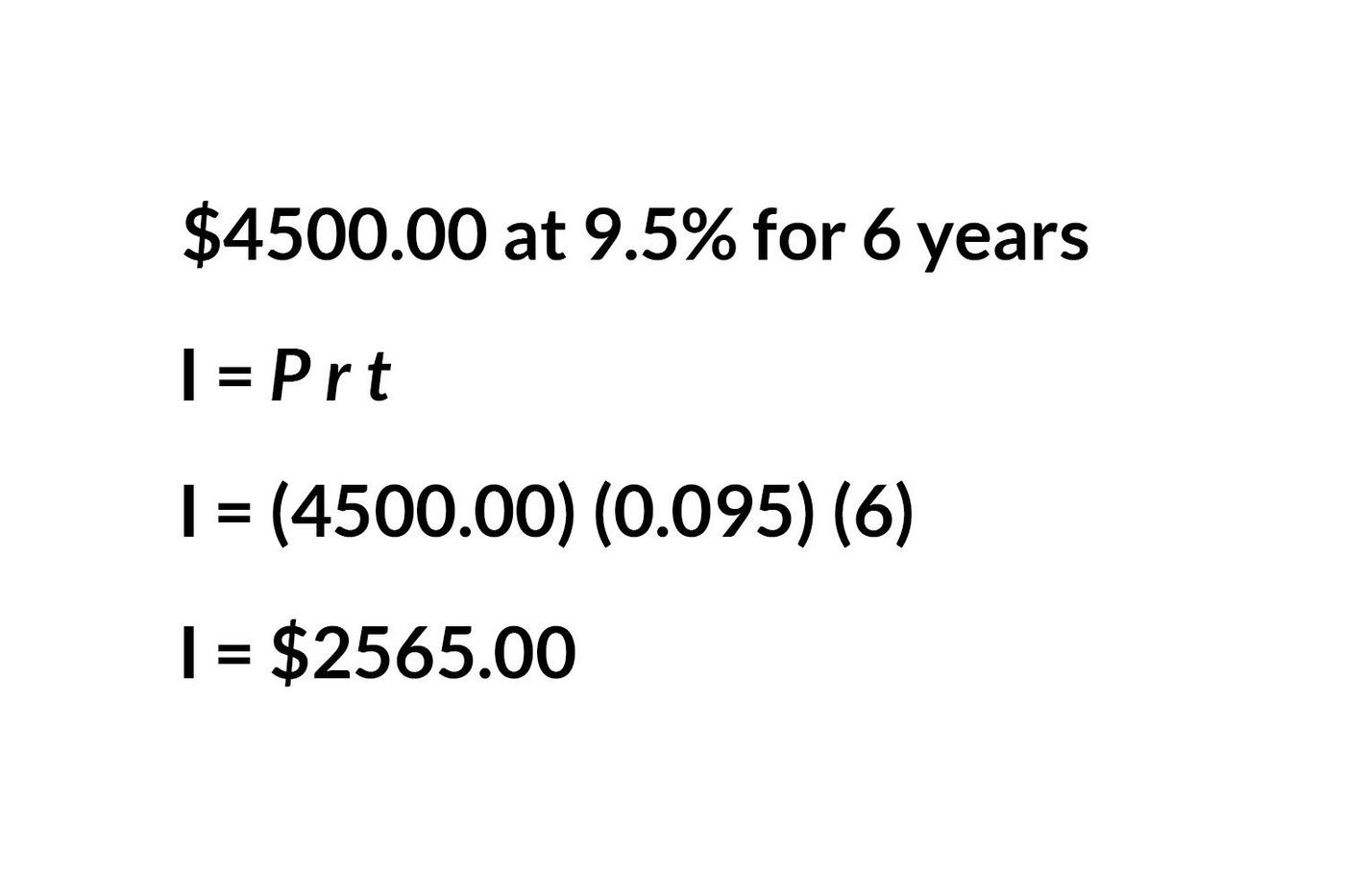
Simple interest is a method of calculating interest where the charge is applied only to the initial sum of money borrowed or deposited, known as the principal. The calculation does not account for any interest that may have accumulated in previous periods, meaning the interest amount remains fixed for each period based on the original balance. This is fundamentally different from compound interest, where interest is calculated on the principal plus any previously earned interest. The standard formula for simple interest is expressed as I = P × r × t, where I represents the total interest, P is the principal amount, r is the annual interest rate expressed as a decimal, and t is the time period in years. For instance, a $10,000 loan at a 5% annual simple interest rate over five years would generate $500 in interest each year, totaling $2,500 over the loan term.
The time variable 't' in the formula must align with the period used for the interest rate. If the rate is an annual percentage, the time must be expressed in years or a fraction of a year. This often requires conversions, such as expressing a 6-month loan period as 0.5 years. The formula can be easily manipulated to solve for any of the four variables if the other three are known, making it a versatile tool for financial planning. Common rearrangements include solving for the principal (P = I / (r × t)), the interest rate (r = I / (P × t)), or the time period (t = I / (P × r)). These variations allow individuals to determine how much they need to invest, what rate they are effectively paying, or how long it will take to reach a financial goal under a simple interest structure.
Historical Context and Mathematical Foundation
The concept of interest, as a charge for borrowed money, has ancient origins, but the formalization of the simple interest calculation provided a clear, linear model for financial transactions. Its mathematical simplicity made it a standard for basic lending and borrowing agreements before the widespread adoption of compounding methods. The formula's structure reflects a direct proportional relationship where interest accrues in a straight line over time, which is why it is sometimes called straight line interest. This linear growth is predictable and easy to project, which historically made it preferable for short-term agreements and contracts where compounding complexities were unnecessary.
In educational contexts, such as the Grade 9 math curriculum in Canada, the simple interest formula serves as an introductory concept to financial literacy before students learn about exponential growth in compound interest. The formula is taught using notations like I = Prn or I = PRT, where 'n' or 'T' represents the number of time periods. Mastering this formula provides the foundational skills needed to later understand more complex financial instruments and the powerful effects of compounding. The enduring use of the simple interest formula in textbooks and basic financial agreements underscores its role as a fundamental building block in both mathematics and personal finance education.
Application in the Canadian Financial Landscape
In Canada, the simple interest formula is applied in specific financial products and scenarios, though compound interest is more common for most banking products. Simple interest is often found in certain short-term personal loans, some auto loans, and bonds that pay a fixed interest coupon. For borrowers, simple interest is advantageous as it results in a lower total interest cost over the life of a loan compared to a compound interest structure on the same principal and rate. This makes it a critical concept for Canadians to understand when comparing loan options and calculating the true cost of debt.
As an investor or saver, however, simple interest is less favourable because it does not allow earnings to be reinvested to generate their own returns. Most Canadian checking and savings accounts, as well as credit cards, operate using compound interest. Investments like Guaranteed Investment Certificates (GICs) typically calculate interest on the original deposit, but the interest is usually compounded annually, with the total paid at maturity. Understanding this distinction helps Canadians choose products aligned with their goals, whether they are borrowing for a car or saving for retirement. The formula also appears in basic financial calculators provided by Canadian banks, allowing users to model loan repayments or investment growth under a simple interest assumption before considering more realistic compound scenarios.
- Short-term personal and auto loans may use simple interest.
- Bonds often pay a simple interest coupon to holders.
- Basic savings calculations and educational tools use the formula.
- Most everyday banking products (savings accounts, credit cards) use compound interest.
- Financial calculators from institutions like RBC incorporate simple interest models.
Comparative Analysis: Simple vs. Compound Interest
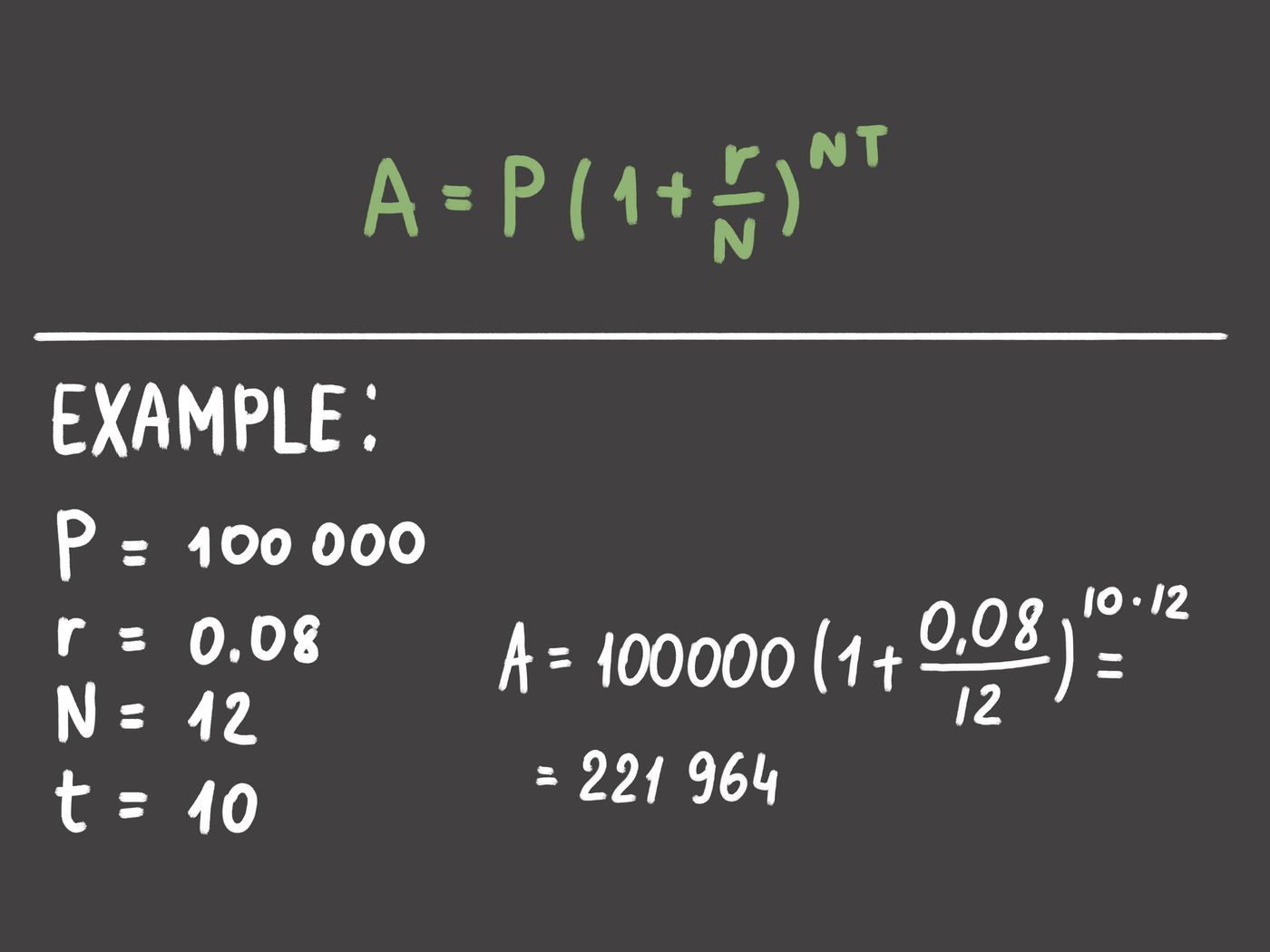
The fundamental difference between simple and compound interest lies in the base amount used for the interest calculation. Simple interest is calculated only on the original principal throughout the loan or investment term. In contrast, compound interest is calculated on the principal plus any accumulated interest from previous periods, leading to exponential growth or cost. For a borrower, this means a loan with compound interest will be more expensive over time than a simple interest loan with the same nominal rate and term. For an investor, compound interest generates significantly higher returns over the long term, as earnings are continually reinvested.
The compound interest formula is A = P(1 + r/n)^(nt), where A is the ending amount, P is the principal, r is the annual interest rate, n is the number of compounding periods per year, and t is the time in years. The more frequently interest compounds, the greater the total interest accrued. For example, $5,000 invested at 5% compounded monthly for 4 years grows to about $6,104.48. This comparative analysis is crucial for Canadians managing record levels of consumer debt, which reached $2.5 trillion in outstanding debt as of 2025, much of which accrues compound interest at high rates.
Practical Calculation and Examples
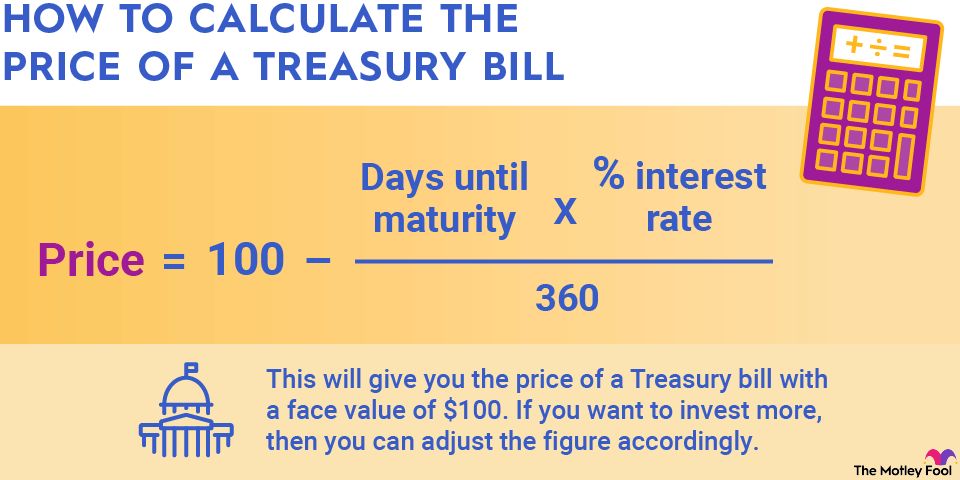
Applying the simple interest formula requires careful attention to the units of the interest rate and the time period. The rate is often given as an annual percentage (p.a.), so time must be expressed in years. For a loan of $2,000 at a 6% simple interest rate for 3 years, the calculation is straightforward: Interest = $2,000 × 0.06 × 3 = $360. The total amount payable would be the principal plus interest, or $2,360. This linear calculation makes it easy to determine the cost per year, month, or day by adjusting the time variable.
More complex scenarios involve solving for a different variable. For instance, to find the principal needed to earn a specific amount of interest, the formula is rearranged to P = I / (r × t). If an investment earns $1174.20 in simple interest at a 6% annual rate, and the time is unknown, the formula t = I / (P × r) can be used. With a principal of $1957, the time required is calculated as $1174.20 / ($1957 × 0.06), which equals approximately 10 years. These practical applications demonstrate the formula's utility in planning loans, investments, and savings goals within a Canadian financial context.
| Scenario | Principal (P) | Rate (r) | Time (t) | Simple Interest (I) | Total Amount (A) |
|---|---|---|---|---|---|
| Loan Example | $10,000 | 5% p.a. | 5 years | $2,500 | $12,500 |
| Investment Example | $2,000 | 6% p.a. | 3 years | $360 | $2,360 |
| Monthly Rate Example | $10,000 | 5% per month | 12 months | $6,000 | $16,000 |
Financial Implications and Risks for Canadians
For Canadian borrowers, the primary benefit of a simple interest loan is cost predictability and lower total interest payments compared to compound interest structures. This can make certain loans, like some auto financing, more manageable over their term. However, the risk lies in misunderstanding the terms. Many common debt instruments, especially credit cards, use compound interest, which can cause balances to grow rapidly if only minimum payments are made. With over 32.3 million Canadians holding at least one open credit product, comprehending the type of interest applied is essential to avoid debt traps.
For savers and investors, the drawback of simple interest is the opportunity cost of forgone growth. In an environment where compound interest can help savings outpace inflation, products offering only simple interest may not be optimal for long term goals like retirement. The key is to read the fine print on any financial product to identify whether interest is simple or compound, and how frequently it is calculated. Using online calculators to project total costs or returns under both models is a prudent step before committing to any significant loan or investment. This knowledge empowers Canadians to make informed decisions that align with their financial objectives and risk tolerance.
Frequently asked questions
What is the difference between simple and compound interest?
Simple interest is calculated only on the original principal amount throughout the term. Compound interest is calculated on the principal plus any previously accumulated interest, leading to exponential growth. As a borrower, compound interest costs more over time. As an investor, it generates higher returns.
What is the simple interest formula?
The simple interest formula is I = P × r × t. In this formula, I represents the total interest amount, P is the principal amount initially borrowed or invested, r is the annual interest rate expressed as a decimal, and t is the time period measured in years. This calculation yields interest based only on the original principal sum. It does not account for any interest that may have been previously earned or accrued, which distinguishes it from compound interest. The formula can also be written as I = P R T or I = P r n, where n represents the number of periods.
How does simple interest work in Canada?
In Canada, simple interest functions as a cost for borrowing or a return for lending, calculated only on the initial principal amount. It is often set as a fixed percentage for the loan's duration and does not compound. This method is advantageous for borrowers as it results in lower total payments compared to compound interest. Simple interest can be found in certain financial products like some short term loans or bonds paying an interest coupon. Conversely, most common banking products like savings accounts and credit cards utilize compound interest, which accrues on both principal and accumulated interest.
How do I calculate simple interest if the time is in months?
To calculate simple interest when the time is given in months, you must first convert the time period into years. This is done by dividing the number of months by twelve. For instance, a time period of 6 months becomes t = 0.5 years in the formula I = P × r × t. It is crucial to ensure the interest rate is an annual rate to maintain consistent units. Alternatively, the formula I = P r n can be used where n is the number of periods, allowing you to input a monthly interest rate and the number of months directly for the calculation.
Is simple interest good for saving money?
Simple interest is generally not advantageous for long term saving or investing goals. This is because it only applies to the original principal and does not allow earnings to be reinvested to generate their own returns, missing out on potential growth. For savers and investors, compound interest is preferable as it accelerates growth by applying interest to both the initial sum and any accumulated interest. Most Canadian savings vehicles, such as savings accounts and Guaranteed Investment Certificates (GICs), use compound interest to help funds grow more effectively over time.
Where can I use a simple interest calculator in Canada?
You can use a simple interest calculator on the websites of many Canadian financial institutions and personal finance platforms. These online tools are designed to compute interest based on the simple interest formula by allowing you to input the principal amount, the annual interest rate, and the time period. They quickly determine the interest owed or earned and the total repayment amount. These calculators are useful for comparing loan options or projecting the growth of investments that use simple interest, providing clear financial projections.
Sources and further reading
- Interest (Wikipedia) en.wikipedia.org
- Simple Interest Calculator calculator.net
- Investment Calculator bankofcanada.ca
- Compound Interest Calculator ratehub.ca
- 10.01 Review: Simple interest | Grade 9 Math mathspace.co
- Compound vs. simple interest: What to know before saving ... newleafdebt.ca
This article explains how things work and is not financial, tax or legal advice. Rules, limits and rates change, so check the current figures with the Canada Revenue Agency, your province or your financial institution before you act.