Open banking, known in Canada as consumer-driven banking, is a regulated framework that allows individuals and businesses to securely share their financial data with accredited third-party service providers. This system uses application programming interfaces (APIs) to enable data sharing with explicit customer consent, moving away from less secure methods like screen scraping. The federal government is implementing this framework through the Consumer-Driven Banking Act, with oversight from the Bank of Canada and the Financial Consumer Agency of Canada. For Canadians, open banking promises greater control over personal financial data, fostering competition, innovation, and the development of new financial tools and services.
What Open Banking Is and How It Works
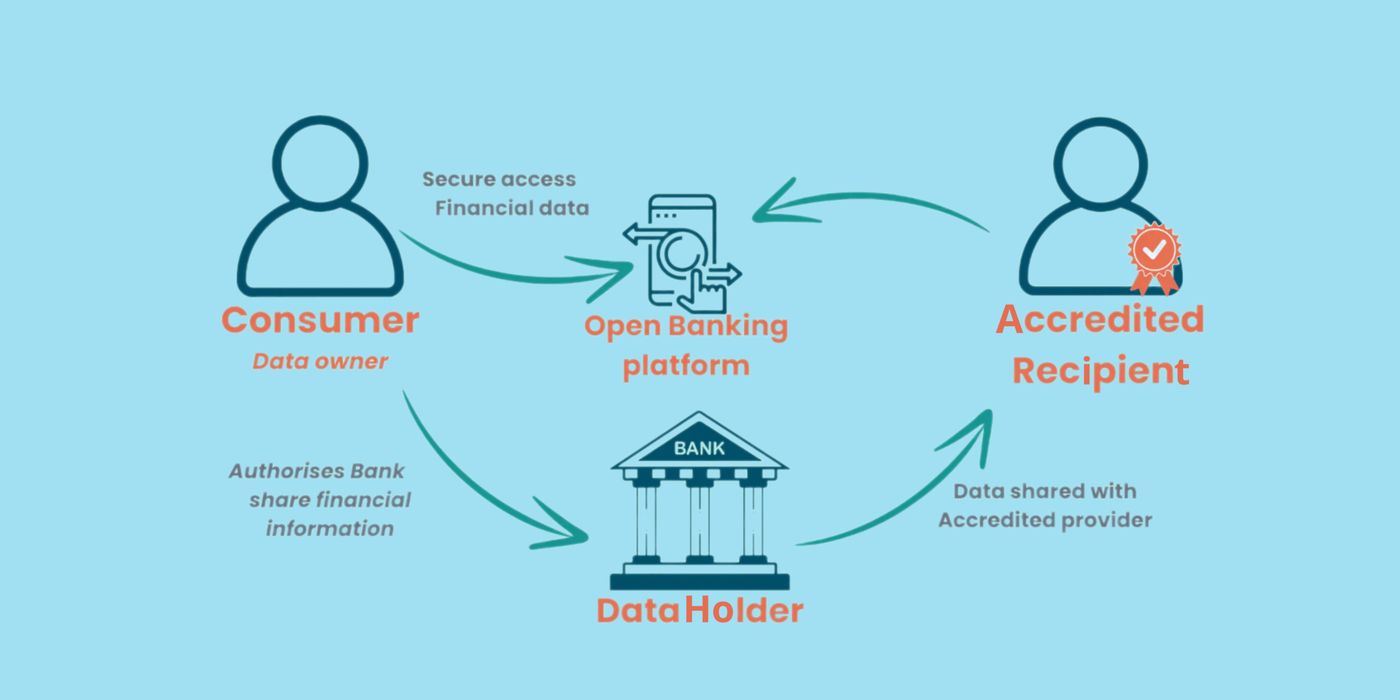
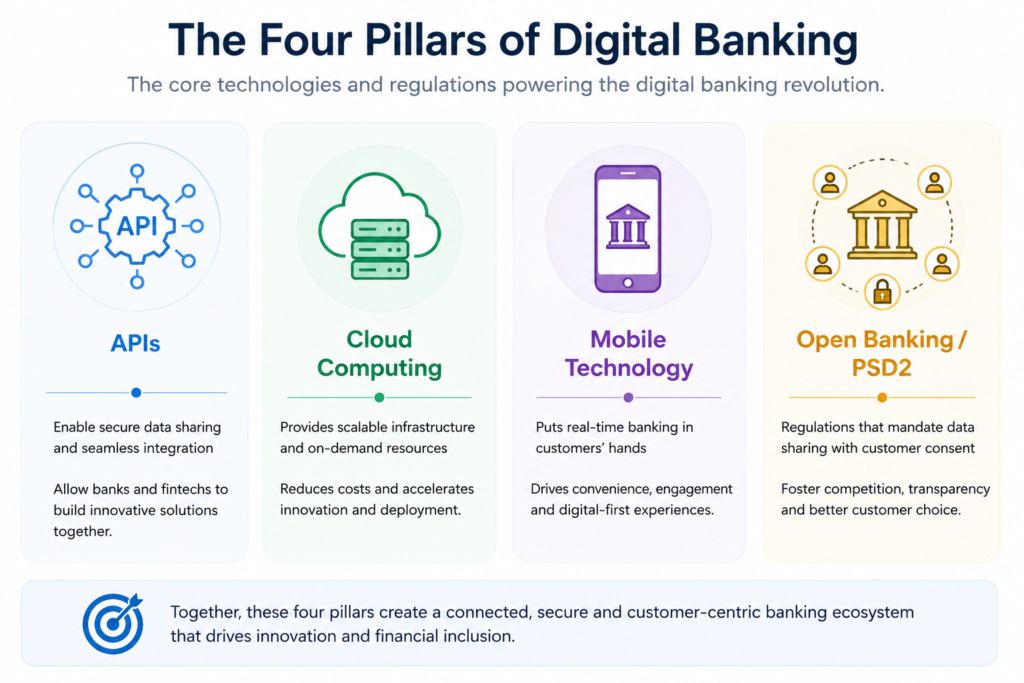
Open banking is a financial services framework that permits the secure electronic sharing of customer financial data between banks and authorised third-party providers. This sharing is facilitated through standardised application programming interfaces (APIs), which are sets of protocols and tools for building software. Traditionally, banks have kept customer financial data within their own closed systems. Open banking changes this by allowing customers to provide explicit consent for their data to be shared with other financial organisations such as payment providers, lenders, insurance companies, and financial technology firms. The core technical implementation involves banks exposing dedicated APIs that follow common specifications for authentication, authorisation, data formats, and security. These APIs enable accredited third parties to access specific account information or, in more advanced phases, to initiate payments on behalf of the user. The system manages consent lifecycles and enforces strict access scopes to ensure customer data is protected and used only for authorised purposes.
The History and Global Adoption of Open Banking
The concept of open banking was first explored in 2003 as part of the broader open innovation movement. Interest grew with the advent of internet banking and online technology, leading to early attempts at account aggregation by technology companies. The first major regulatory move occurred in 2015 when the European Parliament adopted the Revised Payment Services Directive, known as PSD2. This directive forced banks to provide API access to customer data for licensed third parties, aiming to promote innovative online and mobile payments. Between 2015 and 2021, numerous countries enacted laws to mandate open banking. In the United Kingdom, the Competition and Markets Authority issued a ruling in 2016 requiring the nine largest banks to allow licensed startups direct access to customer data, with enforcement beginning in 2018. Australia launched its open banking project as part of the Consumer Data Rights initiative in July 2019. Brazil implemented a mandatory open banking model starting in 2021, which has grown to become one of the largest ecosystems globally. By 2025, Canada risked being the last G7 nation to implement a comprehensive open banking framework.
Key global open banking implementations include the European Union's Payment Services Directive known as PSD2, which was adopted in 2015. In the United Kingdom, the Competition and Markets Authority required the nine biggest banks to allow licensed startups direct access to their data starting in 2018. Australia launched an open banking project as part of its Consumer Data Rights project in July 2019. Nigeria's open banking evolved into a regulatory initiative with the Central Bank of Nigeria releasing regulations in 2021. Brazil deployed its mandatory open banking model, which became the largest open finance ecosystem in the world by 2026. Mexico was the first Latin American country to implement open banking legislation with its Fintech Law of 2018.
- European Union (2015): PSD2 directive adopted, mandating API access for payment account providers.
- United Kingdom (2018): Enforcement began for the nine largest banks under rules created by Open Banking Limited.
- Australia (2019): Open banking launched on 1 July as part of the Consumer Data Rights project.
- Brazil (2021): Phased mandatory implementation began, surpassing 100 million connected accounts by 2026.
- Mexico (2018): First Latin American country to implement open banking legislation via the Fintech Law.
- United States (2021): Rulemaking began for Section 1033 of the Dodd-Frank Act to support open banking.
Canada's Path to Consumer-Driven Banking
Canada's journey toward open banking began with a consultation paper released by the Department of Finance in August 2017. An Advisory Committee on Open Banking was launched in September 2018, followed by a public consultation in January 2019 that received over 100 written responses. Subsequent legislation, including the Retail Payment Activities Act and the Consumer Privacy Protection Act, was enacted with open banking in mind but lacked specific provisions for it. The federal government released policy statements on consumer-driven banking in 2023 and 2024, with the 2024 statement aiming for implementation in 2026. The Consumer-Driven Banking Act (CDBA) was introduced in the 2024 federal budget. On June 27, 2025, the government released draft Consumer-Driven Banking Regulations for a 60-day public consultation period ending on August 26, 2026. The government has affirmed its intention to implement open banking at the earliest opportunity, with a phased rollout expected around 2027. The framework is designed to apply to a broad range of entities including scheduled banks, federal and provincial financial institutions, registered payment service providers, and accredited third-party service providers.
The development of Canada's framework has been slower than in peer nations. As of 2025, an estimated 9 million Canadians were already sharing banking details through the insecure method of screen scraping, which involves providing login credentials to third-party apps that then scrape data from online banking portals. The new regulated framework aims to replace this practice with secure, API-based data sharing. The government believes that spending an estimated $457.7 million on compliance for the framework could bring $13.2 billion to the economy over approximately 10 years. These benefit estimates are largely borrowed from United Kingdom data, while the costs are modelled on Canada's proposed rules.

How the Canadian Framework Will Operate
The Canadian consumer-driven banking framework establishes a regulated system for data sharing centred on explicit customer consent and secure APIs. The Bank of Canada is responsible for administering the accreditation process, ensuring only entities meeting prescribed criteria can participate. The Financial Consumer Agency of Canada is tasked with supervising participants to protect consumers and the financial system. Under the Act, at a consumer's request, participating entities are required to share specific data. This includes consumer profile data from account opening, account data like balances and transactions, and product data related to services offered. Data sharing will be free of charge to the consumer. The framework outlines distinct accreditation streams for different types of applicant entities, with an accreditation fee of C$2,500, adjusted annually for inflation. Banks listed in the schedule to the Act are not required to undergo accreditation but must participate. Other institutions can choose to opt in.
The rollout is planned in phases. Phase 1 focuses on read access to data. Implementation will be staggered by account type, starting with deposit and payment accounts, followed by lending accounts, and then registered and non-registered investment accounts. The full set of Phase 1 rules is expected to be in force within 12 months of the final regulations being published. Phase 2, which is not yet drafted, will introduce write access, enabling functions like payment initiation and account switching. There is a target to legislate write access by mid-2027, but no draft regulations exist as of 2025. Participating entities will have specific duties under the framework, including displaying a sign indicating their participation, notifying the Bank of Canada of material changes, and maintaining detailed records. The Minister of Finance also has authority to review accreditation applications on national security grounds and can issue directives to refuse accreditation or impose conditions.
Potential Benefits and Economic Rationale
Proponents argue that open banking provides greater transparency and data control for account holders, promoting competition, innovation, and customer empowerment in the financial sector. In Canada, the framework is intended to give consumers clearer choices and better tools to manage their finances. It could enable new services like advanced budgeting tools, smarter credit assessments, affordability checks, and subscription tracking. For the approximately 35 percent of Canadians who are credit invisible, including young adults, newcomers, and low-income households, access to alternative financial data could facilitate access to mainstream financial services. The framework is also designed to foster growth through competition by allowing fintechs and payment service providers to compete with incumbent banks using consumer-consented data. The government's economic modelling suggests significant potential benefits, with the framework expected to contribute billions to the economy over a decade. The fintech sector stands to benefit from lower barriers to entry, increased investment, and spurred innovation, helping Canada remain globally competitive in financial services.
Risks, Criticisms, and Challenges
Opponents of open banking highlight several risks, including greater security vulnerabilities and potential exploitation of consumers. By opening APIs to third-party companies, the system creates new targets for hackers, and malicious actors may use phishing scams to trick customers. There are privacy concerns regarding how shared data might be used for aggressive marketing or to offer customers more expensive products based on their financial profile. A significant criticism is the risk of digital and financial exclusion, where only tech-savvy individuals benefit, potentially leaving behind those with low incomes or limited digital access. In the Canadian context, specific challenges remain. The phased approach means the most compelling use cases, like payment initiation, are delayed until Phase 2, which lacks a defined launch date. Without setting hard deadlines for the full framework or a ban on screen scraping, there is a risk the scheme loses momentum. Furthermore, the liability framework for data breaches or scams needs clear rules, a gap that currently exists with screen scraping. Some observers argue Canada's implementation timeline is far too slow, leaving consumers with higher prices and fewer choices compared to other nations.
Comparison with Other Major Jurisdictions
Canada's proposed framework can be compared to systems already operating in other countries. The United Kingdom's model, launched in 2018, is often cited as a global leader. It started with data sharing and later added payment initiation, which became a major driver of growth. By 2025, the UK had 16.5 million user connections and 351 million open banking payments. The European Union's PSD2 directive, effective from 2019, mandates open banking for all payment account providers across the bloc, creating a large, standardised market. Australia's Consumer Data Right, launched in 2019, extends beyond banking to sectors like energy and telecommunications. Brazil's mandatory model, implemented in phases from 2021, quickly scaled to over 100 million connected accounts. Canada's framework shares similarities with these models, such as using APIs and requiring customer consent, but it is launching later and with a narrower initial scope, focusing only on read access for financial data. A key difference is that Canada plans to adopt a single API standard supervised by the Bank of Canada, whereas other regions may have multiple competing standards.
| Jurisdiction | Key Legislation/Initiative | Launch Year | Notable Feature |
|---|---|---|---|
| European Union | Revised Payment Services Directive (PSD2) | 2015 (adopted), 2019 (enforced) | Mandatory for all payment account providers in the EU. |
| United Kingdom | CMA Ruling, Open Banking Limited | 2018 | Payments-led growth. 351 million payments in 2025. |
| Australia | Consumer Data Right (CDR) | 2019 | Extends data-sharing rights to non-financial sectors. |
| Brazil | Central Bank of Brazil Regulation | 2021 (phased) | Largest open finance ecosystem by connected accounts. |
| Canada | Consumer-Driven Banking Act (CDBA) | Target 2026/2027 (phased) | Single API standard, BoC supervision, free for consumers. |
The Future of Open Banking in Canada
The successful implementation of Canada's consumer-driven banking framework hinges on several factors. Adopting or adapting proven international technical standards for APIs could accelerate progress while domestic policy foundations are solidified. Clear and timely regulations for Phase 2, covering payment initiation and write access, are crucial to unlocking the full economic value and consumer benefits. Establishing definitive deadlines for the framework's rollout and for banning insecure screen scraping is necessary to maintain momentum and protect consumers. The government, regulators, financial institutions, and fintechs must collaborate to build trust in the system through robust consumer protection, transparent liability rules, and strong security standards. As the framework evolves, it has the potential to transform how Canadians interact with their financial data, leading to a more competitive and innovative financial services landscape. The ultimate goal is to provide secure, consumer-controlled data sharing as a foundational piece of modern financial infrastructure.
Frequently asked questions
When will open banking start in Canada?
The federal government has announced a launch target of early 2026, with a phased rollout expected around 2027. Draft regulations were published for consultation in June 2025. The full implementation will occur in phases, with Phase 1 (read access to data) expected to be fully in force within 12 months of the final rules being published. Phase 2, which includes payment initiation, has a target for legislation by mid-2027 but is not yet drafted.
Is open banking safe?
The regulated open banking framework is designed to be safer than the current common practice of screen scraping. It uses standardised APIs with strong customer authentication, explicit consent management, and security protocols. Only accredited service providers that meet strict criteria set by the Bank of Canada will be allowed to participate. However, as with any system involving data sharing, there are inherent security and privacy risks that the framework aims to mitigate through regulation and oversight.
What data can be shared under open banking?
Under the proposed framework, at a consumer's request, participating financial institutions must share several types of data. This includes consumer profile data from account opening, account data like balances and transactions, and product data related to the financial services offered. Specifically, this covers information from deposit accounts, payment products, lending accounts, and investment accounts. The sharing is done at no cost to the consumer.
What are the benefits of open banking for Canadians?
Open banking aims to give Canadians more control over their financial data, leading to greater choice and competition. It could enable new tools for budgeting, debt management, and accessing credit, potentially helping those who are credit invisible. It may also make switching financial providers easier and foster innovation in the fintech sector. The government believes these benefits could contribute billions to the economy over time.
What is open banking in Canada?
Open banking, also called consumer driven banking, is a secure framework that will allow Canadians to share their financial data from their bank with approved financial technology companies. This system is not yet available in Canada but the federal government has committed to its implementation. It is designed as a regulated framework to provide consumers with safe access to financial products and technologies. The framework will enable data sharing through secure, consented methods as an alternative to screen scraping. This will support use cases like budgeting tools and smarter credit assessments. The government has released policy statements aiming for implementation and has proposed specific Consumer Driven Banking Regulations to establish the system.
Who is overseeing open banking in Canada?
The oversight of open banking in Canada involves several government bodies. The Department of Finance Canada first signaled its intent to examine open banking and launched an Advisory Committee on the subject. The federal government will administer Canada's Consumer Driven Banking Framework to allow secure data sharing. In its 2025 Federal Budget, the government reiterated its commitment to implement open banking. Furthermore, on June 27, the federal government released the proposed Consumer Driven Banking Regulations under the Consumer Driven Banking Act. These actions collectively indicate that the Department of Finance and the federal government are the primary entities overseeing the development and future regulation of the open banking framework in Canada.
Sources and further reading
- Open banking (Wikipedia) en.wikipedia.org
- Open banking in Canada: Key insights into the proposed ... nortonrosefulbright.com
- Consumer-driven banking bankofcanada.ca
- Canada finally moves the needle on Open Banking redcompasslabs.com
- Canada Can't Afford to Wait for Open Banking cdhowe.org
This article explains how things work and is not financial, tax or legal advice. Rules, limits and rates change, so check the current figures with the Canada Revenue Agency, your province or your financial institution before you act.