Canada's official currency is the Canadian dollar, abbreviated as CAD, which is divided into 100 cents. The currency is overseen by the Bank of Canada and is one of the world's seven reserve currencies, known for its stability. Canadian money consists of polymer banknotes and coins produced by the Royal Canadian Mint, with the penny having been withdrawn from circulation in 2013. Understanding Canada's currency system is essential for residents and visitors for everyday transactions and financial planning.
The Canadian Dollar: History and Status
The Canadian dollar became the official currency of the unified nation in 1870 with the passage of the Dominion Notes Act, now known as the Currency Act. Prior to this, Canada's colonies used a mixture of British pounds, American dollars, Spanish pesos, and local colonial currencies. Since 1931, the Canadian dollar has been a free-floating currency, with its value determined by international markets rather than being tied to gold or another currency. The Bank of Canada, established in the 1930s, manages the currency, printing bank notes and implementing policies to maintain its value and integrity. The International Monetary Fund classifies the Canadian dollar as one of the world's seven major reserve currencies, reflecting its global stability and reliability during economic uncertainty. The value of the Canadian dollar is most commonly measured against the United States dollar, with its exchange rate fluctuating based on economic and political factors.
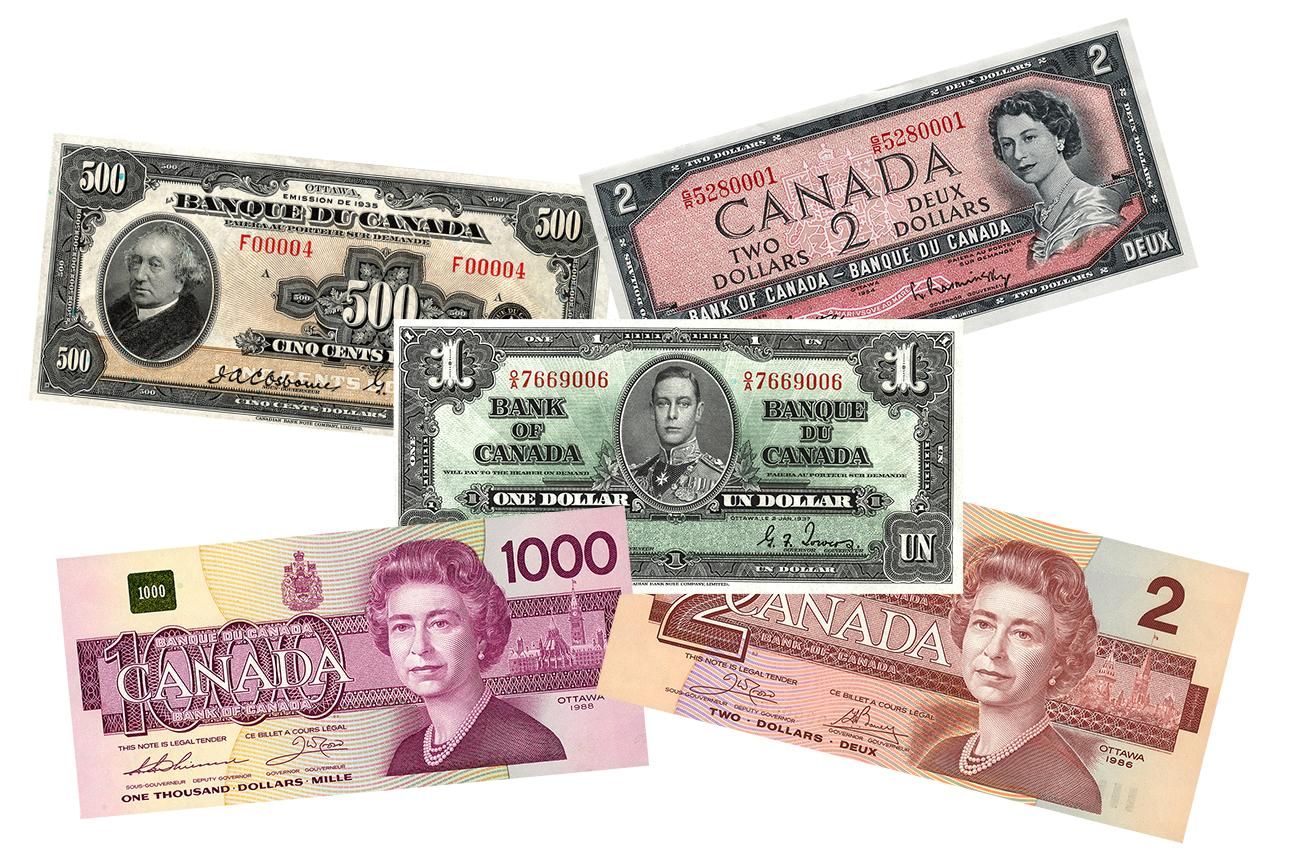
Canadian Coins and Their Nicknames
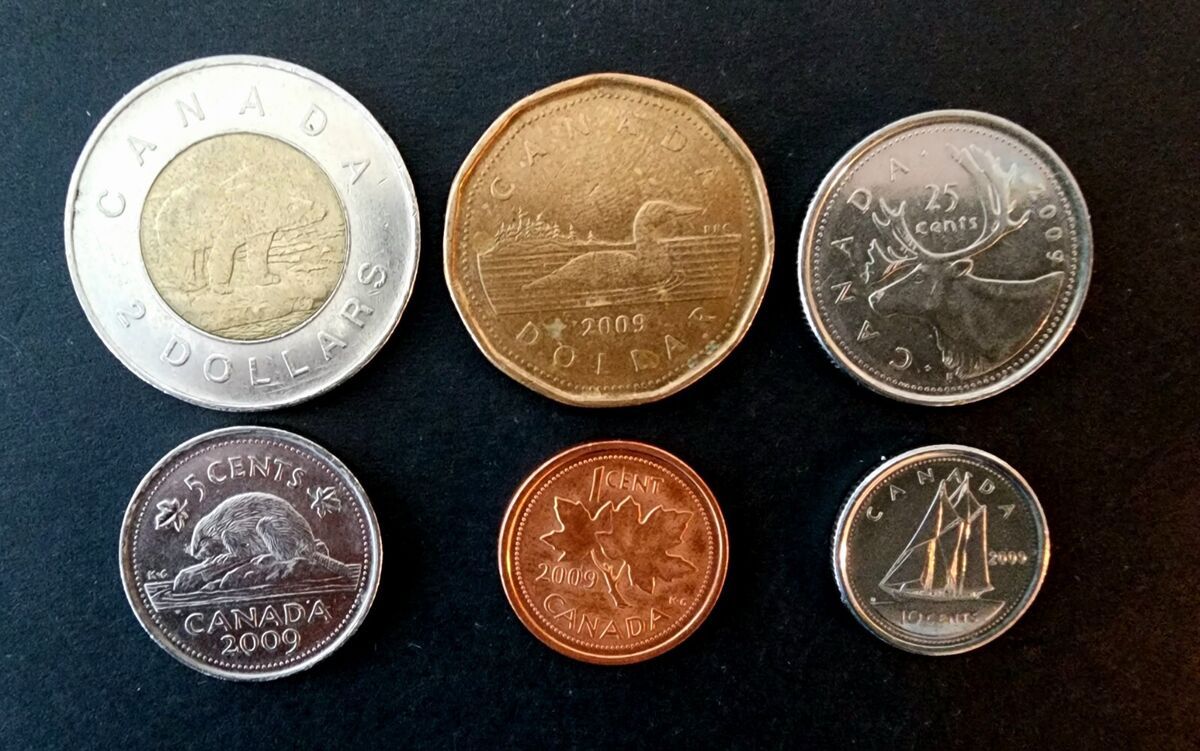
Canadian coins are minted by the Royal Canadian Mint and are known for their distinctive designs and durable compositions. The most common coins in circulation are the 5-cent, 10-cent, 25-cent, 1-dollar, and 2-dollar pieces. Each coin has a colloquial nickname rooted in its history or appearance. The 5-cent piece is called the nickel, a name derived from its original metal composition, though it is now made of steel. The 10-cent piece is the dime, which is the smallest coin by size and features the Bluenose schooner. The 25-cent piece is the quarter, depicting a caribou. The 1-dollar coin is famously known as the loonie, named for the loon bird featured on its reverse, which replaced the one-dollar bill in the 1980s.
The Royal Canadian Mint also produces special edition coins, including high-value pieces of pure gold, silver, and platinum, as well as novelty items. The 1-cent coin, known as the penny, was officially withdrawn from circulation in 2013 due to production costs exceeding its face value. While existing pennies remain legal tender indefinitely, cash transactions are now rounded to the nearest five cents. This rounding rule applies only to cash payments. Electronic transactions continue to be settled to the exact cent. The elimination of the penny represents a significant shift in Canada's physical currency handling.
Key details about Canadian coin denominations include the following specifications. The 5-cent coin (nickel) is made of steel and is larger than the dime. The 10-cent coin (dime) is the smallest and thinnest coin, featuring the Bluenose sailboat. The 25-cent coin (quarter) depicts a caribou on its reverse side. The 1-dollar coin (loonie) is made of gold-coloured nickel and features a loon. The 2-dollar coin (toonie) is a two-toned, bimetallic coin with a polar bear design. The 50-cent coin exists but is rarely encountered in general circulation. The 1-cent coin (penny) was made of copper-plated steel and featured a maple leaf. Special edition coins can include full-colour, glow-in-the-dark, or Marvel superhero designs.
Polymer Banknotes: Design and Security
Canadian paper money, referred to as bills, banknotes, or notes, is produced for denominations of five dollars and higher. The current series in circulation is the Polymer Series, made from a thin, flexible plastic that is more durable and secure than traditional paper. These notes are printed by the private-sector Canadian Bank Note Company under the authority of the Bank of Canada. The design and issuance of new bank notes is a multi-year process that combines art and advanced technology to incorporate security features that deter counterfeiting. The Bank of Canada works with law enforcement, accessibility groups, and financial institutions to prepare for the introduction of new notes. All bank notes received at the Bank of Canada's operations centres are inspected on high-speed equipment, and worn or damaged polymer notes are shredded and recycled.
The Bank regularly engages with law enforcement to monitor and combat counterfeiting, providing training and legal tools to prosecutors. Banknote designs typically change every decade, with the previous Canadian Journey Series, which began in 2001, being phased out starting in 2011. The most recent designs feature vertical orientations and new prominent Canadian figures, representing an evolution in the nation's currency presentation. The Bank of Canada plays a central role in issuing secure and reliable bank notes and is committed to maintaining the integrity of Canadian currency through rigorous research and public education.
Current Banknote Denominations and Features
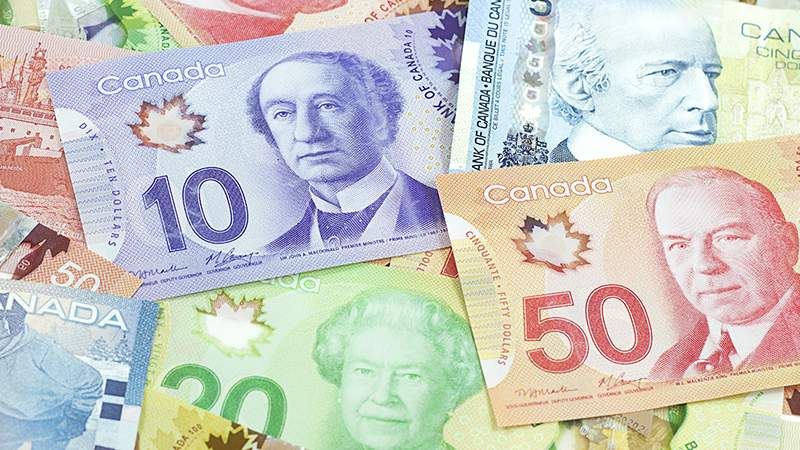
Canadian banknotes are issued in five denominations: $5, $10, $20, $50, and $100. Each note features a portrait of a significant historical figure on the front and Canadian imagery on the reverse. The $5 note is blue and features a portrait of former Prime Minister Wilfrid Laurier, the first French-Canadian to lead the country. Its reverse depicts the Canadarm, a Canadian-designed robotic arm used on NASA space missions. The purple $10 note features Sir John A. Macdonald, Canada's first prime minister, with a reverse design honouring the cross-country Canadian railroad and The Canadian train service. The $20, $50, and $100 notes complete the set with their own distinct colours and themes.
New vertical designs are being introduced, with the $5 note soon to feature Terry Fox and the $10 note already featuring civil rights activist Viola Desmond. The new $20 vertical note will feature King Charles III, the British monarch and Canada's head of state. These polymer notes are colourful and incorporate complex security features such as transparent windows, holographic elements, and raised ink to help Canadians verify their authenticity easily. The primary security and distribution functions managed by the Bank of Canada involve several key steps. Developing new and enhanced security features to stay ahead of counterfeiters is the first step. The Bank then works with stakeholders like law enforcement and accessibility groups to prepare for a new note's introduction. Supplying financial institutions with bank notes through the Bank Note Distribution System follows this preparation. Inspecting all returned notes on high-speed processing equipment ensures quality control. Shredding and recycling polymer notes that become worn or damaged is the next step in the lifecycle. Monitoring and combating counterfeiting through partnerships with law enforcement is an ongoing task. Providing training and legal tools to police and Crown prosecutors supports these efforts. Conducting ongoing research on cash demand and the evolution of digital payments completes the cycle of currency management.
Methods of Payment in Canada
Canadians use a variety of methods to pay for goods and services and to settle bills. Cash, consisting of bills and coins, remains legal tender, but its use has declined significantly as digital payments have become more prevalent. Many stores and restaurants accept credit and debit cards, with most utilizing chip technology that enables fast, one-touch 'tap' payments through wireless terminals. Cheques drawn on a personal checking account are another payment method, though some businesses may not accept personal cheques without proper identification. A money order, which is a prepaid payment order for a specific amount, can be purchased at post offices or banks for a small fee and is considered more secure than a personal cheque. Online banking through secure websites operated by financial institutions is a common and convenient way to pay bills and transfer funds.
Debit cards are linked directly to a user's bank account and can be used to make purchases or withdraw cash from automated banking machines, though some institutions may charge fees for these services. Credit cards allow for purchases on credit, with interest charged on any outstanding balance not paid in full each month. The high interest rates associated with credit cards make it important for users to manage their balances carefully. The evolution of payment methods reflects a broader shift towards digital and cash-free transactions in Canadian society. The main payment options available in Canada each have specific characteristics. Cash includes bills and coins, though some small businesses accept only cash or refuse large bills like $50 or $100. Cheques are drawn on a personal checking account and may require identification for acceptance. Money orders are prepaid payment orders bought at post offices or banks for a fee. Credit cards allow deferred payment with interest charged on unpaid balances. Debit cards are connected to a bank account for purchases and cash withdrawals and may incur fees. Online banking is conducted via secure bank websites for bill payments and transfers.
Exchanging Currency for Use in Canada
For visitors to Canada, obtaining Canadian dollars is a primary concern. It is advisable to have some Canadian currency upon arrival, as foreign debit or credit cards may occasionally face compatibility issues. The Canadian dollar trades under the abbreviation CAD and is often marked with a dollar sign or C$ to distinguish it from other dollar-based currencies. Exchange rates fluctuate constantly based on factors like inflation, trade policies, and market conditions. In the first half of 2025, the Canadian dollar traded between roughly $1.36 and $1.47 against the US dollar. When exchanging currency, it is important to research and compare rates and fees from multiple vendors, including banks, online platforms, and exchange kiosks.
Airport and tourist-area exchange counters often offer less favourable rates and may include hidden fees or commissions. Using a reputable service with upfront pricing can provide better value. For those using ATMs in Canada, selecting to be charged in Canadian dollars rather than a home currency typically results in a better exchange rate and lower fees. Informing your home bank of travel plans to Canada can help prevent transaction holds or fraud alerts on your cards during your visit. It is also wise to track live exchange rates to identify advantageous times to convert money and to use trusted providers with clear security measures for currency exchange.
Key Facts and Common Mistakes
Several key facts define the use of money in Canada. First, the penny is no longer in production, and cash transactions are rounded to the nearest five cents, though electronic payments remain exact. Second, Canadian polymer banknotes are durable and feature advanced security elements to prevent counterfeiting. Third, while cash is accepted everywhere, many retailers strongly prefer card or digital payments, and some small businesses may not accept large bills like $50 or $100 notes. A common mistake for newcomers is not accounting for the rounding rule on cash payments, which can lead to confusion at the checkout. Another frequent error involves currency exchange where visitors sometimes accept dynamic currency conversion at point-of-sale terminals or ATMs.
Dynamic currency conversion allows the merchant to perform the conversion at a typically poor rate instead of letting the card network handle it. It is generally better to choose to be charged in the local currency. Furthermore, while US dollars may be accepted in some tourist-heavy border areas, the exchange rate offered is usually unfavourable, and change is almost always given in Canadian dollars. Relying on US currency is not practical for general travel within Canada. Understanding these nuances ensures smoother financial transactions for both residents and visitors. Practical tips for managing money in Canada include the following actions. Carry some Canadian cash upon arrival for initial expenses. Compare total costs, including hidden fees, when exchanging currency. Avoid currency exchange counters at airports and tourist areas. Choose to be charged in Canadian dollars when using an ATM or card. Notify your home bank of your travel dates to Canada before departure. Track live exchange rates to identify advantageous times to convert money. Use trusted providers with clear security measures for currency exchange. Consider opening a Canadian bank account to avoid international transaction fees on daily purchases.
Frequently asked questions
What is the currency of Canada?
The official currency of Canada is the Canadian dollar, abbreviated as CAD. It is divided into 100 cents. The Bank of Canada oversees the currency, which is issued as polymer banknotes and coins produced by the Royal Canadian Mint. The Canadian dollar is one of the world's seven reserve currencies.
Does Canada still use the penny?
No, Canada stopped producing the one-cent penny in 2012 and officially withdrew it from circulation in 2013. Existing pennies remain legal tender indefinitely, but cash transactions are now rounded to the nearest five cents. This rounding rule applies only to cash payments. Debit, credit, and electronic transactions are still settled to the exact cent.
What are Canadian coins called?
Canadian coins have common nicknames. The $1 coin is called the loonie for the loon bird on it. The $2 coin is the toonie. The 25-cent piece is the quarter, the 10-cent is the dime, and the 5-cent is the nickel. The penny was the 1-cent coin. The Royal Canadian Mint produces all coins.
What do Canadian banknotes look like?
Canadian banknotes are colourful polymer notes. Current denominations are $5 (blue, featuring Wilfrid Laurier), $10 (purple, featuring John A. Macdonald or Viola Desmond on newer notes), $20, $50, and $100. They feature portraits of notable Canadians and national symbols on the reverse. New vertical designs are being introduced, with the $20 note soon to feature King Charles III.
How do I get the best exchange rate for Canadian dollars?
To get a favourable exchange rate, compare rates and fees from multiple vendors like banks, online platforms, and exchange services. Avoid airport and tourist-area kiosks which often have poor rates. When using an ATM in Canada, choose to be charged in Canadian dollars to let your bank handle the conversion. Always check for hidden fees or commissions before exchanging money.
Can I use US dollars in Canada?
US dollars may be accepted in some tourist-heavy areas, particularly near the border, but this is not guaranteed and the exchange rate offered will likely be poor. Change will almost always be given in Canadian dollars. For general use throughout Canada, it is necessary to have Canadian currency or use a card that processes transactions in CAD. The official currency is the Canadian dollar, abbreviated as CAD, and it is overseen by the Bank of Canada. While cash is used less frequently, most stores and restaurants accept credit or debit cards, often with convenient tap technology. To avoid issues, it is best to exchange currency through reputable services or use ATMs, choosing to be charged in Canadian dollars for a better rate.
Sources and further reading
- Canadian Money thecanadaguide.com
- Currency bankofcanada.ca
- Canadian Currency | Guildford College guildfordcollege.com
- Money in Canada, Guide to Canadian dollars (CAD) westernunion.com
- Canadian Money ancnl.ca
This article explains how things work and is not financial, tax or legal advice. Rules, limits and rates change, so check the current figures with the Canada Revenue Agency, your province or your financial institution before you act.