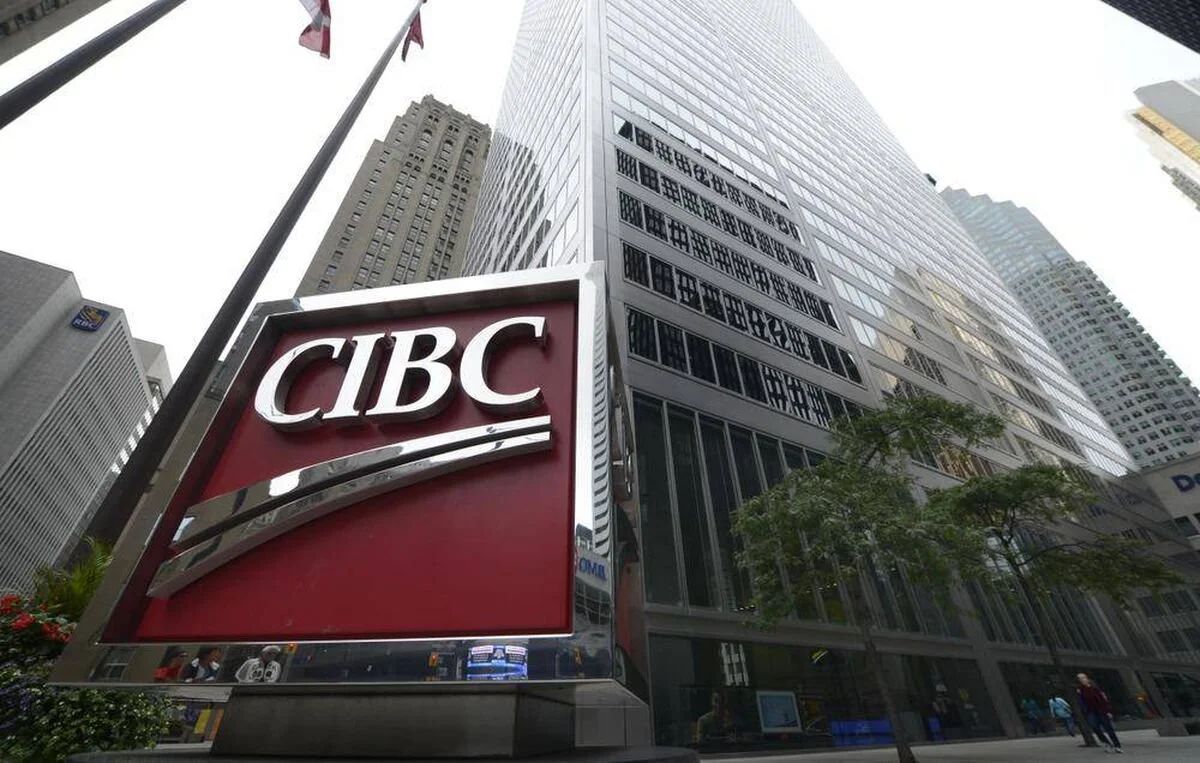
The Big Five banks of Canada are the five largest and most dominant financial institutions in the country: Royal Bank of Canada (RBC), Toronto-Dominion Bank (TD), Bank of Montreal (BMO), Bank of Nova Scotia (Scotiabank), and Canadian Imperial Bank of Commerce (CIBC). Collectively, they hold over $5.4 trillion in total assets and serve the vast majority of Canadian retail and commercial banking customers. All five are headquartered in Toronto's Financial District and are classified as Schedule I domestic banks under federal charter. Their size and stability have made them central pillars of the Canadian economy and key players on the global financial stage.
Composition and Market Dominance
The Big Five banks are defined by their massive scale within the Canadian financial system. They dominate the market in terms of total assets, market capitalization, branch networks, and customer base. As of recent figures, RBC is the largest by total assets with over $1.43 trillion, followed closely by TD with $1.42 trillion. Scotiabank holds approximately $1.09 trillion, BMO has $852.2 billion, and CIBC holds just under $640 billion. In terms of market capitalization as of October 2024, RBC leads followed by TD. All five banks maintain their headquarters in Toronto, primarily along Bay Street, and their shares are widely held with a legal limit preventing any single entity from owning more than twenty percent. This structure is designed to ensure broad ownership and stability. The term Big Six is sometimes used to include National Bank of Canada, which is the next largest bank and has a strong regional presence in Quebec, but the core group remains the five.
Historical Development and Ranking Shifts
The historical rankings among the Big Five have shifted significantly due to mergers, acquisitions, and strategic expansions. For much of modern history, RBC has been the largest bank by a significant margin. Up until the late 1990s, CIBC was typically the second largest, followed by Bank of Montreal, Scotiabank, and TD Bank. A series of major reorganizations in the late 1990s and early 2000s dramatically altered this order. RBC acquired Royal Trust in 1993, while Scotiabank purchased National Trust in 1997. Scotiabank, finding no merger partners among the other large banks, expanded its international operations and surpassed BMO in size. The merger of TD Bank with Canada Trust, which was the largest trust company in Canada at the time, moved TD into the number two position it holds today. Meanwhile, CIBC's unsuccessful foray into the US market led it to shed assets, dropping it to the fifth spot. These moves solidified the current pecking order where RBC and TD are the two largest, followed by Scotiabank, BMO, and CIBC.
Another key evolution was the integration of investment banking. Four of the Big Five acquired independent investment banks, whose activities were later consolidated under new brands. The subsidiaries RBC Dominion Securities, BMO Nesbitt Burns, CIBC Wood Gundy, and McLeod Young Weir were rebranded to RBC Capital Markets, BMO Capital Markets, CIBC Capital Markets, and Scotia Capital, respectively, from 2000 onwards. However, the old names are still used as brands for full service brokerage under wealth management and remain the broker dealer subsidiaries for their investment banking operations in Canada.
Scale of Operations and Customer Reach
The Big Five banks operate vast networks that serve millions of customers across Canada and globally. They offer a comprehensive suite of financial products including chequing and savings accounts, credit cards, mortgages, loans, insurance, and wealth management services like Registered Retirement Savings Plans (RRSPs) and Tax-Free Savings Accounts (TFSAs). Their physical presence is extensive, with thousands of branches and automated teller machines (ATMs) nationwide. RBC has over 1,300 branches and more than 4,200 ATMs. TD operates over 1,100 branches and 2,600 ATMs. BMO has around 900 branches and over 5,400 ABMs across North America. Scotiabank runs over 850 branches and about 3,500 ATMs. CIBC maintains around 1,000 branches and nearly 3,000 ATMs. Customer bases are similarly immense. RBC serves over 19 million customers worldwide. TD serves over 28 million customers globally. BMO has 13 million customers worldwide. Scotiabank serves over 11 million customers in Canada. CIBC serves 15 million clients worldwide. This scale allows for 24/7 customer service and a wide array of digital and in-person banking options.

Regulatory Framework and Stability
Banking in Canada is exclusively under federal jurisdiction, as defined by Section 91(15) of the Constitution Act 1867. The primary legislation governing banks is the Bank Act, which categorizes institutions as Schedule I, II, or III banks. The Big Five are all Schedule I banks, meaning they are domestic banks authorized to accept deposits and are widely held. This federal oversight, combined with conservative lending practices, is often cited as a reason for the sector's resilience. The banks are backed by the Canadian Deposit Insurance Corporation (CDIC), a federal crown corporation that insures eligible deposits up to $100,000 per insured category. The strength of the Big Five was highlighted during the 2007 subprime mortgage financial crisis, where Canadian banks weathered the storm better than many international peers. RBC and TD Bank are listed on the Financial Stability Board's list of systemically important banks as of 2020, underscoring their critical role in the global financial system. Their financial health is monitored through metrics like the Common Equity Tier 1 (CET1) ratio, a key measure of bank capital strength.
Major Mergers and Competition Debates
The history of the Big Five is marked by significant merger attempts and ongoing debates about competition. In 1998, two major merger proposals were announced: Bank of Montreal with Royal Bank of Canada, and CIBC with Toronto-Dominion Bank. The banks argued these unions were necessary to compete globally. If approved, they would have reduced the number of major national banks from five to three. The Competition Bureau of Canada reviewed the proposals and concluded the negative effects, such as higher user fees and local branch closures, would far outweigh any benefits. Ultimately, then Finance Minister Paul Martin rejected both mergers. This decision has been credited with preserving a more competitive domestic landscape and contributing to the system's stability during the 2007 crisis. The issue of domestic mega-mergers has not been revisited by subsequent finance ministers. More recently, consolidation has occurred outside the Big Five, such as RBC's acquisition of HSBC Canada and National Bank's purchase of Canadian Western Bank, which regulators reviewed for competition issues.
Key merger and expansion events include a series of deals that changed the banking landscape. RBC acquired Royal Trust in 1993 and Scotiabank purchased National Trust in 1997. The proposed mergers of BMO with RBC and CIBC with TD were rejected by the federal government in 1998. In the late 1990s, TD merged with Canada Trust, becoming the second-largest bank. In 2007, TD purchased Commerce Bancorp in the United States, later renaming its US subsidiary TD Bank. More recent events include EQ Bank merging with Concentra Bank in 2022 and RBC completing the acquisition of HSBC Canada, with some assets split with National Bank for competition reasons. The strength of the Canadian dollar and relative weakness of US banks after the 2007 crisis led to speculation about further southward expansion, though large-scale domestic mergers remain off the table. Analysts have noted that Canadian banks have much stronger balance sheets today than they did 10 or 15 years ago, putting them in a better position to be aggressive in foreign markets if they choose.
Comparison of the Big Five Banks
The Big Five banks of Canada are the Bank of Montreal, the Bank of Nova Scotia, the Canadian Imperial Bank of Commerce, the Royal Bank of Canada, and the Toronto-Dominion Bank. These banks all maintain their headquarters in Toronto's Financial District along Bay Street. They are all classified as Schedule I banks under the Bank Act, which are domestic banks operating under a government charter. According to a 2017 ranking by Standard & Poor's, all five banks are among the world's 100 largest banks. In modern history, the Royal Bank has typically been the largest by a significant margin, although the Toronto-Dominion Bank has caught up in recent years.
| Bank | Founded | Total Assets (approx.) | Customers (Worldwide) | Branches in Canada | Notable Fact |
|---|---|---|---|---|---|
| Royal Bank of Canada (RBC) | 1864 | $1.43 trillion | 19 million+ | 1,300+ | Largest by assets and market cap. Ranked first in 2024 retail banking satisfaction. |
| Toronto-Dominion Bank (TD) | 1955 (merger) | $1.42 trillion | 28 million+ | 1,100+ | Second largest. Largest customer base in Canada. On Dow Jones Sustainability Index. |
| Bank of Nova Scotia (Scotiabank) | 1832 | $1.09 trillion | 11 million+ (Canada) | 850+ | Strong international focus. Third largest by assets. |
| Bank of Montreal (BMO) | 1817 | $852.2 billion | 13 million | 900+ | Oldest bank in Canada. Never missed a dividend payment. |
| Canadian Imperial Bank of Commerce (CIBC) | 1961 (merger) | $640 billion | 15 million | 1,000+ | Fifth largest. Formed by largest bank merger in Canadian history at the time. |
Each bank structures its account fees differently, with monthly chequing fees ranging from $0 to $30.95, often waivable by maintaining a minimum balance. They all provide specialized accounts for students, newcomers, and seniors, alongside extensive digital banking platforms. Awards and recognitions vary, with RBC and CIBC ranking high in mobile app satisfaction studies, and BMO being repeatedly named a top private bank. For example, BMO was named the Best Private Bank in Canada for the fourteenth consecutive year by the World Finance Magazine, and CIBC ranked second in the J.D. Power 2024 Canada Banking Mobile App Satisfaction Study.
The Big Five in the Broader Financial Landscape
The dominance of the Big Five exists within a wider ecosystem of Canadian financial institutions. The term Big Six acknowledges National Bank of Canada, which has a strong Quebec presence and a growing national footprint with over 360 branches and nearly 2,500 ABMs in the THE EXCHANGE network. Beyond the large banks, Canada has a robust network of credit unions and caisses populaires, such as the Desjardins Group in Quebec, which is a federation of 313 autonomous credit unions and a major regional player regulated provincially. ATB Financial is a Crown corporation owned by the Alberta government that was originally established in 1938 after the province's attempt to impose social credit policies on federally-regulated banks failed. Furthermore, the rise of online-only banks and fintechs has introduced new competition. Institutions like Tangerine, owned by Scotiabank, and Simplii Financial, owned by CIBC, offer no-fee banking and higher interest savings rates due to lower overhead costs. Despite these alternatives, a significant majority of Canadians still bank with one of the Big Five or Big Six institutions, drawn by their perceived security, extensive networks, and full-service offerings. The Big Five's collective strength ensures they remain central to both everyday personal finance and the overall stability of the Canadian economy.
Frequently asked questions
What are the Big Five banks in Canada?
The Big Five banks are Royal Bank of Canada (RBC), Toronto-Dominion Bank (TD), Bank of Montreal (BMO), Bank of Nova Scotia (Scotiabank), and Canadian Imperial Bank of Commerce (CIBC). They are the five largest financial institutions in the country by assets and market capitalization. All have their headquarters in Toronto and operate under federal charter as Schedule I banks. The term Big Six is sometimes used to include National Bank of Canada as the sixth largest.
Which is the largest bank in Canada?
Royal Bank of Canada (RBC) is the largest bank in Canada by total assets, with over $1.43 trillion, and by market capitalization as of October 2024. It was founded in 1864 and serves over 19 million customers worldwide. RBC is also one of two Canadian banks, along with TD, listed as a systemically important bank by the Financial Stability Board. It operates the largest branch and ATM network among the Big Five.
Are the Big Five banks safe?
Yes, the Big Five banks are considered very safe and stable institutions. They are federally regulated and their deposits are insured by the Canadian Deposit Insurance Corporation (CDIC) up to $100,000 per insured category. Their conservative lending practices and strong capital positions, monitored through ratios like the Common Equity Tier 1 (CET1) ratio, helped them weather the 2007 global financial crisis better than many international banks. TD Bank, for example, has high credit ratings from agencies like S&P Global Ratings.
What is the oldest bank in Canada?
The Bank of Montreal is the oldest bank in Canada. It was founded in 1817. It is the fourth largest of the Big Five banks by assets. The bank serves 13 million customers worldwide.
Why were the big bank mergers rejected in 1998?
In 1998, the Bank of Montreal proposed a merger with the Royal Bank of Canada, and the Canadian Imperial Bank of Commerce proposed a merger with the Toronto-Dominion Bank. The Competition Bureau of Canada reviewed the proposals and declared that negative effects, such as higher user fees and local branch closures, would far outweigh the benefits. Ultimately, then Finance Minister Paul Martin rejected both proposed mergers. This decision has been cited as a reason the Canadian economy weathered the 2007 financial crisis well.
Do the Big Five banks have good digital banking?
All Big Five banks offer comprehensive digital and mobile banking platforms to manage accounts, pay bills, and transfer money. They have invested heavily in their online services. According to satisfaction studies, RBC ranked first and CIBC ranked second in the J.D. Power 2024 Canada Banking Mobile App Satisfaction Study. However, online-only banks and digital subsidiaries like Tangerine and Simplii Financial often offer higher interest rates on savings and lower fees, as they have lower overhead costs from operating without physical branches.
Sources and further reading
- Big Five (banks) (Wikipedia) en.wikipedia.org
- Popular banks in Canada wealthsimple.com
- Compare the biggest banks in Canada finder.com
- Largest banks in Canada, statistics & facts statista.com
- How To Choose Between Canada's Five Major Banks? loanscanada.ca
This article explains how things work and is not financial, tax or legal advice. Rules, limits and rates change, so check the current figures with the Canada Revenue Agency, your province or your financial institution before you act.