Banking in Canada is a fundamental part of the national economy, characterized by a highly concentrated and stable system dominated by a few large banks. The sector is globally recognized for its safety and soundness, having weathered major financial crises without a domestic bank failure for decades. Federal regulation, a history of conservative practices, and a robust deposit insurance scheme support this stability. For Canadians, this system provides secure access to everyday financial services, from chequing accounts to mortgages, across a vast and integrated branch network.
Historical Development of Canadian Banking
The origins of banking in Canada date back to the era of New France in the 1680s, where a chronic shortage of coinage led the colonial administration to issue playing cards as a form of currency. This early experiment with paper money collapsed within a decade, fostering long-term suspicion of such instruments among settlers. In the 18th century, French merchants introduced promissory notes known as bons, which became the first widespread form of private banking in the territory. These persisted even after New France became a British possession in 1763, circulating alongside various foreign coins.
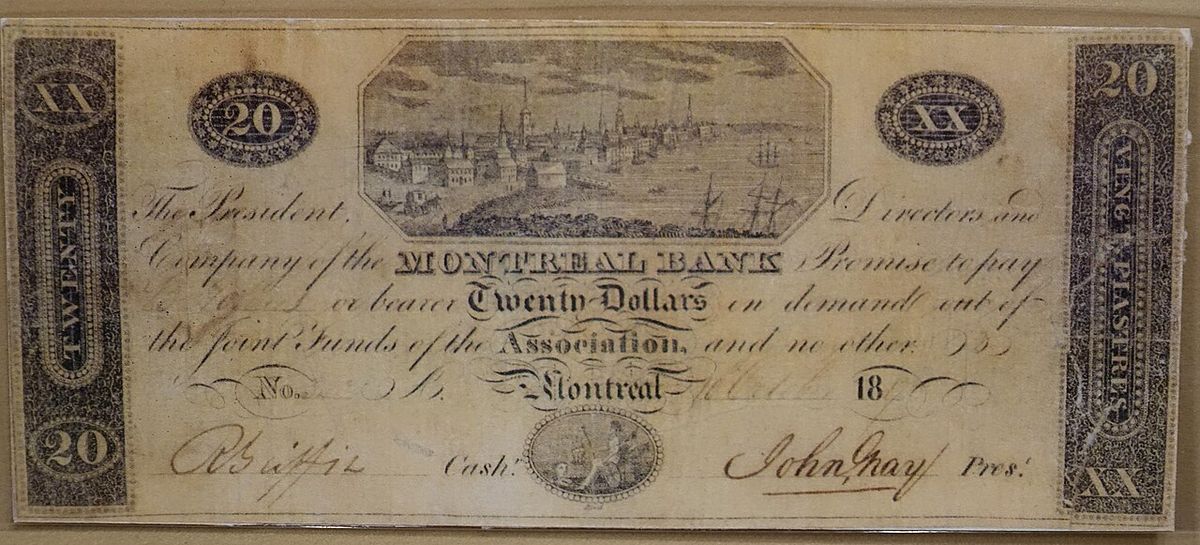
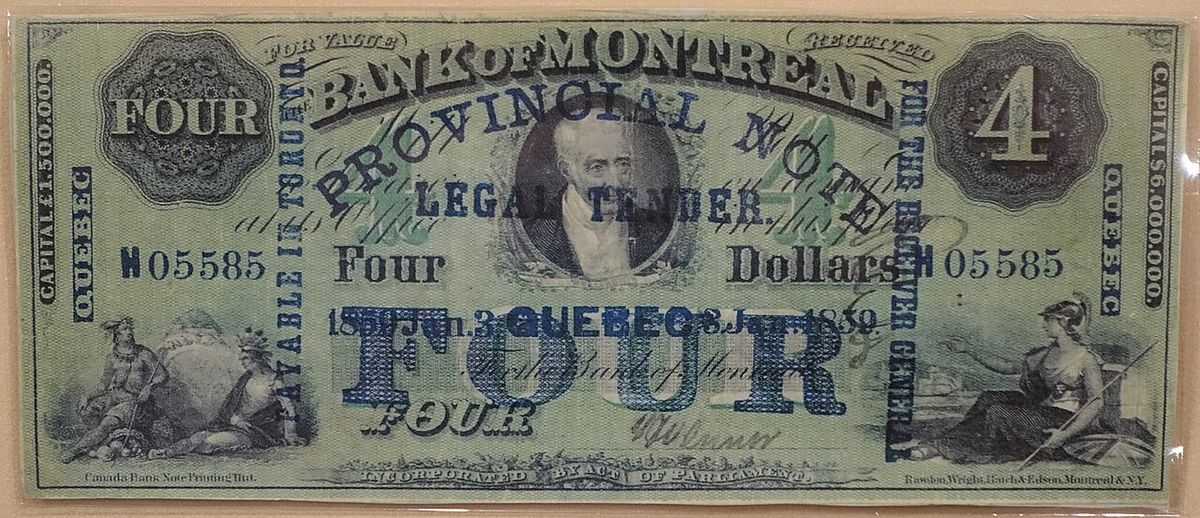
The War of 1812 prompted the British administration to issue government-backed promissory notes called army bills to finance the conflict. Totalling 250,000 pounds, these notes were successfully redeemed for gold after the war, restoring public trust in paper currency. This paved the way for the establishment of formal banking institutions. In 1817, the British government granted a charter to Montreal bankers to open the Bank of Montreal, which was given a monopoly on issuing notes and effectively acted as a central bank for Upper and Lower Canada. Subsequent charters were granted to other banks, but the system remained prone to inflation as currency issuance was left to private bankers.
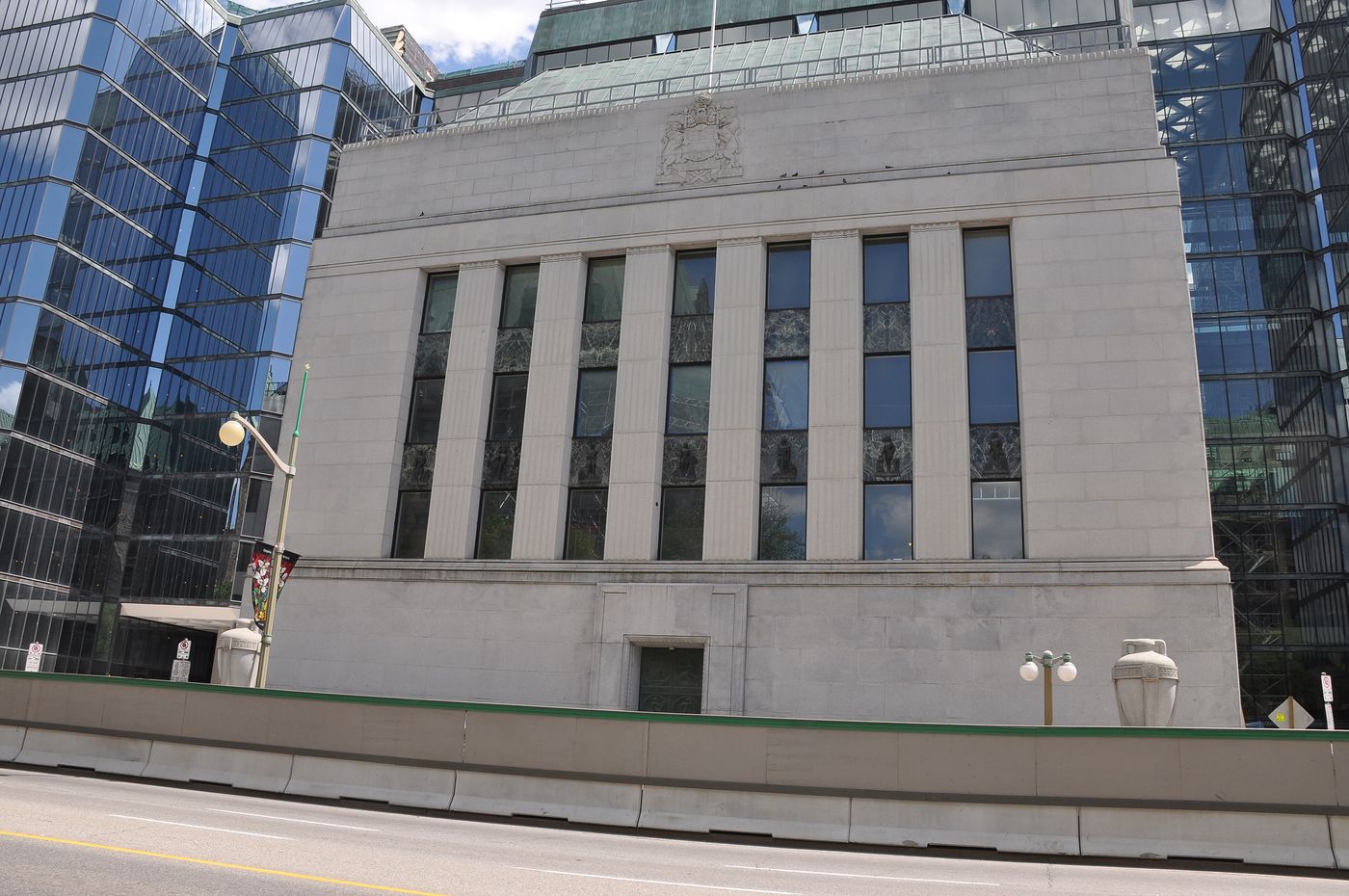
Confederation in 1867 brought banking under federal jurisdiction through the British North America Act, allowing for the creation of a uniform national currency. The Canadian dollar was officially adopted in 1871, overriding the notes of individual banks. A series of laws in the early 1870s established a banking system distinct from that of the United States, favouring a few large banks with nationwide branch networks over many small, local institutions. This structure promoted stability but reduced competition. The final major institutional pillar was established in 1935 with the founding of the Bank of Canada as the nation's central bank, a response to the economic turmoil of the Great Depression.
Structure and Regulation of the Banking Sector
The Canadian Constitution grants the federal government sole jurisdiction over banking, a power exercised primarily through the Bank Act. This legislation categorizes all banks permitted to operate in Canada into three schedules. Schedule I banks are domestic institutions that are not subsidiaries of a foreign bank. This category includes the largest Canadian banks and their associated digital brands like Tangerine and Simplii Financial. Schedule II banks are also incorporated under the Bank Act but are subsidiaries of foreign banks, such as HSBC Bank Canada. Schedule III lists foreign banks permitted to do business in Canada under restrictions, such as Citibank N.A.. These are not incorporated under Canadian law.
The primary regulator for all these entities is the Office of the Superintendent of Financial Institutions (OSFI). OSFI's mandate is to supervise and regulate banks to ensure their safety and soundness. Other financial institutions, such as credit unions and securities dealers, are largely regulated by provincial governments. A key component of consumer protection is the Canada Deposit Insurance Corporation (CDIC), a federal Crown corporation established in 1967. The CDIC insures eligible deposits at member institutions up to $100,000 per account category, covering chequing and savings accounts and guaranteed investment certificates. Since its inception, no Canadian has lost a dollar of insured deposits despite 43 member institution failures.
- Schedule I: Domestic banks (e.g., Royal Bank of Canada, TD Bank, Scotiabank, BMO, CIBC, National Bank).
- Schedule II: Subsidiaries of foreign banks (e.g., HSBC Bank Canada, Citibank Canada).
- Schedule III: Foreign banks operating under restriction (e.g., Bank of America, Deutsche Bank AG).
- Regulator: Office of the Superintendent of Financial Institutions (OSFI).
- Deposit Insurer: Canada Deposit Insurance Corporation (CDIC).
- Insured Limit: $100,000 per eligible account type.
The Major Banks and Systemic Importance
The Canadian banking landscape is dominated by a small group of large institutions, often referred to as the Big Six. These banks combine for approximately 90% of the country's banking assets, creating a highly concentrated market. The group consists of the Royal Bank of Canada (RBC), the Toronto-Dominion Bank (TD), the Bank of Montreal (BMO), Scotiabank, the Canadian Imperial Bank of Commerce (CIBC), and the National Bank of Canada. This concentration is seen as a result of historical policy and the country's geography, and it has contributed to the system's stability by creating large, well-capitalized entities.
These major banks are designated as Domestic Systemically Important Banks (D-SIBs) by OSFI. This designation means their failure could seriously disrupt the domestic economy, so they are subject to stricter regulatory requirements, such as holding a domestic stability buffer of extra capital. Beyond domestic importance, two Canadian banks are also designated as Global Systemically Important Banks (G-SIBs) due to their international scale and interconnectedness. Both RBC and TD hold this global designation, subjecting them to even higher capital standards set by international regulators. Another major financial group, Desjardins, which is a cooperative, is also designated as a D-SIB by Quebec's financial regulator. The business model of the large banks has evolved beyond traditional retail banking. They operate as diversified financial conglomerates, with significant operations in wealth management, insurance, capital markets, and international banking. This diversification helps insulate the banks from downturns in any single sector of the economy.
Stability and Performance in Crisis
The resilience of the Canadian banking system is its most noted feature globally. The sector has experienced very few failures in its modern history. Since the 1923 failure of the Home Bank of Canada, only three institutions have collapsed: the Canadian Commercial Bank and the Northland Bank in 1985, and the Security Home Mortgage Corporation in 1996. Notably, Canada had no bank failures during the Great Depression, the 2008 global financial crisis, or the subsequent periods of economic stress.
During the 2008 financial crisis, Canadian banks required liquidity support but did not need government bailouts to prevent collapse. The Bank of Canada, along with other agencies, provided up to $114 billion in liquidity, much of it through existing mortgage insurance facilities. The system's strength was internationally recognized. The World Economic Forum ranked Canada's banking system as the soundest in the world every year from 2007 to 2013. This stability is attributed to factors including conservative lending practices, strong regulatory oversight by OSFI, and the diversified, well-capitalized nature of the major banks.
| Event | Year(s) | Impact on Canadian Banks |
|---|---|---|
| Great Depression | 1930s | No bank failures. |
| 1979 Energy Crisis | 1979 | No bank failures. |
| Bank Failures (CCB & Northland) | 1985 | Two small regional banks failed. |
| Security Home Mortgage Corp. Failure | 1996 | Last bank failure to date. |
| Subprime Mortgage Crisis | 2007 to 2010 | No bank failures. |
Consumer Banking and Technology Adoption
Canadian banks provide a high level of service and have been early and extensive adopters of technology. A 2002 government report noted that Canada had the highest number of ATMs per capita and the highest penetration of electronic channels like debit cards, internet banking, and telephone banking in the world. More recent World Bank data from 2017 shows Canada maintains a very high level of access, with 227.82 ATMs per 100,000 adults, ranking third globally. This extensive physical and digital network ensures widespread access to banking services across the country's vast geography.
The everyday banking experience for Canadians is shaped by the branch networks of the major banks and a growing array of digital-only banking options. The large banks offer a full suite of personal and commercial banking products, including chequing and savings accounts, mortgages, loans, credit cards, and investment services. Digital banks, often subsidiaries of the major Schedule I banks, provide competitive rates and streamlined services online. The system's concentration means consumers benefit from nationwide service consistency but have historically faced less competition on fees compared to more fragmented systems.
Ongoing Debates and Consumer Protection
While celebrated for stability, the Canadian banking system faces critiques related to its concentrated market structure and consumer complaint resolution. The high degree of concentration among the Big Six banks can limit competition, potentially leading to higher fees for consumers. Furthermore, the process for resolving disputes between customers and banks has been a point of contention. For many years, the independent Ombudsman for Banking Services and Investments (OBSI) was the main dispute resolution body.
In recent years, several major banks, including RBC, TD, and Scotiabank, have moved their dispute resolution to a for-profit service called the Chambers Banking Ombuds Office (ADRBO). Consumer advocacy groups have raised concerns about this shift, citing potential conflicts of interest and a lack of transparency compared to OBSI. Critics argue that allowing banks to choose their own dispute resolver reduces accountability and may result in less favourable outcomes for customers. This ongoing debate highlights the tension between industry self-regulation and independent consumer protection within an otherwise robust system.
Frequently asked questions
How many major banks are there in Canada?
Canada's banking sector is dominated by six major institutions collectively known as the Big Six. These are the Royal Bank of Canada, Toronto Dominion Bank, Bank of Montreal, Scotiabank, Canadian Imperial Bank of Commerce, and National Bank of Canada. The six largest banks combine for 93 percent of the country's banking assets. The Big Six are all designated as domestic systemically important banks.
Are my bank deposits safe in Canada?
Deposits at member institutions are protected by the Canada Deposit Insurance Corporation. The CDIC is a federal Crown corporation that insures eligible deposits. It provides insurance up to 100,000 dollars per account category. Since its creation, no Canadian has lost a dollar of insured deposits despite some institutional failures.
Who regulates banks in Canada?
Banks are federally regulated by the Office of the Superintendent of Financial Institutions, known as OSFI. Its authority stems from the Bank Act. Canada's federal government has sole jurisdiction for banks according to the Constitution. Credit unions and caisses populaires are largely regulated by provincial governments.
What is the difference between a Schedule I and Schedule II bank?
Schedule I banks are allowed to accept deposits and are not subsidiaries of a foreign bank. Examples include the Big Five banks and smaller domestic banks like National Bank of Canada. Schedule II banks are also allowed to accept deposits but are subsidiaries of a foreign bank, such as HSBC Bank Canada. Both Schedule I and Schedule II banks are incorporated under the Bank Act.
Why is the Canadian banking system considered so stable?
The Canadian banking system is considered stable due to its concentrated structure of a few large banks. It has been regarded as one of the strongest and most stable banking systems in the world by industry experts. The system produced far fewer bank failures than the United States or Australian systems. During the 2008 crisis, the World Economic Forum ranked Canada's system as the world's soundest for six consecutive years.
When was the last time a Canadian bank failed?
The last bank failure in Canada was the Calgary based Security Home Mortgage Corporation, which closed its doors for good on June 4, 1996. Prior to that, the only other failures since the 1923 collapse of the Home Bank of Canada were the Canadian Commercial Bank and the Northland Bank, both of which failed in September 1985. Notably, there were no bank failures in Canada during major global crises such as the Great Depression, World War II, or the 2008 financial crisis. This record contributes to the Canadian banking system's reputation as one of the safest and most stable in the world. The relative infrequency of failures is often attributed to the system's structure, which is dominated by a few large, stable institutions and supported by strong regulation.
Sources and further reading
- Banking in Canada (Wikipedia) en.wikipedia.org
- Bank of Canada bankofcanada.ca
- TD Canada Trust, Personal, Small Business Banking & ... td.com
- Why the Canadian banking system is world class fidelity.ca
- Banks, Office of the Superintendent of Financial ... osfi-bsif.gc.ca
- WealthONE Bank of Canada | GICs, Mortgages & Digital ... wealthonebankofcanada.com
This article explains how things work and is not financial, tax or legal advice. Rules, limits and rates change, so check the current figures with the Canada Revenue Agency, your province or your financial institution before you act.