Annual Percentage Yield (APY) is the total rate of return earned on an interest-bearing deposit account over one year, including the effects of compounding interest. It provides a standardized metric that allows Canadians to compare different savings products, such as high-interest savings accounts and certificates of deposit, even if they have different compounding schedules. Understanding APY is crucial for evaluating the true earning potential of savings, as it accounts for how often interest is added to the principal. In the Canadian context, APY is distinct from the Annual Percentage Rate (APR) used for borrowing, and its calculation is influenced by central bank policy rates and market conditions.
Definition and Core Purpose of APY
Annual Percentage Yield (APY) represents the total interest or return an investment earns in a year, expressed as a percentage of the initial investment. It is a normalized representation of an interest rate based on a compounding period of one year. The core purpose of APY is to allow for a reasonable, single-point comparison of different financial offerings that may have varying compounding schedules, such as daily, monthly, or quarterly. By factoring in the compounding effect, APY shows the effective annual rate (EAR) an investor will actually receive. This metric is crucial for consumers because a higher APY directly translates to greater earnings on savings over time. Financial institutions in Canada typically quote APY for deposit products to illustrate the higher return a customer receives at the end of a term.
How APY is Calculated
The calculation of APY mathematically incorporates the nominal interest rate and the frequency of compounding. The standard formula used is APY = (1 + i_nom / N)^N - 1, where i_nom is the nominal interest rate and N is the number of compounding periods per year. This formula demonstrates how more frequent compounding leads to a higher effective yield. For example, a nominal interest rate of 4% compounded monthly results in an APY of approximately 4.074%. If the compounding is daily, the APY can be closely approximated using the formula APY ≈ e^(i_nom) - 1, where e is the base of natural logarithms. It is important to note that for small nominal rates, the APY is very close to the nominal rate, but the difference becomes more pronounced as rates increase. This calculation does not account for the possibility of account fees, which can affect the net gain.
To illustrate with a Canadian example, if you invest $1,000 in a savings account with a 4% nominal rate compounded monthly, the first month's interest would be about $3.33. That interest is added to the principal, so the second month's interest is calculated on $1,003.33, yielding about $3.34. Over a full year, this compounding results in a final balance of $1,040.74, which corresponds to an APY of 4.074%. Many Canadian financial websites and tools offer APY calculators where consumers can enter the nominal rate and compounding period to see the effective yield. These tools often allow for further projections by including an initial investment amount and term to calculate a final balance.
APY Versus APR and Mortgage Compounding in Canada
A critical distinction in Canadian finance is between Annual Percentage Yield (APY) and Annual Percentage Rate (APR). APY measures the total interest earned on a deposit or investment over one year, incorporating compounding. Conversely, APR indicates the total annual cost of borrowing, including interest and certain fees, to provide a comprehensive view of loan expenses. The rule of thumb is that APY is for interest you earn, while APR is for interest and fees you pay. This distinction helps consumers compare products accurately, whether they are saving or borrowing.
The interplay between compounding and payment frequency creates unique dynamics in Canadian lending, particularly for mortgages. Canadian legislation requires that interest on fixed-rate mortgages secured by real property compound semi-annually or less frequently. As a result, most Canadian mortgages compound interest semi-annually. However, borrowers typically make monthly, bi-weekly, or weekly payments. To compensate borrowers for making payments more frequently than interest compounds, lenders use the effective annual rate (which is equivalent to APY for a loan) to calculate the interest portion of each payment.
- A mortgage with a 5% nominal rate compounding semi-annually has an effective annual rate (APR) of 5.0625%.
- An interest rate of 4.949% compounded monthly would have the same effective annual rate of 5.0625%.
- If payments are made weekly, the equivalent nominal rate would be 4.941% to achieve the same 5.0625% effective annual rate.
- This structure means more frequent payments can result in a lower nominal interest rate for the borrower due to the compounding effect.
APY in Canadian Savings Products and Market Context
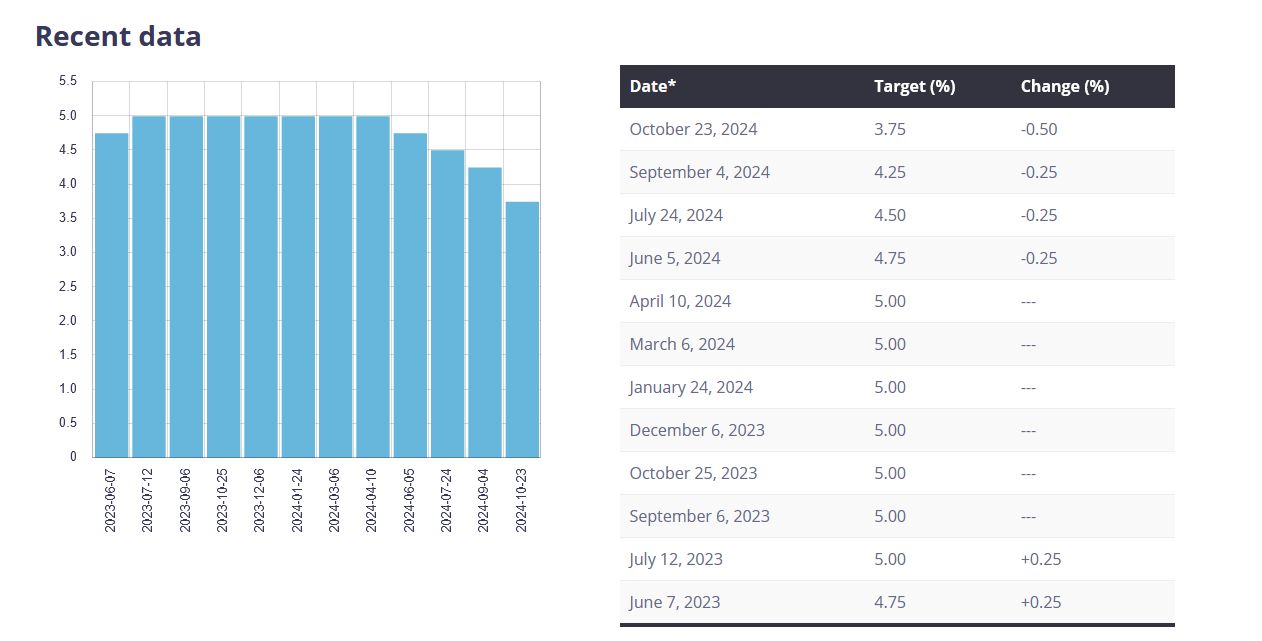
In Canada, APY is a key metric for evaluating deposit products like high-interest savings accounts (HISAs) and certificates of deposit. The interest rates underlying these APYs are influenced by the Bank of Canada's monetary policy, which adjusts the target for the overnight rate to manage inflation and economic activity. As of October 2025, the bank rate was 2.50%, and it rose to 5.50% by October 2026. These policy shifts directly affect the rates financial institutions can offer to savers and borrowers. The Canada Overnight Repo Rate Average (CORRA) serves as a key risk-free benchmark, with an average yield of 3.20% as of October 2026.
Savings account APYs in Canada can be either variable or fixed. Variable APYs fluctuate with changes in the Bank of Canada's policy rate and market conditions, which is common for standard savings and checking accounts. Fixed APYs are locked in for a specified term, typically associated with products like Guaranteed Investment Certificates (GICs). Many institutions also use promotional or tiered rates to attract deposits, such as offering a high APY on the first portion of a balance. When comparing offers, consumers must check whether a high rate is a limited-time promotion or a permanent base rate, as promotional rates can drop significantly after their term ends.
| Product Type | Typical APY Range (2026) | Compounding & Access Notes |
|---|---|---|
| Promotional HISA Rates | Above 4.60% | Often limited-time offers, conditions apply |
| Certificates of Deposit / GICs | Varies by term | Fixed rate, funds locked for a term |
Evaluating High-Interest Savings Accounts in Canada
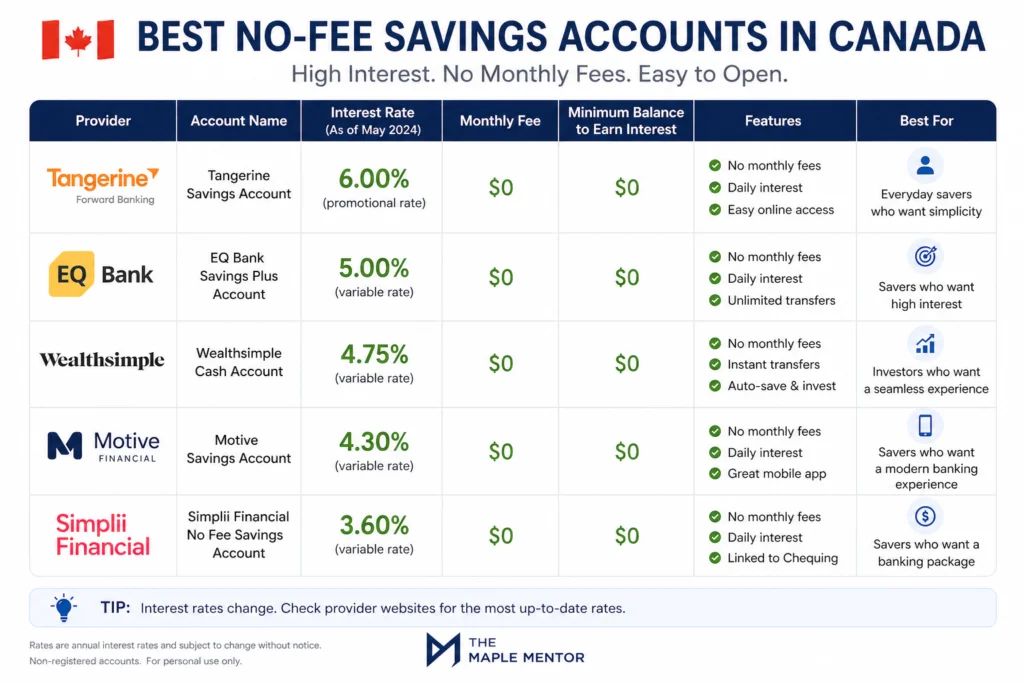
High-interest savings accounts are popular vehicles for Canadians seeking competitive returns with easy access to their money. When evaluating HISAs, the advertised APY is the starting point, but several other factors determine the account's overall value. The best accounts combine attractive interest rates with minimal fees, low or no minimum balance requirements, and a good digital experience. In Canada, standard HISA rates range from 1% to 2.50%, though promotional rates from some institutions can exceed 4.60% as of 2026. It is crucial to verify whether a high rate is a permanent feature or a short-term promotion that will revert to a lower base rate.
Consumers should be aware of common limitations and fees associated with HISAs. Many accounts limit the number of free monthly withdrawals or transactions, charging fees for exceeding these limits. Some accounts require a minimum deposit to open or a minimum daily balance to qualify for the advertised interest rate or to avoid monthly service charges. Furthermore, not all HISAs are available nationwide. Some offers are restricted to residents of specific provinces. Evaluating an HISA based on APY alone can be misleading if the account has restrictive terms that conflict with the saver's financial habits or goals.
- Key evaluation criteria include the annual percentage yield, minimum balance requirements, transaction fees, and digital experience.
- Potential drawbacks include limited monthly transactions, high minimum balance requirements, and temporary promotional rates.
- Accounts are offered by over 50 financial institutions, including traditional banks, credit unions, and online-only banks.
- Prominent examples include the Achieva Financial Daily Interest Savings Account and the Simplii Financial High Interest Savings Account.
- Some accounts, like the ATB Financial HISA, are limited to residents of a single province (Alberta).
- Deposit insurance through the Canada Deposit Insurance Corporation (CDIC) or provincial credit union insurers protects funds.
Factors Influencing Interest Rates and APY
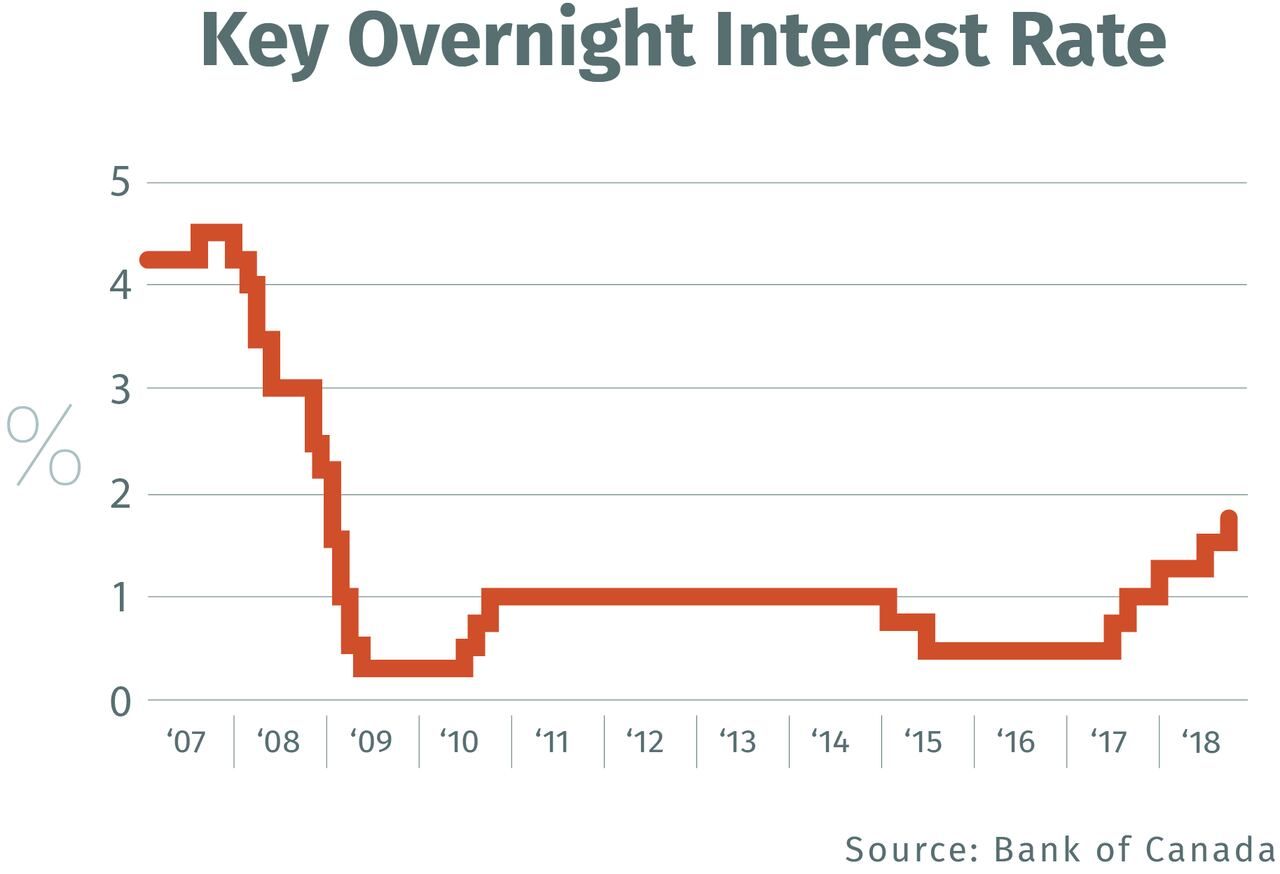
The APYs available on Canadian savings products are not set in isolation. They are deeply influenced by broader economic factors and central bank policy. The Bank of Canada sets the policy rate, which is the rate at which it lends to commercial banks, based on its assessment of economic health and inflation. Commercial banks then use this rate as a benchmark when setting their own consumer-facing interest rates for both deposits and loans. If the central bank raises rates to combat inflation, as it did between 2025 and 2026, borrowing costs increase, but savings rates also typically rise. Conversely, rate cuts to stimulate the economy usually lead to lower returns on savings.
Inflation is one of the most influential factors on interest rate policy. Central banks adjust interest rates to help control inflation. Higher rates discourage borrowing and spending, which can slow price increases. For savers, a rising rate environment can be beneficial for the APY on new deposits and variable-rate accounts. Other factors affecting rates include economic growth cycles, global market conditions, and the level of competition among financial institutions. Online banks and credit unions often offer more competitive APYs than large traditional banks because they have lower overhead costs. Understanding these drivers can help Canadians anticipate trends in savings rates and make more informed decisions about where to place their funds.
Frequently asked questions
What is the difference between APY and interest rate?
The nominal interest rate is the base rate before compounding is applied. The Annual Percentage Yield (APY) is the effective annual rate that includes the impact of compounding interest. For example, a 4% nominal rate compounded monthly results in an APY of about 4.074%. APY provides a truer picture of your potential earnings over a year.
How does compounding work with APY?
Compounding means interest is calculated on both the initial principal and the accumulated interest from previous periods. APY factors in how often this compounding occurs, daily, monthly, quarterly, etc. More frequent compounding leads to a higher APY for the same nominal rate. For instance, daily compounding yields a slightly higher APY than monthly compounding.
Is a higher APY always better?
A higher APY is generally better as it represents a greater total return on a deposit over one year, including the effect of compounding interest. However, a high quoted APY may be a temporary promotional rate that can drop significantly after an introductory period. It is crucial to review full account terms, as some high APY offers may come with requirements like high minimum balances or limitations on transactions that incur fees. The APY also does not account for account fees, which can reduce the net gain. Therefore, while a higher APY indicates better potential earnings, the overall value depends on the account's specific conditions and your personal financial needs.
What is a good APY in Canada?
A good APY in Canada is one that is competitive within the current market. As of 2026, standard interest rates for high interest savings accounts typically range from 1% to 2.50%. Some financial institutions offer promotional rates above 4.60% to attract depositors. The Bank of Canada's policy rate, which influences these offers, was 5.50% in October 2026. A good APY should be evaluated not just by the number but also by the account's features, such as easy access to funds and the absence of high minimum deposit requirements. It is the effective annual rate that allows for a single point comparison between different savings products with varying compounding schedules.
Do all savings accounts in Canada use APY?
Financial institutions in Canada commonly use the Annual Percentage Yield (APY) or the equivalent term Effective Annual Rate (EAR) to represent the true return on savings and investment products. This rate includes the effects of compounding interest, which is when earned interest is added to the principal for future interest calculations. For accurate comparison, especially between products with different compounding frequencies like monthly or semi annually, consumers should look for the APY or EAR figure. While some promotions may highlight a nominal interest rate, the APY provides a normalized representation based on a one year compounding period, allowing for a reasonable comparison of different offerings.
How does the Bank of Canada affect APY?
The Bank of Canada affects APY by setting the target for the overnight interest rate, which is its key policy tool. This rate influences the cost at which banks borrow from each other. When the Bank of Canada raises this rate, as it did from 2.50% in October 2025 to 5.50% by October 2026, financial institutions generally increase the interest rates they offer on deposits to attract customer funds. This leads to higher potential Annual Percentage Yields on savings accounts and similar products. The central bank adjusts this rate based on economic conditions and inflation, making it a primary driver of the interest rate environment that determines the APYs available to Canadian savers.
Sources and further reading
- Annual percentage yield (Wikipedia) en.wikipedia.org
- Interest rates bankofcanada.ca
- Annual Percentage Yield (APY) Calculator for Canadians wowa.ca
- Best High-Interest Savings Accounts in Canada for 2026 nerdwallet.com
- Understanding Interest Rates in Canada td.com
- What is APY (Annual Percentage Yield) moomoo.com
This article explains how things work and is not financial, tax or legal advice. Rules, limits and rates change, so check the current figures with the Canada Revenue Agency, your province or your financial institution before you act.