CALGARY
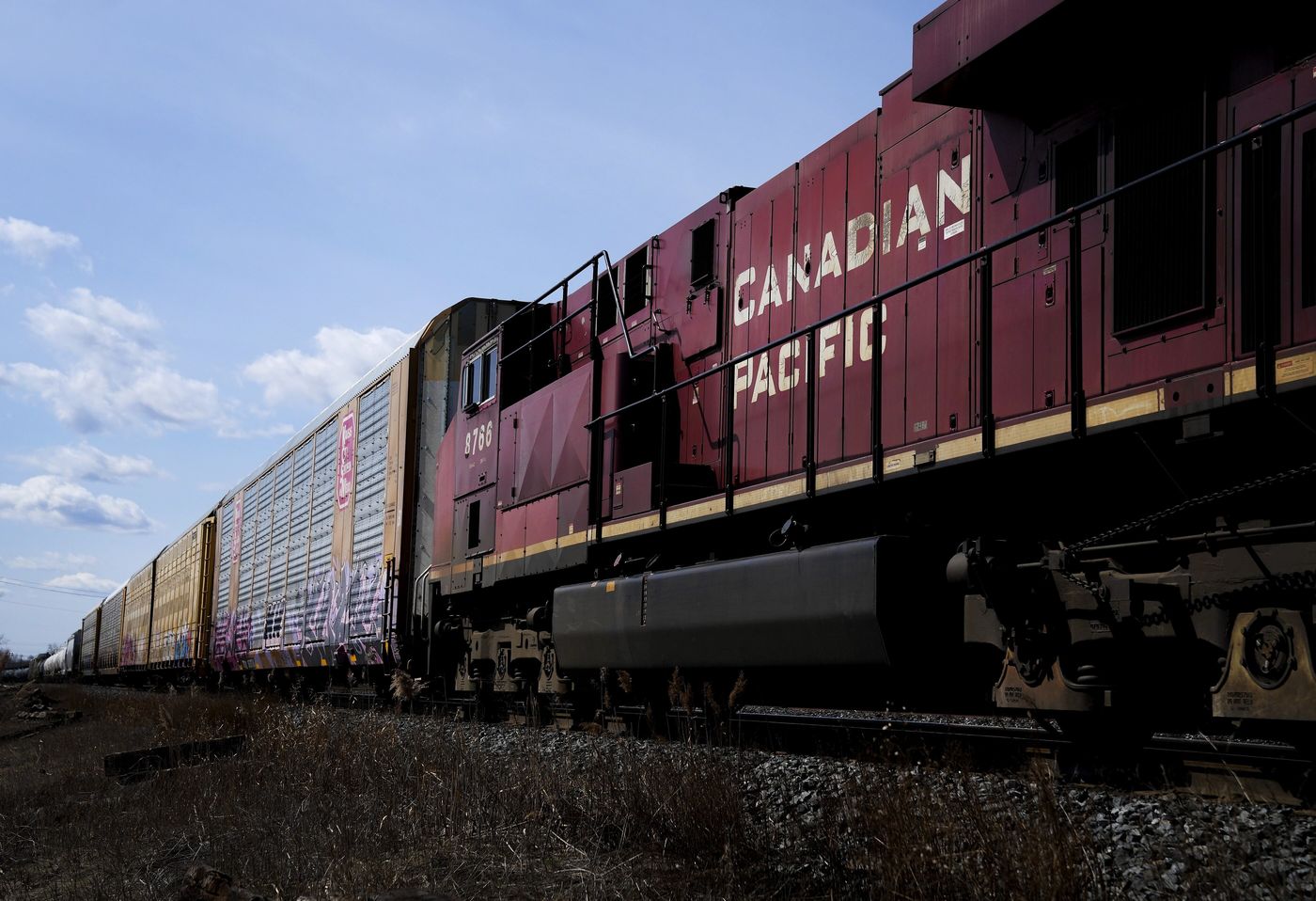
Canadian Pacific Kansas City Ltd. reported flat profit in its latest quarter as its chief executive accused proponents of a massive U.S. rail merger of threatening customers.
Net income attributable to shareholders stayed effectively flat at $917 million in the quarter ended Sept. 30 versus $920 million in the same period a year earlier, the Calgary-based railway said Wednesday.
CEO Keith Creel said proponents of Union Pacific’s attempted US$85-billion acquisition of Norfolk Southern have tried to “chill” dissent against the deal.
“My phone rings and people tell me when they get threatened. Customers share that,” Creel told analysts on a conference call.
He cited warnings he claimed shippers have received: “‘If you’re not for us you’re against us, don’t be on the wrong side of history ... don’t side with the losers.’”
The increasingly acrimonious battle over the acquisition, announced in July 2025, is currently before American regulators.
Creel and other critics worry the deal could trigger a wave of mergers across an already concentrated sector, where six companies dominate the North American rail industry.
Competitors and customers say the acquisition would cost shippers and ultimately consumers, and place unprecedented market power in the hands of a single railway, which would handle some 40 per cent of American freight traffic.
Union Pacific and Norfolk Southern argue that getting hitched would slash costs and prompt rivals to lower their rates to compete.
On Wednesday, Creel pointed to an accusation levelled by U.S. Sen. Tammy Baldwin in a July letter to the U.S. Surface Transportation Board.
She wrote that in a speech to a railway shippers association in Houston last March, Union Pacific chief executive Jim Vena made “a thinly veiled threat ... to raise rates for customers who did not publicly support the merger.”
Union Pacific has said the comment was “taken out of context” and suggestions to the contrary mark an effort to distract from the benefits of a transcontinental railroad.
In an email, the Chicago-based company said the acquisition is backed by more than 2,000 stakeholders, including more than 500 shippers.
Spokesperson Robynn Tysver said those customers “understand how this end-to-end combination will enhance competition and deliver broad public benefits” by shifting some two million truckloads from highway to rail transport, protecting union jobs and driving cost savings.
Despite his stated belief that merger approval is unlikely, Creel is steeling himself for the possibility.
Should the deal get a thumbs-up, CPKC is asking regulators for safeguards to preserve competition, including gateway protections and shipper access to allow switching between railways.
“Not a Christmas list, a reality list,” he said, adding that the acquisition felt like a “lump of coal” in his view.
Third-quarter revenues rose 15 per cent year-over-year to $4.22 billion, bolstered by higher fuel surcharges but also a major jump in grain and shipping container volumes.
The two categories saw revenues leap by 29 per cent and 22 per cent respectively, amounting to 42 per cent of freight revenues.
Coal, potash, fertilizer and automotive volumes all fell, but revenue rose across the board except for coal, where the cash intake was roughly on par with last year’s.
The company’s bottom line was dented by fuel costs that surged 61 per cent year-over-year to $667 million, making it the largest expense outside of labour due to the soaring price of diesel.
On an adjusted basis, core diluted earnings increased 16 per cent year-over-year to $1.28 per share from $1.10 per share, but fell short of analysts’ expectations of $1.32, according to financial markets firm LSEG Data & Analytics.
The railway's results come as the Bank of Canada raised its key interest rate for the first time in more than three years, citing high energy prices.
This story was written by the e2gold.ca newsroom from reporting by BNN Bloomberg, CTV News, CP24 and Barchart.com. Quotes are checked word for word against that reporting.