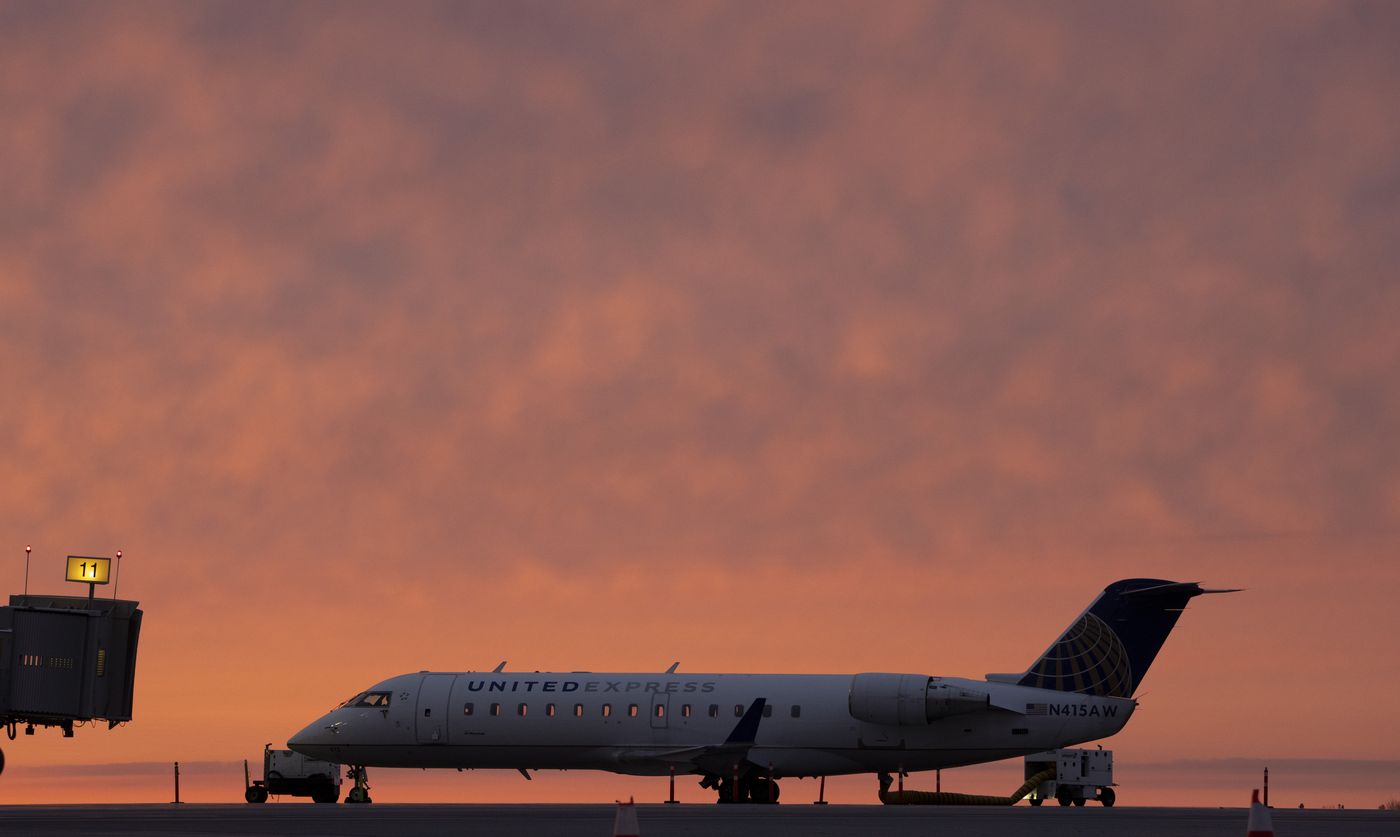
The Competition Bureau says a proposed Air Canada and United Airlines arrangement would harm competition on 10 routes between Canada and the U.S., costing consumers millions of dollars in airfare.
The watchdog sent a report to Transport Minister Steven MacKinnon for review.
The 10 affected routes connect Toronto, Montreal, Ottawa and Vancouver with Chicago, Cleveland, Denver, Houston, New York, San Francisco and Washington.
“The Bureau found that the proposed arrangement would eliminate an important source of competition between the airlines on these routes,” the Competition Bureau said in a news release.
The airlines account for all non-stop traffic on five of the 10 routes, the Bureau said, and have “significant combined market shares on the others.”
The routes are restricted by a 2012 consent agreement.
“The restrictions were put in place after the Bureau concluded that similar coordination between the airlines would substantially harm competition. The restrictions remain in force today,” the Bureau said.
Air Canada and United have operated under the Transborder Joint Business Arrangement since 2022, which allows them to coordinate on joint pricing, inventory management, revenue sharing, and the exchange of competitively sensitive information.
The airlines’ newly proposed arrangement includes an amended and restated version, which the Bureau said would “eliminate competition” on the 10 routes currently restricted.
“If the (agreement) is successfully rescinded, this would permit the Parties to coordinate on the (10) routes in the same manner contemplated by the TBJBA,” the Bureau said.
The proposed expansion would likely mean higher prices and “millions of dollars in consumer harm each year,” it stated, as the arrangement could create monopoly or near-monopoly conditions on several routes.
“Competition between airlines helps keep fares lower and gives travellers more choice and better service,” said interim commissioner Jeanne Pratt.
“Our review found that allowing Air Canada and United to coordinate on these routes would likely reduce competition on key Canada-U.S. routes and lead to higher prices for travellers.”
The bureau said other airlines were unlikely to fly the same routes, given high barriers to market entry.
Air Canada and United proposed growing their partnership in June, arguing that “circumstances have changed.”
Air Canada spokesperson Angela Mah said the partnership has added 20 new cross-border routes and hosted 4.3 million passengers on combined itineraries since 2022.
“The partnership plays an important role for Canadian customers in supporting connectivity between communities across Canada and the U.S.,” she said in an email.
United Airlines spokesperson Megan Boyd said coordinated schedules provide more departure options, improved connections and greater flexibility.
“The agreement gives customers access to more than 1,200 connecting itineraries, with integrated through-fares that can offer meaningful savings compared with purchasing individual flight segments separately,” Boyd said.
The bureau’s report said Air Canada is the only airline that flies from Toronto to Cleveland. On four other routes, Montreal-Washington, Toronto-Denver, Toronto-Houston and Ottawa-Washington, the two airlines combined have total market share.
According to the bureau’s report, the airlines have said that if the minister approves the agreement, they intend to apply to the Competition Tribunal to have the restrictions on the 10 routes lifted.
The comment period for the minister’s public-interest assessment of the expanded arrangement is open until Nov. 15.
This story was written by the e2gold.ca newsroom from reporting by BNN Bloomberg, CTV News, CityNews and The Globe and Mail. Quotes are checked word for word against that reporting.