Saving money in Canada involves creating a budget, reducing everyday spending, and establishing automated savings habits. Canadians can build significant savings by focusing on major expenses like groceries, transportation, and recurring bills. Practical strategies such as meal planning, price matching, and debt management can free up funds for both short-term goals and long-term financial security. Developing these habits is essential for managing the cost of living and achieving financial goals.
Establishing a Budget and Tracking Spending
The foundation of saving money is understanding your cash flow, which means tracking all income against all expenses. Canadians should aim to record every dollar spent for a full month to identify spending patterns, using tools like budgeting apps, spreadsheets, or features within mobile banking applications. During this tracking period, it is important not to restrict spending artificially, as the goal is to capture an accurate picture of habitual expenses. Common discoveries include significant spending on food delivery, multiple streaming subscriptions, and daily coffee purchases, which collectively can hinder savings goals. Separating expenses into needs versus wants provides a clear visual for where cuts can be made most effectively. A budget is not a one time exercise but should be revisited periodically, especially when significant life changes occur, to ensure it remains aligned with financial objectives.
Setting Specific Financial Goals
Clear financial goals provide motivation and direction for saving efforts. Goals should be specific, measurable, achievable, relevant, and time-bound, often referred to as SMART goals. A primary goal for many Canadians is building an emergency fund sufficient to cover three to six months of living expenses to protect against job loss, illness, or unexpected costs. Short-term savings goals can include funds for vacations, new furniture, or a vehicle, while long-term goals encompass down payments for a home, a child's education via a Registered Education Savings Plan (RESP), or retirement. An example of a specific goal is aiming to save $6,000 for a car within twelve months by setting aside $500 each month. Writing these goals down and reviewing them regularly helps maintain focus and track progress. Involving your household in setting and working towards these goals can make saving a team effort and help teach children responsible financial habits.
Creating and Managing a Zero-Based Budget
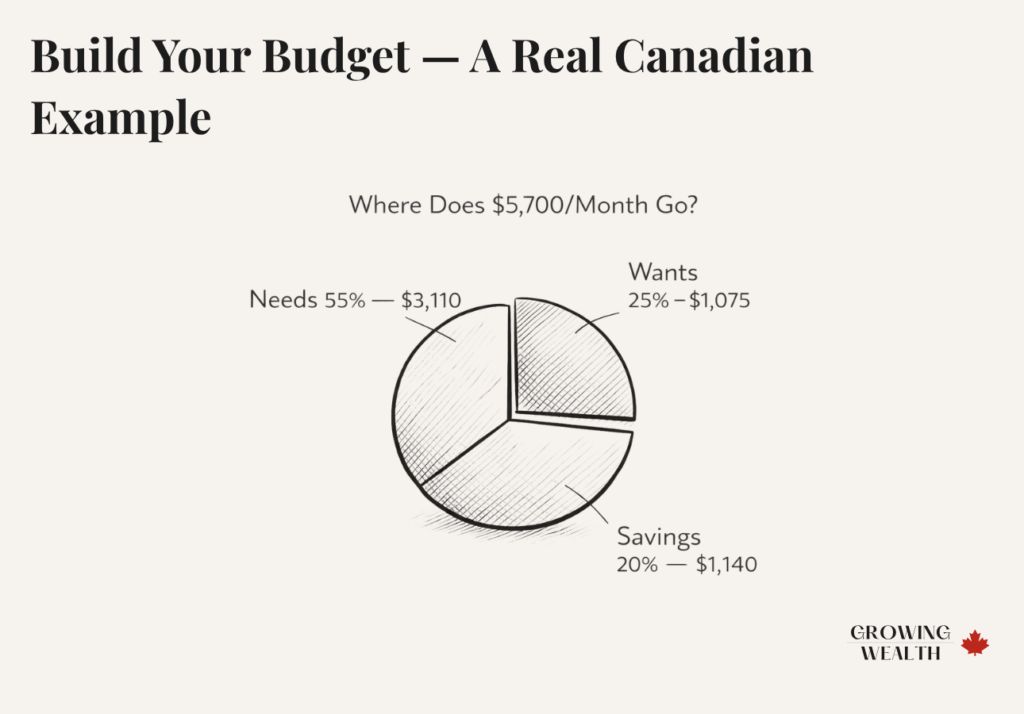
A zero-based budget allocates every dollar of income to expenses, savings, or debt repayment, leaving no unassigned money at month's end. A common framework to start with is the 50/30/20 rule, where 50% of after-tax income goes to needs, 30% to wants, and 20% to savings and debt repayment. Needs include fixed expenses like rent, mortgage payments, insurance, and utilities, while wants cover discretionary spending like dining out and entertainment. This framework can be adjusted based on individual priorities and disposable income levels. The process involves listing all monthly income and expenses to ensure spending aligns with personal financial targets. Fixed expenses are not always set in stone. You can renegotiate bills like cell phone plans or bundle internet, phone, and TV services to secure lower rates. Any money saved from renegotiating these fixed costs should be immediately redirected into your savings accounts to accelerate your progress.
Major Areas for Significant Savings
The most impactful savings often come from reviewing and reducing costs in the largest budget categories: groceries, transportation, and recurring bills. For groceries, research from the University of Pennsylvania indicates avoiding impulse purchases can save up to 23% on a bill, which for a family of four could mean over $2,600 annually. Shopping with cash or debit instead of credit cards can reduce spending by 12% to 18%, as studies show people tend to spend almost twice as much on vending machines with credit and McDonald's found average spending rises from $4.50 to $7 per customer when a credit card is used. Stockpiling non-perishable items on sale and skipping one grocery shop per month can save nearly 25% on annual grocery costs. Price matching at participating Canadian grocery stores by using competitor flyers can save at least ten percent, or over $1,100 per year for a family of four. Bringing lunch from home instead of buying it daily, which can cost over $1,800 annually, is another major saving. For transportation, considering a quality used car instead of new is wise as a new $28,000 car can lose about $17,000 in value within the first four years. Reducing fuel consumption by driving at 100 km/h instead of 120 km/h on highways and practicing fuel-efficient driving like avoiding sudden acceleration can lower gas costs. Regularly reviewing and renegotiating fixed expenses like cell phone plans, internet bundles, and insurance premiums can also yield monthly savings that can be redirected to savings goals.
Everyday Cost-Cutting Habits and Mindset
Incorporating consistent daily habits can lead to meaningful accumulated savings over time. Reducing utility bills is achievable by turning down the thermostat by a few degrees when leaving home or at night, as heating accounts for most electricity costs. Washing clothes in cold water with an appropriate detergent can reduce the energy consumption of a water heater, which may account for up to 20% of an annual electricity bill. Making coffee at home rather than purchasing it daily is a simple change that saves money without significant lifestyle impact. Shopping for groceries after a meal or having a snack beforehand prevents hunger-driven impulse buys. Buying generic house brands, which are often comparable in quality to name brands, reduces food costs. Reducing meat consumption by incorporating plant-based proteins like beans and lentils for one or two meals per week cuts a significant expense. Using public transit, carpooling with coworkers, or biking instead of driving alone saves on transportation costs and may qualify you for a reduced car insurance premium if you drive less. Auditing and cancelling unused or rarely used subscription services for TV and streaming, potentially rotating subscriptions, can save tens of dollars monthly. Purchasing second-hand items like clothing, toys, and cell phones, or renting sports equipment and tools for occasional projects, are economical alternatives. The key mindset is to distinguish between wants and needs, waiting 24 hours or more before non essential purchases to ensure they are truly necessary.

Automating Savings and Strategic Debt Management
Automating the savings process is a powerful tool to ensure consistency and remove temptation. Setting up a pre-authorized transfer service to automatically move funds from a chequing account to a savings account on payday helps prioritize savings before discretionary spending. This method aligns with the principle of paying yourself first and supports long-term goals like saving for a home or a major vacation. Tracking progress using a savings goal app or an online tool can provide motivation by visualizing success. Concurrently, managing high-interest debt is crucial for effective saving. Credit card interest rates in Canada can range from 9% to 29%, adding significant cost to carried balances. Creating a plan to pay off higher-interest debts or consolidating them into a lower-interest loan reduces the amount of money spent on interest. Allocating the money saved from reduced interest payments towards savings accelerates financial growth. Keeping an emergency fund separate from other savings helps avoid derailing progress when unexpected expenses arise. Increasing your income through side hustles, freelance work, or selling unused items can provide additional funds to boost savings even faster.
Common Financial Tools and Resources
Several tools and resources are available to assist Canadians in their saving journey. Budgeting apps like YNAB (You Need a Budget) or features within bank apps help track spending and categorize expenses. Online comparison tools are useful for finding less expensive car models or comparing service providers. For education savings, the Registered Education Savings Plan (RESP) allows money to grow tax-free and may provide government grants. Publications like Consumer Reports or Phil Edmonston's Lemon-Aid books offer guidance on selecting high quality used cars. Many financial institutions offer services like TD Goal Builder, where an advisor can help create a realistic financial plan and set priorities. Loyalty programs at grocery stores can provide additional savings on food purchases. It is important to review all financial tools periodically to ensure they still align with your evolving savings strategy and goals.
| Grocery Store | Price Matching Policy |
|---|---|
| Real Canadian Superstore | Matches competitor advertised prices |
| No Frills | Matches competitor advertised prices |
| FreshCo | Matches competitor advertised prices |
| Save-on-Foods | Matches competitor advertised prices |
| Giant Tiger | Matches competitor advertised prices |
| IGA | Matches competitor advertised prices |
| Maxi | Matches competitor advertised prices |
Other grocery stores may also match competitor's advertised prices, but you will need to speak with a store manager to find out. To use price matching, you should check grocery store flyers in advance and bring them to the cashier as proof. This tactic saves time and fuel compared to driving to multiple stores. It can result in saving at least ten percent on your groceries.
Maintaining Motivation and Measuring Success
Saving money is a long term process that requires sustained effort and periodic review. Celebrating small milestones, like reaching a savings goal for one month or successfully cutting a recurring bill, provides positive reinforcement and helps lock in good habits. Regularly revisiting your budget and goals, at least quarterly or after any significant life change, ensures your plan remains relevant. If your financial situation improves, such as a raise or reduced expenses, you should adjust your savings contributions accordingly to maximize growth. Involving your family in discussions about financial goals and progress can create accountability and shared purpose. Ultimately, saving money is about making intentional choices with your income, cutting out unnecessary spending, and consistently directing funds toward your future security and aspirations.
Frequently asked questions
What is the easiest way to start saving money in Canada?
One of the first things to look at is your cashflow by creating a budget. You can sign up for a pre authorized transfer service that automatically transfers funds into savings accounts. This helps take away the temptation to spend and focuses on your long term saving goal. A budget helps guide your spending and find ways to save money by showing you where to cut back.
How can I save money on groceries in Canada?
You can save on groceries by making a list and sticking to it to avoid impulse buys, which can cut bills by up to 23%. Price matching at stores like No Frills or Real Canadian Superstore using competitor flyers can save at least ten percent. Buying generic brands, stockpiling sale items to skip a grocery shop each month, and reducing meat consumption are also effective strategies. Shopping after a meal and comparing prices by weight on shelf labels further optimizes your grocery spending.
How much should I have in an emergency fund?
A general guideline is to set aside money that can be easily accessed sufficient to cover between three to six months of living expenses. This fund is specifically to address any disruption an emergency expense may cause. You should try to build this fund even if it is hard to do with all your expenses. The amount is based on your necessary monthly costs.
What are some ways to reduce monthly bills?
You can reduce monthly bills by bundling internet, phone, and TV services with one provider. Regularly renegotiating your cell phone plan or asking for discounts can lower costs. Auditing subscriptions to cancel unused streaming services and lowering your thermostat by a few degrees when away can also reduce utility bills. Reviewing your car insurance premium if you drive less and checking if you need all your mobile data if you use home Wi-Fi frequently are other effective tactics.
How can I save money on transportation?
To save on transportation, consider using public transit, carpooling with coworkers, or biking, which may also reduce insurance costs. If you drive, practicing fuel-efficient habits like driving at 100 km/h instead of 120 km/h on highways reduces fuel consumption. For vehicle purchases, buying a quality used car can avoid the steep depreciation of a new car, which can lose about $17,000 in value in four years. Using car-sharing applications or renting vehicles for specific needs instead of owning a second car are additional options.
Does using cash instead of credit cards really help save money?
Yes, using cash instead of credit cards can lead to significant savings. Research indicates that people who shop with credit cards pay 12 to 18 percent more than those who use cash. Furthermore, studies show that spending can nearly double for small purchases, like at vending machines, when a credit card is used instead of cash. Shopping with a physical, limited amount of cash creates a tangible spending constraint compared to the abstract high limit of a credit card. By adopting a cash or debit only approach for everyday purchases, the average Canadian household accustomed to using credit for everything could save well over $3,000 annually. This method helps curb impulse spending and encourages more mindful consumption.
Sources and further reading
- 40 tips to help you save money nbc.ca
- Money-saving tips, TD Canada Trust td.com
- Smart Saving Tips to Save Thousands of Dollars mymoneycoach.ca
- How to Save Money in Canada: Practical Guide, Embark embark.ca
This article explains how things work and is not financial, tax or legal advice. Rules, limits and rates change, so check the current figures with the Canada Revenue Agency, your province or your financial institution before you act.