Health insurance in Ontario consists of the public Ontario Health Insurance Plan (OHIP) and optional private insurance plans. OHIP covers medically necessary services for eligible residents, but does not pay for many common health expenses like prescription drugs, dental care, and routine vision care for adults. Private health insurance from companies like PolicyMe, GreenShield, ScotiaLife, and Manulife can help bridge these coverage gaps. Understanding the two systems is essential for managing healthcare costs in the province.
The Ontario Health Insurance Plan (OHIP)
The Ontario Health Insurance Plan is the foundation of public health coverage in the province. OHIP pays for many medically necessary health services residents may need. To access these services, you must apply for and receive an Ontario health card, which you show to healthcare providers. There is no longer a waiting period for OHIP coverage, meaning if you are eligible, you receive immediate health insurance coverage upon approval. The plan is designed to cover services required for medical reasons, so cosmetic surgeries, for example, are not included. OHIP covers visits to doctors, hospital care, and necessary diagnostic tests for all eligible residents regardless of age.
To be eligible for OHIP, you must meet all of several minimum qualifications. In addition to these requirements, you must meet at least one additional criterion. You may be a Canadian citizen, permanent resident, or have applied for permanent residence. You could be a foreign worker with a valid work permit, a protected person, or a clergy member who can legally stay in Canada. There is a special provision for individuals granted an emergency authorization to enter and remain in Canada for humanitarian reasons, such as under the Canada Ukraine Authorization for Emergency Travel.
- Make Ontario your primary place of residence.
- Meet one additional status requirement, such as being a Canadian citizen or permanent resident.
- Foreign workers with a valid work permit are eligible.
- Protected persons, such as convention refugees, are eligible.
- Clergy members who can legally stay in Canada are eligible.
- Those with an emergency humanitarian authorization, like CUAET, are eligible without the 153 day wait.
Applying for OHIP Coverage
All applications for OHIP must be made in person at a ServiceOntario centre. You cannot apply online or by mail. When you go to apply, you must bring three original documents with you to prove your identity, residency status, and Ontario residency. You need one document that proves your Canadian citizenship or immigration status, such as a Canadian passport or permanent resident card. You also need one document that proves your identity, like a driver's licence or a foreign passport. Finally, you need proof that you live in Ontario, which can be a utility bill, a lease agreement, or an income tax assessment. If you have been outside Ontario for more than 212 days in any 12 month period, you may be required to reapply for OHIP at a ServiceOntario centre.
The process differs for newborn children. If a baby is born in an Ontario hospital with birthing facilities or with a registered midwife, the hospital staff or midwife will provide an Ontario Health Coverage Infant Registration form. The parents complete this form, and the baby's new health card is mailed to the family within eight weeks. If the form is not provided, or if the baby is born at home without a registered midwife, the parents must apply in person at a ServiceOntario centre. For a home birth, parents need the baby's Ontario birth certificate or Statement of Live Birth, along with documents proving the parent's identity and immigration status. For international adoptions, parents can apply for OHIP as soon as the child arrives in Ontario by bringing the child's immigration documents and their own identification to ServiceOntario.
- Apply in person at a ServiceOntario centre.
- Bring an original document proving citizenship or immigration status.
- Bring an original document proving your identity.
- Bring an original document proving you live in Ontario.
- Newborns in hospitals get an Infant Registration form for mailed health card.
- Newborn health cards are mailed within 8 weeks of form submission.
- For home births, bring the baby's birth certificate to ServiceOntario.
- For international adoptions, apply as soon as the child arrives in Ontario.
What OHIP Does and Does Not Cover
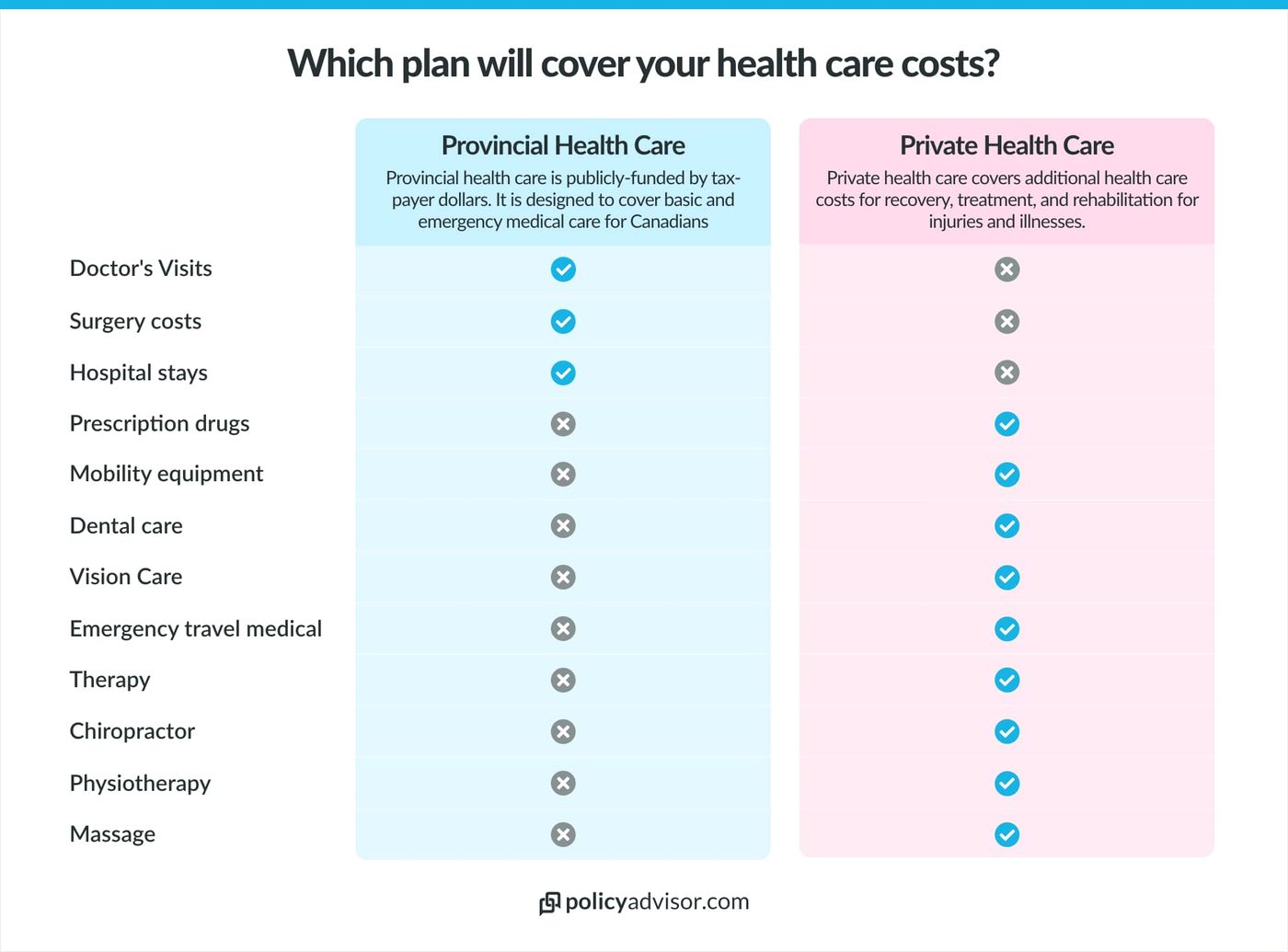
OHIP provides coverage for a wide range of medically necessary services. This includes visits to doctors and specialists, hospital stays and surgeries, and diagnostic tests like X rays and lab work. It also covers some specific services for certain age groups, such as one routine eye exam annually for children and youth aged 19 and under. However, OHIP coverage is not comprehensive and leaves significant gaps for everyday health expenses. The plan does not cover most day to day health expenses incurred outside a hospital setting. This creates the primary need for supplemental private health insurance for many Ontario residents.
There are several major categories of health costs that OHIP does not pay for. Prescription medications purchased at a pharmacy are generally not covered. Dental care, including cleanings, fillings, braces, dentures, and crowns, is excluded from OHIP. Vision care for adults, such as eye exams and eyewear like glasses and contact lenses, is not covered. Paramedical services like physiotherapy, chiropractic care, massage therapy, and psychology visits are also not included. Other excluded items can include medical equipment, ambulance services for non emergency transfers, and cosmetic procedures. These gaps mean residents without other coverage must pay out of pocket for these common health needs.
- OHIP covers visits to doctors and specialists.
- OHIP covers hospital care and surgeries.
- OHIP covers diagnostic tests like X rays.
- OHIP covers one annual eye exam for ages 19 and under.
- OHIP does not cover prescription medications.
- OHIP does not cover dental care (cleanings, fillings, braces).
- OHIP does not cover vision care for adults (exams, glasses).
- OHIP does not cover paramedical services (physio, massage).
Private Health Insurance Plans
Private health insurance plans are designed to cover the expenses that OHIP does not. These plans are offered by insurance companies and are purchased individually or sometimes through an employer. The purpose of private insurance is to bridge the gap between what is covered by provincial plans and what you pay out of pocket. These plans are customizable, allowing you to tailor coverage to include a range of healthcare needs that matter to you. Common areas of coverage include prescription medications, dental care, vision care, and paramedical services. Some plans also offer additional benefits like emergency travel medical insurance as an add on.
Monthly premiums for private health insurance vary based on the plan you choose, your age, and the level of coverage. As of September 2026, basic plans can start around $134 per month. Insurance providers often have different plan tiers, from basic no medical question plans to more comprehensive options. Some companies offer guaranteed acceptance plans, which do not require a medical exam and will cover pre existing conditions, though these conditions may affect the premium. The application process typically involves a short questionnaire about your health history, but providers like Ontario Blue Cross state they do not ask for medical tests like bloodwork. It is important to compare plans based on the net coverage amount, which subtracts expected out of pocket costs like deductibles and co payments from the stated coverage limits.
Leading Insurance Providers in Ontario
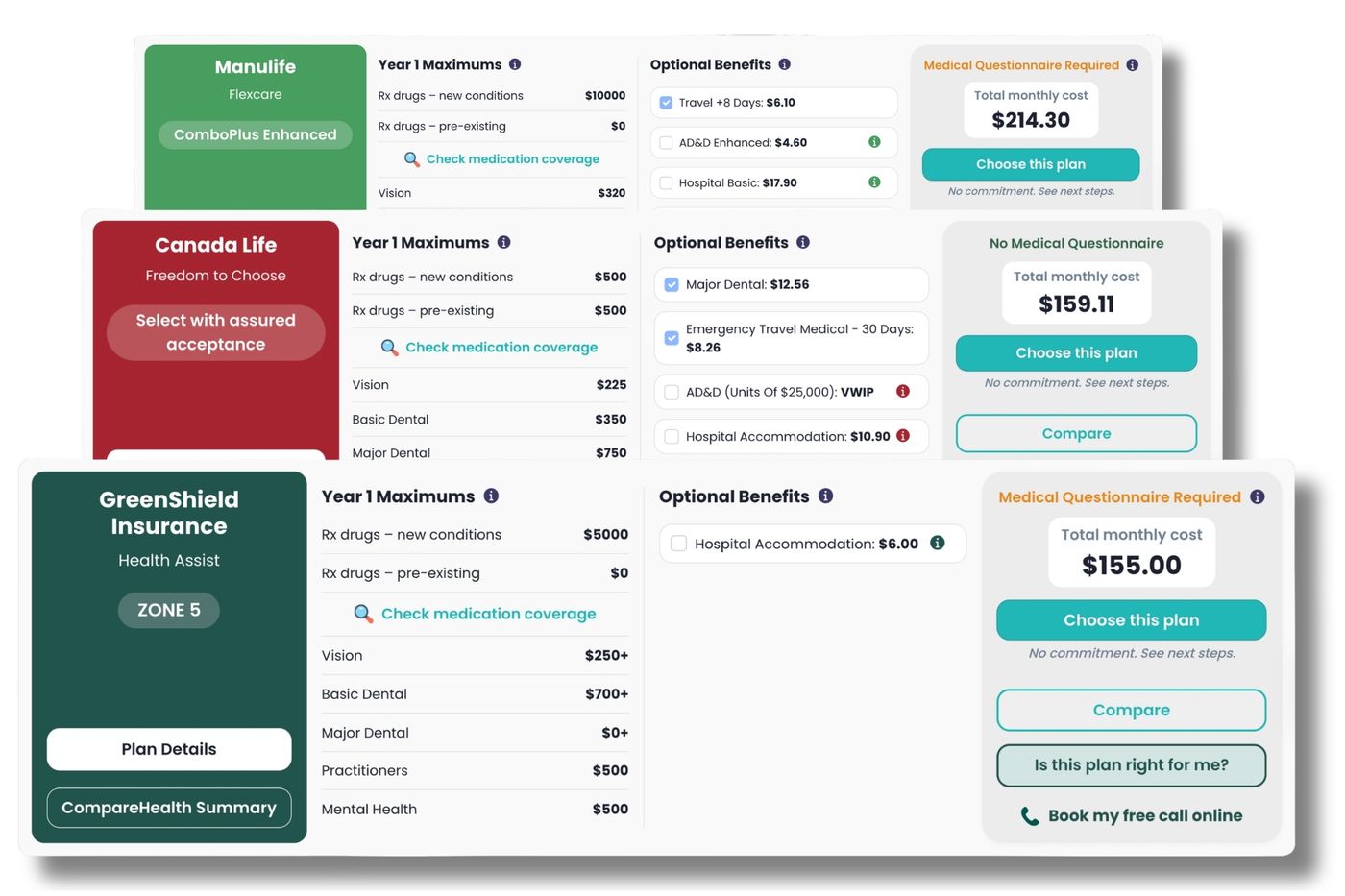
Several companies offer private health insurance to Ontario residents. Analysis of over 1,700 quotes from the seven largest providers identifies PolicyMe, GreenShield, ScotiaLife, and Manulife among the best health insurance providers in Ontario. Other major providers include Sun Life, Canada Life, and Ontario Blue Cross. These companies sell a variety of individual and family plans. Ontario Blue Cross, for example, markets plans like a basic insurance with no medical questions, a flexible popular plan, and a retiree plan for those leaving workplace benefits. Manulife offers health and dental, disability, and critical illness coverage. Each provider has its own portfolio of plans with different benefits, coverage levels, and maximums.
Independent platforms like CompareHealth exist to help residents compare plans. CompareHealth reviews 92 personal health insurance plans from 12 providers across nine provinces, including Ontario. They compare benefits users are likely to claim, such as prescription drugs, dental, vision, and paramedical services. The platform allows users to sort plans by benefits and provides pricing breakdowns. It is important to note that such platforms do not sell insurance or make recommendations. They earn money by facilitating connections between users and advisors or insurance providers. Users should always verify plan details, coverage limits, and the latest premiums directly with the insurance provider before purchasing, as information can change.
- PolicyMe is identified as a leading provider in Ontario.
- GreenShield is identified as a leading provider in Ontario.
- ScotiaLife is identified as a leading provider in Ontario.
- Manulife is identified as a leading provider in Ontario.
- Sun Life sells private health insurance in Ontario.
- Canada Life sells private health insurance in Ontario.
- Ontario Blue Cross sells private health insurance in Ontario.
- CompareHealth compares plans from 12 providers across 9 provinces.
Age Based Coverage Considerations
The need for supplemental private health insurance in Ontario often changes with age because OHIP coverage for certain services is age dependent. For children and youth, OHIP provides one routine eye exam per year for those aged 19 and under. Once a person turns 20, this coverage ends, creating an immediate gap. Prescription drug coverage also varies significantly by age, as public programs like the Ontario Drug Benefit program have specific age and income criteria. Dental care is not covered by OHIP at any age, but the cost and frequency of dental needs can change over a lifetime.
These age based differences mean the need for private coverage often peaks during the working age years. This is when government health plans are more limited and individuals may not have access to employer sponsored group benefits. Seniors may have some drug coverage through government programs, but often seek private plans for dental, vision, and other paramedical services. The analysis of private plans shows that premiums are calculated based on age, so costs will increase as you get older. When comparing plans, it is crucial to consider how coverage for services like dental cleanings, eyeglasses, and physiotherapy aligns with your anticipated needs at your current life stage.
Common Mistakes and Key Details
One common mistake is assuming OHIP covers all health expenses, leading to unexpected out of pocket costs for prescriptions or dental work. It is important to understand exactly what OHIP covers and what it does not. Another error is not applying for OHIP immediately upon becoming eligible, though the waiting period has been eliminated. You should apply as soon as you meet the residency requirements to avoid any lapse in coverage. When applying, ensure you bring the correct original documents to the ServiceOntario centre. Copies or expired documents will not be accepted. For newborns, failing to complete the infant registration form at the hospital can delay receiving the child's health card.
When considering private insurance, a frequent mistake is not comparing the net value of plans. Look beyond the monthly premium and examine deductibles, co payments, and annual maximums. Some plans may have low premiums but high out of pocket costs. Also, be aware that pre existing conditions can affect your eligibility for certain plans and your premiums, even with guaranteed acceptance options. Always disclose your health history accurately on applications. Finally, remember that private health insurance is meant to supplement, not duplicate, your OHIP coverage. It builds on your free provincial coverage for services OHIP does not pay for, creating a more complete safety net for your health expenses.
Frequently asked questions
What does OHIP cover in Ontario?
OHIP covers medically necessary services for residents with a valid health card. These services include visits to doctors and specialists, hospital care, and diagnostic tests. It also provides one routine eye exam annually for children and youth aged 19 and under. However, OHIP does not cover most day to day health expenses outside a hospital, such as prescription drugs, dental care, vision care for adults, or paramedical services like physiotherapy.
How do I apply for an OHIP health card?
You must apply in person at a ServiceOntario centre. Bring three original documents proving your identity, immigration status, and Ontario residency. There is no waiting period, so coverage is immediate if you are eligible. For newborns in hospitals with birthing facilities, staff provide a registration form to complete, and the health card arrives by mail within eight weeks.
What does private health insurance in Ontario typically cover?
Private health insurance plans cover health expenses not paid for by the provincial plan. Common coverage includes prescription medications and dental care such as cleanings, braces, and crowns. These plans also often cover vision care, including exams and eyewear, as well as paramedical services. Private insurance helps bridge the gap between what is covered by OHIP and what you pay out of pocket.
How much does private health insurance cost in Ontario?
Costs vary based on the plan, coverage level, and your age. As of September 2026, basic plans can start around $134 per month. Premiums increase with more comprehensive coverage and for older applicants. Guaranteed acceptance plans are available but may have higher premiums if you have pre existing conditions.
Can I get health insurance if I have a pre existing condition?
Yes, you can get health insurance if you have a pre existing condition. Many providers offer guaranteed acceptance plans that do not require a medical exam. You will still be asked to disclose pre existing conditions on a short questionnaire. This information is used to calculate your monthly premiums and to determine which specific plans you are eligible for, but coverage is not denied.
Who is eligible for OHIP coverage?
You must also meet at least one additional requirement, such as being a Canadian citizen, a permanent resident, a foreign worker with a valid permit, or a protected person. There is no longer a waiting period for OHIP coverage, so eligible individuals receive immediate health insurance. Certain individuals with an emergency authorization to enter Canada for humanitarian reasons, such as under the Canada Ukraine Authorization for Emergency Travel (CUAET), may also be eligible without the 153 day physical presence requirement. All applicants must apply in person at a ServiceOntario centre with the required documents.
Sources and further reading
- Apply for OHIP and get a health card ontario.ca
- Freedom to Choose™ health and dental insurance canadalife.com
- Best Health Insurance in Ontario (September 2026 Guide) policyme.com
- Health Insurance, Personal Insurance, Ontario Blue Cross on.bluecross.ca
- Compare Health Insurance Plans | CompareHealth comparehealth.ca
This article explains how things work and is not financial, tax or legal advice. Rules, limits and rates change, so check the current figures with the Canada Revenue Agency, your province or your financial institution before you act.