Finding affordable car insurance in Toronto involves understanding how insurers calculate premiums based on specific local factors. The median yearly car insurance cost in Toronto is $2,456, which is 4.7% higher than the provincial median. Rates vary significantly by postal code, with annual premiums ranging from $2,136 to $2,751. The price you pay is influenced by your driving history, vehicle type, and specific neighbourhood risks like traffic congestion and auto theft.
How Postal Codes Shape Toronto Insurance Rates
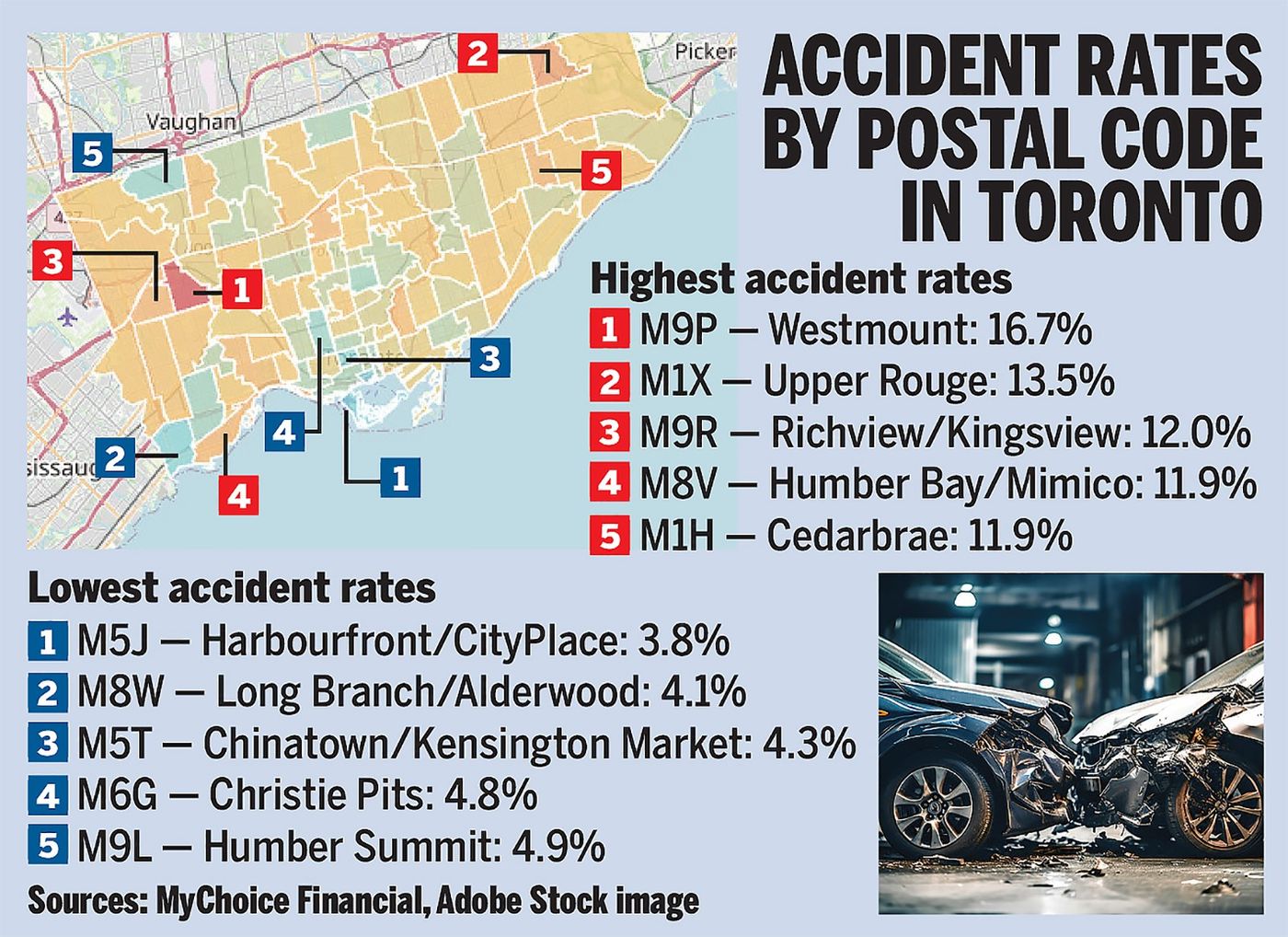
Your postal code is a primary indicator for insurance companies when determining your car insurance rate in Toronto. The city's postal-code medians show a significant range, from $2,136 in areas like M4P and M4C to $2,751 in M6M and M6N. This represents a gap of over $600 per year, or approximately 29% between the lowest and highest values. Local statistics do not always perfectly align with accident or theft rates, meaning your address matters but is not explained by a single statistic. For instance, the M5J postal code has a relatively low accident rate and few stolen vehicles, yet its premium is higher than some other parts of the city. Insurers use complex models that consider aggregated risk data for each specific geographic area to set these rates.
The risk of accidents varies dramatically across Toronto's neighbourhoods. On average, 8.6% of Toronto drivers have an accident on their record, but this figure ranges from less than 4% in some areas to nearly 17% in others. Drivers in the M9P Westmount area are four times more likely to have an accident on their record than drivers in M5J Harbourfront. This disparity directly translates into hundreds of dollars difference in annual insurance premiums. Even within a high-risk postal code, individual factors like a clean driving history can help lower your rate. Completing a certified defensive driving course or installing a dashcam may also qualify you for discounts with certain insurance providers.
The Impact of Auto Theft on Premiums
Auto theft remains a significant driver of high insurance rates in Toronto, despite a recent decline. From 2024 to 2025, auto thefts in the city declined by 24.1 percent, from 9,522 to 7,226 incidents. However, theft levels are still much higher than they were before 2020, with nearly 39,000 vehicles stolen across Toronto in a four-year period. The risk is not evenly distributed, creating substantial premium differences based on location. For example, vehicle thefts occur 75 times more often for those living in Rexdale (M9W) compared to those in the St. Lawrence Market area (M5C). This concentrated risk means insurers often apply higher comprehensive deductibles or theft surcharges for vehicles in high-theft postal codes. If your car is a popular target for thieves, it is important to check with your insurer about specific model-related risks.
Some insurers may require approved anti-theft devices for certain models, and installing them can sometimes lower your premium. Common recommendations include GPS trackers, steering wheel locks, or aftermarket immobilizers. Ensuring you have comprehensive coverage on your policy is crucial in high-theft areas, as this coverage protects you if your vehicle is stolen. Without comprehensive coverage, you would be completely unprotected and responsible for the full financial loss. The decline in thefts from 2024 to 2025 is a positive trend, but the historical volume of thefts continues to influence how insurers assess risk and set prices for comprehensive coverage across the city.
How Toronto Compares to Other GTA Cities
While Toronto's insurance costs are high, its median premium of $2,456 is actually less than any adjacent city in the Greater Toronto Area. This comparison highlights the substantial variation in insurance costs across short distances. Scarborough has a median premium of $2,920, which is $464 more per year than Toronto. Markham and Vaughan also have higher median rates. The most expensive city in the GTA for car insurance is Brampton, with a median annual premium of $4,210.
These differences underscore the importance of updating your insurer immediately if you move within the GTA. You must request a new quote based on your new address and expected driving habits, as your premium will be recalculated. The drastic differences between cities are driven by the unique risk profiles insurers assign to each municipality, which include factors like traffic density, historical claims data, and theft rates. A city-level rate is an aggregate of all its postal codes, but your specific postal code within that city will determine your final premium. The gap between Toronto and Brampton shows how localized risk assessment can lead to vastly different costs for drivers.
Mandatory and Optional Insurance Coverage in Ontario
Ontario law requires all drivers to carry a standard package of mandatory auto insurance coverages. This core protection is designed to protect you financially after a collision under the province's no-fault insurance system, where you claim through your own insurer regardless of fault. The mandatory coverages include Third-Party Liability, which protects you if you are legally liable for injuring someone or damaging their property. Accident Benefits provide financial support for medical treatment, rehabilitation, and attendant care if you are injured. Direct Compensation-Property Damage coverage will repair or replace your vehicle if you are involved in a collision and are not at fault. Uninsured Automobile Coverage helps pay for costs if an unidentified or uninsured driver is at fault.
Beyond the mandatory coverages, drivers can add optional protections for more comprehensive security. Common optional coverages include Collision or Upset, which pays for damage to your vehicle from a collision regardless of fault, and Comprehensive or All Perils Other Than Collision, which covers events like theft, fire, or vandalism. As of July 1, 2026, Ontario's auto insurance system underwent a change where only medical, rehabilitation, and attendant care benefits remain mandatory under Accident Benefits. All other accident benefits, such as income replacement, non-earner benefits, and caregiver benefits, became optional, allowing drivers to customize their policy based on their personal needs and budget. Most drivers opt for at least $1 million in liability insurance, and you can consider increasing your coverage to $2 million as the price difference is often minimal.
- Third-Party Liability: Mandatory coverage for injury or damage you cause to others.
- Accident Benefits: Mandatory coverage for your own medical and rehabilitation costs after an accident.
- Direct Compensation-Property Damage (DC-PD): Mandatory coverage to repair your vehicle if you are not at fault in a collision.
- Uninsured Automobile Coverage: Mandatory protection against at-fault drivers who have no insurance.
- Collision Coverage: Optional coverage for damage to your vehicle from a collision.
- Comprehensive Coverage: Optional coverage for theft, fire, vandalism, and other non-collision perils.
- Increased Accident Benefits: Optional enhancements to standard medical and income replacement benefits (optional as of July 2026).
Key Factors That Determine Your Insurance Premium
Insurance companies calculate your car insurance premium by evaluating a wide array of personal and statistical factors. Your driving record is paramount, as a history of accidents or traffic convictions signals higher risk and leads to higher costs. Your age and years of driving experience are also heavily weighted, with new drivers typically facing much higher premiums due to their lack of a proven track record. The make, model, and year of your vehicle directly affect the cost, as vehicles that are less expensive to repair or replace generally cost less to insure. High-performance vehicles or those popular with thieves will command higher premiums.
How you use your vehicle also matters. Insurers will ask about your annual driving distance and whether the vehicle is used for commuting, business, or pleasure. A longer daily commute, especially on high-traffic routes like Highway 401, increases risk exposure. Your chosen deductibles for collision and comprehensive coverage have an inverse relationship with your premium. Selecting a higher deductible lowers your annual cost but increases your out-of-pocket expense if you make a claim. Finally, many insurers offer discounts that can reduce your final price, such as bundling home and auto policies, installing telematics devices that monitor safe driving, or having multiple vehicles on the same policy.
Ways to Save on Car Insurance in Toronto
There are several proven strategies to reduce your car insurance costs in Toronto. The most effective method is to shop the market and compare quotes from multiple providers, as premiums can vary significantly between companies for the same driver profile. Using online comparison platforms can streamline this process. Maintaining a clean driving record is crucial, as even one at-fault accident or major conviction can increase your premium for several years. If you are eligible, enrolling in a usage-based insurance program can lead to substantial savings. These telematics programs, such as Aviva Journey or Allstate's Drivewise, track your driving behaviour through a mobile app and can offer discounts of up to 25% or 30% at renewal for safe driving habits.
Increasing your deductibles for collision and comprehensive coverage is a direct way to lower your premium, though it requires you to pay more out-of-pocket if you file a claim. Bundling your auto insurance with your home insurance policy with the same provider often unlocks a multi-policy discount, with average savings of $1,172 when bundling. Installing approved anti-theft devices can not only protect your vehicle but may also qualify you for a discount, particularly in high-theft areas. Finally, some insurers offer discounts for completing a certified defensive driving course, for being a member of certain associations, or for having multiple vehicles on the same policy. It is important to ask your broker or insurer about all available discounts for which you may qualify.
Understanding Provincial Auto Insurance Systems
Auto insurance in Canada is governed provincially, leading to different systems and requirements across the country. Ontario operates a private insurance system where consumers purchase mandatory and optional coverages from private companies. This differs from provinces like Manitoba, Saskatchewan, and British Columbia, which have government-run auto insurance plans. In Ontario, you cannot register a car and obtain license plates without first purchasing insurance from a licensed provider. Proof of insurance, typically in the form of a pink slip, must be carried in the vehicle at all times. The harmonized sales tax is not applied to car insurance premiums in Ontario.
The table below outlines key characteristics of the auto insurance systems in several Canadian provinces. It highlights the differences between public and private models and the nature of mandatory coverage. In Ontario, the system is private and drivers must compare quotes from multiple insurers. Car insurance is mandatory to register a vehicle and get license plates in Ontario.
| Province | System Type | Mandatory Coverage Notes |
|---|---|---|
| Ontario | Private | Mandatory core coverages. Optional additions. No-fault system. |
| British Columbia | Public (ICBC) | Basic coverage through public insurer. Optional private coverage allowed. |
| Alberta | Private | Mandatory minimum liability and accident benefits. |
| Quebec | Mixed | Public bodily injury insurance. Private property damage insurance. |
| Manitoba | Public (MPI) | Basic coverage through public Crown corporation. |
| Saskatchewan | Public (SGI) | Basic coverage through public insurer. Optional from private companies. |
These structural differences mean the process of shopping for insurance varies greatly depending on where you live. In Ontario's private system, consumers must compare quotes and coverage options from multiple insurers to find the best value. Available providers and specific rules around claims also differ by province. Due to government-run auto insurance plans, car insurance from some national providers is not available in Manitoba, Saskatchewan and British Columbia.
Frequently asked questions
What is the average cost of car insurance in Toronto?
The median yearly car insurance cost in Toronto is $2,456, which works out to approximately $205 per month. This figure is based on data from over 1,500 auto insurance quotes. It is important to note that this is a median, meaning half of drivers pay more and half pay less. Your actual premium will depend on your specific postal code, driving record, vehicle, and other personal factors.
Why does my postal code affect my car insurance rate so much?
Insurance companies use your postal code as a primary indicator of risk because it links to localized data on accidents, theft, traffic density, and claims history. In Toronto, annual premiums can vary by over $600 between postal codes, with the lowest median around $2,136 and the highest around $2,751. Areas with higher frequencies of accidents or auto thefts, like Rexdale, typically have higher premiums than areas with lower risk profiles. Your address is a main indicator for your insurance company when determining your rate.
What is the cheapest postal code for car insurance in Toronto?
Based on median premium data, the postal codes with the lowest car insurance costs in Toronto are M4P and M4C, where the median yearly premium is $2,136. The range of premiums across the city is substantial, with the highest median premiums found in postal codes M6M and M6N at $2,751 per year. The difference between the lowest and highest areas is approximately 29 percent. Toronto's postal code medians range from $2,136 to $2,751.
How can I lower my car insurance premium in Toronto?
You can lower your premium by shopping around and comparing quotes from multiple insurers. Maintaining a clean driving record and completing a defensive driving course can help. Installing anti theft devices like a GPS tracker or steering wheel lock may protect your vehicle and lower your premium. Bundling home and auto policies can also lead to savings. A usage based insurance program can reward safe driving behaviour with a discount.
What car insurance coverage is mandatory in Ontario?
Ontario law mandates core coverages that protect you financially after a collision. Mandatory coverages include Third Party Liability, Accident Benefits, Direct Compensation Property Damage, and Uninsured Automobile Coverage. You must carry proof of this insurance to register a vehicle and get license plates. Additional or increased benefits and coverage are available as optional add ons for extra protection.
Is car insurance more expensive in Toronto or Brampton?
Car insurance is significantly more expensive in Brampton than in Toronto. Toronto's median yearly car insurance cost is $2,456, which is less than any adjacent GTA city. In contrast, the median premium in Brampton is $4,210. Even Scarborough, which is the closest to Toronto, has a median cost of $2,920, which is $464 more. Insurance companies determine rates based on various factors, with postal code being a primary indicator of risk. The substantial cost difference highlights how location within the Greater Toronto Area greatly impacts insurance premiums.
Sources and further reading
- Cheap Car Insurance for Toronto Drivers | MyChoice mychoice.ca
- Car Insurance Ontario, Free Online Auto Insurance Quote rbcinsurance.com
- Intact Insurance: Canada's Largest P&C Insurer | Car & Home ... intact.ca
- Ontario Car Insurance Quotes Online allstate.ca
- Compare car insurance quotes online & start saving today ratehub.ca
This article explains how things work and is not financial, tax or legal advice. Rules, limits and rates change, so check the current figures with the Canada Revenue Agency, your province or your financial institution before you act.