The prime rate in Canada is currently 4.45% as of October 30, 2025. This key benchmark interest rate is used by major banks to set rates for variable-rate mortgages, lines of credit, and other loans. The rate has remained at this level since October 2025, following a cut by the Bank of Canada, and has been held steady through subsequent policy announcements. For Canadian borrowers, the prime rate directly influences the cost of variable-rate borrowing, making it a critical figure for personal finance decisions.
What the Prime Rate Is and How It Works
The prime rate, also known as the prime lending rate, is the annual interest rate that Canada’s major banks and lenders use as a basis to set interest rates for variable-rate financial products. This foundational rate is applied to products like variable-rate mortgages, home equity lines of credit, personal lines of credit, and some business loans. When a lender quotes a rate for a variable product, it is typically expressed as the prime rate plus or minus a certain percentage spread. The prime rate itself is not set by the government but is determined independently by each financial institution based on broader market conditions and their own funding costs. In practice, the major Canadian banks usually announce identical prime rates, creating a de facto national benchmark that consumers encounter.
The prime rate's primary function is to serve as a reference point for pricing variable credit. It provides a transparent and responsive mechanism for adjusting borrowing costs in line with changes in the broader economy. The rate is always higher than the Bank of Canada's overnight lending rate because lenders add a spread to account for their operational expenses, funding costs, and the risk associated with lending. This relationship means that when the central bank changes its policy rate, commercial banks generally adjust their prime rates by a corresponding amount. The stability of the prime rate since October 2025 reflects a period of monetary policy pause from the Bank of Canada, offering predictable costs for borrowers with variable-rate obligations during this time.
The Direct Link to the Bank of Canada
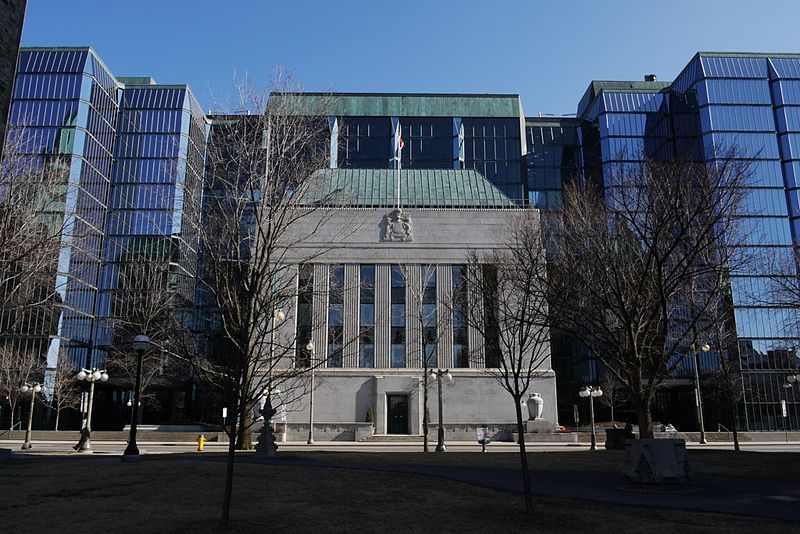
The prime rate is closely tied to the Bank of Canada's overnight lending rate, which is the central bank's key policy interest rate. As of the latest announcement on September 2, 2026, the Bank of Canada has held its overnight rate steady at 2.25%, marking its seventh consecutive decision to maintain the rate. The overnight rate is the interest rate at which major financial institutions borrow and lend one-day funds among themselves. This rate forms the foundation for short-term borrowing costs in the financial system. When the Bank of Canada adjusts this rate, it signals a change in monetary policy aimed at controlling inflation or stimulating economic growth.
Lenders use the overnight rate as a benchmark for their own cost of funds. Consequently, changes to the Bank of Canada's policy rate typically lead to corresponding adjustments in the commercial banks' prime rates. For instance, when the Bank raises its overnight rate, borrowing becomes more expensive for the banks themselves, and they generally pass this cost on to consumers by increasing their prime rates. While lenders are not legally obligated to match the Bank of Canada's moves exactly, competitive and funding pressures mean they almost always do so by the same amount and within a few days. The current spread between the overnight rate of 2.25% and the prime rate of 4.45% illustrates the margin lenders add for their costs and profit.
How the Prime Rate Affects Variable-Rate Borrowing
The prime rate directly determines the interest costs for Canadians with variable-rate loans. The most common and significant application is for variable-rate mortgages, where the borrower's interest rate fluctuates with changes in the lender's prime rate. Any future change to the prime rate would automatically change their mortgage interest rate by the same amount. This immediate pass-through means that borrowers with variable-rate products are directly exposed to monetary policy decisions made by the Bank of Canada.
Other common products tied to the prime rate include home equity lines of credit and personal lines of credit, which often use a formula of prime plus a premium. Business loans and some types of credit cards may also reference the prime rate. When the prime rate rises, the interest portion of a variable-rate mortgage payment increases, which can reduce the amount of each payment that goes toward paying down the principal loan amount. In a scenario where rates rise significantly, some borrowers may reach their trigger rate, the point at which their regular payment no longer covers the accruing interest. When this occurs, lenders may require the borrower to increase their payment amount, make a lump-sum payment, or convert to a fixed-rate mortgage to ensure the loan continues to amortize properly.
Historical Changes to Canada's Prime Rate
Canada's prime rate has moved through several major economic cycles over the past decade, reflecting shifts in inflation, economic growth, and Bank of Canada monetary policy. From early 2022 to the first half of 2023, the prime rate steadily increased in response to the Bank of Canada's efforts to control high inflation. During this period, the Bank of Canada implemented a series of 10 rate hikes, pushing its Overnight Lending Rate to 5 percent by mid 2023. The prime rate has been adjusted multiple times in recent years in response to shifting economic conditions. The table below shows how Canada's prime rate has changed over time, illustrating its path from higher levels in late 2024 to its current stable point.
| Date | Prime Rate |
|---|---|
| October 30, 2025 | 4.45% |
| September 18, 2025 | 4.70% |
| March 13, 2025 | 4.95% |
| January 30, 2025 | 5.20% |
| December 12, 2024 | 5.45% |
Prime Rate Versus Fixed Mortgage Rates
It is important to distinguish between the prime rate, which governs variable-rate borrowing, and the forces that determine fixed mortgage rates. Fixed mortgage rates in Canada are not directly tied to the Bank of Canada's overnight rate or the commercial prime rate. Instead, fixed rates are primarily influenced by the yields on Government of Canada bonds, particularly the five-year bond. When bond yields rise, lenders typically increase the interest rates they offer on fixed-term mortgages, and when yields fall, fixed rates tend to decrease. This means that the environment for fixed-rate mortgages can change independently of Bank of Canada announcements.
Consequently, a period where the Bank of Canada holds its overnight rate steady, like the current one, can still see movement in fixed mortgage rates based on bond market activity. Borrowers shopping for a mortgage or approaching renewal must compare both fixed and variable rate options, as their respective drivers are different. The choice between a variable rate linked to prime and a fixed rate involves weighing the potential savings of a variable rate against the payment certainty offered by a fixed rate. This decision depends on individual financial tolerance for risk and expectations about future interest rate movements.

Common Products and Rates Linked to Prime
A wide range of consumer credit products use the prime rate as their foundation. The most impactful for household finances are variable-rate mortgages, which are commonly offered at a discount to the posted prime rate. Personal lines of credit and some business loans also frequently use the prime rate as a reference, with the final rate depending on the borrower's creditworthiness and the lender's pricing. Other financial instruments are also influenced by the prime rate environment. For instance, the rates on some high-interest savings accounts and guaranteed investment certificates may move in a broad correlation with the direction of the Bank of Canada's policy, though this relationship is less direct than for variable-rate loans. It is also worth noting that the United States has its own separate prime rate, which was 7.00% as of September 18, 2026. Canadian borrowers with U.S. dollar-denominated loans would reference that rate, not the Canadian prime rate. The key takeaway is that any Canadian loan or credit product described as having a "variable" or "floating" rate is almost certainly tied to the lender's Canadian dollar prime rate.
Understanding Rate Announcements and Your Payments
The Bank of Canada makes scheduled announcements about its overnight lending rate eight times per year. Following these announcements, Canada's major banks typically announce any change to their prime rates within one to three business days. When a change occurs, it affects future interest charges on variable-rate products. For mortgages with variable rates and fixed payments, the change does not alter the monthly payment amount immediately. Instead, the portion of the payment allocated to interest versus principal is recalculated. If the rate rises, a larger share of the payment goes to interest, slowing the pace of principal repayment. If the rate falls, more of the payment goes to principal. Borrowers should monitor these announcements and understand their mortgage terms to anticipate potential changes to their borrowing costs.
If the prime rate increases enough that the fixed payment no longer covers the accrued interest, the borrower may hit their trigger rate, prompting the lender to contact them to adjust the payment. For lines of credit with variable rates, the interest charge is typically calculated on the outstanding balance each month, so any prime rate change affects the next statement's interest cost directly. Staying informed about the Bank of Canada's policy direction can help borrowers plan their finances, though predicting exact timing and magnitude of rate changes is not possible. The current period of stability since October 2025 provides a predictable environment for those with prime-linked debts.
Frequently asked questions
What is the current prime rate in Canada?
The current prime rate in Canada is 4.45%, effective as of October 30, 2025. This rate is used by major financial institutions like RBC, TD, Scotiabank, BMO, and CIBC. It has remained unchanged since October 2025 following a rate cut by the Bank of Canada. The Bank's subsequent policy announcements, including the latest on September 2, 2026, have all held the benchmark rate steady, maintaining the prime rate at this level.
How does the Bank of Canada influence the prime rate?
The Bank of Canada influences the prime rate through its setting of the overnight lending rate, which is its key policy interest rate. As of September 2, 2026, this rate is 2.25%. Commercial banks base their prime rates on this benchmark, adding a spread for their costs and profit. When the Bank of Canada changes the overnight rate, lenders typically adjust their prime rates by the same amount within days.
What happens to my variable mortgage if the prime rate changes?
If the prime rate changes, the interest rate on your variable mortgage changes by the same amount immediately. For mortgages with fixed payments, your monthly payment amount usually stays the same, but the allocation between interest and principal shifts. A rate increase means more of your payment covers interest, slowing your debt repayment. A rate decrease means more goes to principal. If rates rise significantly, you may reach a trigger rate where your payment no longer covers all the interest, and your lender may require you to increase your payment.
How often does the prime rate change?
The prime rate changes in response to announcements from the Bank of Canada, which occur eight scheduled times per year. The prime rate does not change at every announcement, only when the Bank of Canada adjusts its overnight lending rate. The rate has been stable at 4.45% since October 30, 2025, indicating a prolonged period of no change from the central bank. Prior to that, the rate changed several times between late 2024 and late 2025 as the Bank adjusted policy.
Is the prime rate the same for all banks in Canada?
While each bank sets its own prime rate independently, in practice the major Canadian banks almost always have identical prime rates. This is because they face similar funding costs and competitive pressures. As of October 2026, banks including RBC, TD, Scotiabank, BMO, and CIBC all list their prime rate as 4.45%. There can occasionally be minor or temporary differences with smaller lenders, but for the major institutions, the prime rate is effectively a uniform national benchmark.
What is a typical variable mortgage rate based on the prime rate?
A typical variable mortgage rate is quoted as the prime rate plus or minus a percentage spread. For instance, RBC Royal Bank of Canada has advertised a rate of prime minus 0.600 percent, which equals 3.850 percent when the prime rate is 4.45 percent. Another example is prime minus 0.300 percent, resulting in a rate of 4.150 percent. These rates are used for variable rate mortgages and other prime linked borrowing products. The prime rate itself is the annual interest rate major banks use to set rates for variable financial products. This rate directly influences the cost of variable rate mortgages, lines of credit, and some business loans across Canada.
Sources and further reading
- Prime Rate in Canada ratehub.ca
- Current Mortgage Rates | RBC Royal Bank of Canada rbcroyalbank.com
- TD Prime Rate and Today's Rates | TD Canada Trust td.com
- Scotiabank Interest Rates scotiabank.com
- Mortgage rates across Canada 1 cibc.com
This article explains how things work and is not financial, tax or legal advice. Rules, limits and rates change, so check the current figures with the Canada Revenue Agency, your province or your financial institution before you act.