Finding cheap travel insurance in Canada involves comparing plans and understanding coverage options to manage costs. Provincial health plans offer little to no coverage outside Canada and limited coverage in other provinces, making supplementary insurance a financial necessity. Insurers offer a range of plans, including single-trip medical, multi-trip medical, and all-inclusive packages, with rates varying by age, trip length, and health. Comparing quotes online and considering factors like deductibles and family plans can help Canadian travellers secure affordable protection for unexpected medical and travel emergencies.
Why Canadians Need Travel Insurance
Canadian provincial and territorial health plans provide minimal coverage for medical emergencies outside one's home province and almost none outside the country. Expenses for hospital care, physician services, and medical evacuation can reach hundreds of thousands of dollars, creating a significant financial risk for uninsured travellers. Travel insurance is designed to cover these eligible unexpected costs, including emergency medical treatment, hospital stays, and prescription medications incurred while travelling. Many plans also include coverage for trip cancellation and interruption, which reimburses non-refundable trip costs if a covered event forces you to cancel or cut short your travels. Without this protection, Canadians bear the full financial burden of emergencies abroad, which can be financially overwhelming. A survey of over 2,000 adults indicated that rising costs, particularly in the United States, are reshaping Canadian travel habits, making financial protection even more critical.
Types of Travel Insurance Plans Available
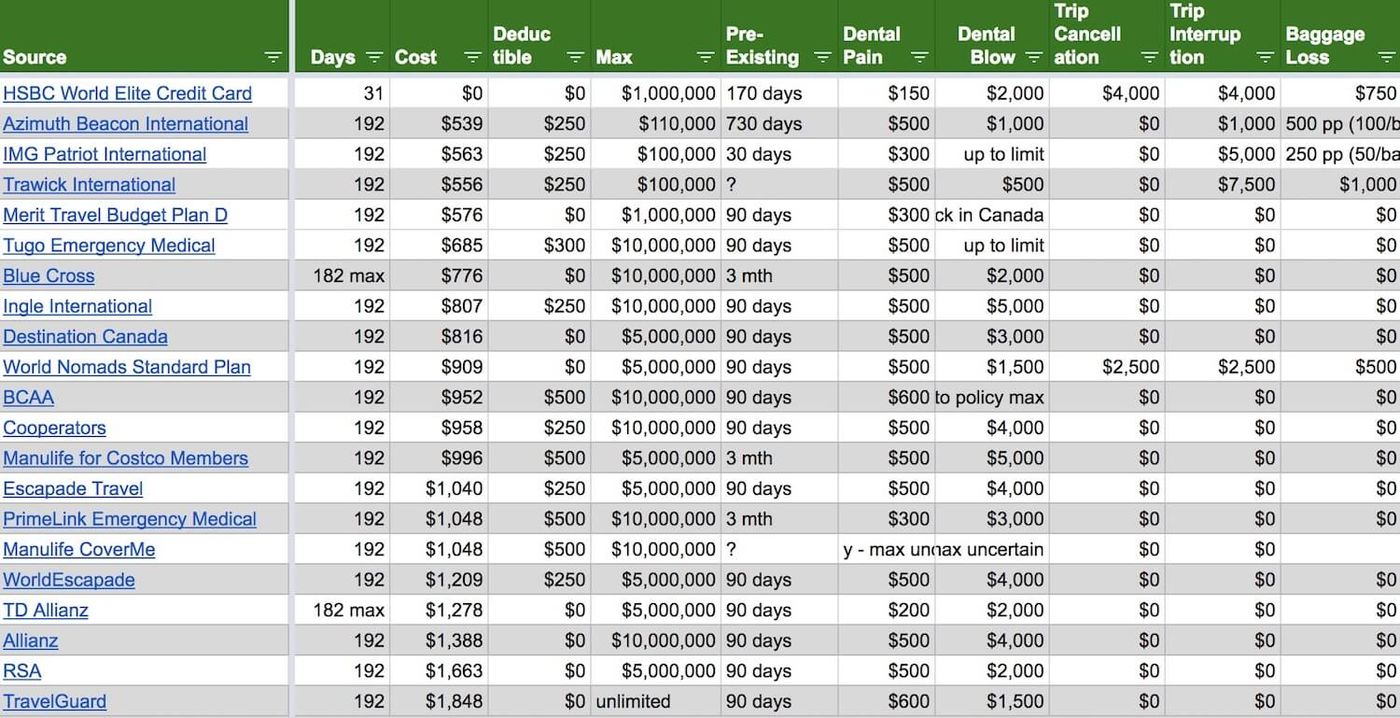
Canadian insurers offer several distinct types of travel insurance plans to suit different travel patterns and needs. The Single-Trip Medical Plan provides emergency medical coverage for one specific trip and is designed for travellers taking a single vacation who only want medical protection. The Multi-Trip Medical Plan covers multiple trips throughout the year, up to a specified number of days per trip, and is intended for frequent travellers. The Multi-Trip All-Inclusive Plan combines emergency medical coverage with trip cancellation, interruption, and baggage protection in an annual package for those seeking comprehensive financial protection. The standalone Trip Cancellation and Interruption Plan offers financial protection if an eligible unexpected event causes your trip to be cancelled or interrupted, without including medical coverage. Additionally, some providers offer Top-up or Extension plans for travellers who need to add days to an existing policy or want more coverage if their trip cost is higher than their existing plan covers. There are also specific plans for travel entirely within Canada, which may be offered at a discount, such as a 25% savings on a single-trip medical plan for domestic travel.
Key Coverage Elements and Benefits
Beyond basic medical coverage, comprehensive travel insurance plans include several critical benefits that address specific travel risks. Emergency medical evacuation coverage is essential, as it pays for transportation to the nearest appropriate medical facility or even back to Canada, a service that can cost tens of thousands of dollars. Trip interruption insurance covers extra costs like hotels, meals, and taxi fares if a covered situation forces you to change your travel plans and reimburses you for unused, prepaid travel arrangements. Baggage and personal effects coverage provides protection for loss, damage, or delay of luggage, though sub-limits often apply to individual items. Many plans offer 24-hour worldwide emergency assistance services, which provide access to medical professionals, help with locating medical facilities, and coordination of care. Some insurers, like Medipac, offer exclusive benefits such as bringing a family member to your bedside if hospitalized, in-hospital or in-home rehabilitation services, and coverage for pet boarding and transport during a medical emergency.

Factors That Determine Insurance Costs
The cost of travel insurance for Canadians is not a flat rate but is calculated based on several personal and trip-related factors. The traveller's age is a primary determinant, with premiums typically increasing for older travellers, especially those over 65, who may need to complete health questionnaires. The length of the trip directly affects the price, as longer trips carry a higher risk and thus a higher premium. The destination also influences cost, with travel to the United States, where medical costs are exceptionally high, often resulting in higher premiums than travel within Canada or to other international destinations. The type of coverage selected, such as a basic medical plan versus an all-inclusive plan with cancellation protection, will change the premium. The presence of pre-existing medical conditions and the traveller's health status can affect eligibility and pricing, with stable conditions often covered but potentially at a higher rate category. The total trip cost is a major factor for trip cancellation plans, as higher non-refundable expenses require higher coverage limits and thus a higher premium.
Insurers use factors like medical condition to place applicants into rate categories, which determine the final premium. Coverage is the same for all categories. For example, a Single-Trip Medical Plan for two healthy 51-year-old adults and their dependent children on a 16-day international trip has a standard rate of $158.00 and a preferred rate of $150.10. A Multi-Trip All-Inclusive Plan for the same family has a standard rate of $753.00 and a preferred rate of $476.90. These examples illustrate how different scenarios can lead to varying standard and preferred rates for a family plan.
| Scenario | Plan Type | Standard Rate | Preferred Rate |
|---|---|---|---|
| Two 51-year-olds with two children, 16-day international trip | Single-Trip Medical | $158.00 | $150.10 |
| Same family, $4,000 trip cost | Trip Cancellation & Interruption | $294.00 | $279.30 |
| Same family, $4,000 trip cost | Multi-Trip All-Inclusive | $753.00 | $476.90 |
These examples show that the most comprehensive coverage, such as a Multi-Trip All-Inclusive Plan, commands the highest premium. Adding trip cancellation and interruption protection for a costly trip increases the cost over a basic medical plan. Preferred rates are often available through specific channels, such as exclusive rates for Costco members for Manulife plans. Preferred rates can also be available for those who qualify based on health status or through other discounts.
Strategies for Finding Affordable Coverage
Finding affordable travel insurance requires a methodical approach to comparing the market and understanding policy details. The first step is to use online comparison tools and quote engines offered by many insurance providers and aggregator websites, which provide instant, free quotes from multiple companies. It is crucial to compare not just the price but the specific coverage limits, exclusions, and benefits across different plans, as a cheaper policy may offer less comprehensive protection. Reviewing sample policies is essential to understand defined terms, full descriptions of features, benefits, limitations, and exclusions before purchasing. Exploring discount opportunities can significantly lower costs, such as family or couple coverage plans, multi-trip annual plans for frequent travellers, and deductible options where accepting a higher deductible can reduce the premium. Checking for new client discounts, loyalty discounts, and group discounts for travelling with ten or more people can also yield savings. Some providers offer a Claim-Free Advantage discount for new clients or significant loyalty and claim-free discounts for returning customers, which can save up to 20%.
- Use online comparison tools for instant quotes from multiple providers.
- Review sample policies for exclusions and limitations before purchase.
- Look for family, couple, or multi-trip annual plan discounts.
- Consider a higher deductible. A $5,000 deductible can save about 25%.
- Check for new client discounts, loyalty programs, and group rates for ten or more travellers.
- Investigate provider-specific savings, like TD's 25% discount for travel entirely within Canada.
- See if you qualify for preferred rates through associations or membership clubs.
Always ensure you are comparing similar levels of coverage, as a low quote might exclude important benefits like medical evacuation. A low quote might also have very low coverage maximums compared to plans offering up to $10 million. Purchasing a plan that offers coverage in U.S. dollars, while very rare, can provide significant financial protection against currency fluctuation for trips to the United States. It is important to review a sample insurance policy for a full description of features, benefits, limitations, and exclusions.
Understanding Policy Details and Critical Exclusions
All travel insurance policies contain specific terms, conditions, and exclusions that define the scope of protection. Coverage for pre-existing medical conditions is a critical area, as most plans require conditions to be stable for a specified period before departure to be covered. Failure to disclose or instability can void a claim. The policy will list general limitations and exclusions, which are events or circumstances explicitly not covered, such as injuries from high-risk activities, travelling against medical advice, or losses due to war or civil unrest. The definition of a family member and the conditions under which trip cancellation is covered, such as a family member's illness, are strictly outlined in the policy wording. Coverage maximums, such as the $10 million limit offered by some providers for emergency medical expenses, are the absolute upper limit the insurer will pay, and sub-limits may apply to specific benefits like baggage loss. Understanding the claims process, including the requirement for original receipts and timely notification, is vital for a successful reimbursement. Policies also specify what constitutes a medical emergency and outline the process for pre-approval of certain treatments, which is managed through the insurer's 24/7 assistance centre.
It is imperative to pay particular attention to the sections of the policy document titled Pre-existing Conditions, What Is Not Covered, and General Limitations. These sections detail the stability period required for pre-existing conditions, which can vary by insurer and plan, and list excluded activities or scenarios. For example, some plans may not cover costs related to a pandemic or epidemic unless specifically included, and most will not cover costs for treatment of a condition that was unstable before departure. Furthermore, coverage for emergency dental work is typically limited to accidental injury and does not include routine care or pre-existing dental problems. Reviewing these details prevents the assumption of coverage for situations that are explicitly excluded, which is a common reason for claim disputes.
Common Mistakes to Avoid When Buying Insurance
Several common errors can lead to denied claims or inadequate coverage, turning a search for cheap insurance into a costly mistake. Failing to disclose pre-existing medical conditions or changes in health before travel is a primary reason for claim denial, as insurers require full and accurate medical information. Assuming your provincial health card provides sufficient coverage abroad is incorrect, as these plans offer little to no coverage outside Canada and limited coverage in other provinces. Buying a policy based solely on the lowest premium without reading the sample policy can result in a lack of essential coverage, such as medical evacuation or high enough coverage limits. Waiting until the last minute to purchase insurance can be problematic, as some benefits, like coverage for pre-existing conditions or trip cancellation, may require purchase within a specific number of days after making your first trip deposit. Not understanding the stability clause for pre-existing conditions, where a change in medication or treatment before travel can affect coverage, is another frequent oversight. Additionally, travellers often mistakenly believe that credit card travel insurance is automatically comprehensive, but it is essential to verify the specific benefits and limits using a provider's Credit Card Travel Insurance Verification Tool, as coverage is often basic and may exclude pre-existing conditions.
Another mistake is not considering the need for a top-up plan if your existing coverage, perhaps from a credit card, has a lower trip cost limit than your actual expenses or a shorter maximum trip duration. Overlooking the difference between a plan that pays healthcare providers directly and one that requires you to pay upfront and seek reimbursement can also create financial strain during an emergency. Finally, not checking the insurer's hours of operation for emergency assistance can lead to confusion. While many offer 24/7 emergency lines, general customer service lines may operate only during business hours, such as Monday to Friday from 8 a.m. to 9 p.m. Eastern Time. Avoiding these pitfalls requires careful reading, timely purchase, and full disclosure.
Special Considerations for Quebec Residents and Seniors
Residents of the province of Quebec face unique circumstances when purchasing travel insurance. Some national insurance providers explicitly state that their travel insurance products are not currently available to residents of Quebec, necessitating a search for providers that operate within the province. The regulatory environment for insurance in Quebec differs from other provinces, which can affect policy terms, conditions, and the types of plans offered. Quebec residents must seek out insurers licensed to sell in the province and should be prepared to encounter different application processes or plan structures. It is essential for Quebec travellers to verify a provider's ability to sell to them before spending time on quote comparisons or applications. For example, Travel Guard notes that its travel insurance products are currently not available to residents of the Province of Quebec, which is a common restriction.
Seniors, particularly those aged 65 and over, also have specific considerations. Many insurers offer plans specifically designed for mature travellers, which may feature simplified medical questionnaires for those aged 65 or over, making the process faster. However, these plans still require disclosure of health conditions and carry the same policy terms and conditions. Coverage limits and premiums for seniors are generally higher due to increased health risks. Some multi-trip plans have age limits, such as being available only for ages 0-64, while single-trip plans may extend to ages 75 and over. Seniors should look for plans that offer benefits tailored to their needs, such as coverage for pre-existing stable conditions, and should be wary of plans that exclude coverage based solely on age without a proper health assessment. Providers like RBC Insurance note that while age can affect eligibility for certain coverages, they have packages and plans that cover all age groups.
The Claims Process and Assistance Services
Understanding how to make a claim and what support is available during an emergency is a crucial part of travel insurance. In the event of a medical emergency, the first step is usually to contact the insurer's 24/7 worldwide assistance centre, whose staff can provide immediate guidance, help locate medical facilities, and may arrange for direct payment to healthcare providers where possible. For non-emergency claims, such as trip cancellation or baggage loss, the process typically begins by submitting a claim through an online portal or by contacting the insurer's administrator, with documentation like original receipts, medical certificates, or police reports. Insurers have dedicated administrators, such as Travel Guard Group Canada, Inc., who handle claims on behalf of underwriting companies like Zurich Insurance Company Ltd or AIG Insurance Company of Canada. The assistance services provided can include access to expert medical professionals who monitor your care, help with transportation to medical facilities, and coordination of complex services like medical evacuation back to Canada. It is important to note the contact details and hours for claims inquiries, which may differ from emergency lines, such as being available Monday to Friday from 8 a.m. to 8 p.m. ET. For instance, TD Insurance lists a claims line at 1-833-962-1143, operating Monday to Friday 8 a.m. to 8 p.m. ET and Saturday 9 a.m. to 5 p.m. ET.
Frequently asked questions
Does my provincial health plan cover me when I travel outside Canada?
No, provincial and territorial health plans provide little to no coverage for medical expenses incurred outside Canada. They also offer limited coverage for emergencies in other provinces. This gap makes purchasing separate travel medical insurance essential for financial protection against high hospital and physician costs abroad. Out-of-province emergency medical expenses are not generally covered by provincial plans and can be financially overwhelming.
What is the difference between single-trip and multi-trip insurance?
A single-trip plan provides emergency medical or comprehensive coverage for one specific journey. A multi-trip plan, often called an annual plan, covers multiple trips throughout the year, each up to a specified number of days. Multi-trip plans can be more cost-effective for frequent travellers, as you apply once and are covered for multiple departures. These are designed for frequent travellers who want coverage for more than one trip a year.
Are pre-existing medical conditions covered by travel insurance?
Many plans offer coverage for stable, controlled pre-existing conditions if they have been stable for a specified period before your trip, as detailed in the policy. You must accurately disclose all conditions during the application. Instability or changes in medication before travel can affect eligibility, so reviewing the stability clause is crucial. Some plans, like the Platinum All Inclusive Package from Travel Guard, include a Waiver of Pre-existing Conditions along with other coverage.
How can I get a cheaper travel insurance rate?
You can lower your premium by opting for a higher deductible, which can save up to 40%. Purchasing a family or couple plan instead of individual policies often provides a discount. Choosing a multi-trip annual plan if you travel frequently is typically cheaper than buying separate single-trip policies. Also, look for new client discounts, loyalty discounts, and group discounts for ten or more travellers, which are commonly offered.
What does trip cancellation and interruption insurance cover?
Trip cancellation insurance reimburses you for non-refundable, pre-paid travel expenses if you must cancel your trip for a covered reason, such as a medical emergency. Trip interruption insurance covers extra costs to return home early or reimburse unused trip portions if you must interrupt your travels. Some plans also cover out-of-pocket expenses for hotels and meals during a delay. Coverage limits for trip cancellation and interruption can be up to $20,000.
Is there an age limit for buying travel insurance?
Most insurers offer plans for all age groups, but options may vary. For travellers aged 65 and over, providers typically offer specific plans and may require answers to health questions. Some multi-trip plans have age limits, such as up to age 64, while single-trip plans are often available for travellers aged 75 and over. RBC Insurance states that while age can affect eligibility for certain coverages, they have packages that cover all age groups.
Sources and further reading
- Travel Coverage | Canada's #1 Travel Plans bluecross.ca
- Travel Insurance Plans for Canadians tdinsurance.com
- Medipac, Travel Insurance for Canadian Travellers ... medipac.com
- Travel Guard Canada: Travel Insurance travelguard.ca
- Travel Insurance rbcinsurance.com
This article explains how things work and is not financial, tax or legal advice. Rules, limits and rates change, so check the current figures with the Canada Revenue Agency, your province or your financial institution before you act.