A loan repayment calculator is a financial tool that helps you estimate the periodic payments required to pay back a loan. It uses inputs like the loan amount, interest rate, and term to calculate your payment schedule. For Canadians, this is essential for budgeting for major purchases like a car, home renovations, or consolidating debt. Understanding your potential payments allows you to compare loan offers and choose a repayment plan that fits your financial situation. Using a calculator provides an approximation of your costs before you formally apply for credit.
What a Loan Repayment Calculator Does
A loan repayment calculator performs a fundamental financial calculation to determine the regular payment amount needed to retire a debt over a specified period. It takes the principal loan amount, the annual interest rate, and the loan term as its core inputs. The calculator then applies a standard amortization formula to spread the repayment and interest costs evenly over the life of the loan. This provides a clear picture of your financial commitment, including the total interest paid over the full term. The result is an estimated payment schedule that helps you plan your monthly budget and assess affordability before you borrow.
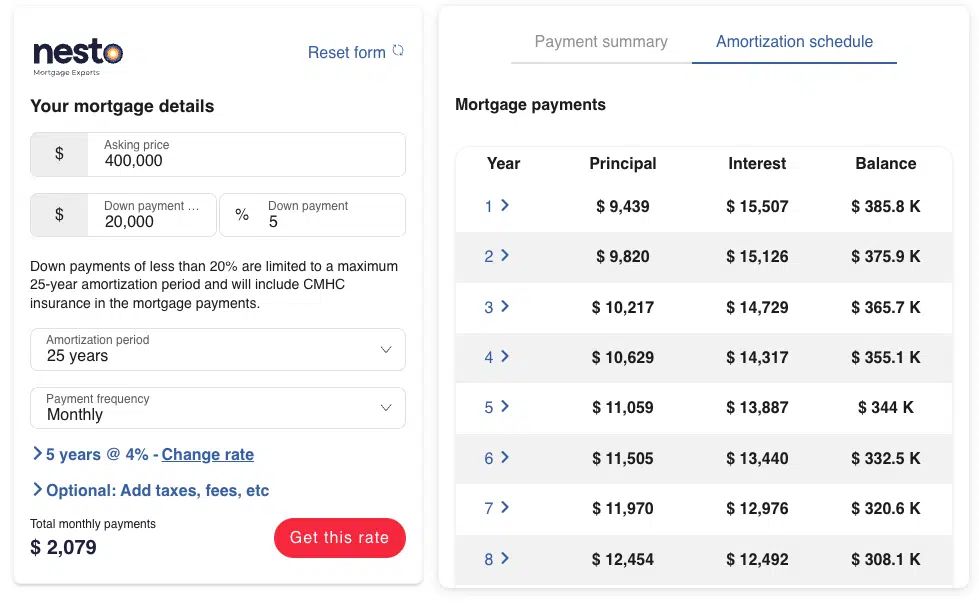
Most calculators are designed for common amortized loans where payments are uniform throughout the term. These include mortgages, car loans, student loans, and personal loans. The calculator output typically shows the periodic payment amount, the total interest cost, and the total repayment amount. Some advanced calculators may also generate a full amortization schedule, breaking down how each payment is split between principal and interest. It is crucial to remember that calculation results are approximations for information purposes only. The actual final terms of any loan are subject to a lender's standard credit approval process.

Understanding the Calculator Inputs
Every input in a loan repayment calculator directly influences the resulting payment amount and total loan cost. The loan amount, or principal, is the sum of money you borrow. A higher principal naturally leads to higher periodic payments, assuming all other factors remain constant. The interest rate is the annual percentage rate charged by the lender on the borrowed amount. A higher interest rate increases both the periodic payment and the total interest paid over the life of the loan. It is important to use the advertised Annual Percentage Rate (APR) for calculations, as this rate includes interest and fees.
The loan term is the duration over which you agree to repay the loan, typically expressed in years or months. A longer loan term reduces the size of each periodic payment but results in paying more interest over time. Conversely, a shorter term increases the payment amount but decreases the total interest cost. Payment frequency refers to how often you make payments, such as monthly, bi-weekly, or weekly. More frequent payments can reduce the total interest paid and shorten the loan term because interest is accrued daily. Calculators assume the interest rate remains constant, but in reality, rates on variable-rate loans may change over the amortization period.
Types of Loans and Their Calculations
Most consumer loans fall into the category of amortized loans, which have regular, uniform payments over their lifetime. Routine payments cover both principal and interest until the loan is entirely paid off at maturity. Mortgages, car loans, student loans, and personal loans are all familiar examples of amortized loans. This is the type most people refer to in everyday conversation and is the primary focus of standard loan repayment calculators. The calculator applies a formula that ensures the loan balance reaches zero precisely at the end of the chosen term.
Another category is deferred payment loans or single-payment loans, where a large lump sum of principal and interest is due at maturity. Many commercial or short-term loans use this structure. Some balloon loans may have smaller routine payments but still a large final payment. A third category involves bonds, which operate differently. With coupon bonds, lenders receive periodic interest payments based on a percentage of the bond's face value. Zero-coupon bonds are sold at a deep discount to their face value, with the full face value paid at maturity. Standard loan calculators can be configured to run calculations for zero-coupon bonds, determining the initial loan value based on a predetermined future repayment.
Key Concepts: Interest, APR, and Loan Security
Interest is the profit lenders make on loans and is a component of nearly all loan structures. The interest rate is expressed as a percentage of the loan paid annually. For most loans, interest is paid in addition to principal repayment. The Annual Percentage Rate (APR) is the standard rate published for loans, as it includes both interest and fees. This differs from the Annual Percentage Yield (APY) often published for savings accounts and certificates of deposit. Understanding the difference between APR and APY is important for accurate financial comparisons.
Compound interest means interest is earned on the initial principal and on accumulated interest from previous periods. In most consumer loans, compounding occurs monthly. Generally, the more frequently compounding occurs, the higher the total amount due on the loan. Loans are also categorized by their security. A secured loan requires the borrower to put up an asset as collateral, such as a house for a mortgage or a car for an auto loan. The lender holds a lien on the property until the debt is paid. An unsecured loan, like many personal loans or credit lines, does not require specific collateral but may rely on the borrower's creditworthiness and often carries a higher interest rate.
Using Calculators for Different Financial Goals
Financial institutions offer specialized calculators for various borrowing scenarios. A personal loan calculator helps determine payment options for a lump-sum loan used for defined goals like car purchases or debt consolidation. A line of credit payment calculator shows what minimum payments would be based on your current balance and interest rate. Mortgage calculators are prevalent for estimating home loan payments and providing detailed amortization schedules. Student loan repayment estimators, such as the one from Canada.ca, help graduates estimate monthly payments for government student loans.
Other useful tools include debt consolidation calculators, which show potential cost savings from combining multiple debts into a new loan. Affordability calculators use your income and expenses to determine how much debt you can comfortably manage. Some banks offer credit selector tools that recommend a loan or line of credit based on your answers to simple questions. Calculators for RRSP loans can illustrate how borrowing to invest in a registered retirement savings plan might affect your tax return and retirement savings. These tools allow you to try different scenarios by changing amounts to see how adjustments affect payments, loan amount, or term.
- Personal loan calculator for lump-sum borrowing needs.
- Line of credit calculator for minimum payment estimates.
- Mortgage calculator for home loan payments and amortization.
- Student loan repayment estimator for government loans.
- Debt consolidation calculator for cost savings analysis.
- Affordability calculator based on income and expenses.
- Credit selector tool for product recommendations.
- RRSP loan calculator for retirement investment scenarios.
Each tool serves a specific purpose, helping you explore different financial strategies. The common thread is using key inputs to model outcomes before making a commitment. You can budget for loan expenses by adjusting the frequency and term to see how quickly you can pay off the loan or reduce payments to a more manageable amount. You can also see what you can afford to borrow based on how much you want your payments to be and current interest rates.
Important Considerations and Limitations
Loan repayment calculators provide valuable estimates, but users must be aware of their limitations. The calculations assume that the interest rate will remain constant over the entire repayment period, which is not the case for variable-rate loans. Interest is accrued daily and charged according to the payment frequency, but calculators typically provide an average periodic result. Rates quoted in calculator results are not considered rate guarantees and are for illustrative purposes only. The final approved rate and terms depend on your credit profile and the lender's assessment.
All calculations assume all payments are made when due, with no prepayments or missed payments accounted for unless specified. Making extra payments can significantly reduce the total interest paid and shorten the loan term, but standard calculators may not automatically show this impact. It is crucial to use these tools for informational purposes and not as a substitute for professional financial advice. Individual circumstances can differ greatly, and a banking specialist or financial advisor can help you apply the calculator's information to your specific situation, ensuring all relevant factors are considered.
- Calculators assume a constant interest rate over the term.
- Interest is accrued daily and charged per payment frequency.
- Quoted rates are not guarantees and are for illustration only.
- All loans are subject to standard credit approval.
- Calculations assume all payments are made on time.
- Extra payments are not automatically factored in.
- Results are approximations for information purposes.
- Not a substitute for professional financial advice.
Choosing Between a Loan and a Line of Credit
When considering borrowing, Canadians often choose between a loan and a line of credit. A loan is suitable for a well-defined borrowing need with a specific end goal, such as buying a car, consolidating debt, or funding a major expense. It provides a lump sum of money upfront, and you can often choose between a fixed or variable interest rate. Payment frequency options typically range from weekly to bi-weekly, semi-monthly, or monthly. You select a term, and the calculator will show the uniform payment required to pay it off in that time.
A line of credit offers flexibility to borrow for various needs without reapplying each time. Funds are available up to your credit limit, and you only pay interest on the amount you use. Calculators for lines of credit often show what your minimum payments would be based on your current balance. This can be ideal for ongoing or unpredictable expenses. Speaking to a banking representative can help determine which solution aligns with your borrowing needs, cash flow, and financial goals. The choice fundamentally affects how you interact with the repayment calculator, as the inputs and payment structure differ. For a loan, you input a fixed amount and term, while for a line of credit, you may input a balance to see minimum payments.
Frequently asked questions
What is APR and why is it used in calculators?
APR stands for Annual Percentage Rate. It is the interest rate used for loans because it includes both the interest and any additional fees. Calculators use the APR to provide a more accurate estimate of your total borrowing cost compared to a simple interest rate. It is the standard rate published by lenders for loan products.
Are loan calculator results guaranteed?
No, calculator results are approximations for informational purposes only. They assume a constant interest rate and timely payments. The actual loan terms, including the final interest rate, are subject to standard credit approval by the lender. Rates quoted in calculators are not rate guarantees.
What is the difference between a loan and a line of credit?
A loan provides a lump sum of money upfront for a specific goal, such as buying a car or consolidating debt, and you repay it with a fixed schedule. A line of credit offers flexible access to funds up to a credit limit, and you only pay interest on the amount you actually use. Loans are better for well defined borrowing needs with a particular end goal. Lines of credit are more suitable for ongoing or variable borrowing needs without having to reapply each time. It is recommended to speak to a banking specialist to determine which solution is right for your specific circumstances.
What does a loan repayment calculator calculate?
A loan repayment calculator estimates the regular payment amount, total interest cost, and amortization schedule for a loan. It uses inputs like the loan amount, interest rate, and term to perform these calculations. These tools are designed for common amortized loans such as mortgages, auto loans, student loans, and personal loans. They help you determine payment options that suit your financial needs by showing how different terms affect payments. The results are approximations for informational purposes and assume a constant interest rate over the repayment period.
How does the loan term affect my payments?
The loan term directly impacts both the size of your periodic payments and the total interest paid. Generally, a longer loan term results in smaller periodic payments but increases the total interest cost over the life of the loan. Conversely, a shorter term leads to larger periodic payments but reduces the total amount of interest you pay. Choosing a term involves balancing affordable monthly payments with the overall cost of borrowing. Calculators allow you to try different scenarios to see how adjusting the term affects your payments and total cost.
What is a secured loan versus an unsecured loan?
A secured loan requires the borrower to put up an asset as collateral, which the lender can claim if the loan is not repaid. Common examples are mortgages and auto loans, where the lender holds a lien on the property or vehicle. An unsecured loan does not require specific collateral and is granted based on the borrower's creditworthiness. Unsecured loans, such as many personal loans, often come with higher interest rates due to the increased risk for the lender. These are two basic categories of consumer loans.
Sources and further reading
- Personal Loan Calculator scotiabank.com
- Loan Calculator calculator.net
- Loan Calculators and Tools | RBC Royal Bank of Canada rbcroyalbank.com
- Personal Loan and Line of Credit Payment Calculator td.com
- Loan Calculator servus.ca
This article explains how things work and is not financial, tax or legal advice. Rules, limits and rates change, so check the current figures with the Canada Revenue Agency, your province or your financial institution before you act.