A loan amortization calculator is a tool that determines your periodic loan payment and generates a detailed repayment schedule. This schedule shows how each payment is split between interest and principal over the life of the loan. Understanding amortization is crucial for Canadian borrowers with mortgages, car loans, or personal loans to track their debt repayment journey. Using such a calculator helps you visualize the long-term cost of borrowing and plan your finances effectively.
What is Loan Amortization
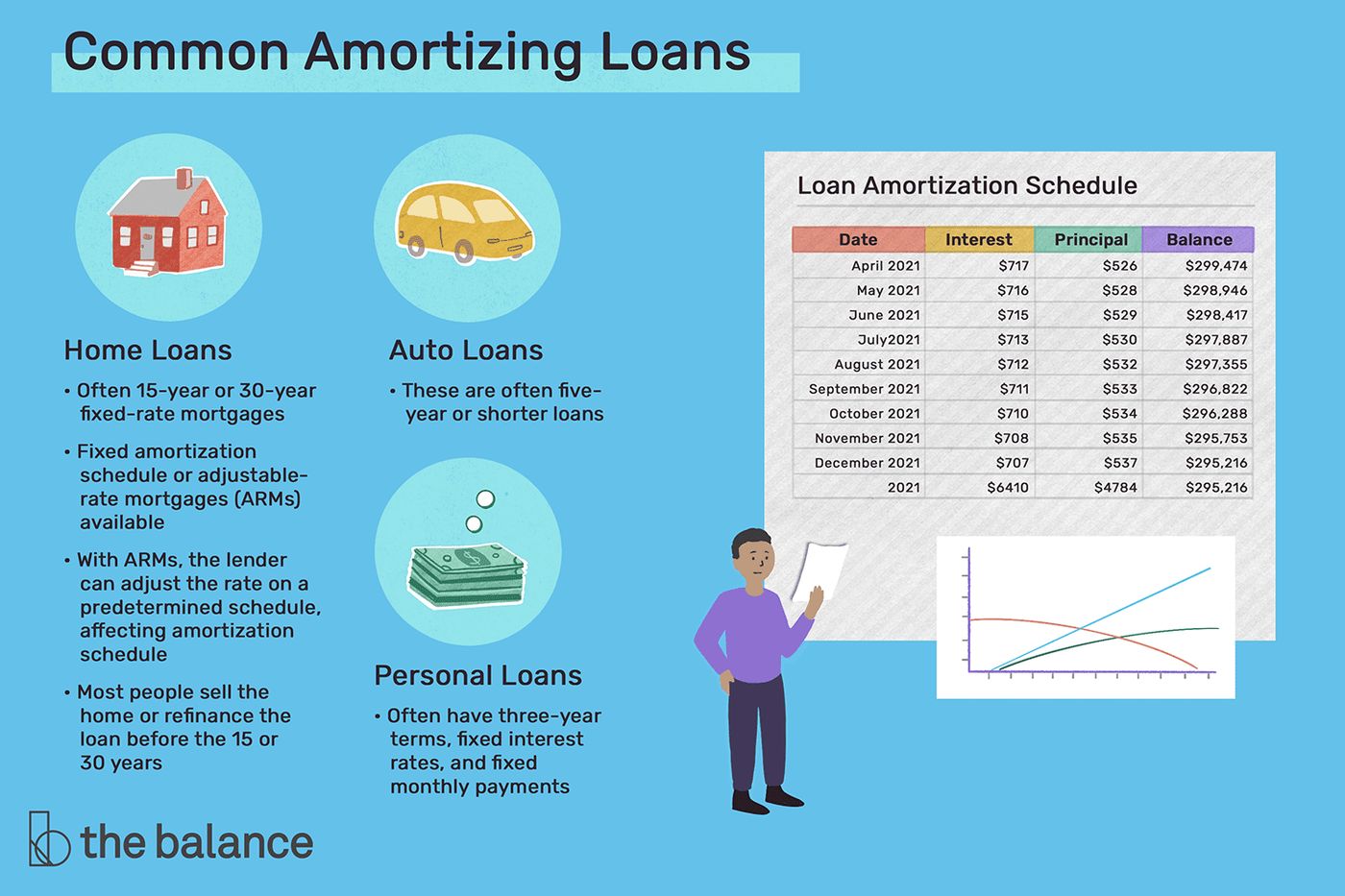
Amortization is the systematic repayment of a loan over a set period of time. When you take out an amortized loan like a mortgage or car loan, you agree to make regular payments until the debt is fully cleared. Each payment covers two components the interest charged on the outstanding loan balance and a portion that reduces the principal amount you originally borrowed. As you continue to make payments, the principal balance decreases, which in turn reduces the amount of interest charged on subsequent payments. This process continues until the entire loan, including all interest, is paid off at the end of the amortization period. In Canada, the most common example is a mortgage, which typically has an amortization period of 25 to 30 years, though the loan contract is divided into shorter terms of one to five years. It is distinct from the accounting use of amortization, which refers to spreading the cost of an intangible business asset over its useful life.
How an Amortization Schedule Works
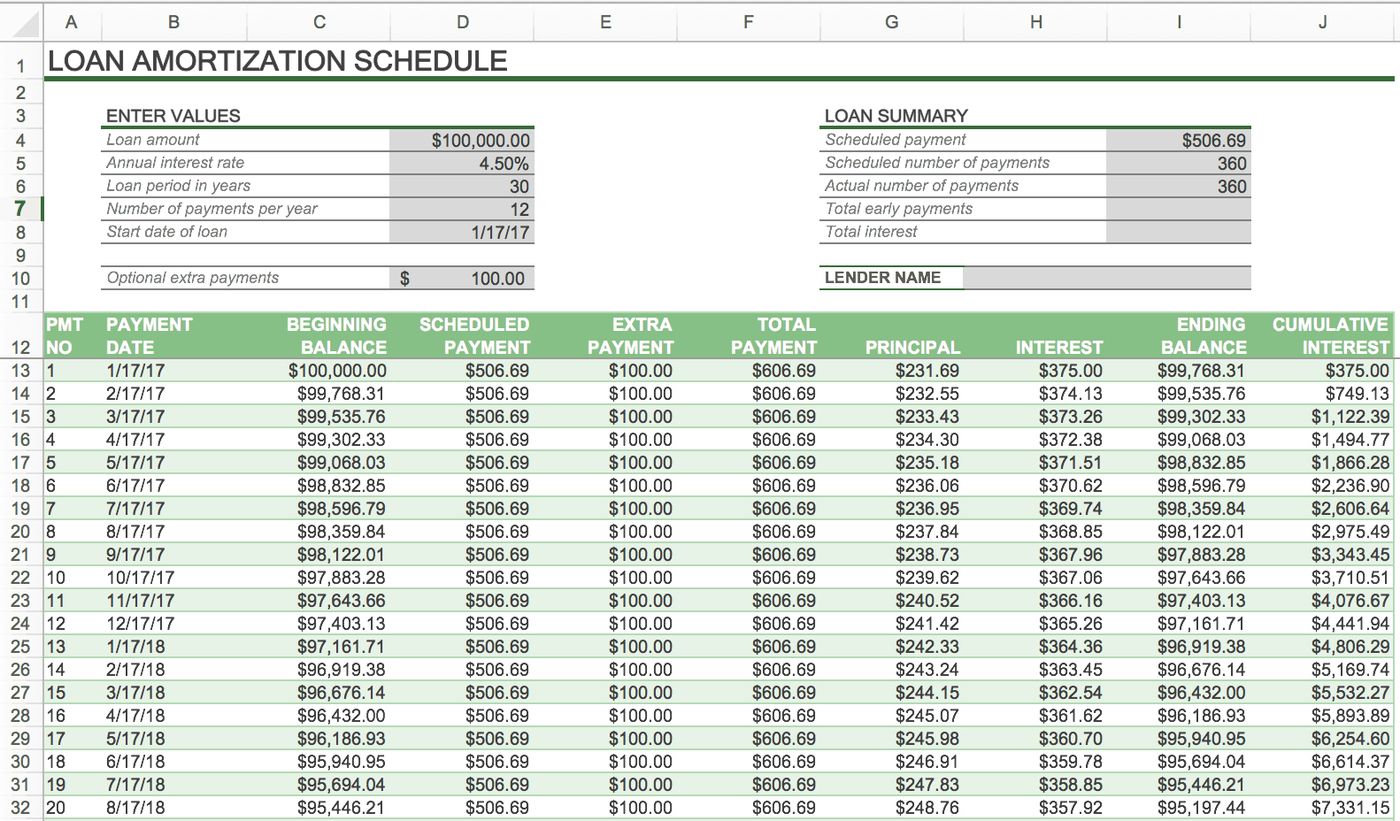
An amortization schedule, also called an amortization table, is a detailed breakdown of every payment over the life of your loan. The calculator generates this schedule to show you the exact impact of each payment. For each payment period, the schedule lists the total payment amount, the portion applied to interest, the portion applied to the principal, and the remaining loan balance after that payment. Early in the loan term, a larger portion of each payment goes toward interest because the outstanding principal is at its highest. As you chip away at the principal, the interest portion of each payment gradually shrinks, and more of your payment goes toward reducing the debt. This schedule helps you track your progress and understand exactly how much interest you will pay over the full loan period. Basic amortization schedules assume a fixed interest rate and do not account for extra payments or fees, which are separate considerations. The calculator will also often provide a visual graph and pie chart showing the declining loan balance and the split between principal and interest paid over time.
Inputs for the Amortization Calculator
The loan amortization calculator requires several key pieces of information to generate your payment schedule. The loan amount is the total sum of money you wish to borrow, excluding any interest that will accrue. The annual interest rate is the cost of borrowing that principal amount, expressed as a yearly percentage. The calculator divides this rate by the number of payment periods per year to determine the periodic interest charge. The amortization period is the total length of time you will take to repay the loan in full, such as 25 years for a mortgage. You must also select a payment frequency, which determines how often you make payments and directly impacts how quickly you repay the loan. The calculator then uses these inputs to compute your periodic payment amount, the total interest paid, and the total of all payments over the loan's life. The total payments figure is the sum of all principal and interest you will pay, assuming you make all scheduled payments with no prepayments.
How Payment Frequency Affects Your Loan
Your choice of payment frequency is a powerful variable that significantly influences your repayment timeline and total interest cost. The calculator typically offers three options weekly payments made 52 times per year, bi-weekly payments made 26 times per year, and monthly payments made 12 times per year. While a monthly payment might seem simpler, choosing a more frequent schedule accelerates your debt repayment. This happens because you make more payments each year, each of which reduces the principal balance sooner. A lower principal balance means less interest accrues between payments. Over the course of a long amortization, such as a 25-year mortgage, switching from monthly to bi-weekly payments can shave years off your loan term and save you thousands of dollars in interest. It is important to confirm with your lender that your loan agreement allows for your desired payment frequency without penalty. Accelerating your mortgage payment through increased frequency is a common pre-payment privilege, but some mortgage products may not allow this option at all.
Amortization Versus Loan Term in Canada
Canadian borrowers, especially homeowners, must understand the distinct difference between amortization and loan term. The amortization period is the total length of time it will take to fully pay off the entire loan. For a mortgage, this is typically 25 to 30 years, representing the complete repayment journey. The term, however, is the length of your current loan contract, which is often one to five years for a mortgage. At the end of each term, you must renew your mortgage, potentially at a new interest rate and with updated conditions, while continuing along your original amortization schedule. For other common loans like auto or personal loans, the term and amortization period are usually the same length, meaning you get a single contract for the entire repayment period. This structural difference makes mortgages unique, as they consist of multiple terms strung together over the full amortization. Think of amortization as the full repayment journey, and the term as just one section of that journey.
Rules for Canadian Mortgages and Loans
Several important rules and thresholds govern borrowing in Canada, particularly for mortgages. Mortgage default insurance is mandatory if you buy a home with a down payment of less than 20 percent of the purchase price. This insurance protects the lender if you default on the loan, and the insurer can take legal action to enforce payment. For homes worth over one million dollars, homebuyers are not eligible for default insurance and must secure an uninsured mortgage. The maximum amortization period is also regulated. Extending your amortization to 30 years is only an option if you have at least 20 percent equity in your home from your initial purchase. Borrowers should also be aware of pre-payment privileges, which are common features in loan agreements. These privileges may allow you to increase your payment amount, increase your payment frequency, or make a lump-sum payment against the principal, but the specific limits and conditions are set by your lender. It is essential to speak with your lender or a mortgage broker to understand the specific conditions attached to your loan, as penalties may apply for breaking the terms of your contract. Some mortgage products allow up to a certain percentage of the mortgage amount to be paid off early annually.
- Mortgage default insurance is required for down payments under 20%.
- A 30-year amortization requires at least 20% equity at purchase.
- Pre-payment privileges for lump sums or increased payments vary by lender.
- Loan terms for mortgages are typically 1 to 5 years.
- Amortization periods for mortgages are typically 25 to 30 years.
- If you default, the mortgage insurer can pay the lender for any shortfall after the property is sold.
- You remain responsible for any shortfall owed after a default and sale.
Making Extra Payments and Adjusting Amortization
Paying off your loan faster than scheduled can save you a substantial amount in interest. Most lenders offer pre-payment privileges that allow you to make extra payments. You can often increase your regular payment amount, switch to a more frequent payment schedule, or apply a lump sum against your principal. Each of these actions reduces your principal balance faster, which reduces the total interest charged over the remaining life of the loan. For a mortgage, you also have the opportunity to adjust the length of your amortization period when you renew your mortgage at the end of a term or when you refinance. If your financial situation improves, you might choose to shorten the amortization to pay off the loan sooner and save on interest. Conversely, if you need lower payments, you could extend the amortization, though this will increase your total interest cost over the long run. For non-mortgage loans like auto loans, adjusting the amortization usually requires renegotiating an entirely new loan. It is always helpful to speak with a mortgage broker for personalized advice on these options.
Worked Example Using a Mortgage Scenario
Consider a Canadian homebuyer taking out a mortgage. They have a 20 percent down payment, so they are eligible for a 30-year amortization period. They choose a monthly payment frequency, meaning 12 payments per year. The calculator would determine their monthly payment amount. In the initial payments, a significant portion would be allocated to interest because the outstanding principal is high. As they continue making payments, the interest portion slowly decreases. If they instead selected a bi-weekly payment frequency, they would make 26 half-payments per year, each calculated proportionally. This would result in more principal reduction each year, shortening the amortization period and reducing the total interest paid over the life of the loan, demonstrating the power of payment frequency. The calculator would show the total interest paid and the total of all payments made over the full 30 years under both scenarios.
What Loans Are Not Amortized
It is important to recognize that not all debt follows an amortization schedule. The most common example is credit card debt, which is a form of revolving debt where the outstanding balance can be carried month-to-month and the repayment amount can vary. Other loan types that are not fully amortized include interest-only loans, where you pay only the interest for a set period before starting to pay down the principal, and balloon loans, which require a large lump-sum payment of the remaining principal at the end of the loan term. These non-amortized loans have different risk profiles and repayment structures. Amortization schedules are designed for fixed-rate loans and generally do not apply to adjustable-rate mortgages, variable rate loans, or lines of credit, where the payment amounts can change with interest rate fluctuations. For calculations involving credit cards, a separate credit card calculator or payoff calculator should be used.
Accounting Amortization of Intangible Assets
In a business context, amortization has a different meaning referring to the act of spreading the cost of an expensive intangible asset over many periods. This is an accounting practice used for assets like patents, copyrights, or goodwill, which are purchased for long-term use. From an accounting perspective, a sudden large purchase can skew financial statements, so the value is amortized over the asset's expected useful life. This is similar to depreciation for tangible assets like machinery or equipment. Under Section 197 of U.S. law, the value of certain intangible assets can be deducted month-to-month or year-to-year for tax purposes. However, some intangible assets with indefinite useful lives, or those that are self-created, may not be legally amortized. Examples of costs that may be amortized as business startup costs include consulting fees, financial analysis of potential acquisitions, and advertising expenditures, but only if incurred before the active business begins and under specific conditions.
Using the Calculator for Debt Consolidation
The amortization calculator can be a valuable tool for evaluating debt consolidation strategies. You can use it to see what the monthly payment would be if you consolidated multiple debts into a single loan. Conversely, if you know the maximum monthly payment you can afford, you can use the calculator to determine how large a consolidation loan you could obtain based on that payment, your desired amortization period, and the prevailing interest rate. The generated amortization schedule will show you the details of all future payments on this new consolidated loan, helping you prioritize your repayment plan. This can illustrate how quickly you may be able to get out of debt compared to managing multiple separate debts. The calculator will show your loan balance declining on a graph and provide a bar graph breaking down the principal and interest portions of each payment, giving you a clear visual of your progress.
Frequently asked questions
What is the difference between amortization and loan term?
Amortization is the total length of time it will take to fully pay off your loan, typically 25 to 30 years for a Canadian mortgage. The term is the length of your current loan contract, often one to five years. You will renew your mortgage several times over different terms until the full amortization period is complete. For other loans like auto loans, the term and amortization are usually the same single period.
How does payment frequency affect my loan?
Choosing a more frequent payment schedule, such as bi-weekly or weekly instead of monthly, accelerates your debt repayment. You make more payments per year, each reducing the principal sooner. This results in less interest accruing over time, can shorten your amortization period, and saves you money on total interest costs. You should confirm with your lender that your loan allows for your chosen frequency.
Can I get a 30-year amortization period in Canada?
Yes, but only under specific conditions. You are eligible for a 30-year amortization period on a mortgage only if you have at least 20 percent equity in your home from the initial purchase. This means a down payment of 20 percent or more. Choosing a 30-year amortization lowers your monthly payments but increases the total interest you will pay over the full life of the loan.
What is mortgage default insurance and when is it required?
Mortgage default insurance protects the lender if a borrower stops making payments on their mortgage. In Canada, this insurance is mandatory when purchasing a home with a down payment of less than 20 percent of the purchase price. It is not available for homes valued at over one million dollars. For these higher-value properties, buyers must secure an uninsured mortgage with a down payment of at least 20 percent.
Can I make extra payments on my amortized loan?
Most lenders offer pre-payment privileges that allow extra payments. These can include increasing your regular payment amount, increasing your payment frequency, or making a lump-sum payment against the principal. These actions reduce your principal faster, saving you interest. It is crucial to check your loan agreement for the specific limits and conditions, as exceeding them might trigger a penalty.
What does an amortization schedule show me?
An amortization schedule is a table detailing every payment over the loan's life. For each payment, it shows the total amount, how much is applied to interest, how much reduces the principal, and the remaining loan balance. Early in the schedule, payments are mostly interest. Over time, the portion going to principal increases. This schedule lets you see your repayment trajectory and total interest cost.
Sources and further reading
- Amortization Calculator calculator.net
- Mortgage and Loan Amortization Schedule Calculator ratehub.ca
- Amortizing Loan Calculator dynamic.ca
- Mortgage Payment Calculator | Scotiabank Canada scotiabank.com
- Free Loan Amortization Calculator & Schedule (Canada) nomoredebts.org
This article explains how things work and is not financial, tax or legal advice. Rules, limits and rates change, so check the current figures with the Canada Revenue Agency, your province or your financial institution before you act.