A compound interest calculator is an essential tool for Canadian savers and investors to project the future value of their money. It calculates how your initial investment grows when interest is earned on both the original principal and the accumulated interest from previous periods. Understanding compound interest is crucial for planning for goals like retirement, education, or a major purchase. Using a calculator helps you see the impact of different interest rates, contribution schedules, and time horizons on your financial growth.
How Compound Interest Works
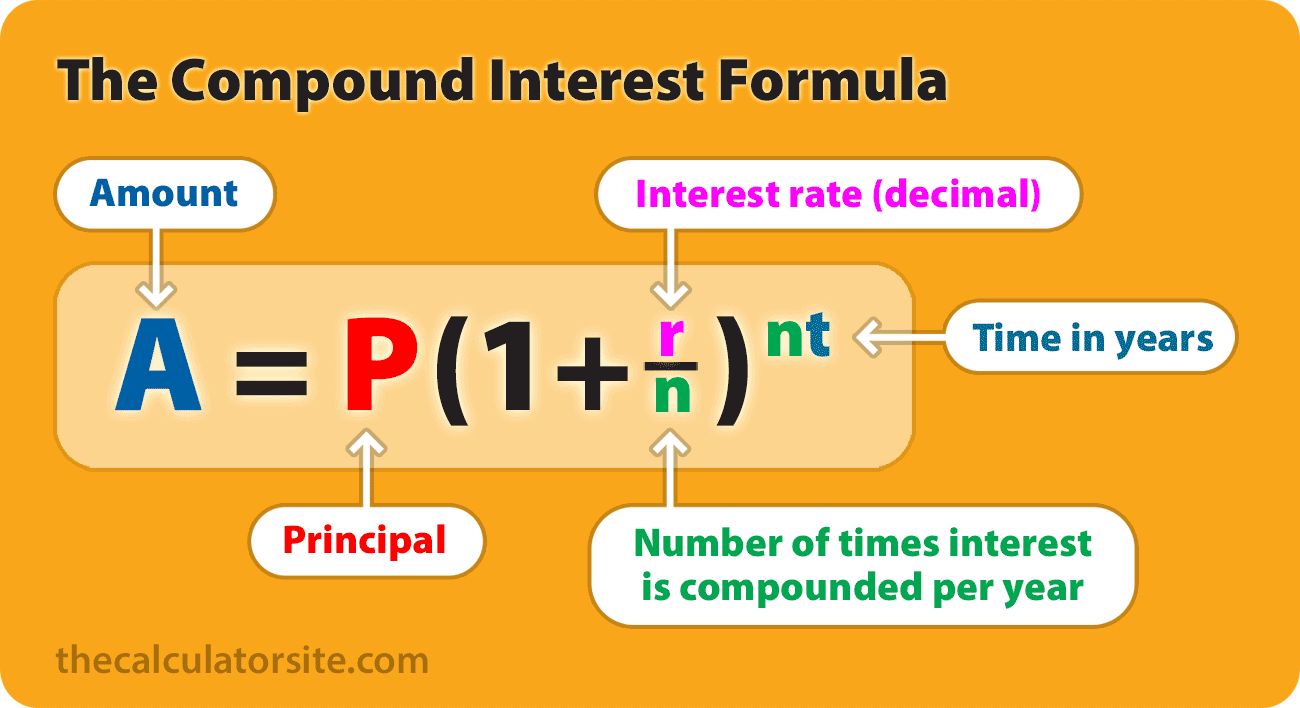
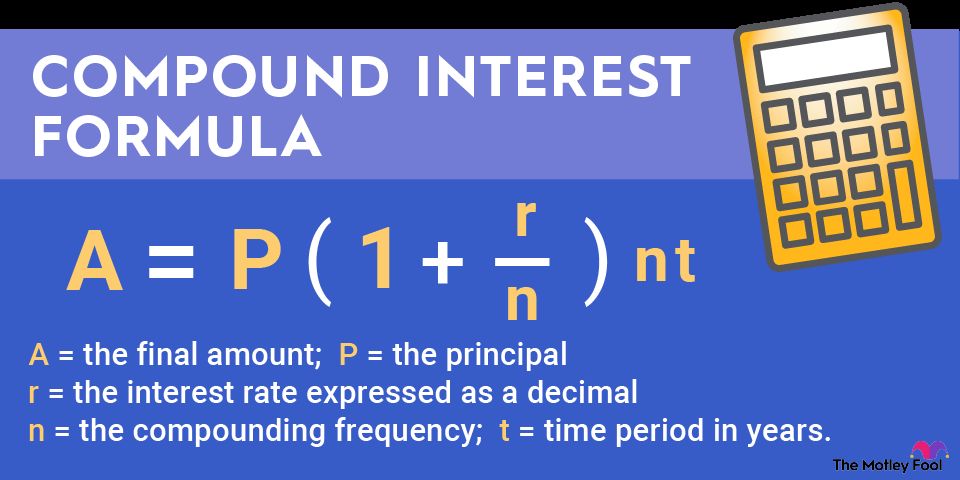
Compound interest is the process where interest earned in one period is added back to the principal balance, and future interest is then calculated on this larger amount. This creates a snowball effect where your money grows exponentially over time, not just linearly. The core mathematical formula used to calculate compound interest is A = P(1 + r/n)^(nt), where A is the final amount, P is the original principal, r is the annual interest rate expressed as a decimal, n is the number of times interest is compounded per year, and t is the number of years the money is invested. This formula is the basis for every compound interest calculator, automating the complex calculation to show you potential growth. The power of compounding is most effective when investments are left untouched for long periods, allowing returns to build upon themselves through market cycles.
Inputs That Drive the Calculation
Every field you fill in a compound interest calculator directly influences the projected outcome of your investment. The initial investment or principal is the starting amount of money you deposit, which forms the base for all future growth. The annual interest rate or expected rate of return is a critical input, as even a small percentage difference can lead to vastly different results over decades. The investment time horizon, or the number of years you plan to stay invested, is perhaps the most powerful variable due to the exponential nature of compounding. Many calculators also allow you to input regular additional contributions, which are typically applied at the beginning of each compounding period to immediately start earning interest.
The compounding frequency determines how often earned interest is added to the principal balance to calculate the next period's interest. Common frequencies include annual, semi-annual, quarterly, monthly, or daily compounding. Typically, the more frequently interest is compounded, the faster your balance will grow, though the practical difference between daily and monthly compounding is often minimal over the long term. Some advanced calculators include an annual inflation rate input, which adjusts the final results to show the purchasing power of your future savings in today's dollars. It is important to note that these tools are intended to show growth before income tax is applied, meaning the final value may be subject to taxation depending on the account type.
Compound Interest Versus Simple Interest
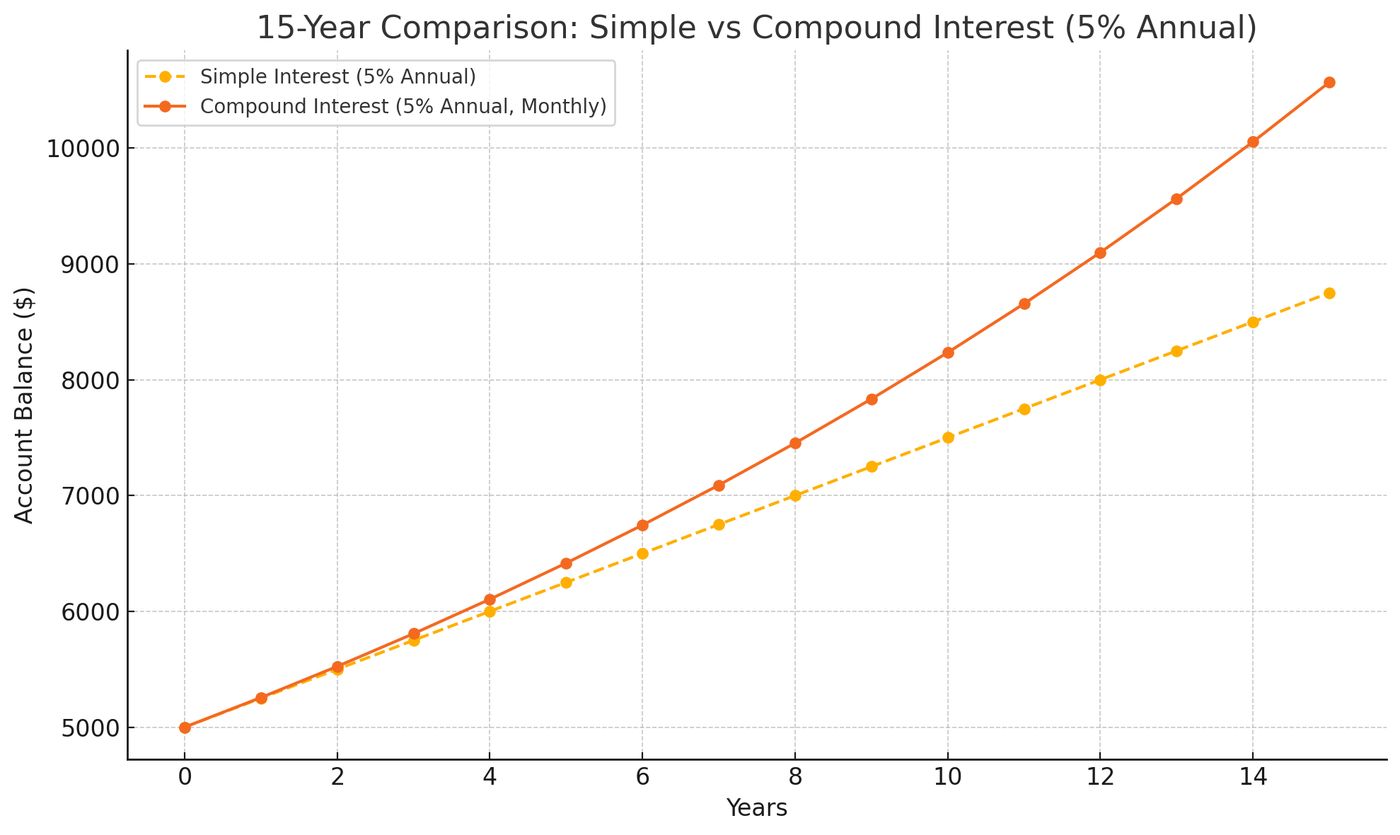
Understanding the difference between compound and simple interest is fundamental to making informed financial decisions. Simple interest is calculated only on the original principal amount deposited. It does not reinvest any earnings, so the interest earned each period remains constant. This means compounding periods have no effect on simple interest calculations, as there is no mechanism for interest to earn additional interest. The growth pattern under simple interest is linear, producing a straight line on a graph over time.
Compound interest, by contrast, is often described as interest on interest. When you first deposit money, only your principal earns interest. Once that interest is credited to your account, the new, higher total becomes the base for the next interest calculation. This process repeats, causing your returns to accelerate over time, especially in accounts where the interest compounds regularly and remains untouched. The growth pattern under compound interest is exponential, creating a curve that gets steeper as time goes on. For long-term savings goals like retirement, the exponential growth of compound interest is vastly more powerful than the linear growth of simple interest.
Using the Calculator for Canadian Investments
Canadians commonly use compound interest calculators to estimate growth for various registered and non-registered investment vehicles. The calculator can project returns on savings accounts, where interest may compound daily or monthly, helping you compare offers from different financial institutions. For Guaranteed Investment Certificates (GICs), most Canadian GICs offer a fixed interest rate locked in for the term, with interest typically calculated on the original deposit and compounded annually. The total interest is paid when the GIC reaches maturity, and a calculator can show the final value based on the advertised rate.
The tool is also valuable for long-term equity investments in assets like stocks, ETFs, or bonds, though these involve variable returns rather than a guaranteed interest rate. For retirement planning, calculators help estimate how savings in a Tax-Free Savings Account (TFSA) or Registered Retirement Savings Plan (RSP) may grow over time. A TFSA or RSP can help you save on taxes and help grow your money, making the compounding effect even more beneficial inside these shelters. By entering your current balance, expected rate of return, planned contributions, and time until retirement, you can assess whether you are on track to meet your future income goals.
Strategies to Maximize Compound Growth
To harness the full power of compound interest, certain strategies can significantly enhance your results. The single most effective action is to start investing as early as possible. The sooner you begin, the more time your money has to grow exponentially, and the less you may need to contribute from your own pocket later to reach the same goal. Making additional regular contributions to your principal can dramatically increase the final balance, as each new contribution itself begins compounding immediately.
It is crucial to let your money stay invested and avoid unnecessary withdrawals, as every withdrawal reduces the principal amount that is working for you. Seeking investments with higher potential returns, while understanding the associated risks, can accelerate growth, provided those returns outpace inflation. Keeping investment fees and taxes low ensures a greater portion of your returns are reinvested to compound. Finally, maintaining a long-term perspective and staying invested through market fluctuations allows the compounding process to work consistently over decades.
- Begin investing as early as possible to maximize time.
- Make regular additional contributions to your principal.
- Avoid unnecessary withdrawals to protect the compounding base.
- Seek returns that outpace inflation to preserve purchasing power.
- Minimize fees and taxes to keep more money compounding.
- Stay invested for the long term through market cycles.
Understanding Calculator Results and Assumptions
The results generated by a compound interest calculator provide a detailed projection, but it is vital to understand their context and limitations. The tool calculates the value of your investment at the frequency of the compounding period you select, with any additional contributions applied immediately at the beginning of the period. Detailed results are typically displayed by year, regardless of the specific contribution or compounding frequencies you select. If you select a target date that includes a partial final year, the growth for that final year may appear slower because it is not a full compounding period.
The results shown are intended for reference only and do not necessarily reflect results that would be obtained in actual investment situations, as market returns are variable. The calculator often shows several key figures: the total future value of the investment, the total amount of interest earned before inflation, and, if applicable, the value after adjusting for inflation. When an inflation rate is input, the tool may show the inflation-adjusted value of the initial investment, the real interest earned after inflation, and the total real value of the investment. These inflation-adjusted figures help you understand the future purchasing power of your savings.
Frequently asked questions
What is compound interest?
Compound interest is interest calculated on both the initial principal of an investment and on all previously accumulated interest. When interest is earned, it is added to the principal, and future interest calculations are based on this larger amount. This process causes your savings to grow at an accelerating, exponential rate over time. It is a fundamental concept for long-term saving and investing in products like savings accounts, GICs, and retirement funds.
How does compounding frequency affect my returns?
Compounding frequency refers to how often earned interest is added to the principal balance to calculate the next period's interest. Common frequencies are annual, semi-annual, quarterly, monthly, or daily. Typically, the more frequently your interest is compounded, the faster your overall balance will grow, because interest starts earning its own interest more quickly. In practice, the difference between daily and monthly compounding is often small, but the frequency is a key variable in the compound interest formula and calculator results.
Can I use a compound interest calculator for retirement planning?
Yes, a compound interest calculator is an excellent tool for retirement planning. You can use it to estimate how your savings in accounts like a TFSA or RSP may grow over time. By entering your current balance, expected annual rate of return, how much you plan to contribute regularly, and your time horizon until retirement, the calculator projects the potential future value of your nest egg. This helps you assess whether your current savings rate is sufficient to meet your retirement income goals.
How is GIC interest calculated with compounding?
Most Guaranteed Investment Certificates (GICs) in Canada offer a fixed interest rate that is locked in for the entire term of the investment. The interest is typically calculated on your original deposit amount. For many GICs, this interest is compounded annually, meaning the interest earned each year is added to the principal for the calculation of the following year's interest. The total accumulated interest is then paid out to you when the GIC reaches its maturity date.
What's the difference between compound interest and simple interest?
Simple interest is calculated only on the original principal amount you deposited. The interest earned each period remains constant and does not get reinvested. Compound interest, however, is calculated on the principal plus any interest already earned. This means your balance grows faster with compound interest because you earn 'interest on interest.' Over long periods, compound interest generates exponentially higher returns compared to simple interest at the same rate.
Do compound interest calculators account for taxes and inflation?
Most basic compound interest calculators show the growth of an investment before income tax is applied, providing a gross return figure. Some more advanced calculators include an option to input an annual inflation rate. When used, this feature adjusts the final results to show the real purchasing power of your future savings in today's dollars, displaying both the nominal interest earned and the interest earned after inflation. It is important to remember that actual tax liabilities depend on your account type and personal situation.
Sources and further reading
- Compound Interest Calculator investor.gov
- Compound Interest Calculator | Saving & Investing td.com
- Investment Calculator bankofcanada.ca
- Compound Growth Calculator mdm.ca
- Compound Interest Calculator ratehub.ca
This article explains how things work and is not financial, tax or legal advice. Rules, limits and rates change, so check the current figures with the Canada Revenue Agency, your province or your financial institution before you act.