Yield to maturity (YTM) is the estimated total annual rate of return an investor can expect from a bond if it is purchased at its current market price and held until it matures. This calculation includes all interest payments and the return of the bond's face value, providing a comprehensive view of its lifetime yield. For Canadian investors, understanding YTM is crucial for comparing Government of Canada bonds, provincial bonds, and corporate debt securities across different maturities. The YTM on benchmark bonds like the 5-year Government of Canada bond also serves as a key reference point for setting fixed mortgage rates across the country.
Definition and Core Calculation
Yield to maturity is the theoretical internal rate of return for a bond, representing the discount rate that equates the present value of all its future cash flows to its current market price. These cash flows consist of all periodic interest payments, known as coupons, and the repayment of the bond's face value at maturity. The YTM is often expressed as an annual percentage rate, and in Canadian and other major bond markets, the convention is to quote annualized yields assuming semi-annual compounding. This standardization allows for direct comparison between bonds with different coupon structures and maturities. The calculation itself is central to bond valuation and requires a numerical method, such as Newton's method, for coupon-bearing bonds as it cannot be solved algebraically.
For a zero-coupon bond, which pays no periodic interest, the formula simplifies considerably. The yield to maturity is calculated by taking the root of the face value divided by the present value, over the time period, and subtracting one. Consider a 30-year zero-coupon bond with a face value of $100 priced today at $5.73, its yield to maturity is 10% because $100/(1.1)^30 equals $5.73. Over the 30-year period, the price advances to $100, realizing the 10% annualized return. This example illustrates how YTM encapsulates the total return from price appreciation alone when no coupons are paid.
The YTM provides a single, comparable metric that accounts for the bond's purchase price, par value, coupon interest, and time to maturity. It effectively measures the bond's promised yield under a strict set of assumptions about the future. When a bond's coupon rate is less than its YTM, the bond is selling at a discount to its par value. Conversely, when the coupon rate exceeds the YTM, the bond sells at a premium. A bond trades at par when its coupon rate is exactly equal to its yield to maturity.
Critical Assumptions and Associated Risks
The yield to maturity calculation is based on several foundational assumptions that must hold true for the realized return to match the estimated YTM. The first assumption is that the investor holds the bond until its maturity date. The second is that the bond issuer makes all scheduled interest and principal payments in full and on time, with no default. A third, and more debated, assumption is that the investor reinvests all coupon payments as they are received, rather than spending them. This reinvestment must occur at a rate equal to the bond's original YTM to achieve the compounded returns implied by the calculation. These assumptions introduce specific risks for bondholders, including reinvestment risk and default risk.
Reinvestment risk is the possibility that future interest rates will be lower when coupon payments are received, preventing them from being reinvested at the original YTM. This risk is particularly significant for bonds with long maturities and high coupons. Default risk, or credit risk, is the chance the issuer fails to make a payment, which would cause the actual return to be lower than the YTM. The YTM quoted in markets is a gross redemption yield, meaning it does not account for taxes an investor may pay on returns or any transaction costs incurred when buying or selling the bond. Some financial literature argues that earning the yield to maturity does not strictly require the reinvestment of coupons, claiming that assuming reinvestment is a common mistake.
For investors who intend to spend the coupon payments, such as those practicing asset-liability matching strategies, reinvestment is not a factor in their return. However, for total return investors, the rates earned on reinvested coupons are a critical and unknown component of the bond's ultimate investment return at the time of purchase. Consequently, the total return realized at maturity is likely to differ from the YTM calculated at purchase, sometimes considerably. This potential deviation underscores that YTM is a theoretical estimate, not a guaranteed outcome.
YTM Variants for Bonds with Special Features
For bonds with embedded options or other unique characteristics, standard yield to maturity may not be the most relevant measure. Several variants of YTM have been developed to account for these features. Yield to call is used for callable bonds, which can be repurchased by the issuer at a predetermined price before the official maturity date. The YTC calculation assumes the bond will be called at the earliest possible date, thus shortening its expected cash flow stream. Yield to put applies to puttable bonds, where the bondholder has the right to sell the bond back to the issuer at a fixed price on a specified date.
The most conservative measure among these variants is the yield to worst. This metric calculates all possible yields, including yield to maturity, yield to call, and yield to put, and presents the lowest yield the investor could receive under any of the bond's potential redemption scenarios. Yield to worst is a crucial metric for evaluating bonds with multiple embedded options, such as callable, puttable, or exchangeable bonds, as it highlights the downside risk. Another specialized term, subscriber yield, is used in markets like Japan to denote the yield to maturity at the time of a bond's initial issue in the primary market. These variants provide a more nuanced view for bonds whose cash flows are not guaranteed to continue to the stated maturity.
YTM in the Canadian Bond Market Context
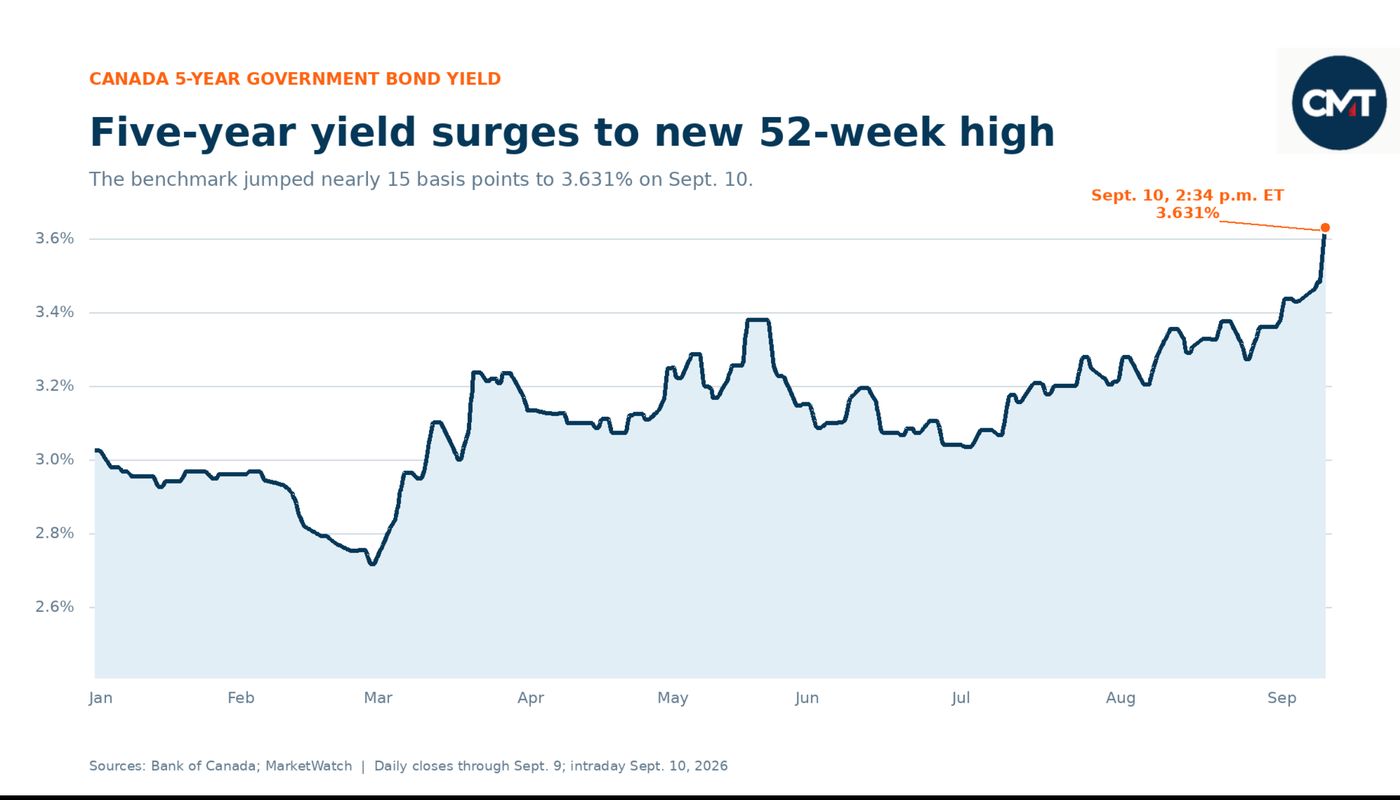
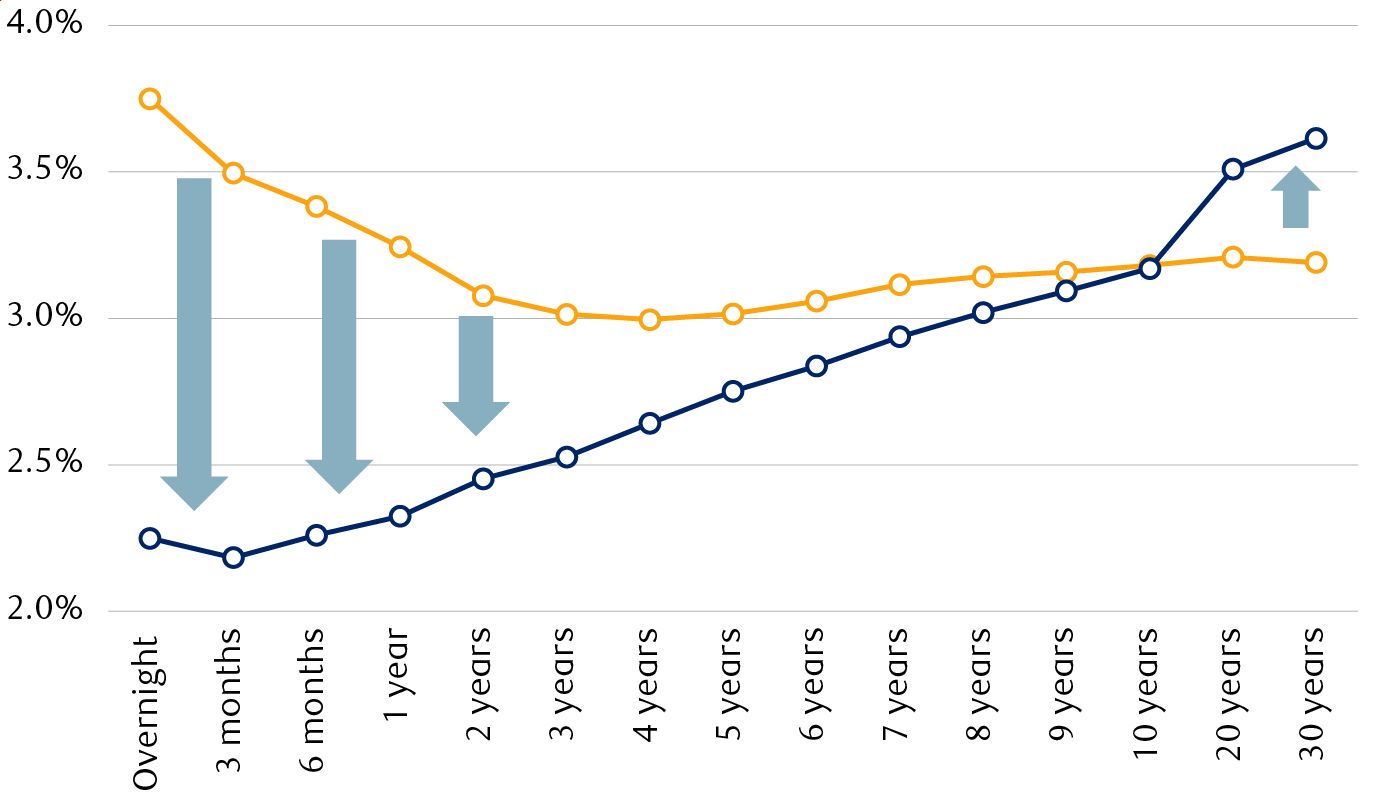
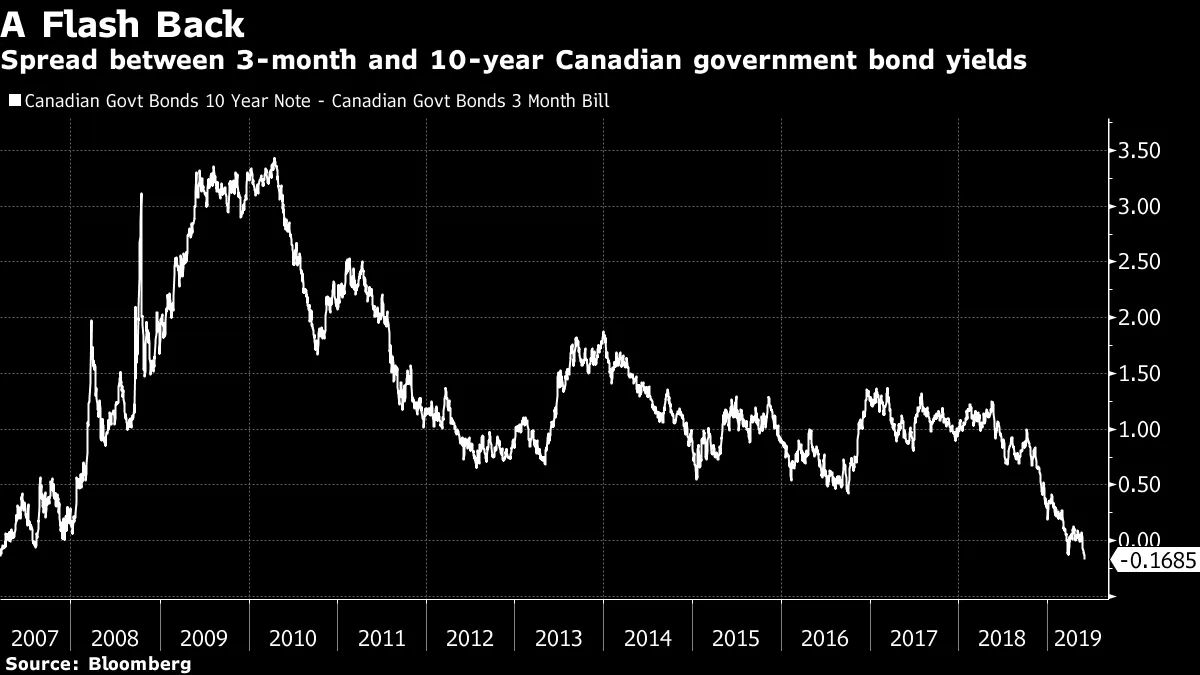
In Canada, yield to maturity is the standard measure for evaluating and comparing fixed-income securities, from Government of Canada bonds to provincial and corporate issues. The Government of Canada regularly publishes selected benchmark bond yields, which are based on mid-market closing yields of specific bond issues that mature in approximately 2, 3, 5, 7, and 10 years. The 10-year Government of Canada bond yield was reported at 3.89% in October 2026, marking a decrease from the previous session. The relationship between a bond's price and its YTM is actively observed in the market. A Canada 5-Year Government Bond with a price of 99.14 and a given yield illustrates how prices fluctuate below par (a discount) or above par (a premium) as market yields change. The yield curve, which graphs yields against maturities, is a vital tool. A normal, upward-sloping curve suggests economic growth expectations, while an inverted curve can signal recession concerns. The spread between the 10-year and 2-year Government of Canada bond yields was 56.8 basis points in recent data, indicating the curve's shape. The 5-year Government of Canada bond yield holds particular importance beyond the investment community as a primary determinant for setting 5-year fixed-rate mortgage rates in Canada.
Factors Influencing Canadian Bond Yields
While the Government of Canada sets a bond's initial coupon rate, its ongoing yield to maturity in the secondary market is ultimately determined by supply and demand dynamics influenced by domestic and international factors. Inflation expectations are the most significant domestic influence. Bond yields tend to rise when inflation is expected to exceed the Bank of Canada's 2% target and may fall when inflation is expected to be lower. Monetary policy decisions by the Bank of Canada also move yields, as they typically rise when the policy rate is increased and fall when it is cut. Canadian bond yields are also closely linked to movements in the United States bond market due to the close trading relationship and integrated capital markets.
In 2026, two major global forces were cited as having a greater impact on Canadian yields than domestic data. The first was the price of oil, driven by geopolitical events like the blockade of the Strait of Hormuz, which kept energy costs high. The second was the increased global supply of government debt, as most major economies ran large deficits. Governments found themselves competing for investor capital with corporations borrowing to fund data centres and AI infrastructure. This increased supply, without a corresponding increase in demand, forced sellers to offer higher yields to attract buyers. The table below shows a snapshot of generic Government of Canada bond yields for different maturities, illustrating the yield curve.
| Term | Generic Yield |
|---|---|
| 1 year | 2.99% |
| 2 years | 3.36% |
| 3 years | 3.52% |
| 4 years | 3.60% |
| 5 years | 3.66% |
| 6 years | 3.72% |
| 7 years | 3.78% |
Practical Application and Investor Considerations
For Canadian investors, yield to maturity serves as a critical tool for making informed fixed-income investment decisions. It allows for an apples-to-apples comparison between a Government of Canada bond, a provincial bond, and a corporate bond, even if they have different coupon rates and prices. When the YTM of one bond investment is less than the expected yield of another, an investor might consider swapping, but must carefully account for transaction costs and tax implications which are not included in the quoted gross yield. Financial institutions like RBC Direct Investing provide extensive online bond inventories where YTM is a key data point for evaluation. Understanding the calculation's limitations is equally important for effective portfolio management.
The YTM is a promised yield, not a risk-adjusted or guaranteed return. Investors must assess the creditworthiness of the issuer to evaluate default risk and consider their own time horizon against the bond's maturity. The assumption about reinvesting coupons at the YTM rate is a major source of potential deviation between expected and actual returns. For zero-coupon bonds, this reinvestment risk is eliminated, as there are no interim cash flows to reinvest. Historical data on benchmark yields is available from sources like the Bank of Canada and CanDeal Data and Analytics, allowing investors to analyze trends over the past decade. This data shows how yields have responded to changing economic conditions, monetary policy, and global events.
Frequently asked questions
What is the difference between coupon rate and yield to maturity?
The coupon rate is the fixed annual interest rate stated on the bond, expressed as a percentage of its face value. Yield to maturity is the total estimated annual return, including all interest payments and any capital gain or loss from buying the bond at a discount or premium to its face value. If you buy a bond at its face value, the YTM equals the coupon rate. If you buy at a discount, the YTM is higher than the coupon rate, and if you buy at a premium, the YTM is lower.
Why is the 5-year Government of Canada bond yield so important?
The 5-year Government of Canada bond yield is a key benchmark for several reasons. It is a low-risk security backed by the federal government. More importantly, it directly influences the pricing of 5-year fixed-rate mortgages across Canada, as lenders base their rates on yields from bonds with comparable maturities. It is also frequently used by economists and investors to gauge the state of the Canadian economy and expectations for future interest rates.
How are bond yields quoted in Canada?
In Canada, bond yields are typically quoted as an annual percentage rate with semi-annual compounding. This is a standard market convention. Selected benchmark Government of Canada bond yields for terms like 2, 3, 5, 7, and 10 years are published based on mid-market closing yields. The yields are gross redemption yields, meaning they do not account for taxes or transaction costs an investor may incur.
What does it mean when a bond is selling at a discount or premium?
A bond sells at a discount when its current market price is below its face value (par). This occurs when the bond's coupon rate is lower than its current yield to maturity. A bond sells at a premium when its market price is above face value, which happens when its coupon rate is higher than its current YTM. The relationship between price and YTM is inverse. As market yields rise, bond prices fall, and vice versa.
Does yield to maturity guarantee my return on a bond?
No, yield to maturity does not guarantee your return. It is an estimate of the total rate of return anticipated if you buy a bond at a given price and hold it to maturity, receiving all interest and principal. This calculation assumes you hold the security to maturity, the issuer makes all payments on time and in full, and you reinvest all interest payments at the YTM rate. The YTM will be realized only if these assumptions are met. Factors such as default risk or reinvestment risk, where future reinvestment rates differ from the purchase YTM, mean the total return realized at maturity is likely to differ from the calculated YTM.
What major factors affect Canadian bond yields?
Canadian bond yields are influenced by domestic and international factors. Domestically, inflation expectations are the most significant influencer, along with Bank of Canada monetary policy decisions and economic indicators like GDP growth and employment data. Since Canada is a close trading partner of the United States, Canadian bond yields are closely linked to changes in the US bond market. As noted in recent data, external forces like the price of oil, which drives inflation expectations, and the global supply of government debt also critically affect yields. When governments issue more debt, they often must offer higher yields to attract investor capital.
Sources and further reading
- Yield to maturity (Wikipedia) en.wikipedia.org
- Selected bond yields bankofcanada.ca
- Canada Government Bonds, Yields Curve worldgovernmentbonds.com
- Bond Rates rbcdirectinvesting.com
- Yield, Government of Canada bonds Canada Savings ... desjardins.com
- 5 Year Government of Canada Bond Yield Explained nesto.ca
This article explains how things work and is not financial, tax or legal advice. Rules, limits and rates change, so check the current figures with the Canada Revenue Agency, your province or your financial institution before you act.