Treasury securities are debt instruments issued by a national government to finance public spending. In the United States, these securities, known as Treasuries, are issued by the Department of the Treasury and are backed by the full faith and credit of the US government, making them among the world's lowest-risk investments. Canadian investors and institutions are significant holders of US Treasuries, which serve as key global benchmarks. The Government of Canada also issues its own treasury bills and bonds, which function similarly as core components of domestic financial markets and government funding.
What Are Treasury Securities
Treasury securities are government debt instruments issued to finance public spending as a supplement to taxation. The United States Department of the Treasury issues these securities, which are collectively called Treasuries. Since 2012, the US government debt has been managed by the Bureau of the Fiscal Service. These securities are backed by the full faith and credit of the United States, meaning the government promises to raise money by any legally available means to repay them. This strong record of repayment has given Treasury securities a reputation as one of the world's lowest-risk investments. The low risk grants Treasuries a unique place in the financial system where they are used as cash equivalents by institutions, corporations, and wealthy investors globally.
Types of US Marketable Treasury Securities
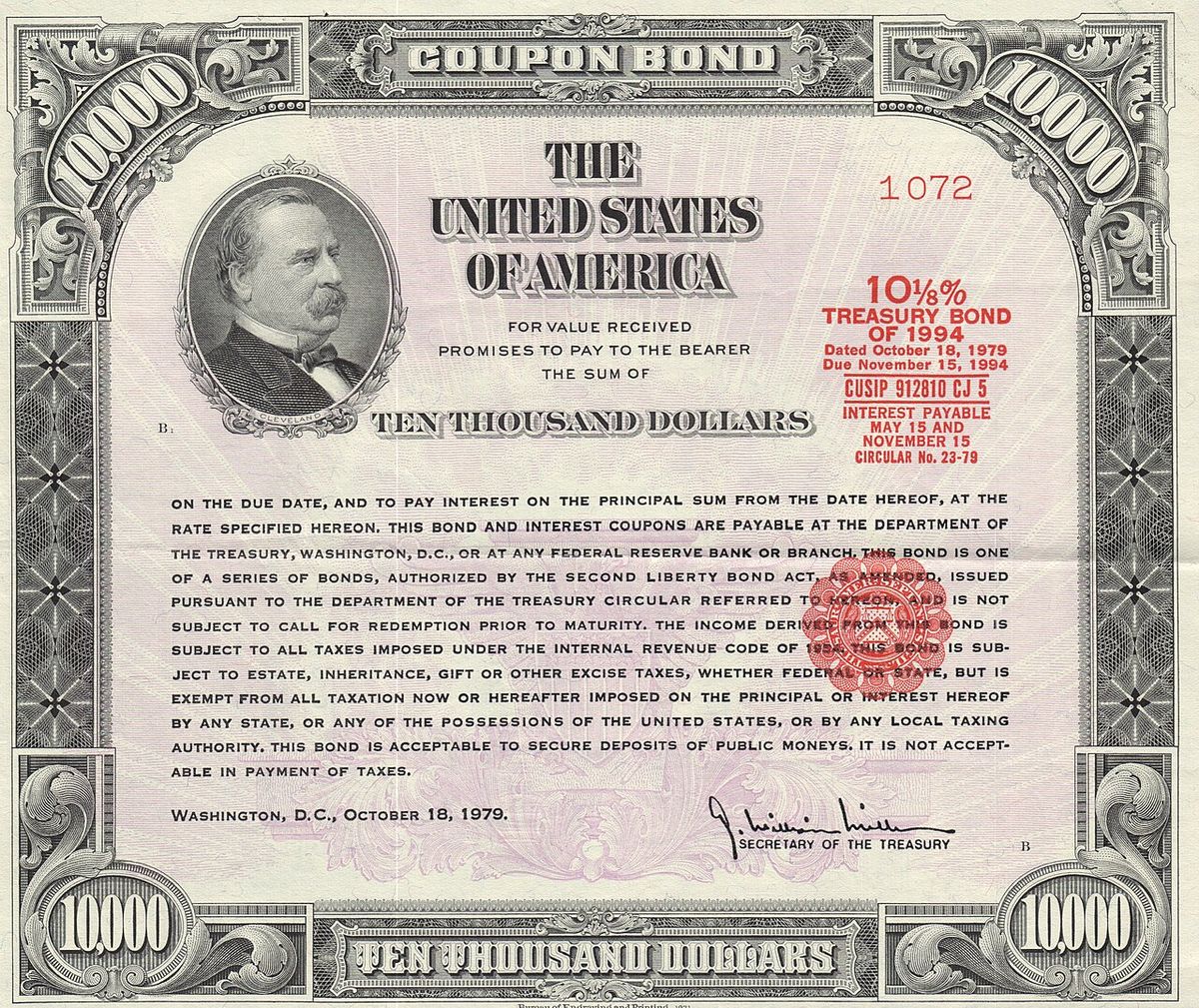
There are four primary types of marketable Treasury securities issued by the United States government. Treasury bills, or T-bills, are zero-coupon bonds that mature in one year or less and are bought at a discount to their par value. Regular T-bills are commonly issued with maturity dates of 4, 8, 13, 17, 26, and 52 weeks. Treasury notes, or T-notes, have maturities of 2, 3, 5, 7, or 10 years and pay a coupon every six months. Treasury bonds, or T-bonds, have the longest maturities at twenty or thirty years and also pay interest semi-annually. The fourth type is Treasury Inflation Protected Securities, or TIPS, which have maturities of 5, 10, or 30 years and have their principal adjusted based on the Consumer Price Index.
Another marketable security is the floating rate note, or FRN, which pays interest quarterly based on rates set in periodic auctions of 13-week Treasury bills. FRNs are issued for a two-year term. The government sells these marketable securities in auctions conducted by the Federal Reserve Bank of New York, after which they can be traded in secondary markets. A related product is STRIPS, which stands for Separate Trading of Registered Interest and Principal Securities. STRIPS are not directly issued by the Treasury but are created when brokers separate the interest and principal components of T-notes, T-bonds, and TIPS for separate sale as zero-coupon instruments. STRIPS must be purchased through a broker and cannot be bought from TreasuryDirect.
History and Evolution of Treasury Auctions
The modern system for issuing Treasury debt evolved significantly over the 20th century. To finance World War I, the US government issued Liberty bonds, selling $21.5 billion through a fixed-price subscription system. After the war, the Treasury refinanced maturing debt with variable short and medium-term maturities, still using fixed-price subscriptions. This system suffered from chronic over-subscription in the late 1920s, indicating the government was paying too much for its debt. Inspired by the United Kingdom, the US Treasury shifted to an auction system on December 13, 1929, completing its first auction for $100 million in three-month bills.
Until the 1970s, the Treasury offered long-term securities at irregular intervals, which created uncertainty in the money market. By the end of that decade, the Treasury shifted to regular and predictable offerings and began auctioning notes and bonds using a process based on the bill auction. The 30-year Treasury bond was suspended from February 2002 to February 2006 but was re-introduced due to demand from pension funds and other long-term investors. In 2019, the Trump administration considered issuing 50-year and 100-year Treasury bonds, though this did not materialize. The Treasury also issues cash management bills, or CMBs, during periods of low cash balances, which are irregular in amount, timing, and maturity term.
How Treasury Securities Work in Canada
While Treasury securities are a US instrument, they play a significant role for Canadian investors and the Canadian government. Canada consistently ranks among the top foreign holders of US Treasury securities. As of August 2026, US Treasuries held by Canada increased to 464.60 USD Billion. Canadian investors purchase US Treasuries for their safety and liquidity, often through brokers or financial institutions. Domestically, the Government of Canada issues its own treasury bills and bonds, which are analogous to US instruments but denominated in Canadian dollars. These are key tools for federal government financing and are also considered very low-risk investments backed by the Canadian government.
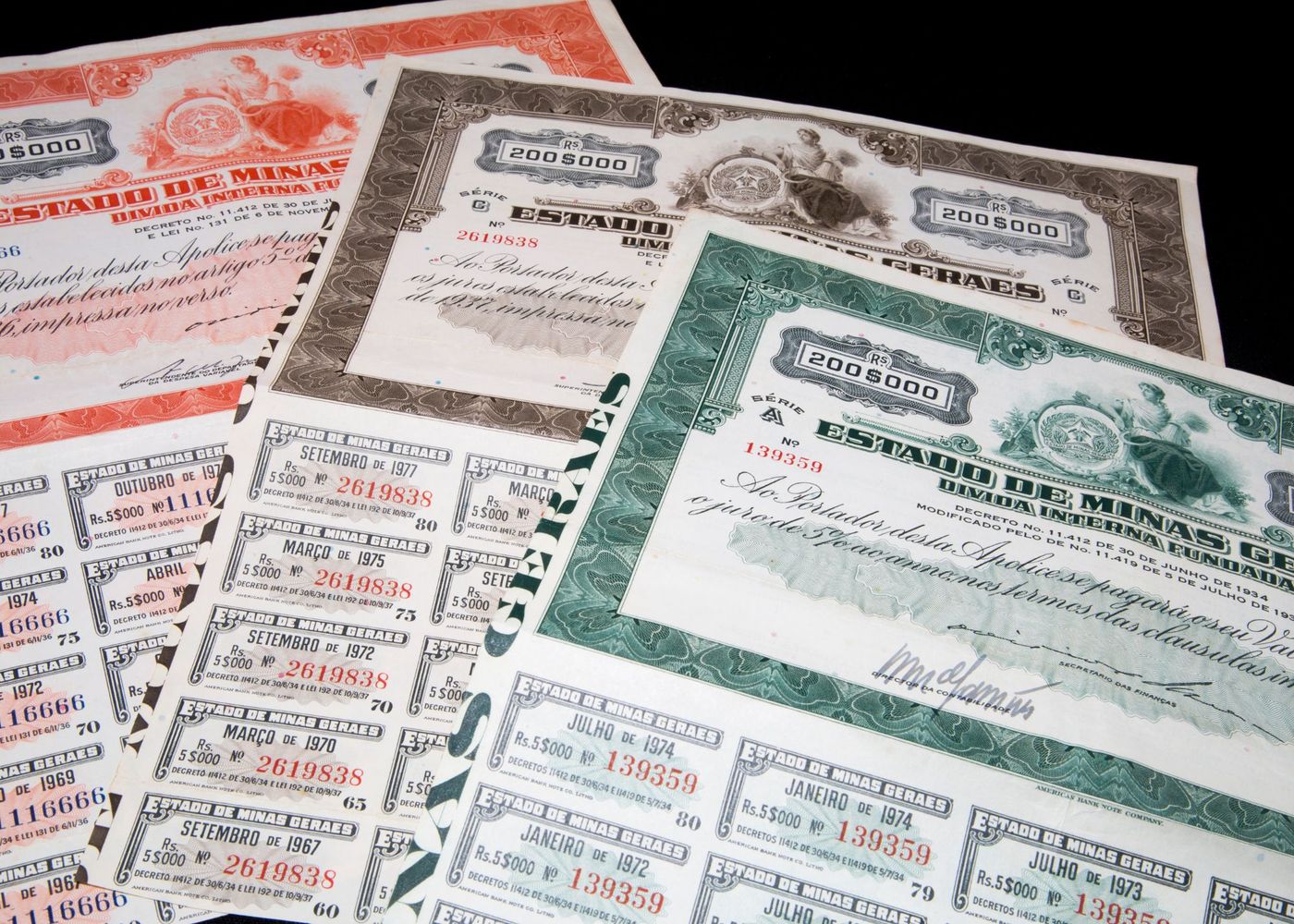
Canadian treasury bills, or T-bills, are debt securities issued by provincial and federal governments. They are sold at public auctions, sometimes twice a week, and are considered safe investments with a 100 percent government guarantee. T-bills are generally short-term investments issued for terms ranging from one month to one year. They are sold at a discount to their face value, and the investor's yield is the difference between the purchase price and the redemption value at maturity. The income earned on a Canadian Treasury Bill is considered interest income and is fully taxable. The yield on T-bills is not very high due to their low risk, and selling before maturity means the investor will not collect the full yield.
United States Treasury securities are government debt instruments issued by the United States Department of the Treasury to finance government spending. There are four types of marketable Treasury securities: Treasury bills, Treasury notes, Treasury bonds, and Treasury Inflation Protected Securities (TIPS). These securities are backed by the full faith and credit of the United States, giving them a reputation as one of the world's lowest-risk investments. This low risk gives Treasuries a unique place in the financial system where they are used as cash equivalents.
- They are 100 percent guaranteed by the issuing government.
- Common denominations are $1,000, $5,000, $10,000, $25,000, $50,000, $100,000 and $1 million.
- The minimum investment is typically $1,000, though some institutions require more.
- They are sold at a discount and redeemed at par value.
- Income is considered interest and is fully taxable.
- They are part of the money market and provide government liquidity.
Non-Marketable US Treasury Securities
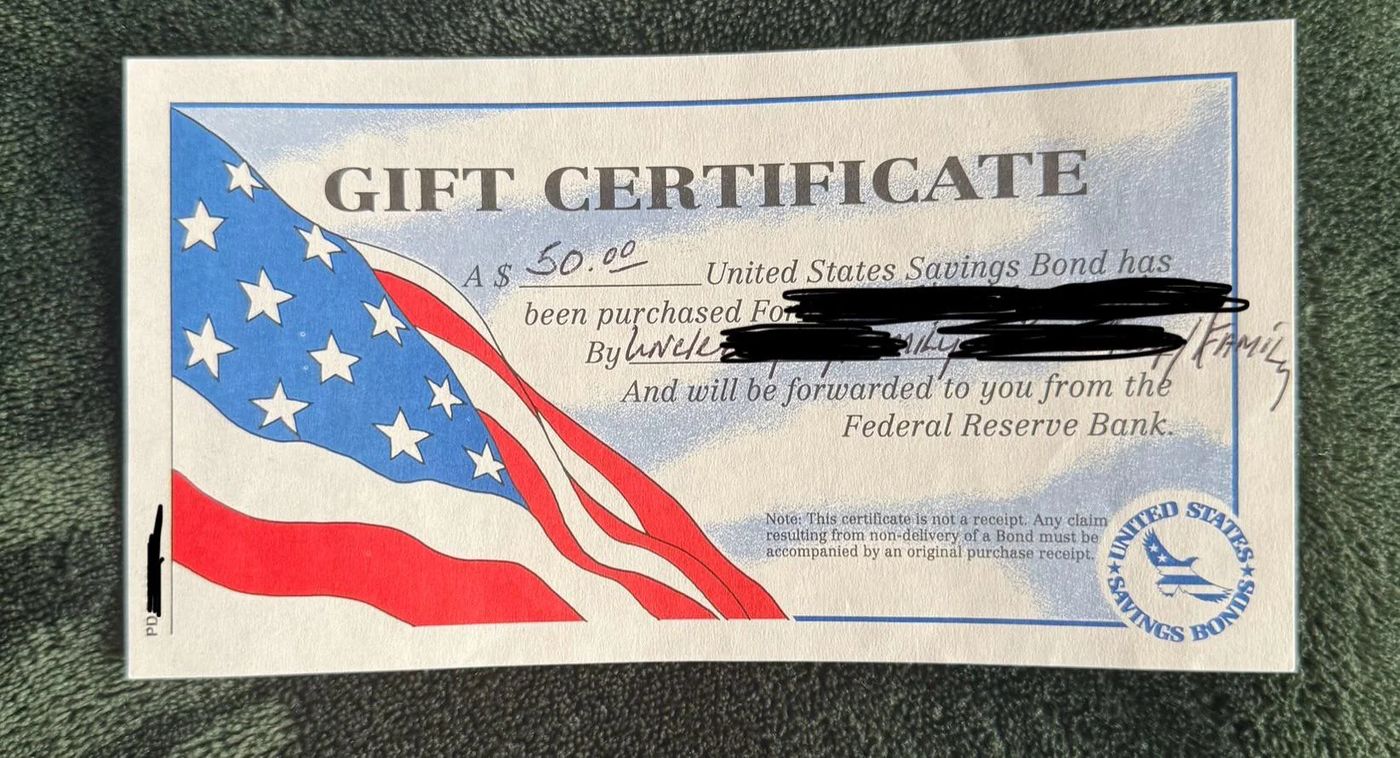
In addition to marketable securities, the US Treasury issues non-marketable securities that cannot be traded on secondary markets. US savings bonds are the most well-known type, created in 1935. Series E bonds, also known as war bonds, were widely sold to finance World War II. Unlike marketable bonds, savings bonds are redeemable only by the original purchaser or their beneficiary. As of January 1, 2012, financial institutions no longer sell paper savings bonds. Savings bonds are currently offered in two series. Series EE bonds pay a fixed rate and are guaranteed to double in value if held for 20 years. Series I bonds have a variable rate consisting of a fixed component and an inflation-adjusted component based on the CPI-U.
Other non-marketable securities include the State and Local Government Series, or SLGS, issued to state and municipal governments with proceeds from tax-exempt bond sales. The Government Account Series is the principal form of intragovernmental debt, where federal agencies invest excess funds. A Zero-Percent Certificate of Indebtedness is a one-day maturity security that can be purchased in any amount up to $1000 through TreasuryDirect to hold funds for future security purchases. These non-marketable instruments serve specific regulatory and administrative purposes within the government's debt structure. The Treasury issues SLGS securities at its discretion and has suspended sales on several occasions to adhere to the federal debt ceiling.
Holdings and Market Significance
Treasury securities are held by a wide array of domestic and international investors. As of June 2025, approximately $27 trillion of outstanding Treasury securities, representing 75 percent of the public debt, belonged to domestic holders in the United States. Of this amount, $7.2 trillion, or 20 percent of the debt, was held by agencies of the federal government itself as intragovernmental holdings. The Federal Reserve Bank of New York held $4.5 trillion as the market agent of the Federal Reserve system. Other major domestic holders included mutual funds with $4.2 trillion, state and local governments with $2.2 trillion, banks with $2 trillion, insurers with $590 billion, and private pension funds with $540 billion.
Foreign governments and investors are also major holders of US debt. Canada is consistently a top foreign holder. The performance of US Treasuries, particularly the 10-year Treasury note, is a globally watched metric for the bond market and investor sentiment on macroeconomic conditions. In September 2026, the US Treasury market saw a sharp sell-off, with ten-year yields climbing above 5.2 percent, their highest level since 2007. Over the same period, the net US debt pile surpassed $40 trillion. The yields on these securities influence everything from global capital flows to domestic mortgage rates, as seen when 30-year mortgage rates reached 7 percent during that period. The 30-year Treasury yield also exceeded 5.5 percent for the first time since 2004 during this market stress.
Risks and Financial Debates
While considered extremely safe, Treasury securities are not entirely without risk. The United States is a sovereign power and could theoretically default, though its historical record makes this perceived risk very low. A more practical risk is interest rate risk, where rising rates cause the market value of existing bonds to fall. This was evident in the 2026 sell-off when yields rose sharply. Inflation risk is another concern for fixed-rate Treasuries, as rising inflation erodes the real value of future interest payments. This risk is specifically addressed by TIPS, which adjust their principal for inflation.
Financial debates often surround Treasury issuance and market dynamics. A 2014 study found that conventional US Treasury bonds were persistently mispriced relative to TIPS, creating arbitrage opportunities and posing a major puzzle to asset pricing theory. Debates also occur about the optimal maturity structure of government debt, such as the consideration of ultra-long 50 or 100-year bonds. Furthermore, the market's size and liquidity mean that disruptions, like those caused by debt ceiling impasses which can suspend SLGS sales, can have widespread ripple effects. For Canadian holders, currency exchange rate risk is an additional factor, as the value of US dollar-denominated interest and principal payments fluctuates with the CAD/USD exchange rate. Finance scholars note that inflation-indexed securities like TIPS provide efficient portfolio diversification because they have a weak correlation with stocks and conventional bonds.
Frequently asked questions
What is a Treasury bond?
A Treasury bond, often called a T-bond or long bond, is a long-term US government debt security. These bonds have maturities of twenty or thirty years and pay a fixed interest rate every six months. They are sold at auction and can be traded in the secondary market. The 30-year bond is a key benchmark for long-term interest rates and was re-introduced in February 2006 after a four-year suspension.
What is the difference between a Treasury bill and a Treasury note?
The main differences are maturity and how interest is paid. Treasury bills, or T-bills, mature in one year or less and are zero-coupon securities, meaning they are bought at a discount and redeemed at full face value. Treasury notes, or T-notes, have longer maturities of 2, 3, 5, 7, or 10 years and pay a fixed coupon interest payment every six months. T-note prices are quoted on the secondary market as a percentage of par value in thirty-seconds of a dollar.
What are TIPS?
TIPS are Treasury Inflation-Protected Securities. They are marketable US Treasury securities whose principal value is adjusted based on changes in the Consumer Price Index for All Urban Consumers. TIPS pay a fixed interest rate every six months, but the dollar amount of the payment changes because it is applied to the inflation-adjusted principal. They are issued with maturities of 5, 10, and 30 years, and at maturity, the holder receives the inflation-adjusted principal or the original principal, whichever is greater.
How much US debt does Canada hold?
Canada is a major foreign holder of US Treasury debt. The amount fluctuates monthly. As of August 2026, US Treasuries held by Canada were reported at 464.60 USD Billion. Canada consistently ranks among the top ten to fifteen foreign holders, reflecting the deep financial ties and integrated markets between the two countries. The exact position changes month to month based on investment flows and foreign exchange reserves management.
How do Canadian investors buy US Treasury securities?
Canadian investors purchase US Treasury securities through brokers, dealers, or financial institutions that provide access to the US market. They cannot buy them directly from the US Treasury's TreasuryDirect system, which requires a US Social Security Number. The securities are initially sold at auctions conducted by the Federal Reserve Bank of New York and are then traded in secondary markets, which is where Canadian investors typically access them. Many Canadian mutual funds and exchange traded funds also hold portfolios of US Treasuries, providing another avenue for investment. This process allows Canadian investors to participate in one of the world's lowest risk investments, which are backed by the full faith and credit of the United States government.
Are Treasury securities taxable in Canada?
Yes, for Canadian investors, income from US Treasury securities is subject to taxation. The interest income is considered foreign income and must be reported on a Canadian tax return. This withheld tax can usually be claimed as a foreign tax credit in Canada to avoid double taxation. Income from Canadian treasury bills is also fully taxable as interest income. It is important for investors to understand these tax implications when holding such government debt instruments from either country.
Sources and further reading
- Treasury security (Wikipedia) en.wikipedia.org
- Why buy Treasury bills? nbc.ca
- TreasuryDirect, Marketable Treasury securities treasurydirect.gov
- CIBC Canadian T-Bill Fund cibc.com
- How Much US Treasury Bonds Does Canada Hold? A Guide startrader.com
This article explains how things work and is not financial, tax or legal advice. Rules, limits and rates change, so check the current figures with the Canada Revenue Agency, your province or your financial institution before you act.