A Treasury bill, commonly known as a T-bill, is a short-term debt security issued by a government to finance its operations. In Canada, T-bills are issued by the federal and provincial governments and are considered one of the safest investments available because they are backed by the full faith and credit of the issuing government. They are sold at a discount to their face value and mature at par, with the difference representing the investor's return. These instruments are a core component of the money market and are used by individuals, institutions, and the government itself for managing short-term liquidity.
What Is a Treasury Bill
A Treasury bill is a zero-coupon debt instrument, meaning it does not pay periodic interest like a bond. Instead, it is issued at a price below its face, or par, value. Upon maturity, the government pays the holder the full face value. The profit for the investor is the difference between the purchase price and the redemption value. This structure makes T-bills a type of discount security. They are issued by sovereign governments to raise short-term funds, supplementing taxation revenue. The full faith and credit backing of the government makes default risk exceptionally low, which is why they are often treated as cash equivalents in the financial system. In Canada, T-bills are a fundamental tool for government financing and a staple in conservative investment portfolios.
How Treasury Bills Work
Treasury bills function through a process of issuance at a discount and redemption at par. This yield is determined by the discount rate set at auction. T-bills are highly liquid and can be sold before maturity in the secondary market, though the sale price will reflect current market interest rates. The income generated is considered interest income for tax purposes and is fully taxable in the year it is earned. Their short-term nature, typically one year or less, allows governments to manage cash flow needs and investors to park funds with minimal risk.
The pricing and yield of T-bills are calculated on a discount basis. The common formula used in the market annualizes the discount. For a T-bill with a face value of F, a purchase price of P, and D days to maturity, the discount yield is calculated as ((F, P) / F) * (360 / D) * 100%. This method uses a 360-day year for simplicity. In Canada, yields are closely tracked through indices like the S&P Canada Treasury Bill Index, which is a market-value weighted index of Canadian dollar-denominated T-bills.
History and Development of Treasury Securities
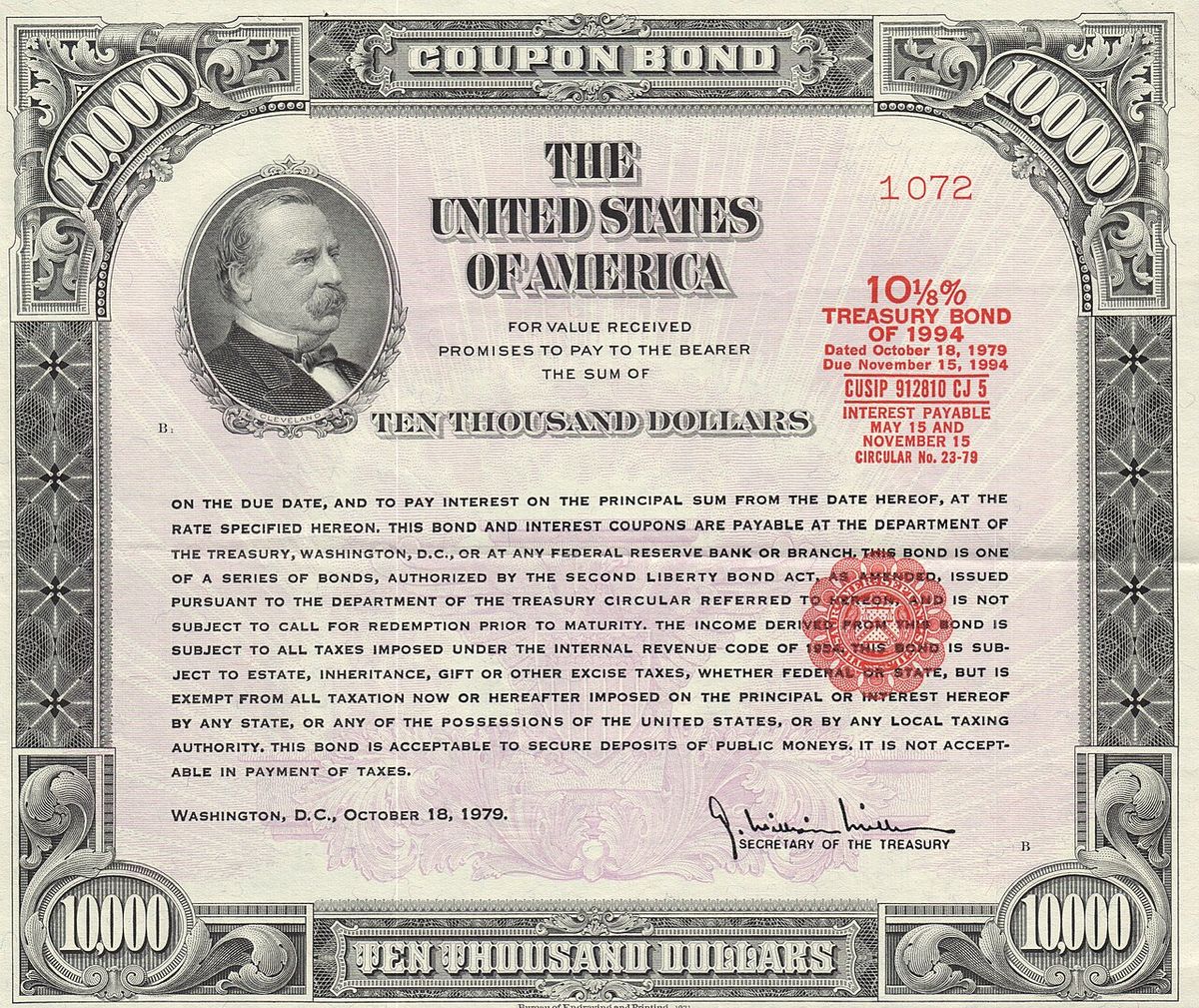
The modern system for issuing government debt, particularly through auctions, has evolved over nearly a century. To finance World War I, the U.S. government issued Liberty bonds through a fixed-price subscription system. This method led to problems like chronic oversubscription in the late 1920s, indicating the government was paying too much for its debt. In 1929, the U.S. Treasury adopted an auction model inspired by the United Kingdom, holding its first auction for three-month bills. This allowed the market to set the price. By the 1970s, the Treasury moved to regular and predictable offerings to reduce market uncertainty. This auction framework is the basis for how Government of Canada treasury bills are sold today in primary markets.
The types of marketable treasury securities expanded over time. Beyond standard bills, governments introduced notes and bonds with longer maturities and coupon payments. Innovations like Treasury Inflation-Protected Securities (TIPS) and floating rate notes (FRNs) were created to protect investors from inflation and interest rate changes. In Canada, the federal government issues regular treasury bills and may also issue cash management bills for extraordinary cash needs, similar to practices in other countries.
Treasury Bills in the Canadian Market
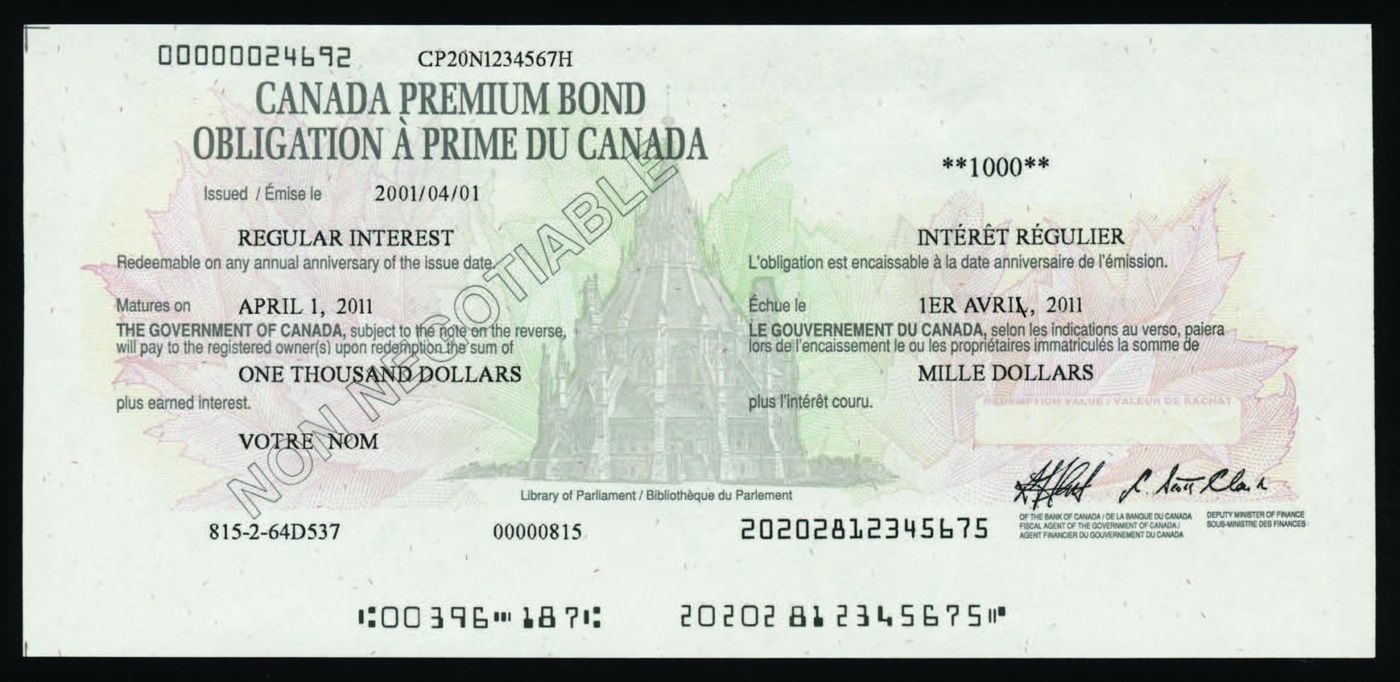
In Canada, treasury bills are issued by the federal government through the Bank of Canada and by provincial governments. They are a fundamental part of the domestic money market. The Government of Canada sells T-bills through public auctions, which are typically held weekly. Provincial T-bills may be sold at similar auctions, sometimes twice a week. These auctions determine the discount rate and allocate bills to the highest bidders. The primary purchasers are large financial institutions and primary dealers, but individual investors can participate directly or through intermediaries. Canadian T-bills are issued in standard denominations, with a minimum investment of $1,000. Common face value increments include $1,000, $5,000, $10,000, $25,000, $50,000, $100,000, and $1 million. While the minimum is $1,000, many financial institutions and brokers require a higher minimum purchase, often several thousand dollars. The most common maturities align with short-term cash management needs, ranging from one month to one year. The S&P Canada Treasury Bill Index tracks the performance of these securities, providing a benchmark for the market.
- T-bills are sold at auctions by the Bank of Canada and provincial governments.
- The minimum purchase amount is $1,000.
- Common maturities are short-term, from a few weeks to 52 weeks.
- Income from T-bills is taxed as 100% interest income.
- They are considered one of the safest investments in Canada.
How to Buy Treasury Bills in Canada
Canadian investors have several avenues for purchasing treasury bills. The most direct method is participating in a government auction through a financial institution that acts as a primary dealer, though this is more common for institutional investors. For most individuals, the practical routes are through a financial institution, a full-service investment advisor, or a brokerage. When buying through a bank or investment firm, T-bills can be purchased individually or as part of a managed portfolio or mutual fund, such as the RBC Canadian T-Bill Fund or the CIBC Canadian T-Bill Fund. Purchasing through a brokerage, including online discount brokerages, typically involves the secondary market. Here, investors buy T-bills that have already been issued and are being resold by other investors. Brokerages often charge a commission that is embedded in the quoted price. Some platforms offer features like automatic rollover upon maturity. To buy T-bills directly from the Bank of Canada in an auction, an investor needs a Canadian bank account and a Social Insurance Number, and must submit a competitive bid.

Comparison with Other Investments
Treasury bills are often compared to other low-risk investments like Guaranteed Investment Certificates (GICs). Both are considered very safe, with T-bills being government-guaranteed and GICs often being insured by the Canada Deposit Insurance Corporation up to certain limits. However, their structures differ significantly. GICs pay a stated interest rate at regular intervals or at maturity, while T-bills generate a return through the discount mechanism. Maturity terms also differ, with T-bills being strictly short-term (up to one year) and GICs commonly offered for terms of one, three, or five years. Compared to corporate bonds, T-bills carry substantially lower risk, as corporate debt is subject to the financial health of the issuing company. This lower risk is reflected in generally lower yields for T-bills. Within the universe of government securities, T-bills differ from longer-term bonds and notes, which pay semi-annual coupon interest and are more sensitive to changes in interest rates. The following table outlines key differences between T-bills and common alternatives.
| Investment | Issuer | Typical Term | Income Method | Primary Risk |
|---|---|---|---|---|
| Treasury Bill (T-Bill) | Government | 1 month to 1 year | Discount to par | Very low (sovereign) |
| Guaranteed Investment Certificate (GIC) | Bank/Credit Union | 1 to 5 years | Stated interest rate | Low (often CDIC insured) |
| Government Bond | Government | 2 to 30 years | Semi-annual coupon | Interest rate risk |
| Corporate Bond | Company | Varies | Semi-annual coupon | Credit/default risk |
Risks and Considerations
While treasury bills are among the safest investments, they are not entirely without risk. The primary risk is opportunity cost. Because T-bills offer very low returns, investors may miss out on higher yields available from other securities, especially during periods of rising inflation. Inflation risk is pertinent, as the fixed return from a T-bill may not keep pace with increasing prices, eroding purchasing power. There is also interest rate risk if an investor needs to sell a T-bill before maturity in the secondary market. If interest rates have risen since purchase, the market value of the T-bill will be lower, potentially resulting in a loss if sold. Liquidity is generally high for government T-bills, but it can vary for provincial issues or in times of market stress. All investment income from T-bills is treated as interest income by the Canada Revenue Agency and is fully taxable at the investor's marginal tax rate. This makes them less tax-efficient than investments that generate capital gains or eligible dividends. For these reasons, T-bills are best suited for conservative capital preservation, short-term savings goals, or as a temporary holding place for cash within a diversified portfolio.
The Role of T-Bills in the Financial System
Treasury bills play a critical role in the broader financial system beyond being a simple investment vehicle. For the government, they are a key tool for managing daily cash flow and funding short-term budgetary needs without resorting to longer-term, more expensive debt. For financial markets, T-bills serve as a fundamental benchmark. Their yields are a primary indicator of short-term interest rates and influence pricing for other financial products, including floating-rate loans and derivatives. Institutional investors, such as banks, money market funds, and pension funds, use T-bills extensively for liquidity management and as collateral in financial transactions. The widespread perception of T-bills as a risk-free asset makes them a central part of pricing models and a safe haven during periods of market volatility. In Canada, the active T-bill market supports the overall stability of the financial system by providing a deep and liquid market for high-quality, short-term debt.
Frequently asked questions
What is a Treasury bill in simple terms?
A Treasury bill is a short-term loan you make to the government. You buy it for less than its face value, and when it matures, the government pays you the full face value. The difference is your profit, which is your interest for lending the money. They are considered very safe because they are backed by the government.
How do I buy T-bills in Canada?
You can buy T-bills through several channels. You can purchase them from a financial institution or an investment advisor, who can buy them at auction or from the secondary market. You can also buy them through a brokerage account, including online brokerages. While it is possible for individuals to bid directly in government auctions, this process is more complex and common among institutional investors.
Are T-bills safer than GICs?
Both T-bills and GICs are considered very safe investments. T-bills are direct debt obligations of the federal or provincial government, backed by its full faith and credit. GICs are issued by banks and credit unions and are often insured by the Canada Deposit Insurance Corporation up to $100,000 per institution. The safety profile is similarly high, though the issuers and structures differ.
Can I sell a T-bill before it matures?
Yes, Treasury bills can be sold before their maturity date in the secondary market through a broker or financial institution. However, the price you receive will depend on current market interest rates. If rates have risen since you bought the T-bill, you may sell it for less than you paid, resulting in a loss. If rates have fallen, you may sell it for a gain.
What is the minimum investment for a T-bill?
The minimum purchase for a United States Treasury bill is $100. This has been the minimum since April 2008, when it was lowered from $1,000. Treasury bills are zero coupon bonds sold at a discount to their par value and mature in one year or less. They are sold through single price auctions held weekly for most maturities and every four weeks for the 52 week bill. The auctions are conducted by the Federal Reserve Bank of New York. Individual investors can participate with this relatively low minimum, while banks and primary dealers are the largest purchasers.
Sources and further reading
- Treasury bill (Wikipedia) en.wikipedia.org
- Why buy Treasury bills? nbc.ca
- RBC Canadian T-Bill Fund, RBF262 rbcgam.com
- CIBC Canadian T-Bill Fund cibc.com
- Bonds, T-Bills and More rbcdirectinvesting.com
- How to Buy Treasury Bills in Canada springfinancial.ca
This article explains how things work and is not financial, tax or legal advice. Rules, limits and rates change, so check the current figures with the Canada Revenue Agency, your province or your financial institution before you act.