The Toronto Stock Exchange (TSX) is the principal stock exchange in Canada and the tenth largest in the world by market capitalization. Located in Toronto's Financial District, it serves as the primary marketplace for senior equities in the country, including all of Canada's major banks and leading energy companies. The TSX operates as a wholly owned subsidiary of the TMX Group, facilitating fully electronic trading. Its performance is widely tracked through the S&P/TSX Composite index, making it a central pillar of the Canadian economy and a key destination for domestic and international investors.
History and Evolution of the TSX
The origins of the Toronto Stock Exchange trace back to an association formed by Toronto businessmen on July 26, 1852. A more formal gathering occurred on October 25, 1861, when twenty-four brokers met at the Masonic Hall to establish the exchange. Initially, the exchange had 13 listings, growing to 18 by 1868, with a majority being bonds and bank issues. The exchange was incorporated by an act of the Legislative Assembly of Ontario in 1878. The TSE, as it was known until 2002, grew continuously except for a three-month closure in 1914 due to fears of financial panic at the start of World War I. During the Wall Street crash of 1929, the Toronto exchange was better connected to New York than its Montreal counterpart and saw its three most popular stocks fall by at least 8 percent. The following day, a record 331,000 shares changed hands on the TSE with an overall loss of 20 percent in value.
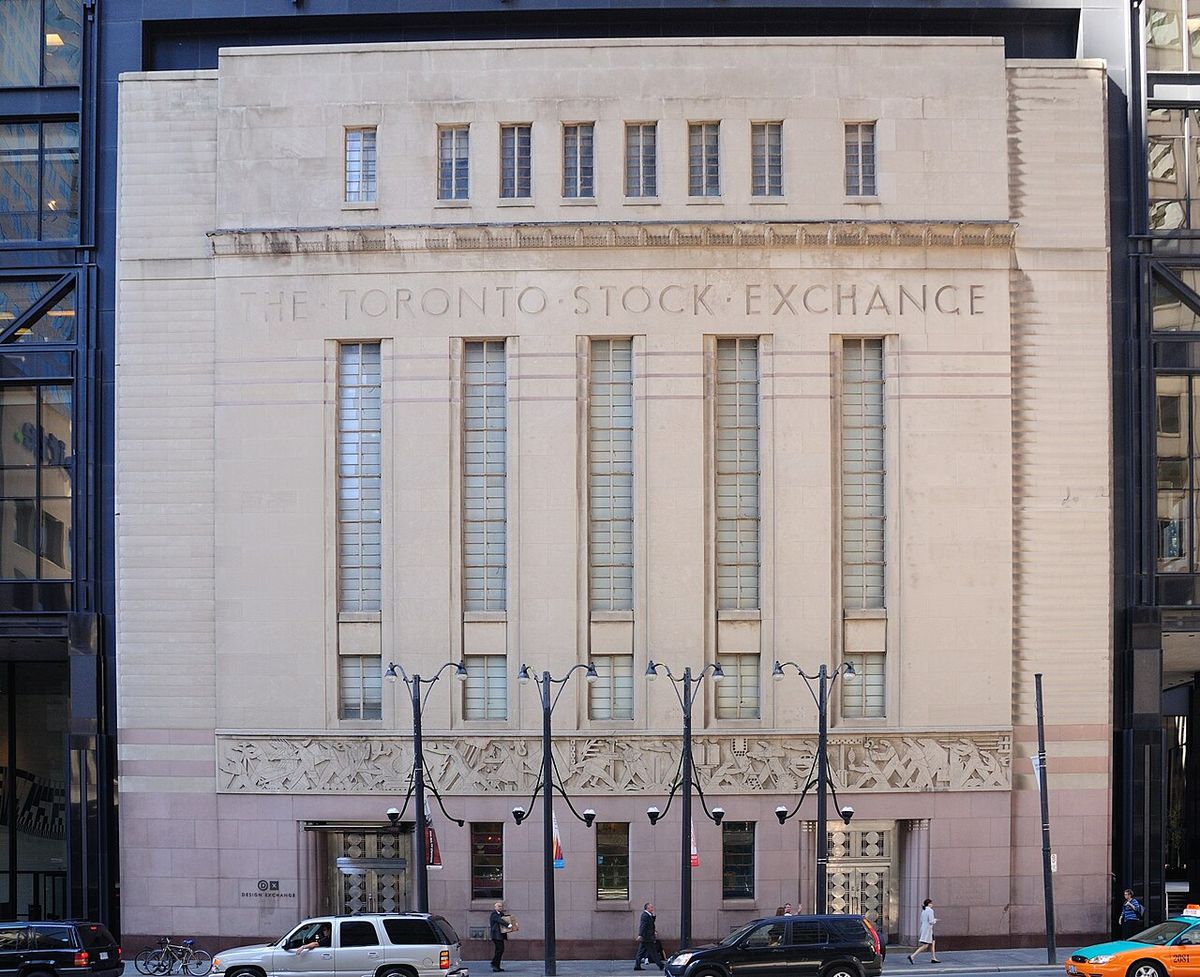
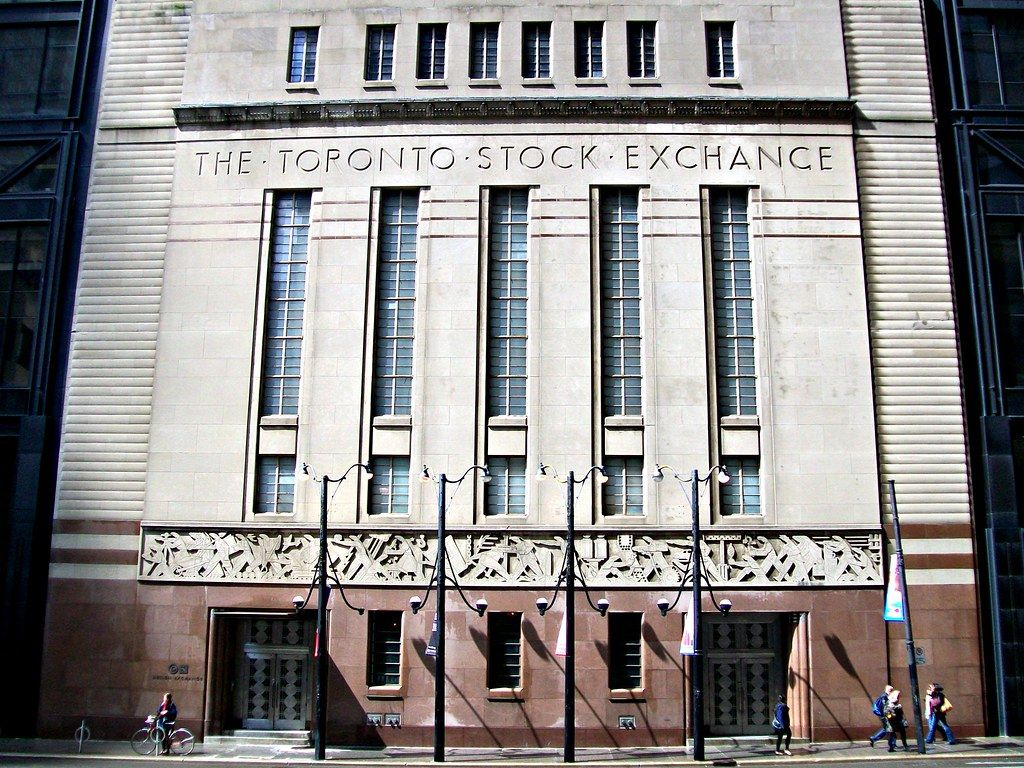
Toronto's reputation as a financial centre for mining was cemented in the 1890s during a British Columbia gold rush. Local exchanges deemed the ventures too risky, leading to the formation of the Toronto Industrial and Mining Exchange in 1897 and the Standard Mining Exchange in 1899. These merged in 1900 to become the Standard Stock and Mining Exchange, which was finally amalgamated into the Toronto Stock Exchange in 1934. This move helped Toronto's total trading volume surpass that of Montreal's exchange. The TSE moved to Bay Street in 1913 and opened a new Art Deco trading floor and headquarters there in 1937. By 1936, it had become the third largest stock exchange in North America.
The Toronto Stock Exchange introduced the Computer Assisted Trading System (CATS) in 1977 for automated trading. It closed its physical trading floor on April 23, 1997, becoming a fully electronic exchange. In 1999, it became Canada's sole exchange for senior equities. The exchange became a for-profit company in 2000 and a public company in 2002, changing its acronym from TSE to TSX.
- 1977: The TSE 300 index launched and the Computer Assisted Trading System (CATS) was introduced.
- April 23, 1997: The physical trading floor closed, making it a fully electronic exchange.
- 1999: A major realignment made the TSE Canada's sole exchange for senior equities.
- 2000: The exchange became a for-profit company.
- 2002: Its acronym was officially changed from TSE to TSX, and it became a public company.
- 2001: The TSX acquired the Canadian Venture Exchange, creating the TSX Group.
- December 17, 2008: The TSX closed for a full trading day due to a technical glitch.
The creation of the TSX Group parent company followed the acquisition of the Canadian Venture Exchange in 2001, which was renamed the TSX Venture Exchange in 2002. A proposed merger with the London Stock Exchange in 2011 was terminated after failing to receive the minimum 67 percent shareholder approval, following concerns raised by the Bank of Canada and opposition from Ontario's finance minister. A competing Canadian bid from the Maple Group of financial institutions, valued at up to CAD$3.7 billion, succeeded. A new competing exchange, Aequitas Neo, opened for trading in March 2015, listing 45 TSX issues and focusing on fairness and challenging high-frequency trading practices.
Market Operations and Trading Hours
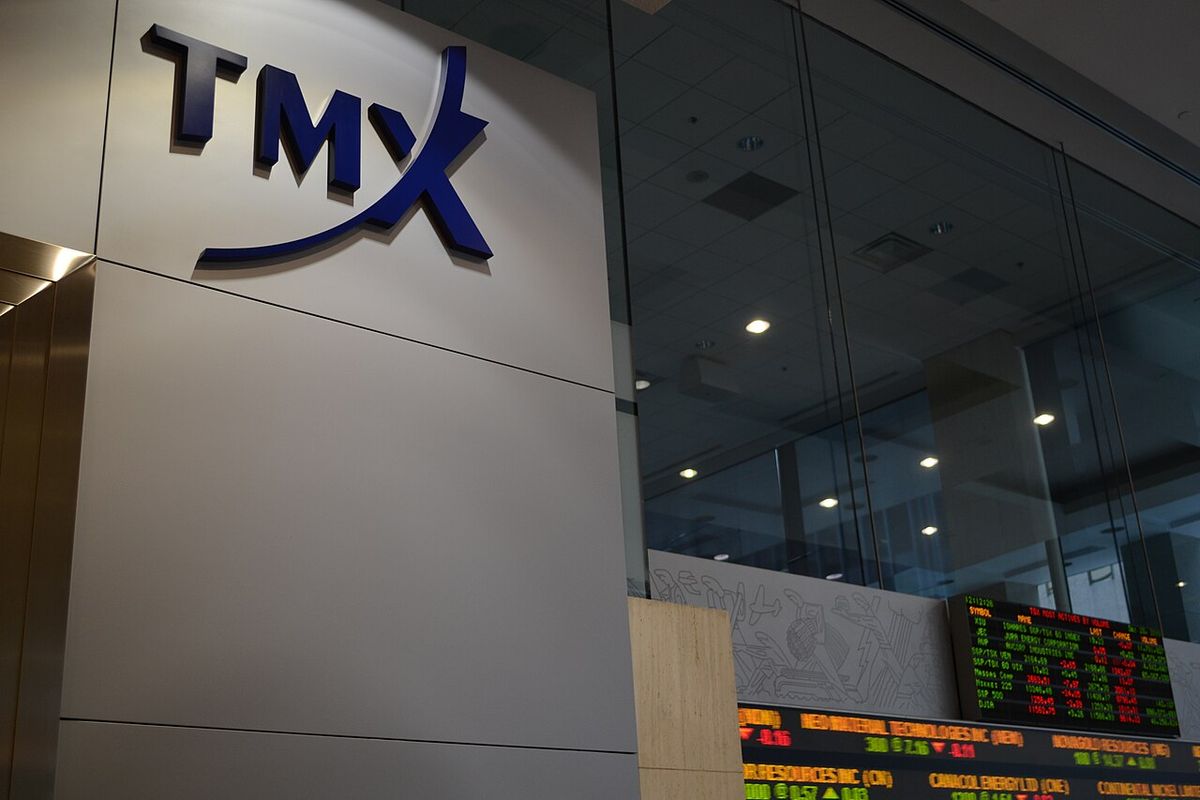
The Toronto Stock Exchange operates a fully electronic trading environment. Its normal trading session runs from 9:30 AM to 4:00 PM Eastern Time, Monday through Friday. This is followed by a post-market session which operates from 4:15 PM to 5:00 PM ET. Trading does not occur on Saturdays, Sundays, or on holidays declared by the exchange in advance. The continuous trading period accepts all regular order types. A specific market-on-close period runs from 3:50 PM to 4:00 PM ET to facilitate the closing auction. The exchange's parent, TMX Group, facilitates trading not only on the TSX but also on the TSX Venture Exchange and TSX Alpha. This electronic infrastructure ensures liquidity and efficient price discovery for the thousands of securities listed.
Listed Companies and Market Capitalization
As of January 2024, the Toronto Stock Exchange had 1,811 listed issuers, which includes companies, exchange-traded funds, and other structured financial products. The combined market capitalization of these listings was CAD $4.16 trillion. This represented an increase from March 2023, when there were 1,798 listed issuers with a combined market cap of CAD $4.0 trillion. When combined with the TSX Venture Exchange, the total market capitalization reached CAD $4.23 trillion by the end of January 2024. The TSX is the definitive centre for banking in Canada, as it is home to all of the country's Big Five commercial banks. These are the Canadian Imperial Bank of Commerce, Bank of Montreal, Bank of Nova Scotia, Royal Bank of Canada, and Toronto-Dominion Bank. Proposed mergers between Royal Bank and Bank of Montreal, and CIBC with Toronto-Dominion Bank in 1998 were blocked by then-Finance Minister Paul Martin to preserve competition.
The exchange is also the primary listing for many of Canada's largest energy companies. Major energy firms listed on the TSX include Enbridge, Suncor, TC Energy, Canadian Natural Resources, Imperial Oil, Pembina, and Cenovus, all of which are components of the S&P/TSX 60 index. A significant number of large TSX-listed companies, especially those on the S&P/TSX 60, maintain a secondary listing on an American exchange such as the New York Stock Exchange. For cross-listed companies, the TSX uses a specific ticker symbol convention, appending ':CA' to the NYSE or NASDAQ symbol. For example, a U.S.-listed company like Apple would be identified as AAPL:CA on the TSX.
Leadership and Governance Structure
From its early days until 1954, the Toronto Stock Exchange was led by an elected president from its board of governors. This was an unpaid, part-time position, with presidents typically serving one or two terms, though some early leaders served for several years. At the annual meeting in 1954, the title of the head of the board was changed from president to chairman. The role remained an unpaid, part-time position occupied by an elected member. A significant change occurred in 1956 with the creation of a new, full-time presidential role. Unlike the chairman, this president was a paid position and was held by a non-member of the exchange, marking a shift towards professional management.
In 1956, the exchange created a new, full-time presidential role, which was a paid position held by a non-member. Arthur John Trebilcock served as the first such president from May 1956 to October 1958. Other notable presidents included John Pearce Bunting, who served from 1977 to 1994, and Barbara Gayle Stymiest, who served from 1999 to 2004. The last listed president was Richard William Nesbitt, who served from 2004 to 2008.
- Arthur John Trebilcock served from May 23, 1956, to October 1958.
- Howard Douglas Graham served from January 1, 1961, to June 30, 1966.
- John Robert Kimber served from May 1, 1967, until his death in office on October 10, 1976.
- John Pearce Bunting had a long tenure from July 1, 1977, to December 31, 1994.
- Rowland William Fleming served from January 1, 1995, to April 1999.
- Barbara Gayle Stymiest served from October 12, 1999, to October 31, 2004.
- Richard William Nesbitt served from December 2, 2004, to February 27, 2008.
The Toronto Stock Exchange is a wholly owned subsidiary of the TMX Group. The TMX Group was created as a parent to the TSX in 2001. In 2011, there was a proposed merger between the TMX Group and the London Stock Exchange Group, but it was terminated. The TMX Group now provides executive leadership for the exchange.
The TSX in the Canadian Financial Landscape
The Toronto Stock Exchange functions as the core public equities market in Canada. Its evolution from a regional exchange to a global top-ten marketplace mirrors the growth of the Canadian economy. The 1999 realignment of Canadian exchanges solidified its role, making it the sole venue for trading senior equities nationwide, while derivatives moved to the Montreal Exchange and junior equities to the TSX Venture Exchange. This structure provides a clear pathway for companies from early-stage funding on the TSXV to graduation onto the senior TSX. The concentration of the country's largest banks and resource companies on the TSX means its performance, tracked by the S&P/TSX Composite index, is a barometer for national economic health. The index traded above the 14,000 point level for the first time on May 11, 2007.
The TSX also supports capital formation for key Canadian industries, particularly mining, oil and gas, and financial services. Its historical strength in mining finance continues, supported by the integrated TSX Venture Exchange for exploration companies. The exchange's rules and listing requirements are set by the TMX Group and are overseen by provincial securities regulators, ensuring a regulated environment for investors. The presence of competing exchanges like Aequitas Neo introduces alternative trading venues, but the TSX remains the dominant liquidity pool for Canadian equities. Its fully electronic model, established in 1997, ensures it operates on par with other major global exchanges in terms of speed and accessibility.
Key Figures and Historical Performance
As of March 2023, the Toronto Stock Exchange had 1,798 listed issuers with a combined market capitalization of CAD $4.0 trillion. By January 2024, this grew to 1,811 listed issuers and a combined market capitalization of CAD $4.16 trillion. The total market capitalization for companies listed on both the TSX and TSX Venture Exchange reached CAD $4.23 trillion by the end of January 2024. This growth reflects an expansion in both the number of listings and the value of existing companies.
| Period | Listed Issuers | Market Capitalization (CAD) |
|---|---|---|
| March 2023 | 1,798 | $4.0 trillion |
| January 2024 | 1,811 | $4.16 trillion |
When combined with the TSX Venture Exchange, the total market capitalization reached $4.23 trillion in January 2024. Historical trading volumes have seen dramatic shifts, such as the record 331,000 shares traded on October 30, 1929, the day after the Wall Street crash. The exchange's main index, the S&P/TSX Composite, has set numerous records throughout its history, with its climb past 14,000 points in 2007 being a notable milestone. The exchange's ranking as the tenth largest in the world and third largest in North America by market cap underscores its global significance. These figures are driven by the large weighting of financial and resource sectors within the index, which are sensitive to commodity prices and interest rate environments.
Frequently asked questions
What is the Toronto Stock Exchange (TSX)?
The Toronto Stock Exchange (TSX) is a stock exchange located in Toronto, Ontario, Canada, and is a wholly owned subsidiary of the TMX Group for the trading of senior equities. It is the 10th largest exchange in the world and the third largest in North America by market capitalization. As of January 2024, it had 1,811 listed issuers with a combined market capitalization of CAD $4.16 trillion. The exchange is the centre for banking in Canada, listing all of the country's Big Five commercial banks. It is based in the EY Tower in Toronto's Financial District and operates as a fully electronic market.
What are the trading hours for the TSX?
The Toronto Stock Exchange has a normal trading session from 9:30am to 4:00pm Eastern Time. It also operates a post-market session from 4:15pm to 5:00pm ET. These sessions run on all days of the week except Saturdays, Sundays and holidays declared by the Exchange in advance. The exchange transitioned to a fully electronic environment in 1997, facilitating this continuous trading schedule without a physical floor.
What is the difference between the TSX and the TSX Venture Exchange?
The TSX is Canada's sole exchange for the trading of senior equities, catering to large, established companies. The TSX Venture Exchange (TSXV) handles trading in junior equities for smaller, early-stage companies. The TSXV was created after the Toronto Stock Exchange acquired the Canadian Venture Exchange in 2001, which was renamed in 2002. This structure resulted from a 1999 realignment that made the TSX the senior market, while the Montreal Exchange took derivatives and the merged junior exchanges formed the Venture market under the TMX Group parent company.
What is the S&P/TSX Composite index?
The S&P/TSX Composite is the main index of the Toronto Stock Exchange. It was launched in 1977 as the TSE 300 index. This index tracks the performance of the largest and most liquid companies listed on the TSX, serving as the key benchmark for the Canadian equity market. A significant milestone occurred on May 11, 2007, when the S&P/TSX Composite traded above the 14,000 point level for the first time ever.
When did the TSX become a fully electronic exchange?
The Toronto Stock Exchange became a fully electronic exchange on April 23, 1997, when its physical trading floor closed. This made it the second-largest stock exchange in North America to choose a floorless, electronic trading environment. The move followed the earlier introduction of the Computer Assisted Trading System (CATS) in 1977 for less liquid equities. The exchange vacated its historic trading floor in the Art Deco building on Bay Street in 1983, well before the final shift to complete electronic trading.
Sources and further reading
- Toronto Stock Exchange (Wikipedia) en.wikipedia.org
This article explains how things work and is not financial, tax or legal advice. Rules, limits and rates change, so check the current figures with the Canada Revenue Agency, your province or your financial institution before you act.