The renminbi, abbreviated RMB, is the official currency of the People's Republic of China, issued by the People's Bank of China. Its primary unit is the yuan, symbolized by ¥ and coded as CNY. For Canadians, the renminbi is a significant currency due to deep trade and investment ties with China, with services available for exchange, transfer, and investment across the country. Understanding the renminbi's structure, exchange mechanisms, and its presence in Canada is essential for businesses, investors, and travellers engaging with the world's second-largest economy.
What Is the Renminbi?
The renminbi, meaning 'people's currency', is the legal tender of mainland China. The yuan is the base unit, similar to how sterling relates to the pound in the United Kingdom. Each yuan is divided into 10 jiao, and each jiao into 10 fen, though fen coins are rarely used today due to inflation. In everyday Mandarin, people often say kuai instead of yuan and mao instead of jiao. The currency symbol is ¥, but to distinguish it from the Japanese yen, RMB or ¥ RMB is sometimes used. The renminbi is sometimes referred to colloquially as the 'redback', a play on the US dollar's nickname 'greenback'. The currency is issued by the People's Bank of China, which introduced it in December 1948, just before the founding of the People's Republic.
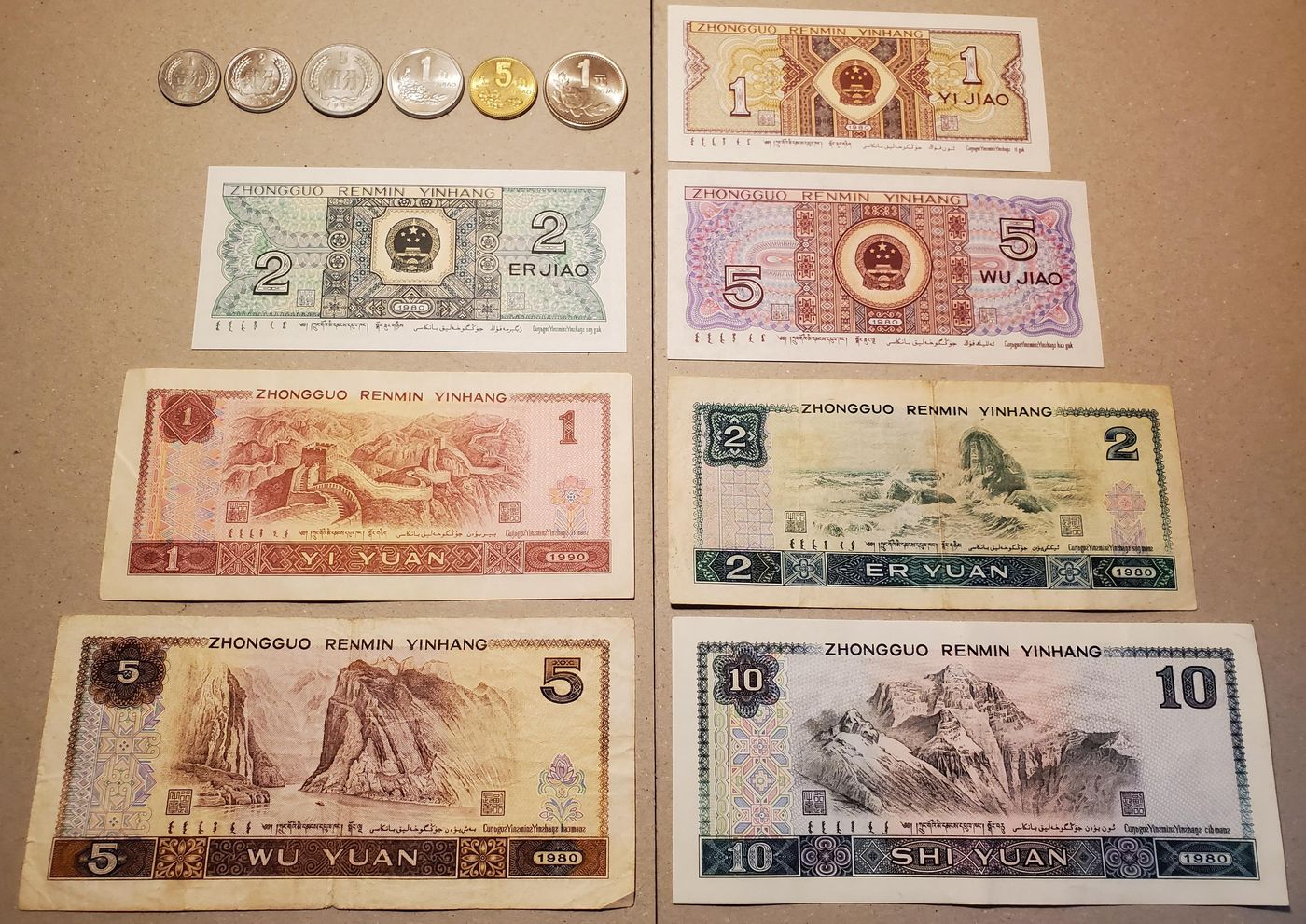
Renminbi banknotes are available in denominations from ¥0.1 to ¥100, with coins from ¥0.01 to ¥1. The denomination of each banknote is printed in simplified Chinese, financial Chinese numeral characters, and Arabic numerals. The words 'People's Bank of China' also appear on the back in Mongolian, Tibetan, Uyghur, and Zhuang scripts alongside Hanyu Pinyin. The first series of the currency was issued only in paper form to replace various currencies in Communist-controlled areas, and a major revaluation in 1955 set 1 new yuan equal to 10,000 old yuan to end the hyperinflation of the prior era.
Onshore and Offshore Renminbi: CNY vs. CNH
A crucial distinction exists between the onshore and offshore versions of the currency. The ISO code CNY refers to the renminbi traded within mainland China, which is controlled by the People's Bank of China and uses a fixed daily exchange rate set by the central bank. In contrast, CNH designates the renminbi traded internationally outside mainland China. The CNH exchange rate is determined by market forces and is not subject to the same capital controls as the CNY. This dual system means that the CNY and CNH rates can differ. For most Canadians exchanging currency or making transfers, they will be dealing with the offshore CNH market, which offers greater flexibility. The abbreviation RMB is not an official ISO code but is commonly used by banks and financial institutions as if it were one, adding to the terminology surrounding the currency.
The creation of the offshore CNH market was a key step in the renminbi's internationalization, allowing it to be used for trade and investment settlements outside China's strict capital account controls. This system enables non-residents to hold and trade renminbi in financial centres like Hong Kong, London, and, notably for Canada, through the official offshore renminbi hub established in the country. While CNY is used only in mainland China, CNH can be used globally, and its value fluctuates based on international supply and demand, providing a more transparent benchmark for global businesses and investors. The renminbi is legal tender in mainland China but not in Hong Kong, Taiwan, or Macau, though it is sometimes accepted in Hong Kong and Macau and easily exchanged there, with banks in Hong Kong allowing people to maintain accounts in RMB.
Historical Development and Exchange Rate Policy
The renminbi's modern history began with its introduction in 1948 to replace various regional currencies in Communist-controlled areas. A major revaluation in 1955 exchanged 1 new yuan for 10,000 old yuan to end hyperinflation. For decades, the exchange rate was pegged to the US dollar at an overvalued level to support industrial development through an import-substitution strategy, allowing the government to procure imported machinery at a lower domestic cost. A significant shift began in the late 1970s as China opened its economy, initiating a 15-year transition to a market-oriented exchange rate. From 1980 to 1994, foreign visitors used special Foreign Exchange Certificates issued by the Bank of China, which were officially at par with the renminbi but traded at a premium on a black market where touts offered over ¥1.30 RMB for ¥1 FEC.
By 1994, the renminbi was devalued and unified, trading above ¥8 to the US dollar after the government sanctioned foreign exchange markets known as swap centres in most large cities. It stayed above that level until 2005 when the peg to the dollar was loosened. Since 2006, the exchange rate has been allowed to float within a narrow band around a fixed base rate determined with reference to a basket of world currencies. The International Monetary Fund included the renminbi in its Special Drawing Rights basket on 1 October 2016, a milestone for its international status, making it the first emerging market currency in the basket with an initial weighting of 10.9%.
The International Monetary Fund's assessment of the renminbi's valuation has shifted significantly over time. In 2011, the IMF stated the renminbi was undervalued by 23 percent. By the second half of 2012, appreciation actions and quantitative easing by other central banks brought it within as little as 8 percent of its equilibrium value. The IMF assessed it as no longer undervalued by 2015. However, in 2026, the IMF stated the renminbi was undervalued by 16 percent. These shifting assessments reflect China's ongoing economic evolution and changes in its exchange rate policies.
| Year | IMF Assessment |
|---|---|
| 2011 | Undervalued by 23% |
| 2012 | Within 8% of equilibrium value |
| 2015 | No longer undervalued |
| 2026 | Undervalued by 16% |
China's transition to a market-oriented exchange rate was a gradual process spanning 15 years. Following the Asian financial crisis in 1998, China became concerned its financial system could not handle rapid cross-border movements of hot money. As a result, the currency was allowed to trade only within a narrow band specified by the government. The ultimate goal has been to make the renminbi fully convertible. This goal has been pursued alongside measures to deepen financial markets and manage the risks associated with volatile capital flows. As of 2013, the renminbi was convertible on current accounts but not on capital accounts.

The Renminbi in Canada: Exchange and Services
Canadians can access renminbi services through various financial institutions and currency exchange specialists. Major banks like the Bank of China (Canada) and the Industrial and Commercial Bank of China (ICBC) offer dedicated RMB accounts and exchange services. For instance, Bank of China allows customers to deposit RMB cash (only ¥50 and ¥100 notes) or convert Canadian or US dollars to RMB over the counter at prevailing rates. Several key services are available to individuals in Canada.
- Opening multi currency accounts that include RMB, such as those offering high interest on daily balances and unlimited transactions for everyday banking needs.
- Exchanging CAD or USD for RMB cash at bank branches, excluding the Montreal branch of some institutions.
- Ordering RMB online for home delivery anywhere in Canada through specialized currency exchange companies like Interchange Financial, often with better rates than banks and no foreign exchange fees.
- Setting up international transfers to send RMB to China using services like Xe or Wise, which operate in over 190 countries and 130 currencies.
- Withdrawing RMB cash from certain Canadian bank branches, converting it back to CAD or USD at the prevailing rate with no extra charge.
Online currency platforms like Wise and Xe also allow Canadians to convert and transfer RMB, often using the real mid market exchange rate with transparent fees. The mid market exchange rate as of recent data showed 1 Canadian dollar was equivalent to approximately 4.75 Chinese yuan. These platforms provide tools like historical currency charts, rate alerts, and upfront pricing, with comparison savings calculated against traditional bank rates for specific transfer amounts. For example, over the last 90 days, the CAD to CNY rate moved between 4.6871 and 4.8837, with an average of 4.7992 and 0.21% volatility, illustrating the typical range within which Canadians might exchange funds.
The Digital Renminbi (e-CNY)
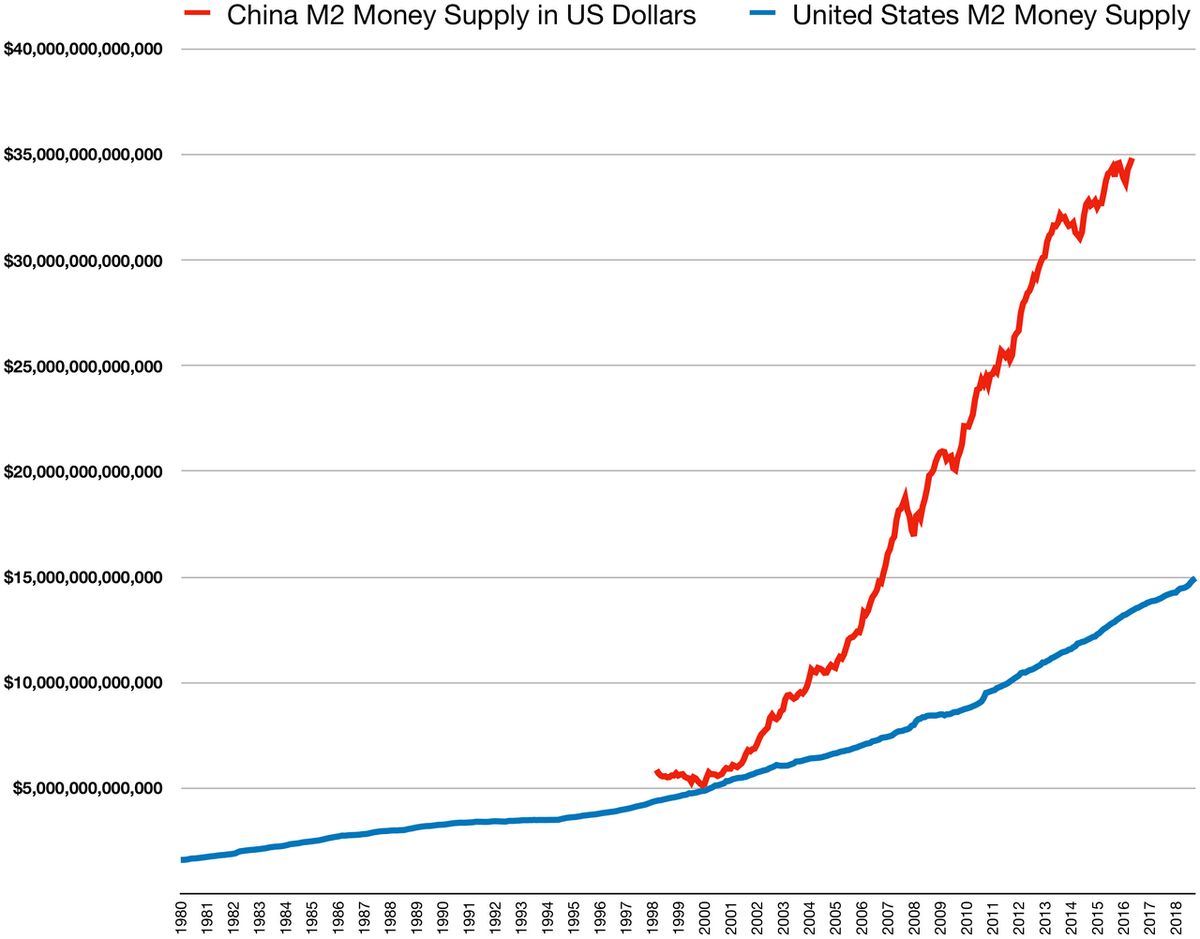
China is at the forefront of developing a central bank digital currency known as the digital renminbi or e CNY. Pilot programs began in 2020 in cities like Shenzhen, Suzhou, and Chengdu. By 2023, e CNY had been integrated into applications for public transportation, government subsidies, and retail payments. The digital yuan is intended to enhance payment system resilience, offer an alternative to private platforms like Alipay and WeChat Pay, and support financial inclusion. The People's Bank of China has filed numerous patents related to the digital currency system, including plans for algorithmic supply adjustment and integration with digital wallets. Some analysts note that the digital renminbi alone does not address the capital controls that limit the currency's global use, and it is not expected to significantly challenge the US dollar's dominant reserve currency status, which stood above 60% compared to the renminbi's roughly 2% share.
The development, also referred to as DCEP (Digital Currency Electronic Payment), involves more than 80 patents filed by the PBOC's Digital Currency Research Institute and state owned corporations. These patents reveal proposals for a system of interbank settlements using the currency, digital currency chip cards, and wallets linked directly to consumer bank accounts. Some patents indicate plans for programmed inflation control mechanisms that could algorithmically adjust the supply based on triggers like loan interest rates. The digital currency can be 'decoupled' from the traditional banking system, potentially allowing tourists to use it more easily. By April 2020, reports indicated that some government employees and public servants in pilot cities began receiving their salaries in the digital currency, and there were discussions about testing it during the Beijing Winter Olympics in 2022.
International observers have expressed mixed views on the digital renminbi's global implications. Experts like Maximilian Kärnfelt argue it would not solve the fundamental problems holding the renminbi back, such as China's financial market openness and property rights. Victor Shih notes that offshore holders may still prefer to exchange renminbi for dollars, considered a safer asset. Eswar Prasad states the digital renminbi will hardly put a dent in the dollar's status due to US economic dominance and deep capital markets. Nonetheless, the project has spurred central banks worldwide to explore similar digital currency initiatives, with some commentators warning that the US risks falling behind in this technological arena. The digital renminbi is seen by some as providing a functional alternative to the dollar settlement system and blunting the impact of sanctions or threats of exclusion at a country and company level.
Canada's Official Renminbi Hub and Swap Line
To strengthen financial ties, Canada and China established formal mechanisms to support renminbi usage. In 2012, the Bank of Canada and the People's Bank of China signed a reciprocal three year currency swap arrangement. This agreement established a swap line with a maximum value of RMB 200 billion or CAD 30 billion, designed to promote trade and investment and support financial stability. Furthermore, Canada launched an offshore renminbi trading hub, officially welcomed by the Province of British Columbia and announced by then Minister of Finance Michael de Jong. This hub, supported by a memorandum of understanding between the central banks, facilitates renminbi clearing and business in Canada, providing a foundation for increased trade and investment flows between the two countries.
The memorandum of understanding also established a regular dialogue between the Bank of Canada and the PBOC on the conduct of renminbi business and renminbi liquidity conditions in Canada, and it supported the establishment of a renminbi clearing bank in the country. This infrastructure is part of a broader Canadian government initiative to promote increased trade and investment with China. The swap line provides liquidity that can be used to support domestic financial stability should market conditions warrant, acting as a backstop for financial institutions engaged in cross border transactions. The hub in British Columbia positions Canada alongside other global financial centres with offshore renminbi capabilities, helping Canadian firms settle transactions in RMB directly and reducing their exposure to US dollar exchange rate fluctuations.
Current Exchange Dynamics and Practical Conversion
The exchange rate between the Canadian dollar and the Chinese yuan fluctuates based on market conditions. Recent data shows the CAD to CNY rate moving between 4.6871 and 4.7902 over a 30 day period, with an average around 4.7265 and a volatility of 0.19%. Over a 90 day period, the range was wider, from 4.6871 to 4.8837. For a Canadian looking to convert funds, the mid market rate is the benchmark, but the rate offered by banks or exchange services will include a margin or fee. Canadians can convert currency through several methods. They can use online transfer services like Wise or Xe, which often provide the mid market rate with transparent fees and allow users to set rate alerts and track historical charts. They can order physical RMB online for delivery anywhere in Canada, typically within two business days via insured Canada Post couriers. They can visit a bank branch to exchange cash, though notes may be limited to larger denominations like ¥50 and ¥100. They can also use multi currency accounts to hold RMB digitally for spending or sending abroad without worrying about high transaction fees or exchange rate markups.
When comparing providers, it is important to look at the total cost, which includes any service charges and the margin applied to the exchange rate. Some online specialists advertise better exchange rates than banks and credit cards, with no foreign exchange fees, and they offer a Best Rate Guarantee. Credit card companies, by contrast, may charge 2.5% to 7% for international transactions. For larger transfers, the potential savings can be significant. Comparison savings are calculated by comparing the exchange rate including margins and fees provided by each bank and a service like Xe on the same day. However, these savings are specific to the example transfer amount and currency pair used in the calculation and may not include all potential costs, so they should be used for guidance only when selecting a service provider.
Debates, Risks and International Role
The internationalization of the renminbi and its potential to rival the US dollar are subjects of ongoing debate. The renminbi's inclusion in the IMF's SDR basket in 2016 marked a significant step, yet its use as a global reserve currency remains limited. China maintains capital controls, meaning the renminbi is not fully convertible on capital accounts, which restricts its free flow across borders. Some experts argue that without removing these controls, the renminbi's global role will be constrained. The development of the digital yuan has sparked discussion about its potential to bypass traditional financial systems, though analysts like Eswar Prasad note it will hardly dent the dollar's dominance due to the United States' economic strength and deep capital markets. For Canadians holding or transacting in RMB, key considerations include exchange rate volatility, the difference between onshore and offshore rates, and the evolving regulatory landscape in both China and Canada.
The renminbi's journey in global trade rankings illustrates its growing but uneven international use. It became the world's 8th most traded currency in 2013, rose to 5th by 2015, but fell to 6th in 2019 before reaching 5th again as of April 2025. This fluctuation reflects both market forces and policy management. The currency's internationalization is also supported by instruments like RMB interest rate swaps, launched in May 2023, and green bonds denominated in RMB, such as the approximately US$6 billion offering by the Hong Kong SAR government in June 2023 under its Government Green Bond Programme. These developments create more avenues for international investment but also come with risks related to China's economic policies, geopolitical tensions, and the potential for sanctions or exclusion from dollar based systems, which the digital renminbi is partly intended to blunt.
For Canadian businesses and investors, engaging with the renminbi requires understanding these complexities. The existence of Canada's renminbi hub and swap line mitigates some liquidity and stability risks. However, participants must stay informed about China's capital account liberalization progress, the stability of its financial markets, and the practicalities of using both traditional and digital renminbi for cross border transactions. The renminbi's status as an emerging global currency presents opportunities for diversification and direct trade settlement, but it also requires a careful assessment of the associated economic and political risks inherent in the evolving international monetary system. As of 2013, the renminbi was convertible on current accounts but not capital accounts, and as of 2012 it traded within a narrow band specified by the Chinese central government, illustrating the controlled nature of its international expansion.
Frequently asked questions
What is the difference between RMB, CNY and yuan?
RMB is the abbreviation for renminbi, the official name of China's currency. Yuan is the primary unit of the renminbi, similar to the dollar being the unit of the US currency. CNY is the ISO currency code for the onshore renminbi traded within mainland China, while CNH is the code for the offshore renminbi traded internationally. In everyday conversation, Chinese people often use 'kuai' instead of 'yuan' and 'mao' instead of the formal term 'jiao' for the subdivision.
Can I exchange Canadian dollars for Chinese yuan in Canada?
Yes, you can exchange Canadian dollars for Chinese yuan in Canada. Many banks, such as the Bank of China (Canada), offer over the counter exchange services where you can convert CAD to RMB at the prevailing rate. You can also order RMB online from currency exchange specialists for home delivery across the country. Some services allow you to deposit RMB cash directly into a multi currency account, typically accepting only ¥50 and ¥100 banknotes. Withdrawals of RMB cash are also possible at certain branches.
What is the current exchange rate from CAD to CNY?
The exchange rate fluctuates constantly. Recent mid market rates showed 1 Canadian dollar was equivalent to approximately 4.75 Chinese yuan. Over a 30 day period, the rate moved between 4.6871 and 4.7902. It is important to note that the rate you receive from a bank or service provider will differ from the mid market rate due to margins and fees. You can track live rates using online currency converters or set up rate alerts on platforms like Xe to be notified when your desired rate is reached.
Can I send money from Canada to someone in China in RMB?
Yes, you can send RMB from Canada to beneficiaries in mainland China. Banks and international money transfer services facilitate these transfers. The funds are converted from Canadian or US dollars into renminbi before being sent. Services like those from Bank of China (Canada) specifically allow you to transfer CAD or USD to Chinese citizens after converting to RMB.
What is the digital yuan (e-CNY)?
The digital yuan, or e CNY, is a central bank digital currency issued by the People's Bank of China. It is a digital form of the renminbi, not a cryptocurrency like Bitcoin. Pilot programs began in 2020, and it is now used for payments in public transport, retail, and for government subsidies. It is designed to work alongside physical cash and provide an alternative to private payment platforms. Its international impact on the currency's global role is still being assessed, with many experts noting it does not directly address the capital controls that limit the renminbi's international use.
Why does Canada have a renminbi hub and swap line?
Canada established an offshore renminbi hub and a currency swap line with China to promote increased trade and investment between the two countries. The swap line, valued at up to RMB 200 billion or CAD 30 billion, provides liquidity and supports financial stability. The hub in British Columbia facilitates renminbi clearing and business in Canada, making it easier for Canadian firms to settle transactions in RMB and reducing exchange rate risks. This infrastructure is backed by a memorandum of understanding for regular dialogue between the central banks on renminbi liquidity and business conditions in Canada.
Sources and further reading
- Renminbi (Wikipedia) en.wikipedia.org
- 1 CAD to CNY, Canadian Dollars to Chinese Yuan ... xe.com
- Renminbi ("RMB") Services for Individual Client bankofchina.com
- Chinese yuan rmb to Canadian dollars today wise.com
- dollar/renminbi bilateral swap arrangement bankofcanada.ca
- Buy Chinese Yuan Renminbi Online, China (CNY ¥) interchangefinancial.com
This article explains how things work and is not financial, tax or legal advice. Rules, limits and rates change, so check the current figures with the Canada Revenue Agency, your province or your financial institution before you act.