The Nasdaq Stock Market is the largest stock exchange in the world by market capitalization and the first fully electronic stock market. Founded in 1971 in the United States, it is a primary listing venue for technology companies and many foreign firms. For Canadian investors and companies, Nasdaq operates a Canadian subsidiary that provides trading and data services for securities listed on major Canadian exchanges. Understanding Nasdaq is essential for anyone following global markets, technology stocks, or investing in U.S. equities from Canada.
What Is the Nasdaq Stock Exchange?
The Nasdaq Stock Market is an American stock exchange known for its fully electronic trading platform and its status as the world's largest exchange by market capitalization. Unlike traditional exchanges with physical trading floors, Nasdaq has operated electronically since its inception. The exchange is owned by Nasdaq, Inc., a public company that also operates the Nasdaq Nordic network and several U.S. stock and options exchanges. Nasdaq is a primary listing destination for technology companies and also hosts many foreign listings, with China and Israel being significant sources. The exchange calculates several major stock market indices, including the Nasdaq Composite and the Nasdaq-100, which are composed exclusively of stocks listed on its platform. As of the end of 2024, a total of 4,075 companies listed securities across Nasdaq's three market tiers.
History and Evolution of Nasdaq
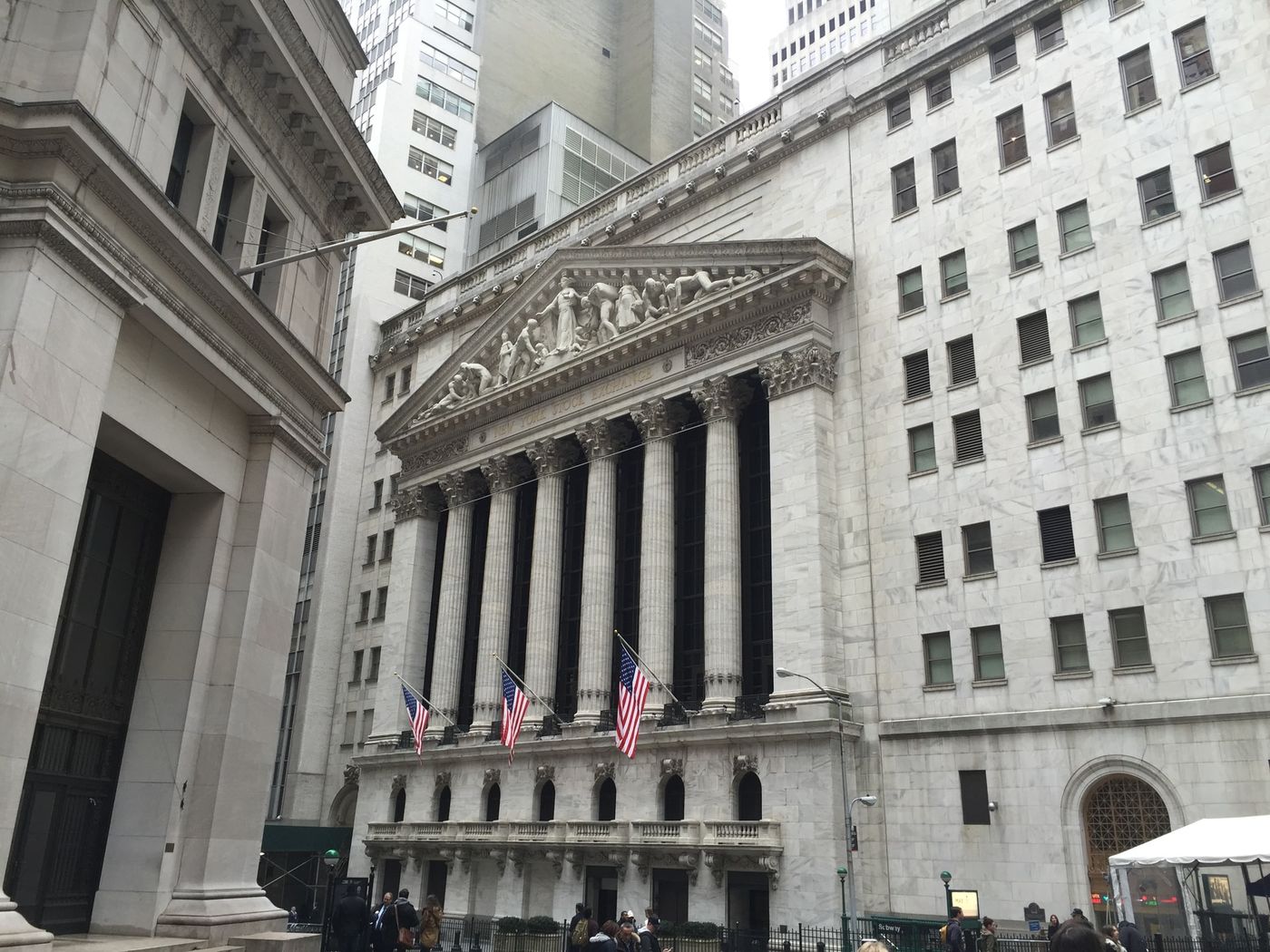
Nasdaq was founded in 1971 by the National Association of Securities Dealers, now known as the Financial Industry Regulatory Authority. It commenced operations on February 8, 1971, as the world's first fully electronic stock market, initially serving as a quotation system for over-the-counter securities. Major early listings included Intel Corporation, Comcast, and Applied Materials. By 1991, it accounted for approximately 46% of U.S. securities trading volume. In 1998, it became the first U.S. stock market to offer online trading. Nasdaq, Inc. became a public company in 2002, listing its own shares on the exchange under the ticker NDAQ. In 2006, its regulatory status changed to a licensed national securities exchange. A major expansion occurred in 2007 with a merger with OMX, forming the Nasdaq OMX Group and expanding its global footprint into the Nordic region.
Key milestones in Nasdaq's recent history include its role as a founding member of the UN Sustainable Stock Exchanges Initiative in 2012 and the promotion of Adena Friedman to CEO in 2016, making her the first woman to lead a major U.S. exchange. The exchange has actively expanded into new areas, launching the Nasdaq Crypto Index in 2021, acquiring a carbon-removal marketplace, and integrating environmental, social, and governance reporting tools. In 2023, the Nasdaq-100 index surged over 50%, marking its best performance since 2009, driven by technology stocks and artificial intelligence. Looking forward, Nasdaq announced plans in March 2025, pending SEC approval, to introduce 24-hour, five-day-a-week trading on its U.S. exchange in the second half of 2026. In a significant move toward modernizing market infrastructure, the SEC approved a Nasdaq proposal in March 2026 to allow certain stocks to be traded and settled in tokenized form.
- 1971: Nasdaq founded as the first fully electronic stock market.
- 1992: Formed first intercontinental market linkage with the London Stock Exchange.
- 2002: Nasdaq, Inc. completes its initial public offering (IPO).
- 2007: Merges with OMX and acquires the Philadelphia Stock Exchange.
- 2016: Adena Friedman becomes CEO, the first woman to lead a major U.S. exchange.
- 2021: Launches the Nasdaq Crypto Index (NCI).
- 2026: SEC approves proposal for tokenized stock trading and settlement.
How Nasdaq Trading Works
Nasdaq operates as a fully electronic marketplace where buy and sell orders are matched by computer systems. The exchange operates on a standard schedule in the Eastern Time Zone, with a normal trading session from 9:30 a.m. to 4:00 p.m., flanked by extended-hours premarket and postmarket sessions. There are approximately 253 trading days per year. Price quotes on Nasdaq are available at three distinct levels of market depth. Level 1 shows the highest bid and lowest ask prices, known as the inside quote. Level 2 displays all public quotes from market makers along with information on dealers and recently executed orders. Level 3 is used by market makers themselves to enter their quotes and execute orders directly. This multi-tiered system provides different layers of transparency and access for various market participants.
To qualify for a listing on Nasdaq, a company must be registered with the U.S. Securities and Exchange Commission and have at least three market makers. It must also meet specific minimum requirements for assets, capital, the number of publicly held shares, and shareholders. The exchange is structured into three market tiers with varying listing standards. The Nasdaq Capital Market is for companies with relatively small market capitalization and has the least stringent requirements. The Nasdaq Global Market is for mid-cap stocks that meet strict financial, liquidity, and corporate governance standards. The most exclusive tier is the Nasdaq Global Select Market, which consists of large-cap companies that meet the highest standards. An annual review each October determines if Global Market stocks are eligible for promotion to the Global Select Market.
Nasdaq's Market Tiers and Listing Details
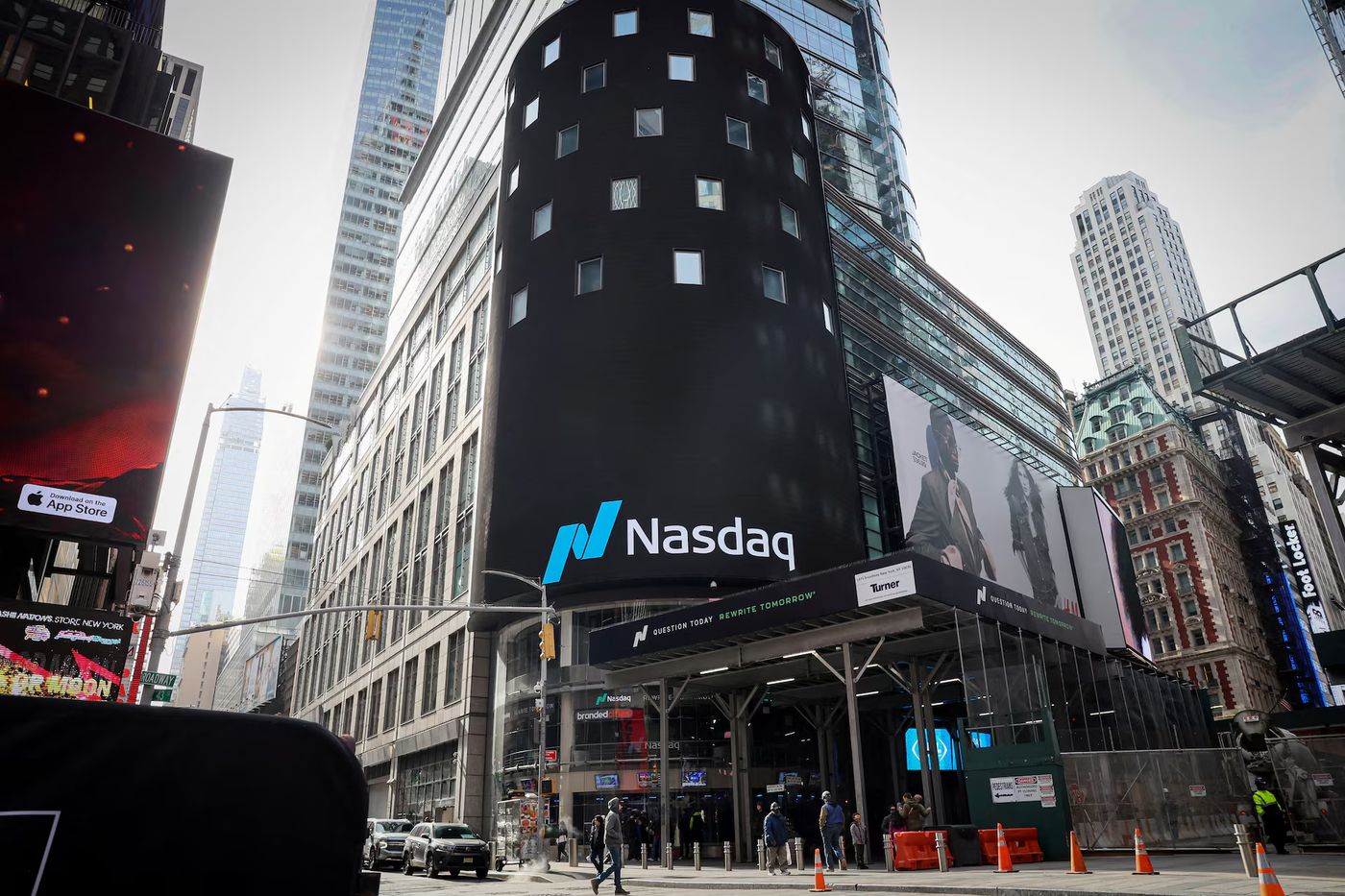
Nasdaq categorizes its listed companies into three distinct market tiers, each with specific criteria. The Nasdaq Capital Market is designed for small-cap companies and has less stringent listing requirements. The Nasdaq Global Market is a mid-cap tier consisting of stocks that meet Nasdaq's strict financial, liquidity, and corporate governance standards. The Nasdaq Global Select Market is the most exclusive large-cap tier, comprising companies with the largest market capitalizations on the exchange. As of December 2024, the distribution of listings across these tiers was 1,326 on the Capital Market, 1,366 on the Global Market, and 1,383 on the Global Select Market. Listing fees vary significantly by tier, reflecting the different levels of service and prestige.
| Market Tier | Company Focus | Listing Fee Range (USD) | Listings (2024) |
|---|---|---|---|
| Capital Market | Small Cap | $53,000 - $86,000 | 1,326 |
| Global Market | Mid Cap | $56,000 - $193,000 | 1,366 |
| Global Select Market | Large Cap | $56,000 - $193,000 | 1,383 |
The financial and governance requirements for the Global and Global Select Markets are notably stricter than for the Capital Market. These requirements ensure a baseline of stability and transparency for investors. The annual review process for the Global Select Market helps maintain the quality of this premier tier. For special purpose acquisition companies, there is a separate listing fee range of $81,000 to $85,000. The tiered structure allows companies at different stages of growth to access public capital markets while providing investors with clear signals about a company's size and compliance profile.
Nasdaq Operations in Canada
Nasdaq maintains a direct presence in Canada through its wholly owned subsidiary, Nasdaq Canada Inc., which is recognized as an exchange in Ontario. Headquartered in Montreal, Quebec, the subsidiary was created to extend Nasdaq's North American trading platform into the Canadian market. Nasdaq Canada operates three distinct trading books for trading securities listed on the Toronto Stock Exchange, TSX Venture Exchange, Canadian Securities Exchange, and NEO Exchange. The primary book, CXC, is a lit order book that provides a reliable platform for trading Canadian equities with price, broker, and time priority, offering both anonymous and attributed trading options. This book is a key pool of liquidity for Canadian markets.
The second trading book, CX2, is also a lit book but is designed to provide additional cost savings and trading efficiencies through a unique pricing model and broker preferencing functionality. CX2 includes a guaranteed execution facility for eligible orders. The third book, CXD, provides an alternative source of non-displayed liquidity to facilitate size discovery and price improvement opportunities. Nasdaq Canada offers a variety of advanced order types and smart routing tools, and it supports the industry-standard FIX protocol for order entry. For market data, Nasdaq offers Nasdaq Basic Canada, a cost-effective product that provides Level 1 trade data with 100% volume and ticker coverage of the major Canadian exchanges, allowing users to save over 60% compared to other data feeds. The subsidiary also offers the GLIMPSE data feed for more streamlined recovery of market depth data.
Comparison with the New York Stock Exchange
Nasdaq and the New York Stock Exchange are the two largest stock exchanges in the United States, but they differ in several fundamental ways. Nasdaq has a greater daily trading volume, averaging approximately 1.8 billion trades per day. The most notable difference is their trading systems. Nasdaq has been an all-electronic exchange since its founding in 1971, while the NYSE historically maintained a physical trading floor with live professionals conducting auctions, though it now uses an electronic system for most volume. The NYSE traces its origins to the Buttonwood Agreement of 1792, making it far older than Nasdaq. In terms of market structure, Nasdaq began as an electronic quotation system, with trades executed by phone until 1984, while the NYSE's floor-based open outcry system was its defining feature for centuries.
The sectors represented on each exchange also differ. The NYSE is traditionally viewed as the home for older, more established companies across a broad range of industries, including many industrial and financial firms. Nasdaq, by contrast, has built its reputation as the exchange for technology and innovation, attracting newer, high-growth companies. Listing fees vary, with Nasdaq's fees structured around its three market tiers. For investors, these differences mean that the exchanges cater to different company profiles and offer distinct trading environments, though both provide access to deep and liquid markets for U.S. and international equities.
Risks and Regulatory Scrutiny
Like all major financial institutions, Nasdaq operates within a complex regulatory environment and faces various risks and debates. Historically, the exchange has faced scrutiny over its market practices, such as in 1996 when the SEC issued a report alleging that Nasdaq market makers fixed prices by avoiding odd-eighth quotes to artificially widen spreads, leading to new rules for order handling. More recently, in September 2024, the European Commission conducted an unannounced inspection at Nasdaq's offices over potential anti-competitive practices. Regulatory bodies also exert control over market data pricing. In October 2018, the SEC blocked both Nasdaq and the NYSE from raising certain market-data fees, marking the first time the commission rejected such increases.
Nasdaq's expansion into new areas like cryptocurrency indices and tokenized securities settlement introduces novel regulatory and operational risks. The integration of blockchain technology for equity settlements, approved in 2026, represents a significant market structure change that will be closely watched by regulators. The exchange's push toward 24-hour trading, planned for 2026, also presents challenges related to system resilience, liquidity during off-hours, and global coordination. Furthermore, Nasdaq's role in enforcing U.S. government directives, such as its December 2020 announcement to remove shares of certain Chinese companies from its indexes following an executive order, highlights how geopolitical factors can directly impact its operations and listed companies.
Frequently asked questions
What is the difference between Nasdaq and the NYSE?
The key differences are in their history, trading systems, and typical listed companies. Nasdaq is an all-electronic exchange founded in 1971 and is known for listing technology and growth companies. The NYSE is much older, founded in 1792, and historically used a physical trading floor alongside its electronic systems, often listing older, more established firms across various sectors. Nasdaq also has a higher daily trading volume, averaging about 1.8 billion trades.
How can Canadians trade stocks listed on Nasdaq?
Canadian investors can trade Nasdaq listed U.S. stocks through most Canadian brokerage accounts offering access to U.S. markets. Nasdaq also operates directly in Canada through its wholly owned subsidiary Nasdaq Canada Inc., which is recognized as an exchange in Ontario. This subsidiary runs three trading books (CXC, CX2, CXD) for trading Canadian listed securities on exchanges like the TSX and TSX Venture. Additionally, Canadians can gain exposure through products like the iShares NASDAQ 100 Index ETF, which is listed in Canada and hedges currency risk. Nasdaq Canada provides a key pool of liquidity for Canadian equities, offering anonymous or attributed trading with price, broker, and time priority.
What are the Nasdaq-100 and Nasdaq Composite indices?
The Nasdaq Composite and Nasdaq-100 are stock market indices made up only of stocks listed on the Nasdaq exchange. The Nasdaq Composite Index includes almost all stocks listed on the Nasdaq exchange. The Nasdaq-100 Index is a subset of the Composite, consisting of 100 of the largest non-financial domestic and international companies listed on Nasdaq. Both indices are market capitalization weighted and serve as widely followed benchmarks, particularly for the technology sector. The Nasdaq-100 experienced a massive historic turnaround in 2023, surging over 50% on a total daily return basis, driven by high growth tech stocks and advancements in artificial intelligence.
What does Nasdaq do in Canada?
In Canada, Nasdaq operates through its subsidiary Nasdaq Canada Inc., a wholly owned entity created to extend Nasdaq's North American trading platform. It is recognized as an exchange in Ontario and runs three trading books for Canadian listed securities: CXC, CX2, and CXD. These books trade securities listed on the TSX, TSX Venture, and CSE, providing a key pool of liquidity. Nasdaq Canada also offers market data products like Nasdaq Basic Canada, a low cost feed with 100% volume and ticker coverage of Canadian markets. Furthermore, it provides connectivity, trading technology, and a guaranteed execution facility on its CX2 trading book to market participants.
When does the Nasdaq stock market open and close?
The Nasdaq Stock Market's normal trading session in the Eastern Time Zone runs from 9:30 a.m. to 4:00 p.m. The exchange also offers two extended hours trading sessions: a premarket session from 4:00 a.m. to 9:30 a.m. and a postmarket session from 4:00 p.m. to 8:00 p.m. Nasdaq averages about 253 trading days per year. In March 2025, Nasdaq announced plans, pending SEC approval, to introduce 24 hour, 5 day a week trading on its United States exchange during the second half of 2026 in response to increased global demand for U.S. equities.
What are the listing requirements for Nasdaq?
To qualify for listing on the Nasdaq exchange, a company must be registered with the United States Securities and Exchange Commission and must have at least three market makers. It must also meet minimum requirements for assets, capital, public shares, and shareholders. Specific requirements vary by its three market tiers. The Capital Market has less stringent rules for small capitalization companies. The Global Market and the more exclusive Global Select Market have stricter financial, liquidity, and corporate governance standards for mid and large cap companies. Every October, Nasdaq reviews the Global Market Composite to determine if stocks are eligible for the Global Select Market.
Sources and further reading
- NASDAQ (Wikipedia) en.wikipedia.org
- Nasdaq Canada nasdaq.com
This article explains how things work and is not financial, tax or legal advice. Rules, limits and rates change, so check the current figures with the Canada Revenue Agency, your province or your financial institution before you act.