An index fund is a type of investment fund, structured as a mutual fund or exchange-traded fund (ETF), designed to replicate the performance of a specific market index. It achieves this by holding all, or a representative sample, of the securities in that index, such as the S&P/TSX Composite Index or the S&P 500. For Canadian investors, index funds offer a passive, low-cost approach to achieving broad market diversification and participating in long-term growth. Their simplicity and historically competitive returns have made them a fundamental part of many investment portfolios.
What Is an Index Fund and How It Works
An index fund is a pooled investment vehicle that aims to mirror the performance of a chosen market index before fees and expenses. It can be structured as a traditional mutual fund or an exchange-traded fund. The fund does this by holding the same securities as the index in the same proportions or, in some synthetic ETFs, by using derivatives to replicate returns. This approach is known as passive management, as the fund manager does not engage in stock picking or market timing. The objective is simply to match the index, which minimizes the need for frequent trading and research. Investors in an index fund gain exposure to the entire basket of securities within the target index, such as all the companies in the S&P/TSX Composite Index, providing instant diversification with a single purchase.
The mechanics of an index fund involve the fund manager purchasing the underlying securities to match the index composition. The holdings are adjusted periodically, a process called rebalancing, to reflect changes in the index itself, such as when companies are added or removed. This passive, rules-based management results in lower operational costs compared to actively managed funds. For the investor, this means the fund's performance, net of fees, will closely follow the rises and falls of the underlying market index. The success of this strategy is measured by tracking error, which is the divergence between the fund's performance and the index it follows.
History and Development of Index Investing
The theoretical foundation for index funds was laid in 1960 by University of Chicago students Edward Renshaw and Paul Feldstein, who proposed an Unmanaged Investment Company. The first open-end index mutual fund available to retail investors was the Qualidex Fund, started in 1970, which tracked the Dow Jones Industrial Average. In 1973, the first Standard and Poor's Composite Index Funds were established by John McQuown and David G. Booth at Wells Fargo and Rex Sinquefield at American National Bank, though these were for institutional clients only. The publication of Burton Malkiel's book A Random Walk Down Wall Street in 1973 argued for the creation of a low-cost fund that simply bought the stocks in the broad market averages.
John Bogle, inspired by academic work from Paul Samuelson and others, founded The Vanguard Group in 1974. On December 31, 1975, Vanguard launched the First Index Investment Trust, which tracked the S&P 500 and was later renamed the Vanguard 500 Index Fund. Initially mocked as Bogle's folly and criticized for aiming for average returns, the fund started with $11 million in assets. It grew exponentially, reaching $100 billion under management by November 1999 and surpassing Fidelity's Magellan Fund in size by 2000. The indexing philosophy was further developed by firms like Dimensional Fund Advisors, founded in 1981, and the acquisition of Wells Fargo's indexing operation by Barclays in 1996, which later became part of BlackRock in 2009.
- 1960: Edward Renshaw and Paul Feldstein propose the first theoretical model.
- 1970: Qualidex Fund, the first retail index mutual fund, launches.
- 1973: First institutional S&P index funds created at Wells Fargo and American National Bank.
- 1973: Burton Malkiel publishes A Random Walk Down Wall Street.
- 1974: John Bogle founds The Vanguard Group.
- 1975: Vanguard launches the First Index Investment Trust (S&P 500).
- 1981: Dimensional Fund Advisors (DFA) is founded.
- 1986: Vanguard starts its first bond index fund.
- 2009: BlackRock acquires Barclays Global Investors, including the iShares ETF business.
Index Funds in the Canadian Market
In Canada, index funds are widely available as both mutual funds and ETFs from major financial institutions and dedicated investment firms. Canadian investors commonly use funds that track domestic indices like the S&P/TSX Capped Composite Index, which represents the largest companies on the Toronto Stock Exchange. Providers such as Vanguard, iShares (BlackRock), BMO, and RBC Global Asset Management offer a suite of index products. These cover not only Canadian equities but also U.S. indices like the S&P 500, international indices like the MSCI World Index, and Canadian and global bond indices. The funds are designed to be core holdings in a diversified portfolio, offering exposure to major asset classes through a passive, low-cost strategy.
Canadian index mutual funds and ETFs have distinct characteristics. Index mutual funds are priced once per day after the market closes, and investors can often purchase them with no commission from the fund company, though management fees still apply. Many series of index mutual funds have low minimum investments, typically around $500 per fund. Index ETFs trade on stock exchanges like the TSX, with prices fluctuating throughout the trading day. ETFs have no minimum purchase requirement beyond the cost of one share, making them accessible for smaller investments. Both structures provide the key benefits of indexing, but ETFs often have slightly lower management expense ratios due to their structure and may be more tax-efficient in non-registered accounts due to lower turnover.
Advantages and Benefits for Investors
The primary advantage of index funds is their low cost. Because they follow a passive, rules-based strategy, they incur lower management and transaction costs than actively managed funds. This results in lower management expense ratios, which helps preserve more of an investor's returns over the long term. Index funds are also simple to understand. Once an investor knows the target index, the fund's holdings and objective are transparent. This simplicity aids in asset allocation and portfolio construction, as investors can easily select funds to cover specific market segments like Canadian large-cap stocks or U.S. bonds without needing to analyze individual securities.
Further benefits include low portfolio turnover. Since the fund only trades when the underlying index changes, it generates fewer capital gains distributions, which can provide a tax advantage, especially in non-registered investment accounts. Index funds also eliminate style drift, where an active manager might stray from a stated investment mandate. An index fund dedicated to the S&P/TSX Composite Index, for example, will remain fully invested in that index, providing consistent and predictable exposure. This reliable diversification across dozens or hundreds of securities helps mitigate the impact of any single company's poor performance and allows investors to participate in the overall market's long-term growth.
Risks, Disadvantages, and Criticisms
Despite their benefits, index funds are subject to several inherent risks and criticisms. A core risk is tracking error, which is the fund's failure to perfectly match its benchmark index. This error can be caused by trading costs, cash holdings, or the fund's sampling methodology. While funds tracking liquid indices like the S&P 500 may have minimal tracking error, funds for emerging markets can experience more significant divergence. Index funds are also forced to buy and sell securities whenever the underlying index changes, such as when a company is added or deleted. This can create demand or supply shocks that temporarily affect the price of those securities, a cost borne by the fund.
Another criticism involves the mechanics of index rebalancing. Because index funds publicly announce their need to trade large blocks of securities to match index changes, algorithmic traders can engage in index front running, anticipating and trading ahead of these orders to capture profits. This effectively transfers value from fund investors to arbitrageurs. A broader societal critique focuses on the concentration of assets. As indexing grows, vast amounts of capital are controlled by a few large asset management firms. This common ownership across many companies in a sector may reduce competitive incentives, potentially leading to monopolistic outcomes and other economic externalities, though this remains a topic of academic debate.
Costs and Fees for Canadian Investors
Understanding the fee structure is crucial for Canadian index fund investors. The primary cost is the management expense ratio, which covers the fund's operating costs. Index funds typically have low MERs compared to actively managed funds. It is important to note that while index mutual funds often have no upfront sales commissions (no-load), they may pay a trailing commission to the dealer for advice and services. Series designed for fee-based accounts, such as Series F, charge no trailing commission to the fund, as the investor pays an account fee directly to their advisor. For ETFs, investors also pay a brokerage commission when buying or selling shares, though many platforms now offer commission-free trading for certain ETFs.
| Fund Series (Example) | Typical Investor | Fee Structure Note |
|---|---|---|
| Series A (Front/Back Load) | General investors via advisors | May have sales charges. Pays trailing commission. |
| Series D (DSC) | Investors with deferred sales charge | Capped for new sales. Redemption schedule applies. |
| Series F | Fee-based account holders | No trailing commission paid by fund. Investor pays account fee. |
| Series T/FT | Investors seeking tax-efficient income | Pays trailing commission. Aims for consistent monthly distributions. |
| Series O | Institutional or negotiated agreements | No management fee paid by fund. Investor pays negotiated fee directly. |
All distributions from index funds, such as dividends or capital gains, are taxable for the investor when held in non registered accounts. The structure of exchange traded funds can provide tax efficiency by minimizing capital gains distributions through in kind redemption processes. Before investing, it is important for investors to review a fund's prospectus to understand all associated fees, commissions, and tax implications. It should be noted that mutual funds are not guaranteed or insured by the Canada Deposit Insurance Corporation.
How to Invest in Index Funds in Canada
Investing in index funds in Canada involves a few clear steps. First, an investor must decide on their investment strategy and select which index or indices they wish to track. Common starting points include a broad Canadian equity index like the S&P/TSX Composite Index, a U.S. index like the S&P 500, or a global index. The next step is to open an investment account. Canadians can open accounts through a bank, credit union, or online brokerage, including self-directed accounts, Registered Retirement Savings Plans (RRSPs), and Tax-Free Savings Accounts (TFSAs). A self-directed brokerage account provides the most control and access to the widest range of index mutual funds and ETFs.
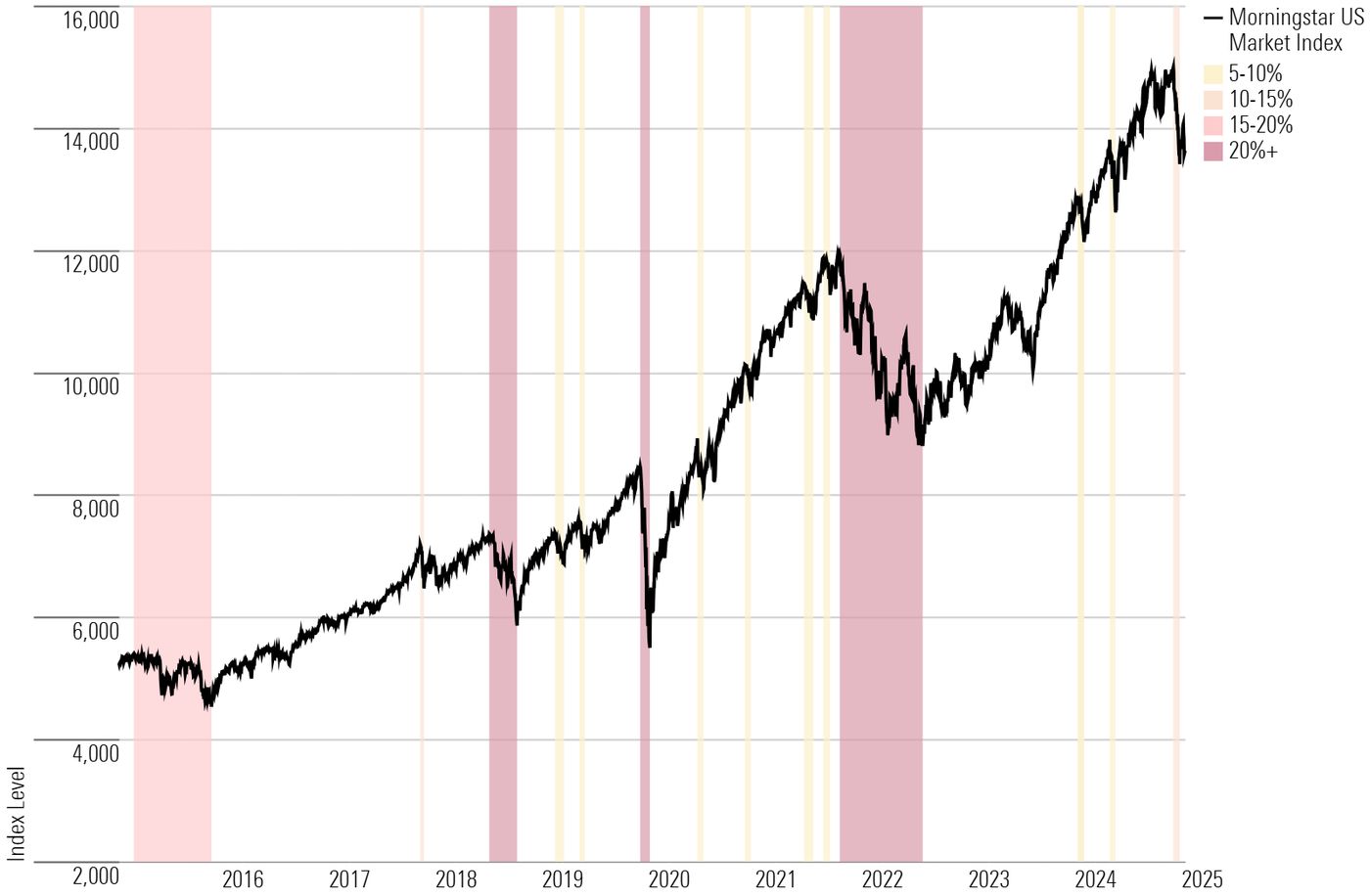
Once the account is funded, the investor can purchase shares or units of their chosen index fund. For ETFs, this is done by placing a trade for the specific ETF ticker symbol during market hours, much like buying a stock. For index mutual funds, purchases are typically made at the end-of-day net asset value. Investors should consider their capacity for risk and long-term objectives before investing, as index funds are best suited for long-term growth. While not guaranteed, broad market indices have historically trended upward over long periods, and index funds allow investors to participate in that growth with a simple, low-maintenance approach. The stock market can be volatile, but index funds offer a way to build a diversified portfolio at a lower cost.
Frequently asked questions
What is the difference between an index mutual fund and an index ETF?
An index mutual fund is priced once per day after the market closes, and investors buy or sell units directly from the fund company. An index ETF trades on a stock exchange like a stock, with its price changing throughout the trading day. ETFs typically have slightly lower management fees and can be purchased as single shares. In contrast, mutual funds often require a minimum initial investment, which is frequently around 500 dollars.
Can I lose money investing in index funds?
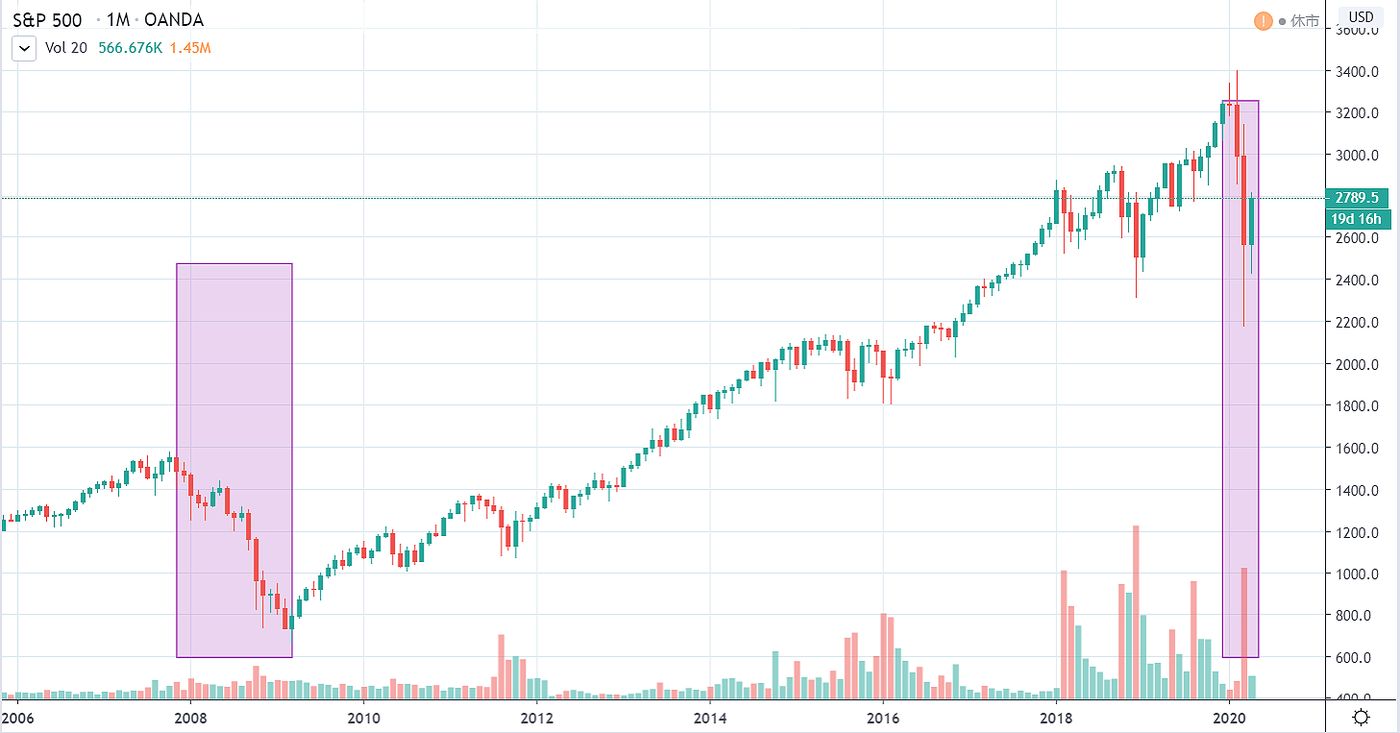
Yes. Index funds mirror the performance of their underlying market index. If that index declines in value, the index fund's value will also decline. The stock market can be volatile in the short term. However, broad market indices have historically risen in value over the long term, though past performance is not a guarantee of future results.
What are some popular index funds available in Canada?
Popular Canadian index funds include the Vanguard FTSE Canada All Cap Index ETF and the iShares Core S&P/TSX Capped Composite Index ETF. Another common choice is the BMO S&P/TSX Capped Composite Index ETF. For exposure to the United States market, funds that track the S&P 500, such as the Vanguard S&P 500 Index ETF, are widely used. Similar index mutual funds are also offered by major Canadian banks.
Why are index funds considered low cost?
Index funds are passively managed, meaning they do not require teams of analysts to pick stocks or make frequent trades. They simply hold the securities in an index. This results in lower management fees, lower transaction costs, and lower portfolio turnover compared to actively managed funds. The savings from these lower costs are retained by the investor, improving net returns over time.
What is tracking error?
Tracking error is the difference between the performance of an index fund and the performance of the index it aims to replicate. This difference can be caused by fund expenses, cash holdings within the fund, or the practical difficulties of perfectly matching every security in the index. A well managed index fund seeks to minimize tracking error. The goal is to ensure investors receive returns as close as possible to the index's returns.
Do I need a broker to buy index funds?
You can purchase index funds through various channels, not strictly requiring a traditional broker. For index mutual funds, you can often buy them directly from the fund company or through a financial advisor or bank representative, as many banks offer their own family of index mutual funds directly to clients. To purchase index exchange traded funds (ETFs), you typically need an account with a brokerage platform. This can be a self directed online brokerage, which provides access to a wide variety of investments, or a robo advisor service. The process involves opening an investment account, which can be a cash, margin, RSP, or TFSA account. Therefore, while a brokerage is needed for ETFs, mutual funds offer more direct purchase options.
Sources and further reading
- Index fund (Wikipedia) en.wikipedia.org
- Index Funds | TD Direct Investing td.com
- RBC Canadian Index Fund, RBF5733 rbcgam.com
- Vanguard Index ETFs vanguard.ca
- How to Invest in Index Funds: 3-Step Beginner Guide wealthsimple.com
- Scotia Index Funds scotiafunds.com
This article explains how things work and is not financial, tax or legal advice. Rules, limits and rates change, so check the current figures with the Canada Revenue Agency, your province or your financial institution before you act.