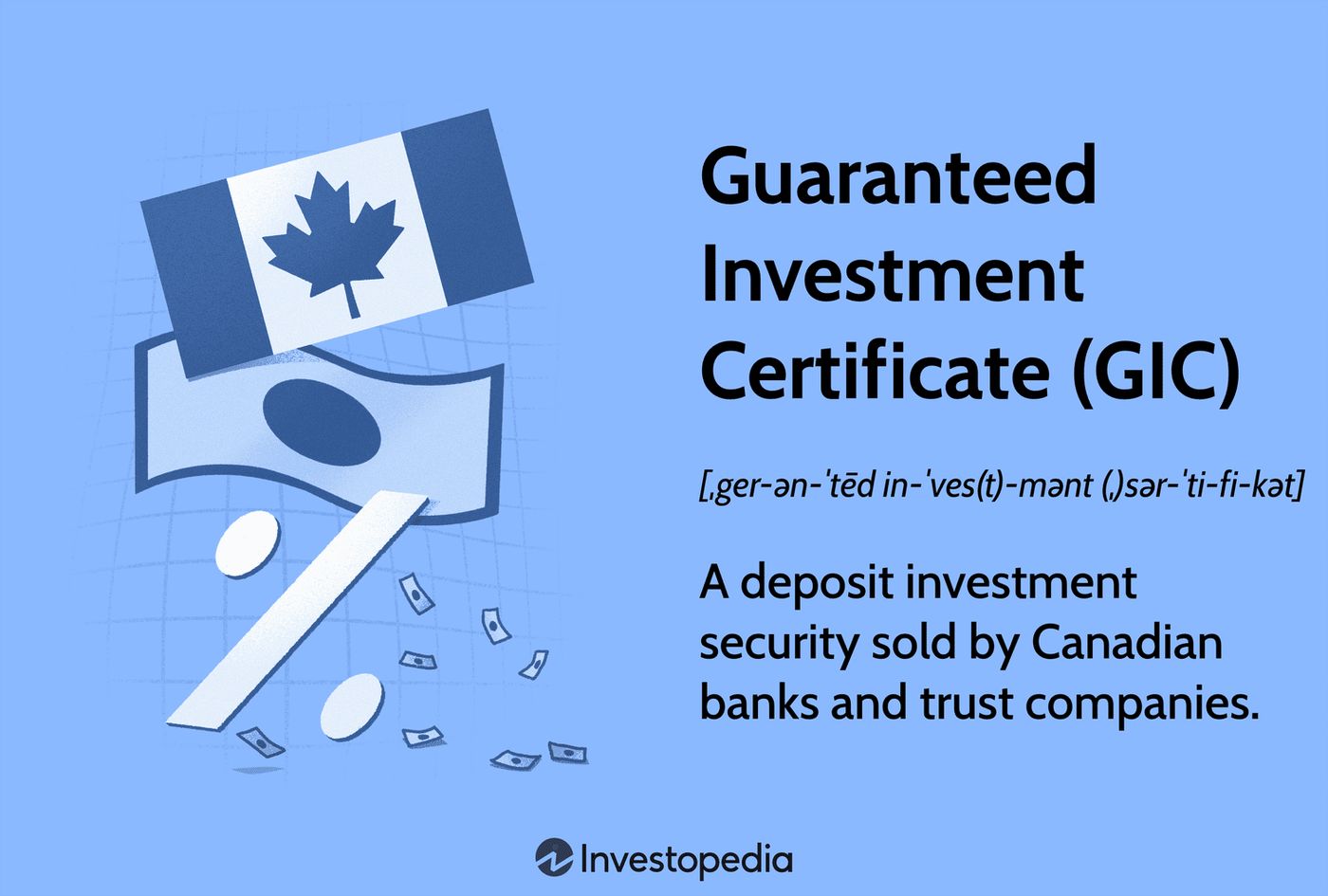
A Guaranteed Investment Certificate (GIC) is a low-risk Canadian investment that provides a guaranteed return of your principal plus interest over a fixed term. Issued primarily by banks and trust companies, GICs are a common feature of conservative financial planning in Canada. They are protected by the Canada Deposit Insurance Corporation (CDIC) up to $100,000 per insured category, offering security for savers. Canadians use GICs for goals ranging from short-term savings to long-term retirement planning within registered accounts.
How a Guaranteed Investment Certificate Works
A GIC functions as a loan from an investor to a financial institution for a predetermined period. In exchange for locking in your funds, the institution guarantees the return of your initial investment, known as the principal, plus interest earned over the term. The interest rate is set at the time of purchase and can be fixed for the entire term or variable based on a specific formula. Interest is typically accrued daily from the issue date up to, but not including, the maturity date, and is paid or compounded according to the GIC's terms, including on leap days in a leap year. At maturity, you receive your original principal plus all accrued interest, provided the GIC is held for the full term. This structure makes the return predictable and the principal secure, barring the default of the issuing institution, which is mitigated by CDIC insurance for eligible deposits.
Types of Guaranteed Investment Certificates
Financial institutions offer several GIC varieties to suit different investor needs and risk tolerances. The most common is the fixed-rate GIC, which offers a guaranteed interest rate that does not change for the entire investment term, providing complete predictability. Variable-rate GICs have an interest rate that can change, often linked to the bank's prime rate, meaning returns can increase if rates rise but may be lower if they fall. Cashable or redeemable GICs offer the flexibility to access funds before maturity, though often at a lower interest rate or with specific encashment rules. Non-redeemable GICs do not allow early redemption but generally offer higher interest rates in return for locking in the funds. Another category is the market-linked GIC, also known as a market growth or equity-linked GIC, where the return is based on the performance of a stock market index like the TSX or S&P 500.
Market-linked GICs guarantee the return of the original principal but offer a variable return tied to market gains. These GICs typically have a maximum return cap, often ranging from 7% to 15% per year depending on the market and term, and a minimum return floor, which is often 0%. This means if the linked index performs poorly or declines, the investor may receive only their principal back with no interest. This structure allows for potential growth linked to equities while maintaining the capital protection characteristic of a traditional GIC. The right choice of GIC depends on an individual's financial situation, investment goals, time horizon, and need for access to funds.
Insurance and Safety Through the CDIC
The safety of GICs for Canadian investors is significantly enhanced by the Canada Deposit Insurance Corporation. The CDIC is a federal Crown corporation that insures eligible deposits at member financial institutions against failure. For a GIC to be eligible for CDIC insurance, it must be issued by a member institution such as a bank or trust company, and the original term to maturity must be five years or less. The insurance covers up to $100,000 per depositor per insured category, combining both the principal amount and any accrued interest. This guarantee means that even if the issuing financial institution were to fail, the investor's insured funds would be protected up to the limit. It is important for investors to confirm that their institution is a CDIC member and to understand that coverage applies per distinct insurance category, such as deposits held in one name versus jointly. This protection is a fundamental reason why GICs are considered one of the safest investment vehicles available in Canada.

GICs Within Registered and Non-Registered Plans
GICs can be held in both non-registered and registered investment accounts, each with different tax implications. A non-registered account is a standard savings or investment account where interest earned on a GIC is fully taxable and must be added to the investor's annual income for tax purposes. Holding a GIC within a registered plan can provide significant tax advantages. In a Tax-Free Savings Account (TFSA), all interest earned on the GIC grows tax-free and withdrawals are also tax-free. In a Registered Retirement Savings Plan (RRSP) or a Registered Retirement Income Fund (RRIF), the interest grows tax-deferred, meaning taxes are not paid on the growth until funds are withdrawn, typically during retirement. GICs can also be held in Registered Education Savings Plans (RESPs) and First Home Savings Accounts (FHSAs), where growth is tax-sheltered until withdrawal for qualified purposes. Using GICs within these registered plans combines the security of a guaranteed return with beneficial tax treatment, making them a popular choice for long-term, goal-oriented savings.
Financial institutions often offer specific GIC products tailored for registered plans. For example, a bank may advertise a Bonus Rate RRSP GIC or a Bonus Rate TFSA GIC. These are typically non-redeemable GICs with promotional interest rates that apply only when the GIC is held within the specified registered plan. The eligibility of a particular GIC for a registered plan depends on the product features, so investors must verify plan eligibility before purchasing. The process of buying a GIC for a registered plan usually involves first opening or having an existing TFSA, RRSP, or other registered account, and then using the funds within that account to purchase the GIC.
Key Features and Common Terms
Understanding the standard features of GICs helps investors make informed decisions. The investment term is the length of time the money is locked in, ranging from as short as 30 days to as long as 10 years, with one to five years being very common. Interest payment frequency dictates how often interest is paid out to the investor. Options include monthly, semi-annually, annually, or at maturity (compounded). The interest rate type, whether fixed, variable, or market-linked, determines how the return is calculated. Most institutions require a minimum investment to open a GIC, commonly $500, while maximum investments can be as high as $5,000,000 per customer. A GIC's redeemability feature specifies whether and under what conditions an investor can access funds before the maturity date. Cashable GICs offer this flexibility, usually at a lower interest rate, while non-redeemable GICs offer higher rates for a committed term.
- Interest Payment Frequencies: At maturity, monthly, semi-annually, annually.
- Minimum Investment: Typically $500.
- Maximum Investment: Can be up to $5,000,000 per customer.
- Rate Types: Fixed, variable, market-linked.
- Redeemability: Cashable (redeemable) or non-redeemable.
Special rate GICs are promotional offers from institutions that provide a higher-than-standard interest rate for a limited time or on specific products. These special rates typically apply only to non-redeemable GICs with the associated terms advertised and are not to be combined with other offers. The posted rate is the annual interest rate if the GIC is held to maturity. For GICs that pay interest during the term, the final interest payment is made at maturity. If a maturity date falls on a non-business day, the term is usually extended to the next business day, with interest paid for the extended period.
Considerations and Potential Drawbacks
While GICs offer safety and predictability, they come with trade-offs that investors should consider. The guaranteed return is generally lower than the potential long-term returns from higher-risk investments like stocks or equity mutual funds. This means GICs may not outpace inflation over time, which can erode the purchasing power of the invested capital. Liquidity is another consideration. Non-redeemable GICs lock up funds for the entire term, and accessing money early may be impossible or come with significant penalties, such as losing all accrued interest. Even cashable GICs may have restrictions or lower rates for early redemption. For market-linked GICs, the potential for higher returns is capped, and there is a risk of earning zero interest if the linked index does not perform positively. Investors must also be aware of the CDIC insurance limits and ensure their total deposits at one institution, across all insured categories, do not exceed the coverage per category. Finally, while interest within a TFSA is tax-free, interest earned in non-registered accounts is fully taxable as income, which can significantly reduce the net return for investors in higher tax brackets.
Purchasing and Managing a GIC
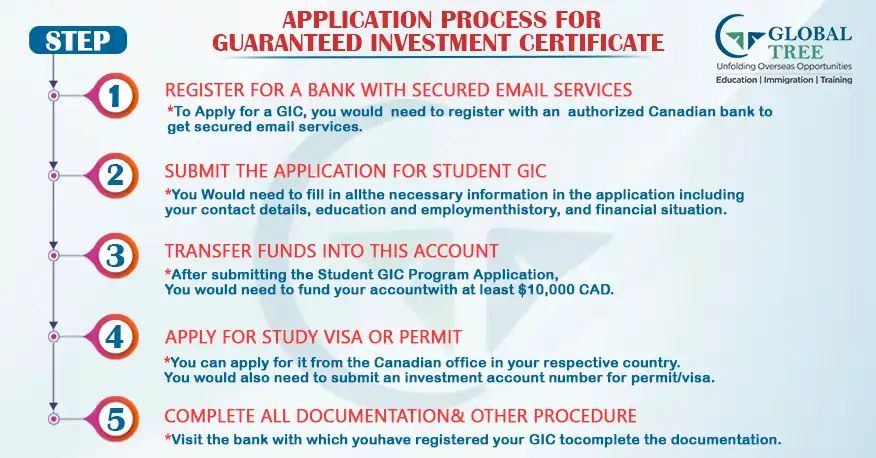
Canadians can purchase GICs directly from issuing financial institutions such as banks and trust companies, or through investment advisors and brokers. The process often starts with determining the investment goal, term, and type of GIC that aligns with the investor's plan. Many institutions provide online tools, such as GIC selectors or calculators, to help compare options and project returns. To complete a purchase, an investor typically needs an existing account with the institution, such as a savings account or a registered plan like a TFSA or RRSP. The funds are then transferred from that account to purchase the GIC. Investors can manage and monitor their GICs through online and mobile banking platforms. At maturity, the institution usually provides options, which often include automatically renewing the GIC for a similar term at the prevailing interest rate or depositing the principal and interest into a linked account. To avoid automatic renewal at a potentially unfavourable rate, investors should note the maturity date and provide instructions to their financial institution in advance.
Frequently asked questions
What is the difference between a GIC and a TFSA?
A GIC is an investment product that guarantees a return over a set term. A TFSA is a type of registered account that can hold various investments, including GICs. The key difference is one is a product and the other is an account wrapper. When you hold a GIC inside a TFSA, the interest it earns grows tax-free, which is a major advantage over holding a GIC in a non-registered account.
Can you cash out a GIC early?
It depends on the type of GIC. Cashable or redeemable GICs allow you to withdraw your money before maturity, often with some interest paid at a pre-determined encashment rate. Non-redeemable GICs do not permit early cash-out. Your investment is locked in until the maturity date. Non-redeemable GICs generally offer higher interest rates to compensate for the lack of liquidity.
Are GICs safe in Canada?
Yes, GICs are considered one of the safest investments in Canada. They guarantee 100% return of your principal investment when held to maturity. This guarantee is provided by the issuing trust companies or banks. Furthermore, the Canada Deposit Insurance Corporation insures eligible GICs up to a maximum of $100,000 per depositor per insured category if the issuer is a CDIC member and the term is five years or less. This protection safeguards your money even if the financial institution defaults.
Can you lose money on a GIC?
You cannot lose your original principal investment on a GIC if you hold it to maturity with a CDIC member institution, as the principal is guaranteed. The only risk to the principal amount is if the bank defaults and your deposit exceeds the CDIC insurance limits. However, the purchasing power of your money is not guaranteed and can be eroded by inflation. Also, with market growth GICs, there is a possibility of earning zero interest if the linked stock market performs poorly.
How is GIC interest taxed?
Interest earned on a GIC held in a non-registered investment account is subject to tax and must be added to your taxable income. If the GIC is held within a Tax-Free Savings Account, the interest is completely tax-free. When held within a Registered Retirement Savings Plan or a Registered Education Savings Plan, the interest grows tax-deferred, meaning you pay tax only when you make withdrawals from the plan. This tax sheltering is a key benefit of holding GICs within registered plans.
What is a market-linked GIC?
A market-linked GIC, also called a market growth or market stock-indexed GIC, has its interest rate determined by the growth of a specific stock market index like the TSX or S&P 500. Your principal is 100% guaranteed even if the market shrinks. However, the interest is variable and there is a possibility of earning zero interest if the market has no growth. These GICs also have a maximum return cap, such as 25% over three years, which limits your potential earnings even if the market index grows more.
Sources and further reading
- Guaranteed investment certificate (Wikipedia) en.wikipedia.org
- Guaranteed Investment Certificates (GICs) in Canada scotiabank.com
- Guaranteed Investment Certificates (GICs) - RBC Royal Bank rbcroyalbank.com
- Guaranteed Investment Certificates (GICs) cibc.com
- Guaranteed Investment Certificates (GICs) | TD Canada Trust td.com
- Thinking of buying a GIC? Here are five things to know cdic.ca
This article explains how things work and is not financial, tax or legal advice. Rules, limits and rates change, so check the current figures with the Canada Revenue Agency, your province or your financial institution before you act.