A government bond is a debt security issued by a national government, like Canada's federal or provincial governments, to fund public spending. Investors lend money to the government in exchange for regular interest payments and the return of the principal amount when the bond matures. In Canada, these bonds are considered among the highest quality and most secure investments available. Understanding government bonds is crucial for Canadian investors seeking stable income and a way to diversify their portfolios away from the volatility of stocks.
What Is a Government Bond?
A government bond represents a loan made by an investor to a government. The government borrows a sum of money, called the face value or principal, and commits to paying periodic interest, known as coupon payments, and repaying the full principal on a specified maturity date. For instance, an investor who buys a ten-year government bond with a $20,000 face value and a 10% annual coupon would receive $2,000 in interest each year and get the $20,000 back after ten years. The ratio of the annual interest payment to the bond's current market price is called the current yield, and this yield tends to decrease when the government budget balance improves as perceived risk declines. Governments issue these bonds to support public spending on items like infrastructure, healthcare, and defence, and they can be denominated in the government's domestic currency or, in countries with less stable economies, in a foreign hard currency to attract investors. International credit rating agencies provide ratings for each country's bonds, which helps investors assess the associated credit risk before investing their capital in these debt instruments.

Historical Development of Government Bonds
The concept of government debt has ancient roots, with one of the first assets resembling government bonds being the forced loans, or prestiti, that the Republic of Venice first issued in 1172 to fund wars and defence spending. These paid a nominal interest rate of 5% per year on the face value, in two half-yearly instalments, and could be sold in the open market for a lump sum, creating an early secondary market. In 1694, William III of England used a syndicate of 1268 investors to purchase debt to fund the Nine Years' War, and this syndicate was granted a Royal charter, becoming the Bank of England. Much of the initial debt issuance by the English government took an unconventional form by current standards, including annuities and lotteries as parts of their design, but alongside these were a number of perpetual bonds offering different coupon rates. By 1752 these perpetual bonds were consolidated into consolidated stocks, or consols, in a smaller number of distinct stocks offering fixed coupon payments, and the bond market took a more recognizably modern form. In the United States of America, bonds date back to the American Revolution, where private citizens purchased $27 million of government bonds to help finance the war, establishing a tradition of public debt financing.
Key Risks for Bond Investors
While government bonds are generally considered lower-risk investments, they are not without several types of risk that can affect returns. Credit risk refers to the possibility that the issuing government could default on its payments, and a government bond in a country's own currency is strictly speaking a risk-free bond because the government can if necessary create additional currency in order to redeem the bond at maturity. There have been instances where a government has chosen to default on its domestic currency debt rather than create additional currency, such as Russia in 1998 during the ruble crisis, demonstrating that political will can override theoretical safety. Furthermore, if a government bond is issued in a foreign currency then the government cannot simply create additional currency to redeem the bond, but must instead use its foreign currency reserves, making such bonds inherently riskier. Investors may use rating agencies to assess credit risk, and in the United States, the Securities and Exchange Commission has designated ten rating agencies as nationally recognized statistical rating organizations to provide these assessments.
Currency risk refers to the exposure to exchange rate fluctuations faced by investors when purchasing assets priced in a different currency. For example, a German investor would consider United States bonds to have more currency risk than German bonds. This is because the dollar may go down relative to the euro. Similarly, a United States investor would consider German bonds to have more currency risk than United States bonds. A bond paying in a currency that does not have a history of keeping its value may not be a good deal even if a high interest rate is offered.
Inflation risk is the risk that changes in the real rate of return realized by an investor will be negative. Inflation is defined as an increase in average price levels, and thus causes a reduction in the purchasing power of money. A bond issued at a fixed interest rate is therefore susceptible to inflation risk. For example, if a bond is purchased at an interest rate of 5 percent, but the rate of inflation is 4.5 percent, then the real rate of return is only 0.5 percent. Many governments issue inflation-indexed bonds, which protect investors against inflation risk by linking both interest payments and maturity payments to a consumer price index.
Interest rate risk is defined as the risk that a bond or other fixed-income asset declines due to fluctuations in interest rates. Interest rates and bond prices have an inverse relationship, so bond prices fall when interest rates rise. For example, suppose an investor purchases a ten-year $1000 bond paying a 3 percent coupon. If a year later interest rates rise to 4 percent, then although the bond purchased by the investor still pays a 3 percent coupon, a $1000 bond issued after the interest rate rise will pay out a 4 percent coupon. This makes the original bond less attractive to other investors, unless sold at a discount.

Government Bonds in Canada
In Canada, government bonds are issued primarily by the federal Government of Canada and by provincial governments, with Government of Canada bonds considered the highest quality and most secure bonds available. Provincial bonds are not as secure as federal bonds but often offer higher rates of return, while municipal bonds are issued by city or local governments, and rates offered by municipal governments can sometimes be higher or lower than rates associated with provincial bonds. The Government of Canada also issues market debt instruments like real return bonds (RRBs), which pay semi-annual interest based upon a real interest rate, unlike standard fixed-coupon marketable bonds, as they protect against inflation by adjusting the principal. Canada Savings Bonds (CSBs), which were guaranteed by the federal government and purchased through payroll savings programs, were discontinued starting November 1, 2017, and are no longer available for purchase, and these bonds could not be traded on the secondary market and only returned the principal investment on maturity. You can view or download the latest data for bond yields, marketable bond average yields and selected benchmark bond yields from official sources, and you can also look up the past ten years of data for these series or access selected data on treasury bill yields.
Canadian government bond yields are key benchmarks for the economy and for pricing other loans and securities, and selected benchmark bond yields are based on mid-market closing yields of selected Government of Canada bond issues that mature approximately in the indicated terms. The bond issues used are not necessarily the ones with the remaining time to maturity that is the closest to the indicated term and may differ from other sources, and the selected 2-, 5-, 10-, or 30-year issues are generally changed when a building benchmark bond is adopted by financial markets as a benchmark, typically after the last auction for that bond. The selected 3-year issue is usually updated at approximately the same time as changes are made to the 2-year, and sometimes with the 5-year, while the selected 7-year issue is typically updated at approximately the same time as the 5- or 10-year benchmarks are changed. The current yields for generic fixed-term bonds as of recent data include a one-year yield of 2.99%, a two-year yield of 3.36%, a three-year yield of 3.52%, a four-year yield of 3.60%, and a five-year yield of 3.66%. The ten-year Government of Canada bond yield is a closely watched indicator. It decreased to 3.79% in late 2026, which was the lowest since September 2026, and over the past 4 weeks at that time, the Canada 10Y Bond Yield lost 7.40 basis points, showing typical market fluctuations.
- Government of Canada Bonds: Highest quality, issued by federal government.
- Provincial Bonds: Issued by provinces, higher return than federal bonds.
- Municipal Bonds: Issued by cities or local governments.
- Real Return Bonds (RRBs): Inflation-indexed, pay semi-annual real interest.
- Canada Savings Bonds (CSBs): Discontinued in 2017, were government-guaranteed and purchased via payroll.
Types of Bonds Available to Canadian Investors
Beyond direct government bonds, Canadian investors have access to a range of bond-related securities that carry different risk and return profiles, which are essential for portfolio construction. Investment-grade corporate bonds are issued by corporations with a credit rating of BBB- or Baa3 or higher and are considered of higher risk than government bonds but tend to offer a higher rate of return, attracting investors seeking more yield. High-yield bonds, sometimes referred to as junk bonds, are issued by corporations with a rating below BBB- or Baa3 and offer a high rate of return but are much higher risk than investment grade or government-issued bonds, and because they are relatively high-risk, these bonds are suitable only for risk-tolerant investors. Strip coupons and residual bonds are created when investment firms separate the two parts of a typical bond, the interest payments and the principal, and sell them individually. If you buy a strip coupon, you'll receive the predetermined interest payments associated with a given bond, and if you buy the residual bond, you'll receive payments equal to the principal amount at maturity, allowing for targeted income or principal strategies.
Bond exchange traded funds and mutual funds provide a common way for Canadians to gain diversified exposure without selecting individual bonds. The iShares Core Canadian Government Bond Index ETF seeks exposure to Canadian investment grade government bonds with maturities of at least one year. It also seeks to provide a consistent and stable income stream. Mutual funds like the RBC Canadian Government Bond Index Fund are designed for investors seeking to invest in bonds as a way to diversify an equity portfolio. These investors prefer to invest in government and government guaranteed fixed income securities.
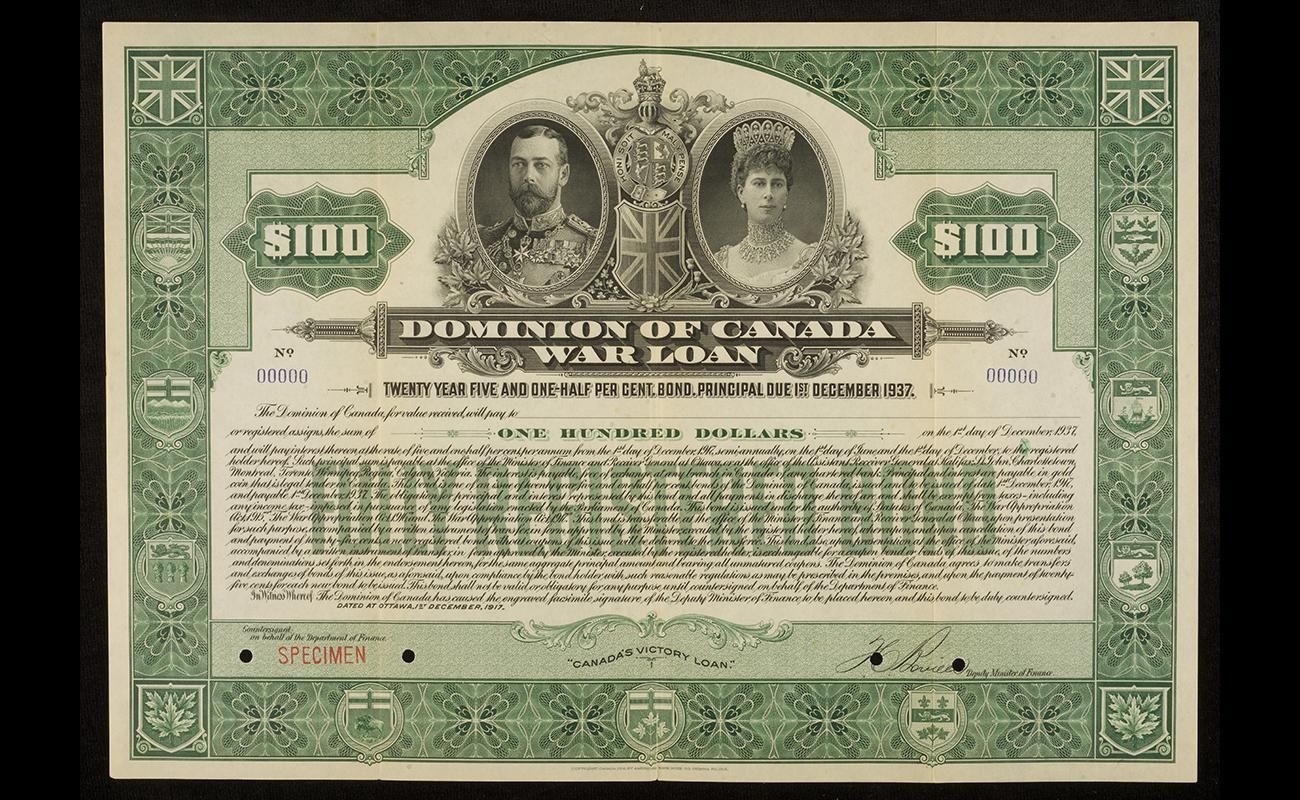
Trading and Investment Vehicles
Individual Government of Canada bonds can be purchased directly from the issuing government or corporation or through financial institutions and online brokerages like TD Direct Investing, which is how most people in Canada buy bonds. For many Canadian investors, buying individual bonds directly is less common than accessing the bond market through funds or derivatives, which offer convenience and diversification. Bond exchange-traded funds (ETFs), such as the iShares Core Canadian Government Bond Index ETF (XGB), provide exposure to a diversified portfolio of Canadian investment-grade government bonds with maturities of at least one year and seek to provide a consistent and stable income stream. Mutual funds, like the RBC Canadian Government Bond Index Fund, offer another route for investors seeking to add government bonds to a diversified portfolio, and some series of these funds are designed for investors wishing to draw regular tax-efficient income from their non-registered investments and aim to pay consistent distributions each month.
A significant market for professionals and institutions is the futures market for Government of Canada bonds on the Bourse de Montréal, where the Ten-Year Government of Canada Bond Future (CGB) is a standardized contract traded. The underlying asset for one CGB futures contract is a nominal value of C$100,000 of a Government of Canada bond with a 6% notional coupon, and these futures are physically-delivered, meaning delivery of eligible Government of Canada bonds occurs upon contract expiry. Trading for these futures ceases at 1:00 p.m. on the seventh business day preceding the last business day of the delivery month, which cycles through March, June, September, and December, and the regular trading session runs from 8:00 p.m. on the prior day to 4:30 p.m., with early closing at 1:30 p.m. on certain days. Delivery notices should be submitted before 5:30 p.m. or before such time set by the clearing corporation on any business day, between the first business day preceding the first business day of the delivery month and the first business day preceding the last business day of the delivery month, inclusively, and delivery should be made on the first business day following the submission of the delivery notice or no later than the last business day of the delivery month. These contracts are cleared by the Canadian Derivatives Clearing Corporation (CDCC), and information on position limits and minimum margin requirements is subject to periodic changes and available from the Regulatory Division and the Bourse respectively.
Comparison with Other Major Markets
Government bond markets operate under different names and structures globally, reflecting their unique histories and financial systems, which influences investment characteristics. In the United Kingdom, government bonds are called gilts, with older issues having names such as Treasury Stock and newer issues called Treasury Gilt, and there are two main types of gilt: conventional, which have a fixed interest rate and length, and index-linked, whose interest rate and overall loan amount are automatically adjusted for inflation. The issuance of gilts is managed by the UK Debt Management Office, an executive agency of HM Treasury, having been managed by the Bank of England prior to April 1998, and purchase and sales services are managed by Computershare. UK gilts have maturities stretching much further into the future than other European government bonds, which has influenced the development of pension and life insurance markets in the respective countries by providing long-dated assets for matching long-term liabilities. As of July 2025, the yield on UK ten-year government bonds was 4.45% and the official Bank of England Bank Rate was 4.25%, and as of January 2025, the Standard and Poors credit rating for the UK was AA, with a 'stable' outlook, indicating high credit quality.
The United States issues debt through United States Treasury securities, which are issued by the United States Department of the Treasury, and the US public debt is managed by the Bureau of the Fiscal Service. The US Treasury offers both marketable bonds, which can be sold in secondary markets before the bond reaches maturity, and non-marketable bonds, which is registered to the buyers' social security numbers and cannot be transferred, providing options for different investor needs. Marketable securities are initially sold by the government through an auction process, and once issued, can then be bought and sold on secondary markets or purchased directly from the US Treasury via the TreasuryDirect website. Interest income from Treasury bills, notes and bonds is subject to federal income tax, but exempt from state and local taxes, which is a significant tax advantage for investors in high-tax states.
| Security Type | Key Features | Maturity |
|---|---|---|
| Treasury Bills | Zero-coupon bonds bought at a discount of the par value | One year or less |
| Treasury Notes | Fixed coupon payments every six months, sold in increments of $100 | 2, 3, 5 or 10 years |
| TIPS | Inflation-indexed, principal adjusted to the Consumer Price Index | 5, 10, 30 years |
| Floating Rate Notes | Two-year bonds with an interest rate that can change over time, pays interest four times per year | 2 years |
The creditworthiness of government bonds is assessed by international rating agencies. Bondholders generally demand higher yields from riskier bonds. For example, during the Greek government debt crisis, the spread in yields between two and ten year Greek and German government bonds peaked at 260 percent and 40 percent, respectively. Governments close to a default are sometimes referred to as being in a sovereign debt crisis. The yield tends to decrease when the government budget balance improves.
Credit Ratings, Yield Spreads, and Sovereign Risk
International credit rating agencies provide ratings for each country's bonds, which serve as a crucial tool for investors to assess credit risk and compare sovereign debt across borders. Investors generally demand higher yields from riskier bonds to compensate for the increased chance of default, creating a direct link between a country's credit rating and its cost of borrowing. This difference in yield between bonds of different credit qualities is called the spread, and during periods of sovereign debt crisis, these spreads can widen dramatically as investors flee to safer assets, reflecting a loss of confidence. For example, during the Greek government-debt crisis, the spread in yields between two-year Greek and German government bonds peaked at 260%, and the spread for ten-year bonds peaked at 40%, showing how extreme risk perceptions can become. Governments close to a default are sometimes referred to as being in a sovereign debt crisis, and the yield on a country's bonds tends to decrease when the government budget balance improves, as a lower deficit or a surplus reduces perceived risk and the government's future borrowing needs.
There have been instances where a government has chosen to default on its domestic currency debt rather than create additional currency, such as Russia in 1998. A government bond in a country's own currency is strictly speaking a risk free bond, because the government can if necessary create additional currency in order to redeem the bond at maturity. Furthermore, if a government bond is issued in a foreign currency then the government cannot simply create additional currency to redeem the bond. It must instead use its foreign currency reserves.
Frequently asked questions
What is a government bond in simple terms?
A government bond is a loan you make to a government. You give them money upfront, and in return, they promise to pay you regular interest and give you back your full original investment on a specific future date. In Canada, these are issued by the federal or provincial governments to fund public projects and services. The annual interest payment divided by the bond's market price is called the current yield, and this yield tends to decrease when the government's budget improves.
Are Government of Canada bonds a safe investment?
Government of Canada bonds are considered the highest quality and most secure bonds available. They are issued by the federal government. A government bond in a country's own currency is strictly speaking a risk free bond, because the government can create additional currency to redeem it. However, bonds are still subject to inflation risk and interest rate risk.
What is the current yield on a Government of Canada bond?
Yields fluctuate daily based on market conditions. Recent data for generic Government of Canada fixed-term bonds showed a one-year yield of 2.99%, a two-year yield of 3.36%, a three-year yield of 3.52%, a four-year yield of 3.60%, and a five-year yield of 3.66%. The ten-year Government of Canada bond yield is a major benchmark and was reported at 3.79% in late 2026, which was the lowest since September 2026. These selected benchmark bond yields are based on mid-market closing yields of specific bond issues that mature approximately in the indicated terms.
Can I still buy Canada Savings Bonds?
No, Canada Savings Bonds (CSBs) are no longer available for purchase. The program was discontinued starting November 1, 2017. While existing bonds are still honoured until maturity, new CSBs cannot be acquired as they are not traded on the market. These bonds were unique as they were purchased through payroll savings programs, provided a guaranteed rate of return, and could not be traded on a secondary market, returning your principal only on maturity.
What are the main risks of owning government bonds?
The main risks are credit risk, currency risk, inflation risk and interest rate risk. Credit risk is the risk of issuer default. Currency risk refers to exposure to exchange rate fluctuations for foreign currency bonds. Inflation risk is the risk that inflation reduces the real rate of return. Interest rate risk is the risk that bond prices fall when market interest rates rise.
How can I invest in Canadian government bonds?
You can purchase individual Government of Canada bonds through a brokerage. Many investors choose bond exchange traded funds like the iShares Core Canadian Government Bond Index ETF. Mutual funds like the RBC Canadian Government Bond Index Fund also provide exposure. There is also an active futures market for Government of Canada bonds on the Bourse de Montréal.
Sources and further reading
- Government bond (Wikipedia) en.wikipedia.org
- Selected bond yields bankofcanada.ca
- What are bonds and how do they work? | TD Direct Investing td.com
- RBC Canadian Government Bond Index Fund, RBF563 rbcgam.com
- Ten-Year Government of Canada Bond Futures (CGB) | TMX m-x.ca
- Yield, Government of Canada bonds Canada Savings Bonds desjardins.com
This article explains how things work and is not financial, tax or legal advice. Rules, limits and rates change, so check the current figures with the Canada Revenue Agency, your province or your financial institution before you act.