Equity is the value of ownership in an asset or company after all debts and liabilities are subtracted. In personal finance, it often refers to home equity, which is the market value of a property minus any outstanding mortgage. For businesses, equity represents the ownership stake held by shareholders after accounting for the company's obligations. Understanding equity is crucial for Canadians making investment decisions, accessing home equity loans, or financing a business through the sale of shares.
Definition and Core Concept
Equity is defined as the ownership interest in property, which may be encumbered by debts or other liabilities. It is calculated for accounting purposes by subtracting total liabilities from the total value of the assets owned. For a single asset like a car or house, if the asset is worth $24,000 and has an attached loan of $10,000, the owner's equity is $14,000. This same principle applies to an entire business entity, where equity measures the portion of the company's assets that belong to its owners. When liabilities exceed the asset's value, the result is a deficit, and the asset is informally described as underwater or upside-down. In government finance or non-profit contexts, equity is alternatively termed net position or net assets.
Historical Origins and Legal Framework
The term equity in finance originates from the system of equity law that developed in England during the Late Middle Ages to address the growing demands of commercial activity. Common law courts handled questions of property title, while equity courts dealt with contractual interests in property. Under this system, a single asset could have an owner in equity, who held the contractual interest, and a separate legal owner who held the title indefinitely or until contract terms were fulfilled. Disputes were examined with consideration of whether the contract's terms and administration were fair, or equitable. This historical foundation is the basis for the modern understanding of ownership interests secured against assets.
Equity in Single Assets and Personal Finance
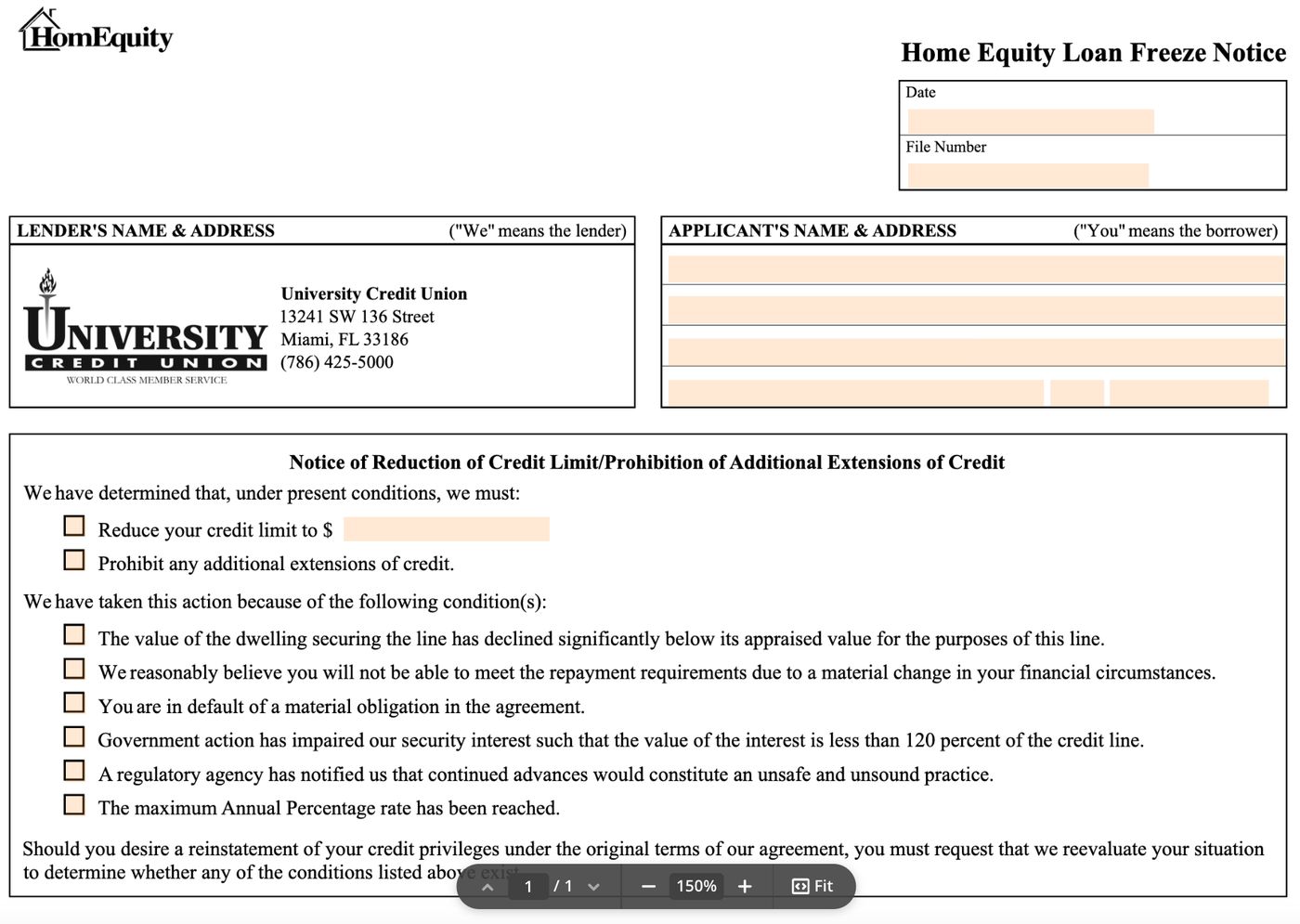
Any asset purchased through a secured loan creates an equity position for the buyer. While the loan is outstanding, the buyer does not fully own the asset, as the lender retains the right to repossess it if the buyer defaults, though typically only to recover the unpaid loan balance. The equity balance is the asset's current market value minus the remaining loan balance, which measures the buyer's partial ownership. This figure differs from the total amount paid on the loan, as payments include interest and do not account for changes in the asset's market value. Houses in Canada are normally financed with non-recourse loans, where the lender assumes the risk of a deficit if the owner defaults. Other assets are often financed with full-recourse loans, making the borrower responsible for any shortfall. Homeowners can use their accrued equity to secure additional liabilities through products like home equity loans or home equity lines of credit, which increase total liabilities and decrease the owner's equity.
Business Equity and Accounting
A business entity possesses a more complex debt structure than a single asset. While some liabilities may be secured by specific business assets, others are guaranteed by the entire business. If the business becomes bankrupt, it may be forced to sell assets. The business's total equity, derived by subtracting its liabilities from its assets, approximates the amount of assets belonging to the owners. The fundamental accounting equation requires that total liabilities plus equity equal total assets at each accounting period's close. Businesses report this in a balance sheet, which details total assets, specific equity balances, and total liabilities and equity. Another statement, the statement of changes in equity, details movements in equity accounts between periods. Various equity accounts can appear on a balance sheet depending on the business form. Share capital or capital stock and capital surplus reflect original investor contributions. Treasury stock is a contra-equity balance offsetting equity, showing amounts paid to repurchase stock. Retained earnings or accumulated deficit is the running total of net income and losses, excluding dividends. In the United Kingdom and related accounting systems, equity includes various reserve accounts for balance sheet reconciliations. Several corporate events can change a firm's equity, including capital investments from outside, accumulated profits or losses, unrealized gains on securities or foreign currency, dividend payments, stock repurchases, and liquidation distributions.
Equity Financing for Canadian Businesses
Equity financing is a primary method for Canadian companies to raise capital by selling ownership stakes to investors. The process involves exchanging shares in the company for a lump sum investment, giving investors a claim on future earnings. A key benefit is that the capital received does not have to be repaid on a set schedule, and if the company fails, the funds are not returned to shareholders. In exchange, the business cedes a percentage of ownership, which may include decision-making control, and shares a portion of its post-tax profits. Equity financing is often counterbalanced with debt financing, which typically costs less and leaves the company with more control. Privately owned small and medium sized enterprises can find equity financing challenging due to low share liquidity, which makes attracting investors difficult. To entice investment, businesses may have to lower share prices, increase dividend payments, or offer a greater ownership percentage per share. Businesses must make several decisions when pursuing equity financing. The type of shares to offer, such as common, preferred, or voting shares, is one key decision. Another is the pricing of shares and the selection of target investors, which could include family, friends, angel investors, or venture capitalists. Companies also need to establish a policy for paying dividends. Companies can engage in multiple rounds of equity financing from different investor types as they grow.

Stages of Equity Financing and Investor Types
The equity financing industry in Canada consists of diverse investors participating at different company growth stages. At the concept or pre seed stage, founders have an idea but an incomplete product, seeking funds for startup costs. This stage carries high risk due to lack of product market validation, and financing often comes from angel investors, friends, or family. The seed stage involves companies that have validated their concept with key customers but have not achieved break even. Seed rounds typically range from $100,000 to $2 million, with 10 to 25 percent equity given to investors, sourced mainly from early stage venture capital funds and angel investors. The growth stage encompasses Series A, B, C, and higher rounds, where companies generate significant revenue and have a clear path to profitability. Capital at this stage is sought for team expansion, new revenue streams, or international expansion, with venture capital funds and larger institutional investors as primary backers. Common types of equity finance available in Canada include angel investment from high net worth individuals providing early stage capital. Venture capital funds invest in companies with high growth potential. Private equity involves investment in companies not publicly traded, often requiring large minimum investments. Equity crowdfunding allows many individuals to invest in an early stage unlisted company via an online platform in exchange for shares.
Equity Investing and Shareholder Considerations
Equity investing involves purchasing stock in companies to gain partial ownership, with the expectation of earning dividends or profiting from resale at a higher price. Equity holders typically receive voting rights, allowing them to vote on board candidates and, with sufficient holdings, influence management. Investors in a new firm contribute initial capital, receiving shares of stock in return. Under the joint stock company model, the firm keeps contributed capital while in business. Upon liquidation, owners have a residual claim on any remaining equity. If equity is negative, the owners' claim is void and creditors bear the loss. Limited liability protects owners from paying the firm's debts personally, provided the firm's books are in order and there is no fraud. When owners are shareholders, their interest is called shareholders' equity, the difference between company assets and liabilities, which can be negative. Shareholder equity balance does not directly determine stock price. Other factors include business prospects, access to credit, and market liquidity. According to intrinsic value theory, buying stock is profitable when priced below the present value of the equity and future earnings payable to stockholders. An equity investment will never have a negative market value even if the firm has a shareholder deficit, as the deficit is not the owners' responsibility. An alternate valuation method, the Merton model, treats equity as a call option on the entire company's value, struck at the liability value.
Comparing Debt and Equity Financing
Businesses often weigh debt financing against equity financing. Debt financing involves borrowing money and repaying it with interest, commonly via a loan, without relinquishing ownership or control. Equity financing requires selling a stake in the business in return for funds, with no obligation to repay the capital or make monthly payments. Equity is generally viewed as less risky for the business in this regard. However, debt financing is usually cheaper than equity because debt holders take on less risk than equity investors, and interest payments are tax deductible, whereas dividends are not. Businesses needing large amounts to scale quickly may find equity financing more suitable, while those needing funds quickly for daily operations may prefer debt. A hybrid instrument, convertible debt, involves investing money in exchange for shares to be issued later, often at a discount for taking early risk.
| Financing Type | Key Characteristic | Typical Cost | Repayment Obligation |
|---|---|---|---|
| Equity Financing | Sells ownership stake | Higher (investor demands return) | No repayment required |
| Debt Financing | Borrows money with interest | Lower, tax-deductible interest | Must repay principal + interest |
| Convertible Debt | Debt converts to equity later | Varies, often includes discount | Initially a loan, converts to shares |
Key Financial Metrics and Analysis
Investors use several metrics to analyze equity. Return on equity is a key ratio measuring a company's ability to generate returns on shareholder investment, calculated as net income divided by shareholder equity. Firms with higher ROE are generally preferred and the metric is used to compare stocks within the same sector. Shareholder equity itself is also referred to as book value or net asset value. In investing, equity represents the value of an investor's stake in a company, represented by the shares owned. Stock ownership provides access to potential capital gains and dividends. Other common equity types analyzed include brand equity, the intangible value from reputation and customer loyalty, and private equity, which involves valuing companies not publicly traded.
Frequently asked questions
How does equity financing work for a small business in Canada?
Equity financing involves a business raising capital by selling shares, or an ownership stake, to investors in exchange for a lump sum of money. The money received does not have to be repaid. In return, investors gain a claim on the company's future profits and often some degree of control or voting rights. Canadian small businesses may seek equity financing from sources like angel investors, venture capital funds, or through equity crowdfunding platforms.
What is the difference between debt and equity financing?
Debt financing means borrowing money that must be repaid with interest, such as a bank loan, without giving up ownership. Equity financing means selling a portion of the company's ownership to investors for capital, with no requirement to repay the funds. Debt is usually cheaper and offers more control, but requires regular repayments. Equity involves sharing profits and potential control but carries no repayment obligation.
What does it mean if an asset has negative equity?
Negative equity, also called a deficit, occurs when the liabilities or debts attached to an asset exceed its current market value. This situation is informally described as the asset being underwater or upside-down. For a house with a non-recourse loan, the lender typically bears the loss. For other assets with full-recourse loans, the borrower remains responsible for the deficit.
What is shareholder equity?
Shareholder equity is the portion of a company's total assets that would be returned to its owners if all liabilities were paid off. It is calculated as total assets minus total liabilities. On a balance sheet, it includes items like share capital, retained earnings, and treasury stock. It represents the book value of the owners' stake in the company.
What is equity in simple terms?
Equity is the value of ownership in an asset or business after all liabilities are subtracted. For a single asset, like a car or house, it is the market value of the asset reduced by the outstanding loan balance. For a business entity, equity is the amount of the company's assets that belongs to its owners, calculated by subtracting total liabilities from total assets. In accounting, this is often called total equity or net assets. If liabilities exceed the asset's value, the result is a deficit, meaning the asset is underwater.
Can I borrow money using my home equity in Canada?
Yes, Canadian homeowners can borrow money using their home equity through secured loan products like a home equity loan or a home equity line of credit. Financial institutions determine the borrowing amount based on the homeowner's equity, which is the home's market value minus any mortgage debt. However, using these products increases the total liabilities attached to the property and correspondingly decreases the owner's equity. This process of using equity to secure additional liabilities is a common practice in personal finance.
Sources and further reading
- Equity (finance) (Wikipedia) en.wikipedia.org
- What is equity financing bdc.ca
- Equity financing explained | Swoop Canada swoopfunding.com
- What is Equity-Based Financing? queenslawclinics.ca
- Equitable Bank: Canada's Challenger Bank™ equitablebank.ca
- What is Equity? td.com
This article explains how things work and is not financial, tax or legal advice. Rules, limits and rates change, so check the current figures with the Canada Revenue Agency, your province or your financial institution before you act.