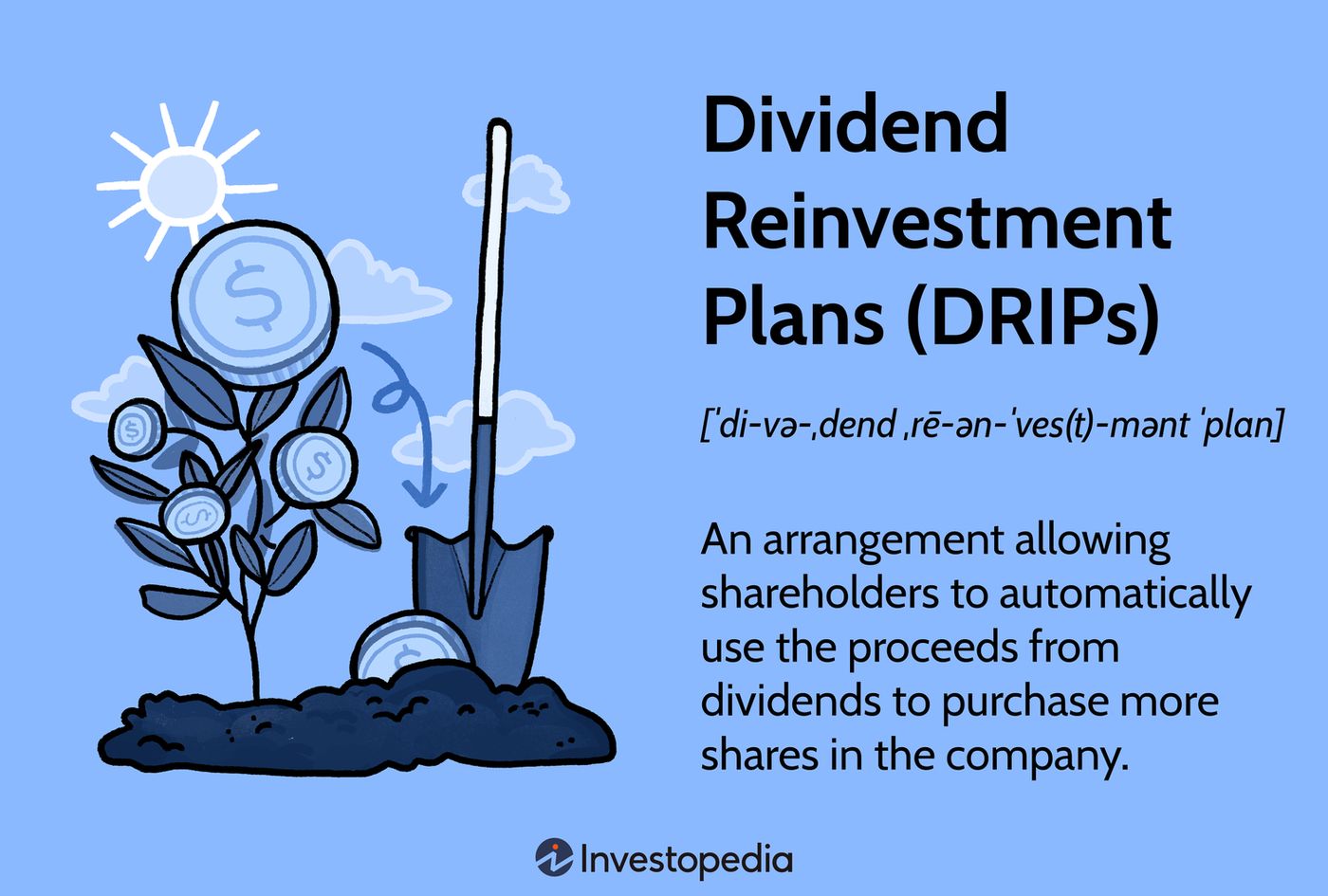
A Dividend Reinvestment Plan (DRIP) is an investment program that automatically uses cash dividends earned from a stock, exchange-traded fund, or mutual fund to purchase additional shares of the same investment. Offered directly by companies or through brokerage firms, DRIPs facilitate the compounding of returns by reinvesting earnings without requiring manual trades. For Canadian investors, these plans can be a cost-effective method to build holdings over time, often involving no transaction fees and sometimes offering shares at a discounted price. However, participation requires understanding the tax implications and record-keeping responsibilities, even when dividends are reinvested rather than received as cash.
How a Dividend Reinvestment Plan Works
A Dividend Reinvestment Plan automates the process of using dividend payments to acquire more shares. When a company pays a dividend, the plan instructs the transfer agent or brokerage to use that cash to purchase additional whole or fractional shares on behalf of the shareholder. This purchase typically occurs on the dividend payment date. The price paid for these new shares is usually the market price, calculated as a volume-weighted average over a few trading days preceding the payment. Some company-sponsored plans offer shares issued from treasury at a discount, commonly between 1% and 5% off the market price. All subsequent shares acquired through the DRIP are usually held in a paperless, book-entry format with the company's transfer agent.
Many DRIPs are coupled with a Share Purchase Plan (SPP), allowing for Optional Cash Purchases (OCPs). This feature lets participants send additional cash, beyond their dividends, to buy more shares, often with set minimums and maximums. For example, Sun Life Financial's plan has a minimum OCP of $100 and a maximum of $50,000 per year, while Exchange Income Corporation (EIC) sets a minimum of $100 per month and an annual maximum of $10,000. These cash purchases are also executed at the market price, often without brokerage commissions, and result in fractional share ownership to three or four decimal places. The combination of automatic dividend reinvestment and periodic cash investments enables a strategy of dollar-cost averaging, where a fixed dollar amount is invested at regular intervals regardless of the share price.
Types of DRIPs Available to Canadian Investors
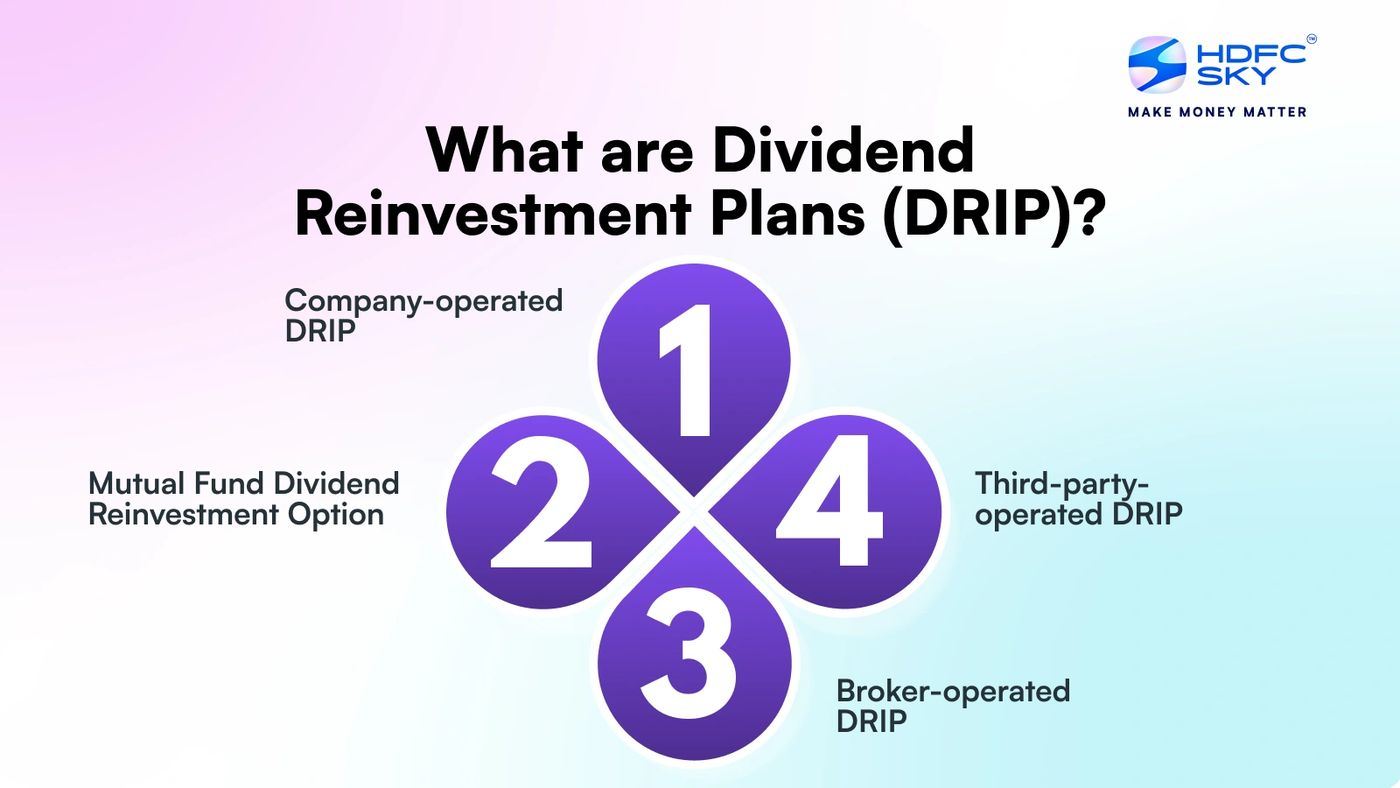
Canadian investors can access DRIPs through two primary channels: issuer-sponsored plans and brokerage-sponsored plans. Issuer-sponsored DRIPs are offered directly by the corporation whose stock is held. To enroll, an investor must typically be a registered shareholder, meaning their name is on the company's books with the transfer agent, as opposed to holding shares beneficially through a brokerage account. In Canada, starting a company DRIP traditionally requires holding at least one share in certificate form, though subsequent plan shares are book-entry. These plans often include the attractive features of optional cash purchases and possible share price discounts. Major Canadian companies like Sun Life Financial and Exchange Income Corporation offer such plans, administered by transfer agents like TSX Trust Company.
Brokerage-sponsored DRIPs, sometimes called synthetic DRIPs, are offered by investment dealers like RBC Direct Investing and TD Direct Investing. These plans allow beneficial shareholders to automatically reinvest dividends without needing to become registered shareholders or obtain share certificates. The broker handles the reinvestment on the payment date, usually charging no commission for the transaction. A key limitation of broker DRIPs is that they typically do not allow for optional cash purchases. To add more money, an investor must place a separate trade and pay standard commissions. Furthermore, broker DRIPs generally do not offer the discounted share price sometimes available through issuer-sponsored plans. The list of securities eligible for a broker's DRIP program is subject to change and must be verified with the institution.
Enrollment Process and Plan Administration
Enrolling in a DRIP involves specific steps that differ depending on whether the plan is issuer-sponsored or broker-sponsored. For a company-sponsored plan, the shareholder must first ensure they are a registered holder of at least one whole share. If shares are held in a brokerage account, the investor must request the broker to have a share certificate issued and registered in their name, which may incur a fee. Once the certificate is obtained, the investor completes an enrollment form provided by the company's transfer agent and mails it in. For example, to enroll in Sun Life's plan, the form is sent to TSX Trust Company. Beneficial shareholders can also participate through their broker, but the broker must facilitate the enrollment with the transfer agent, which may involve additional steps or restrictions.
After enrollment, the plan operates automatically. On each dividend payment date, the plan agent calculates the dividend owed, uses the cash to purchase shares, and credits the new shares to the participant's account. The participant receives a statement detailing the transaction. Administration of these plans in Canada involves compliance with regulations such as the Proceeds of Crime (Money Laundering) and Terrorist Financing Act. Participants in company plans are often required to submit a Participant Declaration Form to confirm their identity. All fees, expenses, and brokerage commissions related to the plan's operation are typically borne by the corporation offering the plan, not the participant. Participants can withdraw from the plan or sell shares held within it by providing written notice to the transfer agent.
Taxation and Record-Keeping Requirements
In Canada, dividends reinvested through a DRIP are fully taxable as dividend income in the year they are paid, regardless of whether the investor receives cash or additional shares. This applies to investments held in non-registered accounts. The Canada Revenue Agency (CRA) treats the dividend amount as income and applies the dividend tax credit, which results in a lower effective tax rate compared to interest income. The shareholder must report the gross dividend amount on their tax return. This tax liability means that even though the cash is immediately reinvested, the investor must have funds available elsewhere to pay the applicable income tax.
A critical and often burdensome responsibility for DRIP participants is tracking the Adjusted Cost Base (ACB) of their investment. Each dividend reinvestment constitutes a separate purchase of shares at a specific price. When shares are eventually sold, the capital gain or loss is calculated using the ACB, which is the average cost of all shares purchased, including those acquired through reinvestment. Failure to maintain accurate records can lead to incorrect tax reporting and potential penalties. The record-keeping challenge compounds over time. An investor in 15 DRIPs for ten years, with quarterly dividends, would have over 600 separate purchase lots to track. This complexity is mitigated if the DRIP is held within a registered account like a Tax-Free Savings Account (TFSA) or Registered Retirement Savings Plan (RRSP), where dividends grow tax-free or tax-deferred and ACB tracking is not required for eventual withdrawals.
Benefits and Advantages of Using a DRIP
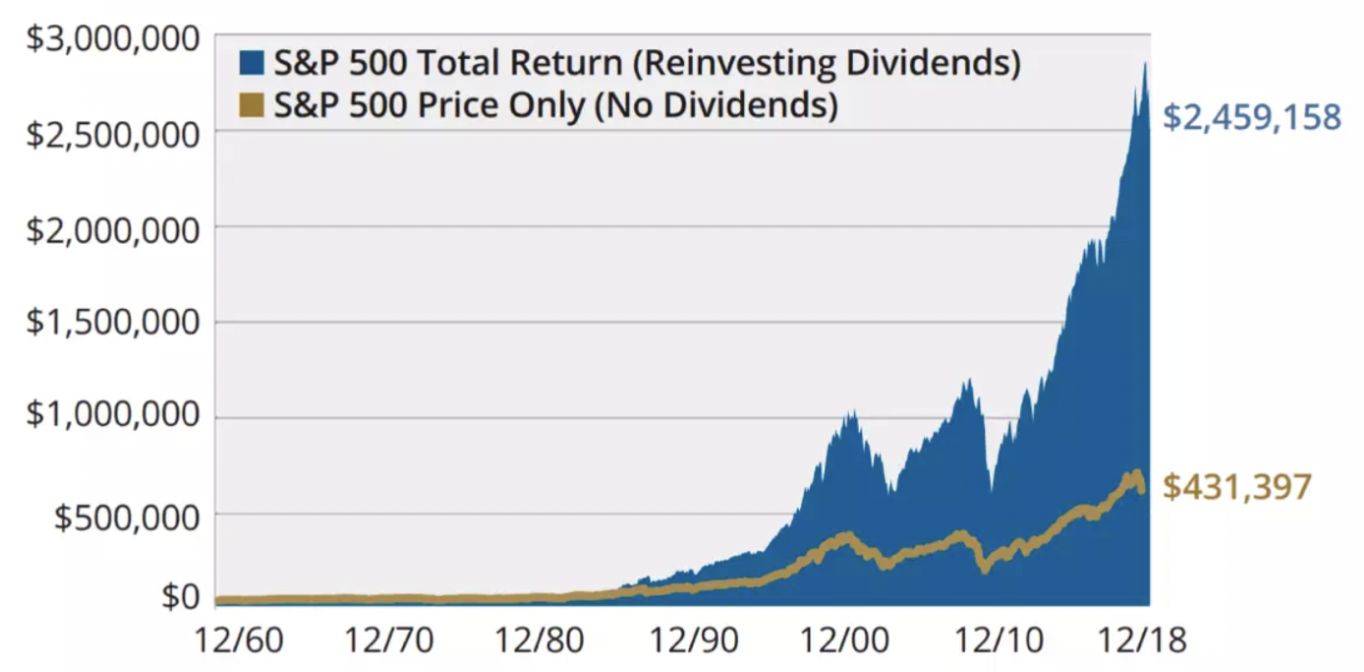
DRIPs offer several compelling benefits for long-term investors, primarily centred on compounding returns and cost efficiency. The automatic reinvestment of dividends harnesses the power of compounding, as newly acquired shares themselves generate dividends in future periods, potentially accelerating portfolio growth over decades. This process happens passively, requiring no action from the investor after initial enrollment. Furthermore, by investing a fixed dollar amount at regular intervals, each dividend payment, the strategy employs dollar-cost averaging. This systematic approach results in buying more shares when prices are low and fewer when prices are high, which can lower the average cost per share over time and mitigate the impact of market volatility.
Cost savings are another significant advantage. Most DRIPs, particularly issuer-sponsored ones, charge no commissions or transaction fees for reinvesting dividends or for optional cash purchases. This allows 100% of the dividend and contributed cash to be deployed into new shares, unlike a typical brokerage trade where a commission is deducted. Some company plans enhance this benefit by offering shares from treasury at a discount of up to 5% from the market price. Additionally, DRIPs encourage a disciplined, long-term investment mindset by automating the reinvestment process, which can have a stabilizing influence on an investor's behaviour and on the stock's trading activity. The ability to purchase fractional shares ensures that no dividend cash sits idle.
Risks, Drawbacks, and Key Considerations
Despite their advantages, DRIPs carry specific risks and drawbacks that investors must weigh. A primary risk is concentration, as automatically reinvesting dividends continually increases exposure to a single company. If that company encounters difficulties, the investor's losses are compounded alongside what could have been gains. This can disrupt a portfolio's desired asset allocation, necessitating periodic rebalancing. Investors also relinquish control over the timing and price of purchases. Shares are bought automatically on the dividend payment date at the prevailing market price, eliminating the ability to wait for a perceived better entry point. The administrative burden, particularly for taxable accounts, is a notable drawback, as tracking the adjusted cost base for numerous small purchases over many years is complex and can become costly if outsourced to an accountant.
DRIPs are inherently unsuitable for investors who rely on dividend payments for income, as the plan redirects that cash back into the market. Furthermore, not all securities offer DRIPs, and eligibility can change. Brokerage DRIPs, while convenient, lack features like optional cash purchases and share price discounts. Investors must also be aware of plan-specific limits, such as maximum annual cash contributions, which vary by company. Complications can also arise from corporate actions like spin-offs or mergers, which require adjustments to the cost basis of the investment. These factors collectively mean that while DRIPs are powerful tools, they require active management and oversight within the broader context of a financial plan.
Historical Context and Evolution in Canada
Dividend reinvestment plans have been a feature of the Canadian investment landscape for decades, evolving with changes in technology and regulation. Traditionally, these plans were exclusively offered by corporations to their registered shareholders and required physical share certificates to initiate. The process was paper-intensive, involving mailing certificates and enrollment forms to transfer agents. The mid-1990s saw a rise in the popularity of company-sponsored plans, with some transfer agents promoting direct enrollment options as no-load stock plans, though these sometimes included hidden fees for each investment.
The evolution towards electronic book-entry systems significantly reduced paperwork, allowing subsequent plan shares to be held digitally. The growth of income trusts and closed-end funds in Canada led to the adoption of distribution reinvestment plans, which operate on the same principle as corporate DRIPs. Concurrently, the rise of discount brokerages introduced the synthetic DRIP, making dividend reinvestment accessible and commission-free for beneficial shareholders without the need for share certificates. Regulatory developments, such as anti-money laundering rules requiring participant declaration forms, have also shaped plan administration. Today, DRIPs remain a staple offering from many blue-chip Canadian corporations and are a standard automated service at major brokerage firms.
Comparing DRIP Limits and Features
The specific terms of a Dividend Reinvestment Plan, including purchase limits and discounts, vary by issuer. For example, some plans may offer common shares issued from treasury at a possible discount of up to five percent. Optional cash purchase amounts are sometimes subject to minimum and maximum limits, such as a minimum of $100 per purchase or a maximum that cannot exceed $50,000 per year. These features differ among Canadian companies and income trusts. Investors must review the offering circular or plan documents for each specific security to understand the exact terms.
| Issuer / Plan Feature |
|---|
| Sun Life Financial |
| Exchange Income Corporation (EIC) |
| Typical Issuer Plan |
| Brokerage (Synthetic) DRIP |
Company sponsored DRIPs or SPPs can offer benefits like discounts on shares issued from treasury and the option to make periodic optional cash purchases. In contrast, synthetic DRIPs offered by some brokerage firms focus solely on the fee free reinvestment of dividends but do not allow for optional cash purchases. Maximum annual cash purchase limits in company plans are in place to control the dilution of existing shares and the administrative scale of the plan. Investors must review the offering circular for each security to understand if shares will be purchased on the open market or issued from treasury, as this affects the availability of a discount.
Frequently asked questions
What is a Dividend Reinvestment Plan (DRIP)?
A Dividend Reinvestment Plan (DRIP) is a program that automatically uses cash dividends earned from an investment to purchase additional shares or units of the same security. Instead of receiving dividend payments as cash deposited into your account, the funds are immediately reinvested. This can be offered directly by the issuing company (an issuer DRIP) or by your brokerage firm (a synthetic DRIP). The core purpose is to facilitate compounding returns by keeping investment capital continuously at work.
How do I enroll in a DRIP in Canada?
Enrollment depends on the type of DRIP. For a company-sponsored plan, you typically need to be a registered shareholder with a share certificate. You then complete an enrollment form from the company's transfer agent (e.g., TSX Trust Company) and mail it in. If your shares are held in a brokerage account, you can ask your broker to enroll you in the company's plan, which may involve issuing a certificate. For a brokerage DRIP, you simply enable the feature for eligible securities within your online brokerage account, often with a click, as offered by firms like RBC Direct Investing or TD Direct Investing.
Are dividends reinvested through a DRIP taxable in Canada?
Yes. Dividends reinvested through a DRIP are fully taxable as dividend income in the year they are paid, identical to dividends received as cash. This applies to investments held in non-registered accounts. You must report the full dividend amount on your tax return, and the dividend tax credit will apply. The reinvestment does not defer or eliminate the tax obligation. It is crucial to track each reinvestment to adjust the cost base of your investment for future capital gains calculations.
What are the main benefits of using a DRIP?
The primary benefits include automatic compounding of returns, dollar-cost averaging, and cost efficiency. Reinvested dividends buy more shares, which then generate their own dividends, accelerating growth over time. Buying at regular intervals averages out purchase prices. Most DRIPs charge no commissions on reinvested dividends, allowing all the money to be invested. Some company plans offer shares at a discount. DRIPs also encourage long-term investing by automating the process and keeping funds fully invested.
What is an Optional Cash Purchase (OCP) in a DRIP?
An Optional Cash Purchase (OCP) is a feature of many company-sponsored DRIPs that allows participants to send additional cash, beyond their dividend payments, to buy more shares directly through the plan. This is part of a complementary Share Purchase Plan (SPP). OCPs usually have minimum and maximum limits. For example, Sun Life has a $100 minimum per purchase and a $50,000 annual maximum. These purchases are often made at market price without brokerage fees and allow for investment in fractional shares, providing a low-cost way to incrementally increase holdings.
What are the risks or downsides of a DRIP?
Key risks include concentration risk, as continuously reinvesting in one stock can overweight your portfolio in that company. You also lose control over the timing and price of purchases. Significant administrative burden arises from tracking the adjusted cost base for every small reinvestment in a taxable account for capital gains purposes. DRIPs are unsuitable for investors who need dividend income for living expenses. Furthermore, some older company plans may have fees, and broker DRIPs do not allow optional cash purchases or offer discounted shares.
Sources and further reading
- Dividend reinvestment plan (Wikipedia) en.wikipedia.org
- What is a Dividend Reinvestment Plan (DRIP) ? td.com
- Canadian Dividend Reinvestment and Share Purchase Plan sunlife.com
- Dividend Reinvestment Plan rbcdirectinvesting.com
- Dividend Reinvestment Plan (DRIP) exchangeincomecorp.ca
- What is a dividend reinvestment plan (DRIP)? wealthsimple.com
This article explains how things work and is not financial, tax or legal advice. Rules, limits and rates change, so check the current figures with the Canada Revenue Agency, your province or your financial institution before you act.