A bull market is a sustained period of rising stock prices, conventionally defined as a gain of 20% or more from a recent low. It represents a time of optimism, economic growth, and positive investor sentiment. For Canadian investors, understanding bull markets, and their counterpart bear markets, is crucial for making informed investment decisions through the market's long-term cycles. Historically, bull markets in Canada have lasted significantly longer than bear markets, offering extended periods for portfolio growth.
Definition and Characteristics of a Bull Market
A bull market is formally identified as a period where stock prices rise by 20% or more from a recent low and the higher prices persist. This upward trend is marked by a shift in market psychology from widespread pessimism at its inception to hope, optimism, and eventually euphoria as it progresses. Bull markets often lead the broader economic cycle, sometimes beginning even during a recession. The defining price movement is characterized by a series of higher highs and higher lows, which technical analysts identify by drawing trendlines.
While the term is most commonly applied to the stock market as a whole, it can also describe upward trends in specific sectors or securities. The transition into a bull market typically occurs when stocks have climbed 20% from their trough, signalling a reversal from a prior downturn. Conversely, a bull market is considered to have ended when prices experience a 20% decline from their peak, which may mark the start of a bear market. Analysis of long term data from 1926 to 2014 shows that the average bull market lasted 8.5 years with a massive cumulative total return averaging 458%, and annualized gains during these periods ranged from 14.9% to 34.1%.
Bull Versus Bear Markets
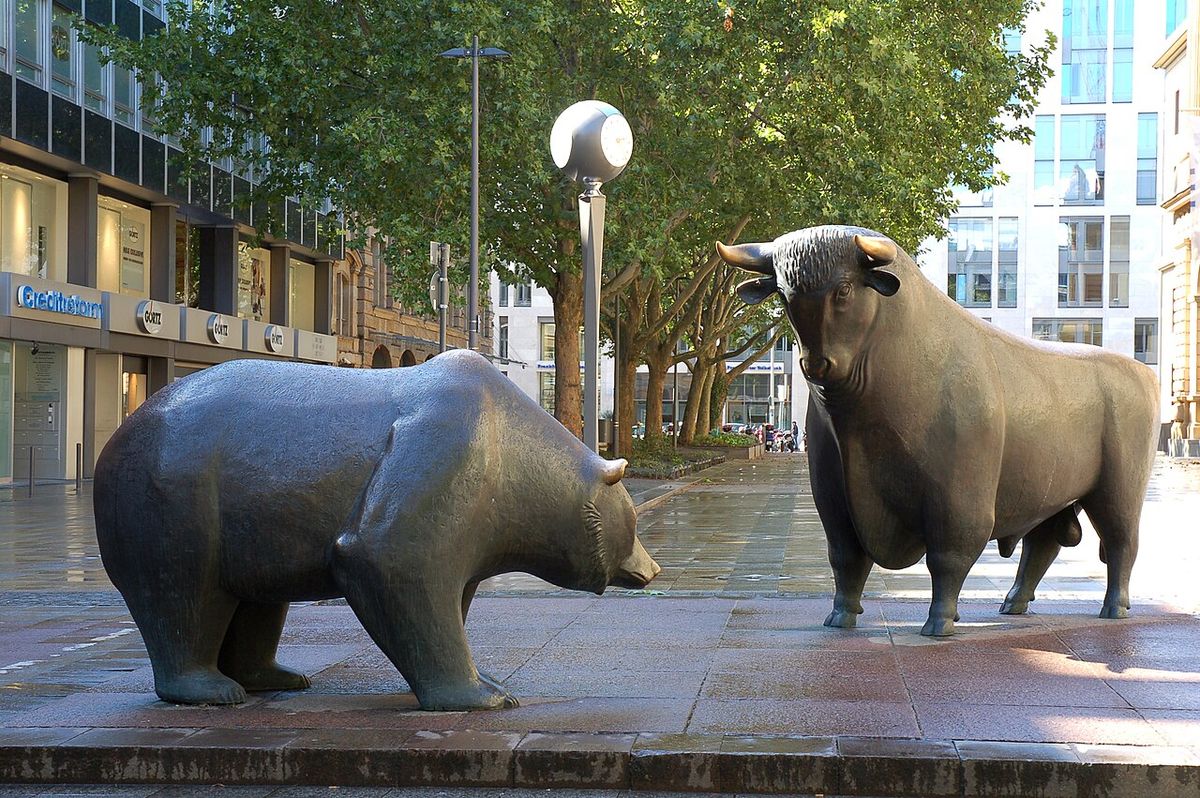
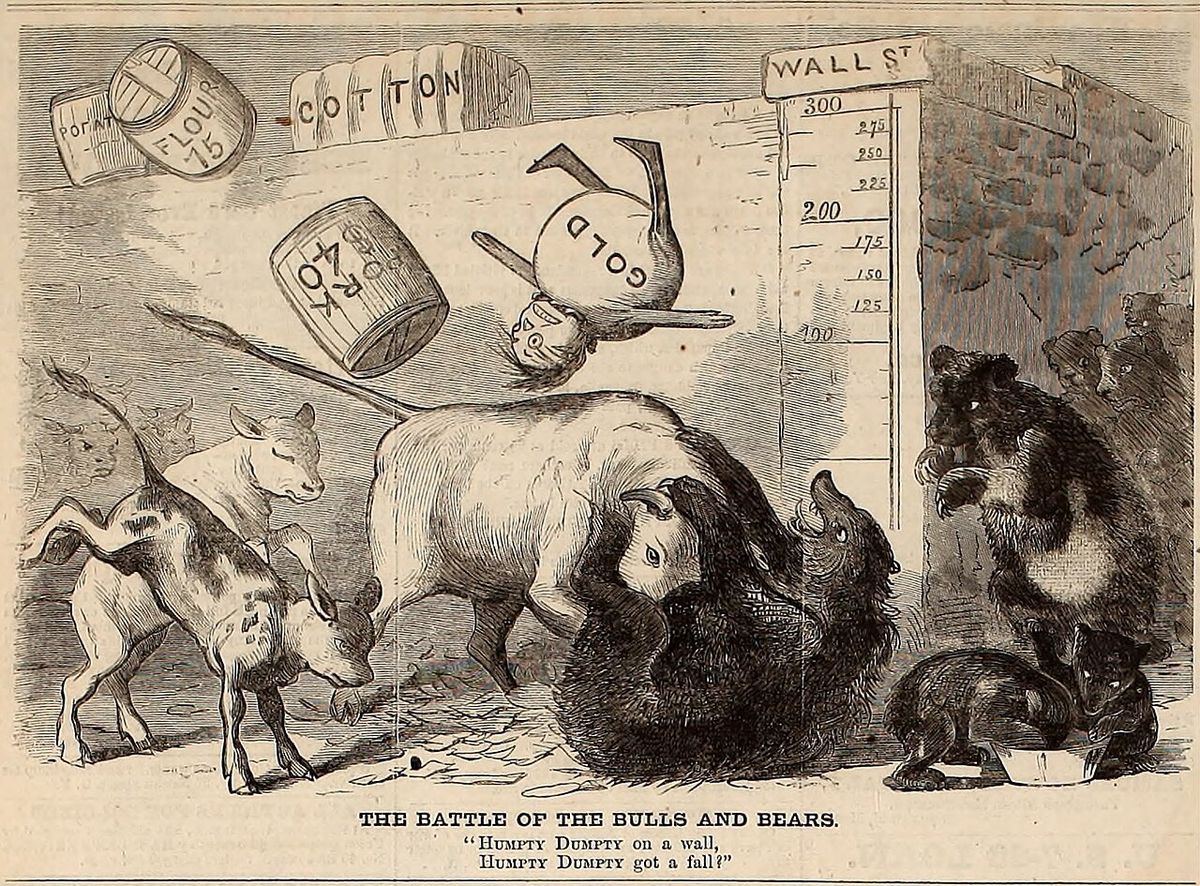
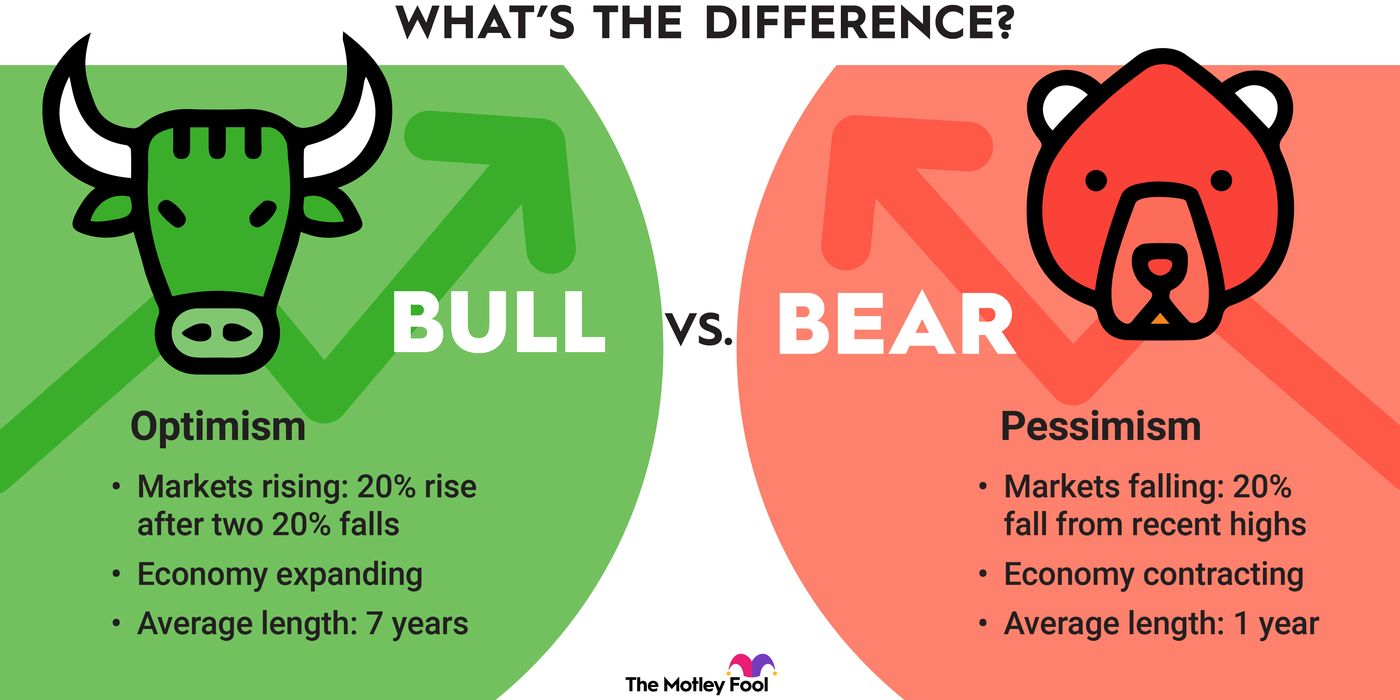
The terms bull and bear market describe opposing market trends, with bulls representing upward movement and bears representing downward movement. These labels originate from London's Exchange Alley in the early 18th century where traders who engaged in naked short selling were called bear skin jobbers, later shortened to bears. Those who bought shares on credit were called bulls, and the animal analogies of a bull attacking upward with its horns and a bear swiping downward with its claws became enduring metaphors for market direction. A bear market is defined as a general decline where stock prices fall by 20% or more over at least a two month period, and it involves a transition from high investor optimism to widespread fear and pessimism.
From 1926 to 2014, the average bear market lasted 13 months with an average cumulative loss of 30%, and a decline of 10% to 20% is classified as a correction, which is a shorter and less severe pullback. Bear markets often conclude when stocks recover by 20% or more from their low, leading to a new bull phase. The table below contrasts the average historical characteristics of bull and bear markets based on Canadian data from 1957 to 2024. This data clearly shows that bull markets in Canada have historically lasted much longer and produced greater gains than bear markets have in losses.
| Market Type | Average Duration | Average Price Change |
|---|---|---|
| Bull Market | 71 months | +170% |
| Bear Market | 11 months | -29% |
Another analysis of the TSX since 1960 found that bull markets lasted three to four years on average. The average gain during these bull markets was about 92 percent. In contrast, bear markets lasted about eight months on average with an average loss of about 32 percent. These patterns show that downturns are typically shorter lived than upturns. While bear markets can feel severe while they occur, they are a normal part of the market cycle.
Historical Bull Market Examples
History provides numerous examples of significant bull markets across global markets. In the United States, a notable secular bull market lasted from about 1983 to 2000, driven by economic expansion and technological innovation, despite brief upsets like Black Monday in 1987. Another major bull market occurred in India, where the Bombay Stock Exchange's BSE SENSEX index soared from 2,900 points in April 2003 to 21,000 points by January 2008, a return of over 600% in five years. Other notable U.S. bull market periods include 1925 to 1929, 1953 to 1957, and 1993 to 1997, though the first ended abruptly with the Great Depression.
Secular market trends are long term trends lasting 5 to 25 years and consist of a series of primary bull and bear markets. A secular bull market features larger bull markets and smaller bear markets within the overall upward trend. The opposite is a secular bear market, where the prevailing long term trend is downward, consisting of smaller bull markets and larger bear markets. An example of a secular bear market occurred in gold from January 1980 to June 1999, where its price fell from $850 per ounce to $253 per ounce. The U.S. stock market was also in a secular bear market from 1929 to 1949, a period that included the Great Depression and World War II.
Bull and Bear Markets in Canada
Between 1957 and 2024, the Canadian stock market experienced ten distinct bull markets and ten bear markets. Canadian bull markets are typically defined by periods where the economy is strengthening or already strong, with generally rising stock prices and positive investor sentiment. These periods can last for months or even years, and analysis of the S&P TSX Composite Index since 1960 shows that bear markets, defined as declines of more than 20%, are shorter on average than bull markets. The S&P TSX Composite Index has delivered an average annual return of 9.7%, including dividends, since 1960 despite these periodic downturns.
The most recent severe bear market for Canadian stocks occurred in early 2020 during the COVID 19 pandemic. The S&P TSX Composite declined 37% from its February 2020 high, marking the quickest bear market in history at that time, lasting only 32 days. This contrasts with the average bear market duration of about 8 months, and severe bear markets like this are infrequent. Only three of the 14 bear markets since 1960 have had declines of 40% or more, and such sharp downturns have often been followed by significant rebounds. For long term Canadian investors, these cycles are a normal part of the investment landscape and have consistently been followed by recovery and growth.
Causes and Market Sentiment
Bull markets usually occur when the economy is performing well and investor confidence is high. They are driven by a surge in demand where buyers are willing to pay higher prices and sellers seek those higher returns. This optimism fuels further growth, encouraging more investors to enter the market and sustain the upward momentum. Common catalysts include strong economic growth, low unemployment, rising corporate profits, and technological innovations, as seen during the dot com boom of the late 1990s.
Sector specific booms, like the 2000s commodities boom, can also drive bull markets. Market sentiment is a key contrarian indicator, and when an extremely high proportion of investors express bearish sentiment, it can signal a potential market bottom and the start of a new bull phase. Conversely, extreme bullish sentiment and very low bearish sentiment may suggest a market top is near. Indicators like the Investor Intelligence Sentiment Index, which measures the spread between the percentage of bulls and bears, and the American Association of Individual Investors sentiment indicator are tools used to gauge this mood. The fundamental cause of price trends is the balance of supply and demand, as investors reallocate funds between different asset classes like stocks and bonds.
Investment Approaches in Different Markets
Investor behaviour and strategy often shift between bull and bear markets. In a bull market, the prevailing optimism can tempt investors to chase quick wins and speculative trends. However, many experts emphasize that a disciplined, long term approach focused on buying quality investments and holding them tends to outperform attempts at market timing. One study found that buy and hold investors consistently outperformed those who sold during periods of volatility, and savvy investors often adjust their asset allocation based on their life stage and goals, not just market conditions.
During bull markets, investors with longer time horizons may continue investing steadily in higher risk assets like stocks to grow their portfolios. Those closer to retirement might use strong markets as an opportunity to lock in some gains and rebalance toward more conservative assets like bonds or GICs. It is important to remember that even bull markets experience normal pullbacks called corrections, which are declines of 10% to 20%, and staying calm during these dips is crucial to avoid making impulsive decisions based on short term fear. The following list outlines key strategies for investors during different market phases.
- Focus on a buy and hold strategy with quality, diversified investments.
- Rebalance your portfolio regularly to maintain your target asset allocation.
- Stay invested through normal market corrections without panic selling.
- Adjust risk exposure based on your personal timeline, not market hype.
- Consider dollar cost averaging by making regular contributions regardless of market levels.
- Avoid the temptation to time the market, as missing even a few strong days can significantly impact returns.
In contrast, a bear market can present opportunities for long term investors to purchase quality investments at discounted prices. Strategies like continuing regular contributions and reinvesting dividends can help investors during downturns. Maintaining a well diversified portfolio across asset classes and geographies also helps investors weather downturns and position for recovery. Since bear markets tend to end abruptly and rebounds are often strong, staying invested is generally advised over trying to predict the exact bottom.
Key Risks and Considerations
A primary risk in a bull market is the potential for investors to buy at peak prices driven by euphoria, only to suffer losses when the trend reverses. This behaviour contradicts standard economic theory, as rising prices can sometimes increase demand due to investor herding instinct, leading to bubbles and eventual instability. The dot com bubble peak in March 2000 and the market peak before the 2008 financial crisis in October 2007 are classic examples where buying high led to significant subsequent losses. Identifying a market top in real time is exceptionally difficult, as it is usually only clear in hindsight after prices have begun to fall.
Another risk is the potential for a bear market rally, sometimes called a sucker's rally or dead cat bounce. This is a short term price increase of 5% or more within an overall bear market trend, which can falsely signal a recovery before prices fall again. Such rallies were observed during the long decline after the 1929 crash and in the Japanese Nikkei 225 index during its long term downward trend from the 1980s. For investors, this underscores the danger of reacting to short term movements without considering the broader market context, and the inherent uncertainty of future prices makes all market timing an exercise in educated guessing rather than certainty.
Frequently asked questions
What is the difference between a bull and bear market?
A bull market is a sustained period of rising stock prices, typically defined as a gain of 20 percent or more from a recent low. It is characterized by investor optimism and economic strength. A bear market is the opposite, defined as a decline of 20 percent or more from a recent high and marked by widespread pessimism. Bull markets in Canada have historically lasted much longer, averaging 71 months, compared to bear markets, which average about 11 months in duration.
How long do bull markets usually last?
The duration of bull markets varies. Based on Canadian data from 1957 to 2024, the average bull market lasted 71 months, or nearly six years. Another analysis of the TSX since 1960 found bull markets last three to four years on average. Globally, data from 1926 to 2014 shows the average bull market lasted 8.5 years. These are averages, however, and individual bull market periods can be shorter or longer depending on economic conditions.
What causes a bull market?
Bull markets are usually caused by strong economic fundamentals such as growth in GDP, low unemployment, rising corporate profits, and high consumer confidence. They are driven by increased investor optimism, which leads to greater demand for stocks. Technological innovations, sectoral booms like in commodities, and periods of low interest rates can also fuel bull markets. The common theme is that optimism encourages more investors to enter the market, sustaining upward price momentum.
What is a market correction versus a bear market?
A market correction is a decline of 10% to 20% from a recent peak. It is a shorter and less severe pullback than a bear market. A bear market is a more prolonged decline of 20% or more over at least a two month period. Corrections can happen within both bull and bear markets. For example, a bull market may still experience corrections when asset prices climb faster than fundamentals justify, but the overall upward trend remains intact.
How should I invest during a bull market?
During a bull market, a disciplined, long term approach is often recommended. This includes maintaining a diversified portfolio aligned with your risk tolerance and investment goals. Avoid chasing speculative trends or trying to time the market. Investors with longer timelines may continue steady contributions to growth oriented assets like stocks. Those nearer to retirement might use strong markets to rebalance and secure gains by moving some funds into more conservative assets. Staying invested through normal corrections is key.
Have Canadian stocks recovered from past bear markets?
Yes, Canadian stocks have historically recovered from all past bear markets and gone on to new highs during subsequent bull markets. For example, after the severe but short bear market in early 2020 where the TSX fell 37%, the market rebounded strongly. Historical data shows that bear markets are a normal part of the cycle and are eventually followed by recoveries. The S&P TSX Composite Index has had an average annual return of 9.7% since 1960, demonstrating the long term growth despite periodic downturns.
Sources and further reading
- Bull market (Wikipedia) en.wikipedia.org
- Bull vs. Bear market: The basics explained | Posts scotiabank.com
- Bulls and Bears dynamic.ca
- Don't fear the bear edwardjones.ca
- How to invest in a bear market td.com
- The bulls and the bears rbcgam.com
This article explains how things work and is not financial, tax or legal advice. Rules, limits and rates change, so check the current figures with the Canada Revenue Agency, your province or your financial institution before you act.