TORONTO
Canada lost 4,700 jobs in October as the unemployment rate rose to 6.7 percent, Statistics Canada reported Friday.
The increase from 6.5 percent in September came as more people searched for work, the agency said.
"Very disappointing," said Sal Guatieri, a senior economist at BMO. "Normally in a month, if you see 4,700 job losses, it wouldn't be as awful, if not for the fact that we lost on net 110,000 jobs in the previous two months."
The economy shed 42,000 jobs in August and 68,000 in September.
Private sector employment fell by 53,000 positions in October, the first decline in that segment since February. Public sector employment rose by 50,000 jobs.
"But now it does seem like the higher interest rates and new tariffs are once again weighing on Canadian private sector businesses, and they've kind of put the brakes on hiring again," Guatieri said.
The Bank of Canada raised its key interest rate to 2.5 percent in late October, and the United States imposed 50 percent tariffs on a range of Canadian goods in August.
"I think that's put a new chill in business confidence in Canada," Guatieri said.
Unemployment among young people aged 15 to 24 increased to 13.7 percent, up from 13 percent in September.
"We seem to be having a struggle finding jobs for young people, particularly students looking for work," said Avery Shenfeld, chief economist at CIBC Capital Markets. "The economy is just not hot enough."
Statistics Canada also noted the country added just 17,000 jobs over the last 12 months. "In a normal year, we would create more than 200,000 jobs," Guatieri said.
Average hourly wages rose 2.2 percent from a year earlier, edging down from 2.3 percent in September.
"Employers aren't having to pay up a lot to get new workers in the door," Shenfeld said.
Alberta shed 24,000 jobs in October, wiping out the previous month's gain, and the province's unemployment rate jumped to 7.3 percent. British Columbia added 12,000 jobs after losses in September.
Employment in the wholesale and retail trade industry led losses, shedding 29,000 roles. Transportation and warehousing and food and accommodation also posted losses, offset by some gains in construction and education.
Economists polled by Reuters ahead of the release had expected a gain of 13,600 jobs for October and for the unemployment rate to remain unchanged.
"While the Canadian Labour Force Survey is notoriously volatile, three monthly declines in a row is a trend that is hard to ignore," CIBC senior economist Andrew Grantham wrote in a note to investors.
Shenfeld said three months in a row of job losses is often an ominous sign, but not necessarily cause for alarm. "I don't yet interpret it as a sign that we're going into recession," he said. "But we do think that fourth-quarter growth is going to be quite sluggish."
The job losses coincide with the fallout in Canada-U.S. trade negotiations late this summer. "When trade talks just froze like that, it made investor and businesses nervous," said Tu Nguyen, an economist at business consulting firm RSM Canada.
She expects the unemployment rate could continue to creep up through the end of the year.
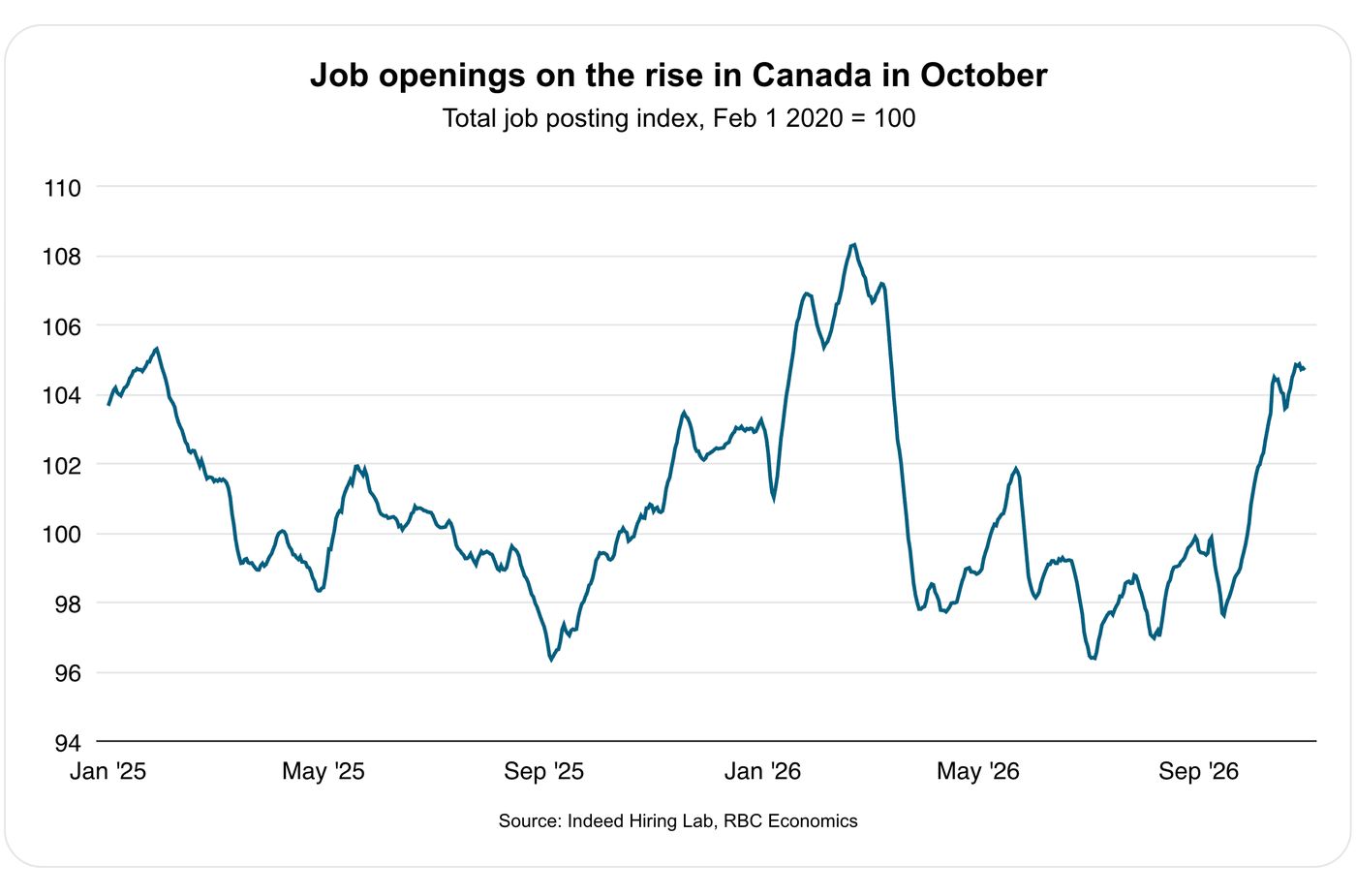
There are some signs employers may be getting ready to hire. Cory Stahle, a senior economist with the job search site Indeed, said postings in Canada rose about three percent month over month.
"It's at least positive that we're starting to see employers express a little more demand there in the last few months," he said.
But Stahle cautioned that more postings do not necessarily mean more jobs. "Employers are clearly saying we want people, but they've just been a little hesitant to actually take that step of hiring them."
He said the weak numbers could influence the Bank of Canada's next rate decision in early December. "You have to wonder, is this maybe grounds to kind of pause those rate hikes?"
Nguyen also predicts weakness in the job market could prompt the central bank to leave interest rates unchanged at its next meeting in December.
The October job figures come a day after the federal government tabled a budget focused on investment and affordability. e2gold.ca reported this week that the budget includes a $36 billion business tax deduction.
Nguyen said efforts by the federal government to juice investment in Canada could help foster new jobs in 2027. "Measures like the productivity mega-deduction should be attracting a lot of investment into the economy, which helps with job creation," she said.
This story was written by the e2gold.ca newsroom from reporting by BNN Bloomberg, CBC News, Radio-Canada and Sudbury Star. Quotes are checked word for word against that reporting.