OTTAWA
Finance Minister François-Philippe Champagne tabled a $142.1 billion federal budget on Thursday that aims to spur business investment and provide cost-of-living relief while projecting a $62.3 billion deficit for the current fiscal year.
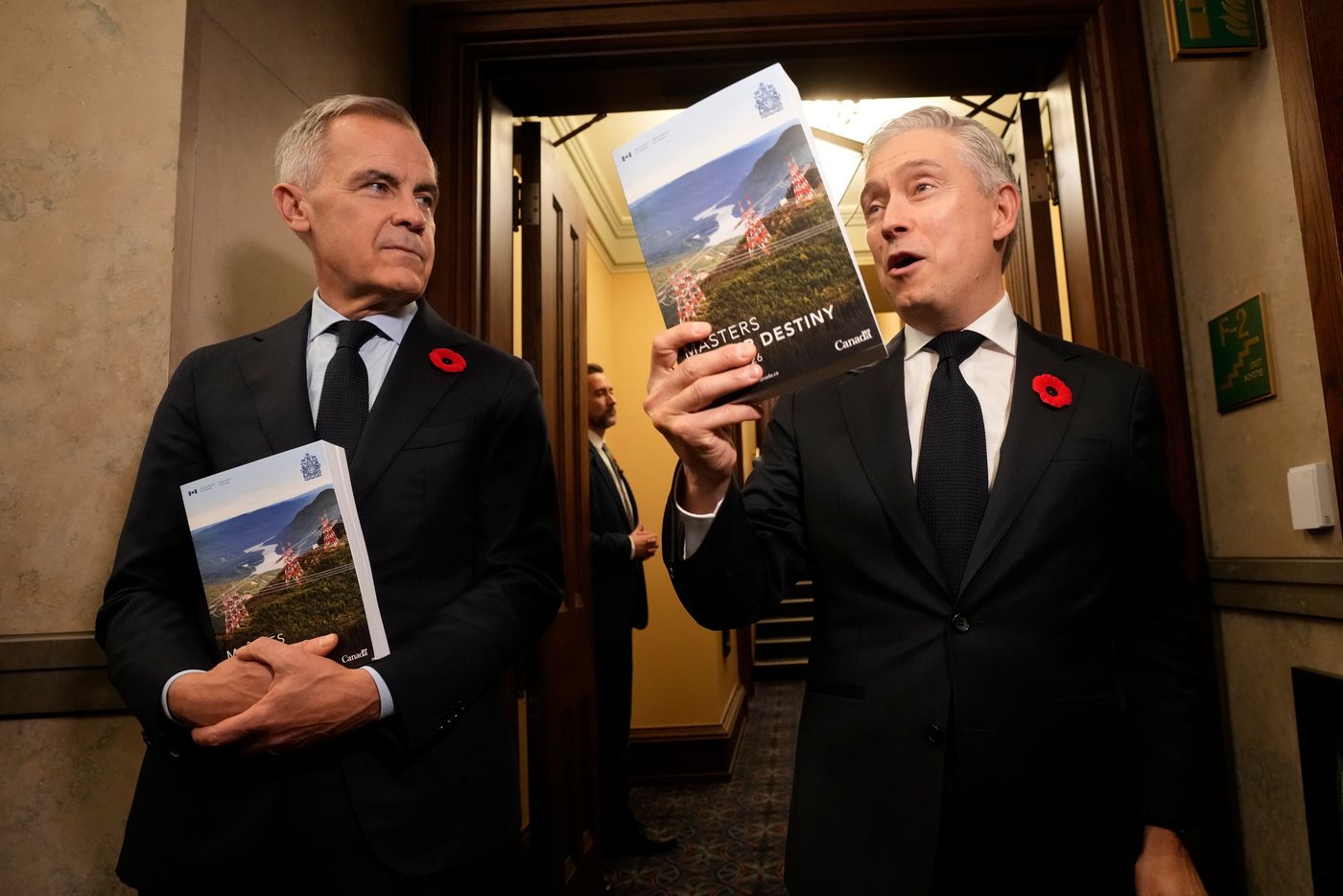
The budget, titled "Masters of our Destiny," includes a previously announced $36 billion productivity mega-deduction for businesses and a one-time 50 percent increase to the Canada Groceries and Essentials Benefit in early 2027.
"We're going to create a more prosperous, more independent Canada. This is the essence of being a master of our destiny," Champagne told reporters in an embargoed press conference before tabling the budget.
The government expects the deficit for 2026-27 to be $3 billion lower than projected in April's spring economic update, citing higher federal revenues largely tied to a spike in global energy costs.
When asked why Ottawa did not use its fiscal windfall to pay down the deficit further, Champagne said two-thirds of the measures in Budget 2026 are meant to boost the economy, while the remainder are about supporting Canadians struggling with the rising cost of living.
"If we have the fiscal capacity to grow, we also need to be there to support Canadians," Champagne said.
The budget projects the deficit will gradually decrease to $52.9 billion in 2030-31 and says the government will balance day-to-day operating spending with revenues by 2027-28, a year ahead of schedule.
Desjardins deputy chief economist Randall Bartlett said the government has been able to paint a picture of fiscal sustainability by baking "ambitious" revenue projections into its outlook.
"Without these very generous forecasts and the generous assumptions underneath them, they would not be able to reach the deficit numbers that they have. They would have much larger deficits," he said.
The budget includes a reference to tighter fiscal conditions in other countries, stating, "Unlike what we are seeing in other advanced economies, Canadians, not the bond market, will determine our choices."
Bartlett said Canada is more insulated from rising global bond yields than some other deeply indebted countries but warned the country is not immune to intensifying fiscal pressures.
Tax simplification and new incentives
The budget proposes no changes to general personal or corporate income tax rates but launches what it calls the most ambitious effort in a generation to simplify the tax system.
A key change is a new personal tax filing and balance-due date of May 15 for all individuals, including the self-employed, starting with the 2027 taxation year.
It also proposes to increase the threshold for filing a Foreign Income Verification Statement from $100,000 to $200,000 and raise instalment payment thresholds.
For businesses, the budget introduces the Canada Growth Incentive, which provides a new tax exemption to shelter up to $15 million in capital gains earned from the sale of qualifying shares of an eligible Canadian company.
It also proposes an enhancement to the small business rollover to allow increased deferral of taxes on capital gains when proceeds are reinvested in another Canadian small business.
The government anticipates the productivity mega-deduction will add $22 billion to Canada's GDP annually and create 80,000 jobs over 10 years.
Other measures include $930 million to expand the Scientific Research and Experimental Development tax incentive program and $2.3 billion for the Critical Minerals Strategy.
"If we have the fiscal capacity to grow, we also need to be there to support Canadians."
The budget also includes $44.7 billion over 11 years aimed at ending homelessness within a decade and expanding non-market housing.
Affordability measures include the Build Canada Workers Benefit, which the government says could lift 240,000 people out of poverty, and a refundable Canada Caregiver Credit of up to $1,260 annually.
For cultural initiatives, the budget provides $300 million over two years to CBC/Radio-Canada and $600 million in immediate support for Canadian content production.
It also establishes a new Canada Creative Credit tax relief for artists and a $300 million Canada 160 Fund to celebrate the country's anniversary.
Infrastructure investments include over $50 billion for a national electricity strategy, $518.5 million for a nuclear energy strategy and $6.5 billion over six years for a forest sector transformation strategy.
The budget sets targets of 380,000 permanent resident admissions per year in 2027, 2028 and 2029, and 370,000 new temporary resident admissions per year for the same period.
It also aims for 200,000 temporary residents already in Canada to become permanent residents by the end of 2027.
The Liberal government now has a majority mandate and can pass its budget without the support of other parties.
Conservative Leader Pierre Poilievre had been urging Prime Minister Mark Carney to rein in "out-of-control" spending ahead of the budget.
This story was written by the e2gold.ca newsroom from reporting by Department of Finance Canada, RBC Wealth Management, Yahoo News and insauga.com. Quotes are checked word for word against that reporting.