TORONTO
Ontario will table its fall economic statement next Thursday, Oct. 29, Finance Minister Peter Bethlenfalvy announced.
Speaking at a Canadian Club breakfast in Toronto, Bethlenfalvy said the document will provide an update on the province's finances and outline the next phase of his plan.
He did not divulge details but said it will continue with a "focused, disciplined and responsible approach" to spending.
Ontario closed the 2025-26 fiscal year with a $13-billion deficit, and Bethlenfalvy said Thursday that this year's is projected to be higher, in line with the spring budget forecast of $13.8 billion.
"Ontario has weathered the impact of tariffs better than economists had thought, but the slower economy has impacted our deficit, which was $13-billion last year and is predicted to be higher this year," Bethlenfalvy said.
"And while deficits are not desirable in the long term, they are necessary in the current environment."
He warned that deficits are necessary as the province faces U.S. tariffs targeting its steel, auto and manufacturing sectors, and as it reels from a slower economy strained by those tariffs and rising energy prices caused by the war in Iran.
Bethlenfalvy pointed to the $30-billion the province has pledged to support businesses and workers affected by the trade war, and to Wednesday's announcement with Prime Minister Mark Carney of $9-billion in joint federal-provincial support for the steel, auto and mining sectors. e2gold.ca reported this week that the funding targets steel, auto and critical mineral sectors.
In his prepared remarks, he ruled out balancing the books by either raising taxes or cutting health care, vowing the province "will continue to root out wasteful spending."
His government's plan to balance its books has already been pushed back several times, with its last projections showing a small surplus by 2028-29.
Bethlenfalvy said the province is "planning to lower the cost of capital investments for Ontario businesses by providing over $8-billion in additional relief."
He said this new move, combined with accelerated writeoffs announced earlier this year for businesses that invest in things like new equipment, will amount to more than $12-billion in tax breaks over the next five years.
On the federal level, Carney has also recently outlined what he called the "productivity mega deduction," which would allow companies to immediately write off the cost of a wide range of new capital investments.
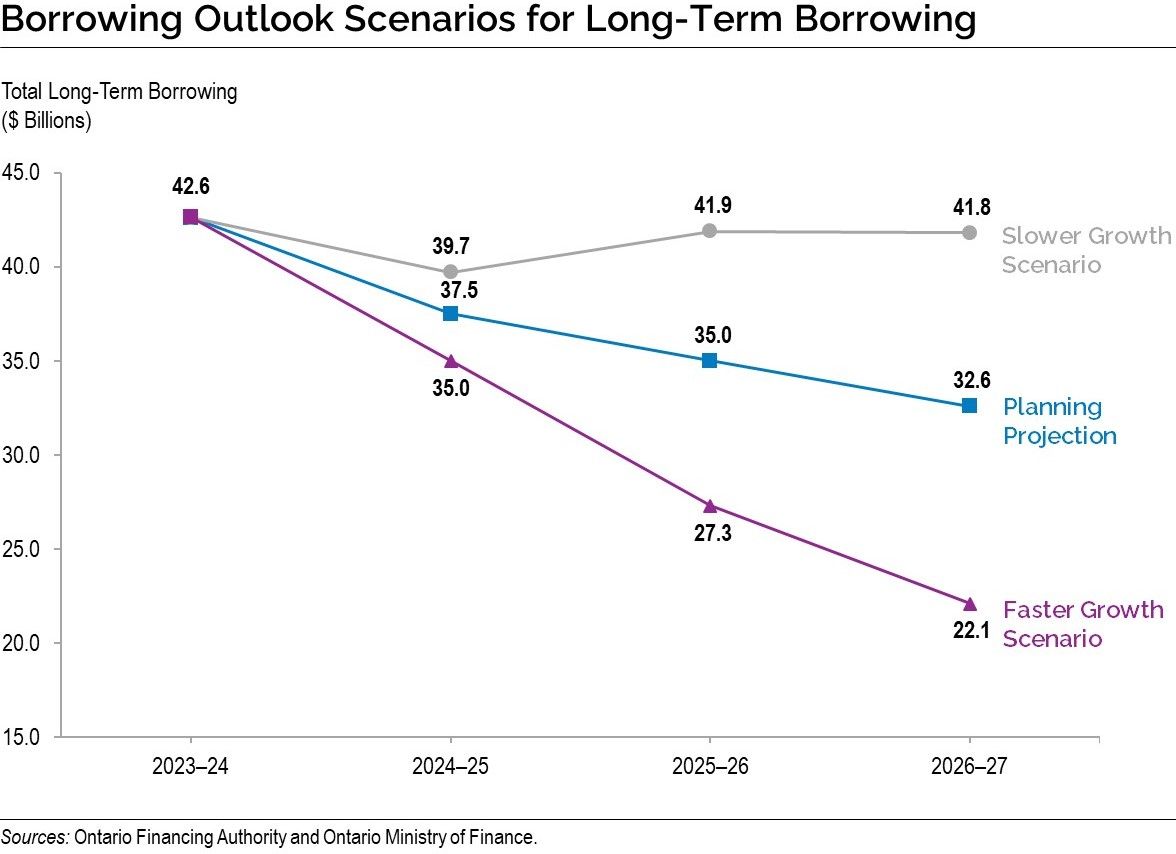
The finance minister said the province can handle the added financial strain, as its borrowing costs are low compared to previous decades, thanks to its practice of issuing long-term 30-year bonds and borrowing in advance.
He noted that credit-rating agencies have rewarded the province's handling of its books with upgrades.
Bethlenfalvy said that Ontario has weathered the impacts of American tariffs better than economists had thought, but the slower economy is having an impact and leading to deficits as a necessity.
This story was written by the e2gold.ca newsroom from reporting by The Globe and Mail, CBC News, CityNews and Durham Radio News. Quotes are checked word for word against that reporting.