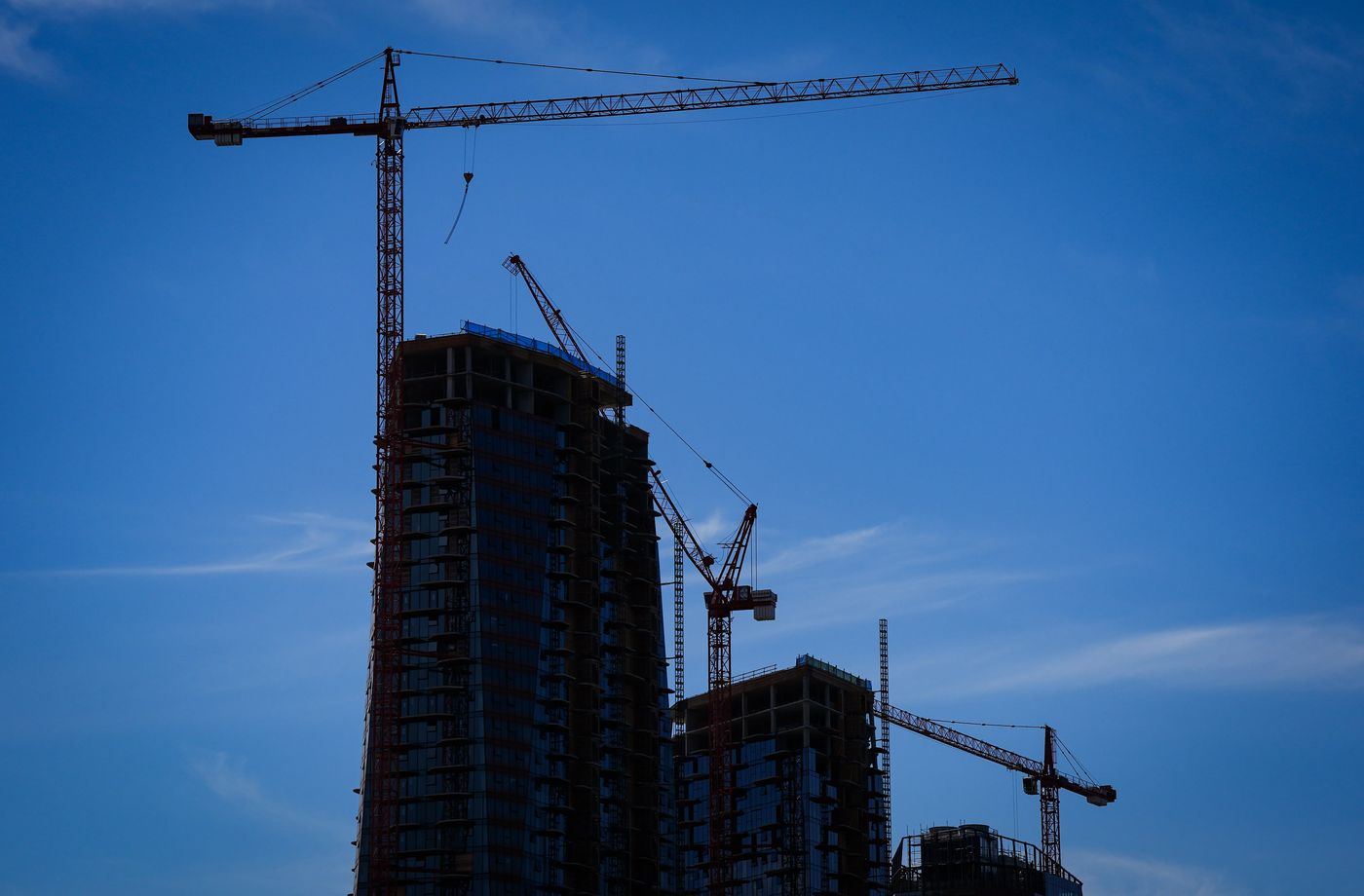
Canada's construction sector grew one per cent last quarter but faces an uneven outlook from rising costs and trade uncertainty, according to a new industry report.
The Canadian Construction Association's latest quarterly report shows construction sector GDP rose in the second quarter, driven by gains in both engineering construction and residential building construction.
That followed two consecutive quarterly declines and brought overall activity back to levels seen around a year earlier, the association said.
"Our industry remains resilient, but we are increasingly divided between emerging opportunities and near-term challenges," Nicole Emmett, the association's vice-president of communications, marketing and members services, said in a news release.
But there are risks to sustaining that rebound, including the industry's rising input costs.
Statistics Canada said non-residential building construction costs increased 3.5 per cent year-over-year in the quarter, while construction costs for residential buildings rose 2.3 per cent.
The report said steel-intensive construction divisions are experiencing some of the strongest cost increases at more than eight per cent year-over-year.
Higher fuel prices, tariffs on steel and aluminum products, and additional duties on imported wood cabinets and vanities are also contributing to ongoing pricing pressures throughout the construction supply chain.
The report also noted the broader effect of ongoing trade uncertainty on the sector.
Around 40 per cent of the inputs used by Canada's construction industry are imported, with the U.S. accounting for 25 percentage points of that share, it said.
The association said exposure to trade risks is particularly high in engineering construction.
In communications and oil and gas engineering, roughly 40 per cent of inputs are sourced from the United States, while imports from south of the border account for around 21 per cent of inputs for residential construction.
"Many contractors saw the tariff announcements. Far fewer heard of new remissions that came quietly in their wake," the report said.
"Nation-building ambitions have expanded the long-term project pipeline, but the promise of tomorrow's megaprojects should not distract from the pressures the industry is currently facing."
The report also pointed to a "soft" residential pipeline in some of Canada's largest markets.
It said contractors are facing a lack of growth in the existing project pipeline, particularly for highrise residential properties.
That comes as Canada's population growth has stagnated and its largest housing market remains "subdued," as the pace of new condo projects in the Greater Toronto and Hamilton Area has slowed compared with recent years.
e2gold.ca reported in October that Ontario's housing market is set for a modest rebound in 2027, though activity remains below long-term norms.
The report warned that geopolitical conflicts continue to have economic consequences long after they fade from public attention.
"Their effects can persist across energy markets, trade flows, supply chains, project costs, and construction timelines," it said.
The outlook for Canada's construction sector remains "uneven" heading into 2027, the association concluded.
This story was written by the e2gold.ca newsroom from reporting by BNN Bloomberg and The Spec. Quotes are checked word for word against that reporting.