TD Bank charges fees for withdrawals at non TD ATMs in Canada, with a fee of $2.00 per transaction. For foreign ATM withdrawals, the fee is $3.00 each in the U.S. and Mexico, and $5.00 each in other foreign countries. On top of these ATM fees, TD adds a foreign exchange charge of 3.5 percent to the total after currency conversion for foreign cash withdrawals. Account holders should review their specific account type for monthly transaction limits, as exceeding these limits incurs additional per transaction fees.
ATM Withdrawal Fees at TD Canada Trust
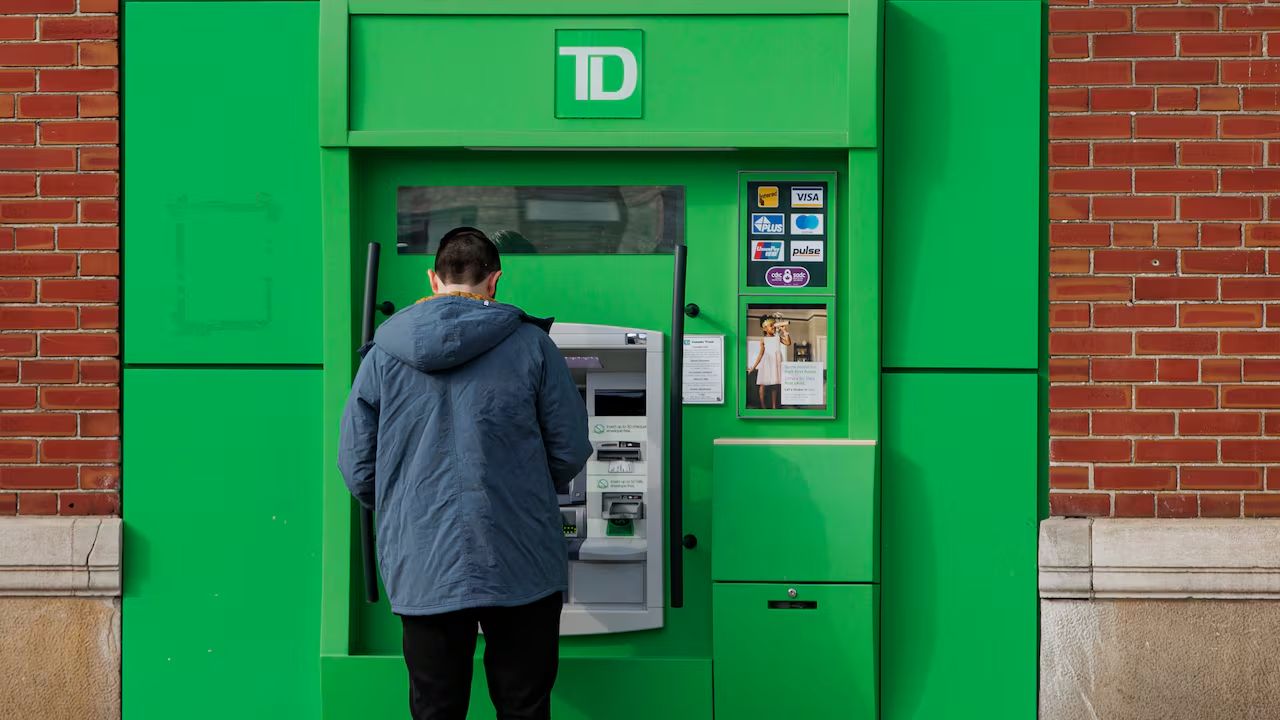
The fees for withdrawing cash from an ATM with a TD debit card depend entirely on the network used. Withdrawals from any TD ATM in Canada are free of charge, with no transaction limit for this specific action. Using an ATM that is not part of the TD network incurs a fee, which is charged per transaction. For withdrawals at a non-TD ATM within Canada, the fee is $2.00 for each withdrawal made. This fee increase to $2.00 took effect on March 1, reflecting a change from a previous lower rate. When travelling, the fees are higher for accessing cash from foreign ATM networks.
For clients in the United States or Mexico, using a non-TD ATM results in a foreign ATM fee of $3.00 per withdrawal. Withdrawals in any other foreign country outside of North America carry a fee of $5.00 per transaction. It is important to note that these are separate fees from the foreign currency exchange charge that also applies. The ATM fee is levied on top of the currency conversion. These fees apply regardless of the type of TD chequing or savings account held by the client. The TD Every Day Savings Account lists the same non-TD ATM fee in Canada of $2.00 and the same foreign ATM fees for the U.S., Mexico, and other countries.
Foreign Currency Withdrawals and Exchange Fees
When you withdraw foreign currency from an ATM, either abroad or at certain TD ATMs in Canada that dispense U.S. dollars, TD applies a foreign exchange fee. This fee is 3.5% of the total Canadian dollar amount after the currency conversion. The conversion uses the rate set by Visa International for the transaction. This fee applies to all foreign cash withdrawals made with a TD debit card. For foreign purchases made with the card, the same 3.5% fee is added to the total after conversion. The fee schedule explicitly states that for foreign cash withdrawals, TD adds 3.5% to your total after converting to Canadian dollars at the rate set by Visa International.
This means a single foreign withdrawal incurs two potential charges: the flat foreign ATM fee of $3.00 or $5.00, plus the 3.5% foreign exchange fee on the converted amount. There is no fee for withdrawing U.S. currency at a TD ATM in Canada, aside from the standard foreign exchange fee if applicable. Clients should be aware that using a debit card for purchases outside Canada also triggers the 3.5% foreign exchange fee on every transaction. This charge is consistent across all TD personal banking accounts, including the TD Minimum Chequing Account, TD Every Day Chequing Account, and the higher-tier plans.
Account-Specific Transaction Limits and Fees
Monthly account fees and included transaction limits vary significantly across TD's chequing accounts, which directly impacts the cost of withdrawals and other transactions. The TD Minimum Chequing Account has a monthly fee of $3.95, but this fee is waived for clients who are recipients of the Guaranteed Income Supplement, beneficiaries of the Registered Disability Savings Plan, Indigenous Peoples from Canada, or Newcomers to Canada during their first year. This account includes 25 transactions per month, plus unlimited public transit transactions. The TD Every Day Chequing Account has a monthly fee of $11.95, which is waived if a minimum daily balance of $3,000 is maintained. It includes 12 transactions per month, which encompass up to two full-serve transactions in a branch or through EasyLine telephone banking, plus unlimited public transit transactions. Higher-tier accounts like the TD Unlimited Chequing Account have monthly fees of $17.95 or $30.95, waivable with minimum daily balances of $4,000 or $6,000 respectively, and they offer unlimited transactions. The TD All-Inclusive Banking Plan has a monthly fee of $30.95, waivable with a $6,000 minimum daily balance, and includes an annual fee rebate on eligible TD credit cards.
- TD Minimum Chequing Account: $3.95 monthly fee, 25 included transactions.
- TD Every Day Chequing Account: $11.95 monthly fee, 12 included transactions.
- TD Unlimited Chequing Account: $17.95 monthly fee, unlimited transactions.
- TD All-Inclusive Banking Plan: $30.95 monthly fee, unlimited transactions.
- Transaction over-limit fee for the TD Every Day Chequing Account is $1.25 per additional transaction.
- The Low Fee TD Chequing Account offers no transaction fees on the first 12 transactions monthly, with additional transactions at $1.25 each.
Once the monthly transaction limit on an account is exceeded, a per-transaction fee applies. For the TD Every Day Chequing Account and the Low Fee TD Chequing Account, this fee is $1.25 for each transaction beyond the first 12. This includes debit purchases, bill payments, and withdrawals, meaning excessive ATM use can quickly lead to these over-limit charges. The TD Minimum Chequing Account does not specify an over-limit fee, suggesting transactions beyond 25 may not be permitted or may incur a different charge. The unlimited accounts naturally avoid this concern but carry higher monthly fees or balance requirements.

Other Withdrawal and Transfer Service Fees
TD charges fees for several other services related to moving money out of an account. A telephone withdrawal or transfer conducted through EasyLine telephone banking costs $8.00 per transaction. If the same wire transfer is set up through EasyWeb Online Banking or the TD app, the fee is reduced to $12.50. Requesting a copy of a statement or a transaction that is over 90 days old incurs a fee of $5.00. Overdraft protection on accounts comes with a monthly fee of $5.00 plus an annual interest rate of 21% on the overdraft balance. For the TD Minimum Chequing Account, this $5 monthly overdraft fee is waived if the monthly chequing account fee is $0 due to the client's eligibility for social benefit programs. On other accounts, the $5 monthly fee applies consistently. Some account packages also offer a daily maximum overdraft fee structure of $5 per day plus interest, but this is noted as not available on accounts in Quebec.
Detailed Monthly Account Fees and Waiver Conditions
Several TD accounts offer a waiver of the monthly fee if a minimum daily balance is maintained in the account. This can effectively make all included transactions, including ATM withdrawals, free for that month. The required minimum balance varies by account type. Maintaining a $3,000 minimum daily balance waives the $11.95 fee on the TD Every Day Chequing Account. For the TD Unlimited Chequing Account, a $4,000 minimum daily balance waives the $17.95 fee. The TD All-Inclusive Banking Plan requires a $6,000 minimum daily balance to waive its $30.95 monthly fee.
There is no minimum balance requirement to waive the fee on the TD Minimum Chequing Account, as its fee waiver is based on program eligibility. The TD Every Day Savings Account has a monthly fee of $8.20 or $0 with a minimum daily account balance maintained, though the exact balance is not specified. The TD Every Day Savings Account also states there is no minimum account balance fee rebate, indicating the waiver condition may differ. Clients should monitor their daily balances closely, as falling below the threshold even once in a month can result in the full monthly fee being charged.
| Account Type | Standard Monthly Fee |
|---|---|
| TD Minimum Chequing | $3.95 |
| TD Every Day Chequing | $11.95 |
| TD Unlimited Chequing | $17.95 |
| TD All-Inclusive Banking | $30.95 |
| TD Every Day Savings | $8.20 |
The monthly fee for the TD Minimum Chequing Account is waived if the account holder receives the Guaranteed Income Supplement. The fee is also waived for a beneficiary of the Registered Disability Savings Plan, for Indigenous Peoples from Canada, or for a Newcomer to Canada during their first year in the country. For the TD All Inclusive Banking Plan, an annual fee rebate of up to $139 is available for the primary cardholder on eligible TD credit cards. The TD Unlimited Chequing Account offers a rebate of up to $139 for the primary cardholder, but only for the first calendar year the account is open.
Overdraft Fees and Interest Charges
The overdraft protection service on TD accounts carries significant costs if used. The standard structure is a $5 monthly fee plus 21% annual interest calculated on the overdraft balance. This interest is charged at an effective annual rate, compounding the cost of carrying a negative balance. For the TD Minimum Chequing Account, the $5 monthly overdraft fee is waived if the account's monthly chequing fee is $0, which occurs when the holder qualifies for the social benefit waiver. In that case, the overdraft carries a $0 monthly fee but still accrues the 21% annual interest.
An alternative overdraft fee structure is noted for some accounts, involving a $5 daily maximum fee plus the same 21% annual interest. This daily fee cap could result in higher costs than the monthly fee if an account remains overdrawn for many consecutive days. This daily fee structure is explicitly noted as not available on Quebec accounts, indicating provincial differences in service offerings. Clients should review their specific account agreement to understand which overdraft fee model applies to them, as the costs can escalate quickly.
Common Mistakes Leading to High Withdrawal Fees
Many Canadians incur avoidable TD withdrawal fees by not planning their ATM usage. Frequently using non-TD ATMs for convenience, especially for small amounts, can lead to numerous $2.00 charges that add up quickly, as noted by users who have racked up significant fees during high-spending periods. Exceeding the monthly transaction limit on an account like the TD Every Day Chequing Account turns every subsequent withdrawal into a $1.25 fee on top of any ATM network fee. Travelling abroad without understanding the fee structure is another common pitfall, resulting in combined charges of $3.00 or $5.00 plus a 3.5% foreign exchange fee on every cash withdrawal.
Failing to maintain the minimum daily balance required for a monthly fee waiver leads to paying the full account fee, which increases the cost per transaction. Using telephone banking for withdrawals incurs an $8.00 fee, which is significantly higher than ATM fees. Not leveraging TD's own network of ATMs for free withdrawals in Canada is a missed opportunity to reduce costs. For those eligible, not enrolling in the fee waiver for the TD Minimum Chequing Account means paying a monthly fee unnecessarily.
Frequently asked questions
How much does TD charge for using a non-TD ATM in Canada?
TD charges a fee of $2.00 for each withdrawal made at a non-TD ATM within Canada. This fee is applied per transaction, so making multiple withdrawals will result in multiple charges. Using a TD ATM in Canada is free for cash withdrawals. This fee was increased to $2.00 effective March 1.
What are TD's fees for ATM withdrawals in the United States?
When you use your TD debit card at an ATM in the United States, TD charges a foreign ATM fee of $3.00 per withdrawal. Additionally, a foreign currency exchange fee of 3.5% is applied to the total Canadian dollar amount after conversion. These two fees are combined on your statement. The same $3.00 fee applies for withdrawals in Mexico.
How can I avoid the monthly fee on my TD chequing account?
You can avoid the monthly fee on several TD accounts by maintaining a specified minimum daily balance. For the TD Every Day Chequing Account, a $3,000 minimum balance waives the $11.95 fee. Higher-tier accounts have higher balance requirements. The TD Minimum Chequing Account fee is waived for recipients of certain government benefits like the Guaranteed Income Supplement.
Does TD charge a fee for foreign currency exchange?
Yes, TD charges a foreign currency exchange fee of 3.5% on all foreign purchases and cash withdrawals made with your debit card. This fee is calculated on the total Canadian dollar amount after conversion at the Visa International rate. It applies in addition to any flat ATM network fees. This 3.5% charge is standard across all account types.
What is the transaction limit on a TD Every Day Chequing Account?
The TD Every Day Chequing Account includes 12 transactions per month. These transactions can include debit purchases, bill payments, and withdrawals. The plan includes up to two full-serve transactions done in a branch or by phone. Each transaction beyond the 12 incurs a fee of $1.25, which applies to additional withdrawals as well.
What is the fee for an overdraft on a TD account?
TD charges a monthly overdraft fee of $5.00 plus an annual interest rate of 21 percent on the overdraft balance. For the TD Minimum Chequing Account, the $5 monthly fee is waived if the account holder qualifies for a monthly fee waiver. Some other TD accounts feature a $5 daily maximum overdraft fee instead of a monthly fee. The daily overdraft fee option is not available on accounts in Quebec.
Sources and further reading
This article explains how things work and is not financial, tax or legal advice. Rules, limits and rates change, so check the current figures with the Canada Revenue Agency, your province or your financial institution before you act.