In Canada, individuals can earn a certain amount of income each year without paying federal income tax, thanks to the Basic Personal Amount (BPA). For the 2026 tax year, the maximum federal BPA is $16,452 for individuals with a net income of $181,440 or less. This means a single taxpayer can earn up to this amount before owing any federal tax. Each province and territory also sets its own basic personal amount, further reducing provincial tax payable. Understanding these tax-free thresholds and the various credits available is essential for Canadians to accurately calculate their tax obligations and potential refunds.
How the Basic Personal Amount Creates Tax-Free Income
The Basic Personal Amount (BPA) is a non-refundable tax credit available to all individual Canadian taxpayers. It effectively creates a zone of tax-free income by reducing the amount of federal tax you owe to zero on income up to the specified amount. For the 2026 tax year, the maximum federal BPA is $16,452. This credit is calculated by multiplying the BPA by the lowest federal tax rate, which is 14% for 2026, resulting in a federal tax reduction of $2,303.28. The credit is claimed on your annual income tax return, and its value is phased out for higher-income earners. Individuals with a net income above $181,440 will see their BPA gradually reduced, reaching a minimum of $14,829 for those with a net income of $258,482 or more. The federal BPA for the 2025 tax year was $16,129, and the lowest federal tax rate for that year was a blended 14.5% due to a mid-year rate change.
Provincial and territorial governments also administer their own basic personal amounts, which work in the same way to reduce provincial tax payable. For example, Ontario's basic personal amount for 2026 is $12,989, and for 2025 it was $12,747. It is important to note that these amounts are indexed to inflation and typically increase each tax year. The BPA is the most fundamental tax credit and forms the basis for understanding how much income can be earned before incurring a tax liability. All provinces and territories compute income tax using tax-on-income systems, meaning they set their own rates, brackets, and credits based on the federal definition of taxable income.
Federal and Provincial Tax Brackets and Rates for 2026
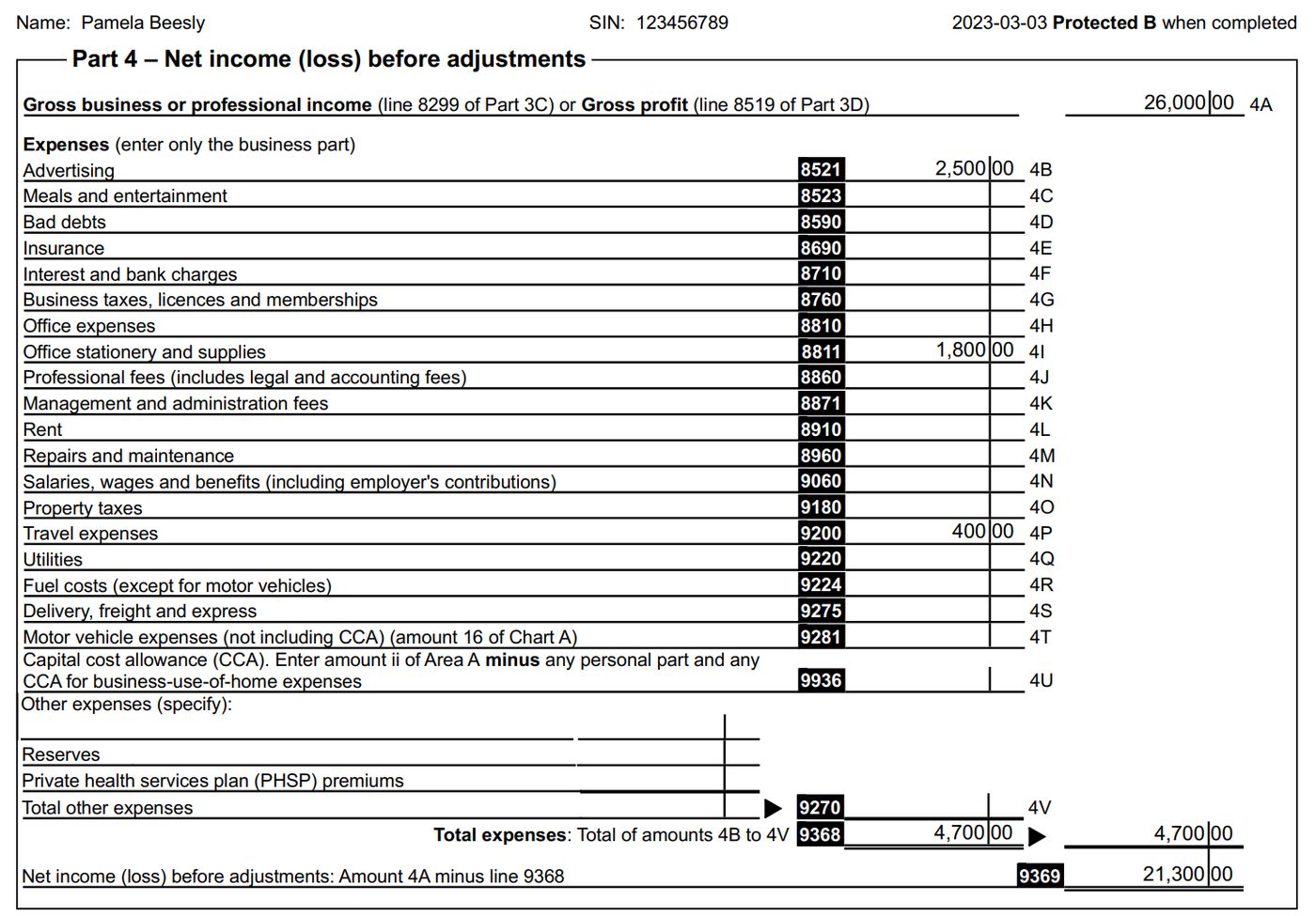
Canada uses a progressive tax system where income is taxed at increasing rates as it rises through defined brackets. Your entire income is not taxed at a single rate. Only the portion within each bracket is taxed at that bracket's rate. For the 2026 tax year, the federal income tax brackets are applied to taxable income after deductions. The first $58,523 of taxable income is taxed at 14%. In a progressive system, your income tax payable is cumulative, meaning you pay multiple rates on different portions of your income.
Provincial and territorial taxes are calculated separately using their own brackets and rates, which are added to the federal tax. The following table outlines the 2026 tax brackets and rates for Ontario, which has five tiers. Ontario also applies a provincial surtax, which is an additional charge calculated on the provincial tax owed, further increasing the effective tax rate for higher earners. Two numbers describe your tax burden: your marginal tax rate is the rate you pay on your next dollar of income, and your average tax rate is the total tax paid divided by total income, which is always lower than the marginal rate.
| Taxable Income Bracket | Ontario Tax Rate (2026) |
|---|---|
| Up to $53,891 | 5.05% |
| $53,891 to $89,354 | 9.15% |
Key Federal and Provincial Tax Credits
Beyond the Basic Personal Amount, the Canadian tax system offers numerous other non-refundable tax credits that can reduce tax payable. These credits are subtracted from the amount of tax you owe, as opposed to deductions which reduce your taxable income. Common federal credits include those for charitable donations, medical expenses, and public transit passes. There are also credits for specific situations, such as the disability tax credit, the Canada employment credit, and the volunteer firefighters' credit. Each of these credits has specific eligibility criteria and is calculated by multiplying a base amount by the lowest federal tax rate. Personal tax credits, miscellaneous tax credits, and the dividend tax credit are all subtracted from tax to determine the final federal tax liability.
Provinces and territories offer their own suite of credits that align with regional priorities. Ontario, for example, provides several key credits designed for low and moderate-income individuals and families. To qualify for most provincial benefits and credits, individuals must file a tax return each year, even if they had no income. The following are key Ontario tax credits for the 2026 period. A complete list of available credits is maintained by the Canada Revenue Agency and respective provincial revenue ministries. These credits are essential tools for reducing overall tax liability and should be reviewed annually.
- The Low-Income Individuals and Families Tax (LIFT) Credit provides up to $875 or 5.05% of employment income for eligible workers.
- The Ontario Childcare Access and Relief from Expenses (CARE) Tax Credit allows families to claim up to 75% of eligible childcare expenses.
- The Ontario basic personal amount for 2026 is $12,989.
Calculating Your Tax Owing: Detailed Examples for 2026
To understand how the Basic Personal Amount and tax brackets work together, follow this calculation for an Ontario resident with a $60,000 taxable income in 2026. First, calculate federal tax using the progressive brackets. The first $58,523 is taxed at 14%, resulting in $8,193.22. The remaining $1,477 ($60,000 - $58,523) falls into the next bracket and is taxed at 20.5%, adding $302.79. The total federal tax before credits is $8,496.01. Next, calculate Ontario provincial tax. The first $53,891 is taxed at 5.05%, equaling $2,721.50. The remaining $6,109 ($60,000 - $53,891) is taxed at 9.15%, adding $558.97, for a total provincial tax of $3,280.47. Combine the federal and provincial taxes for a pre-credit total of $11,776.48.
Now, apply the non-refundable tax credits. The federal Basic Personal Amount credit is $16,452 multiplied by 14%, which equals $2,303.28. The Ontario basic personal amount credit is $12,989 multiplied by 5.05%, which equals $655.94. This final amount represents the combined federal and provincial income tax payable. For a lower income example, an Ontario resident with $45,000 of taxable income and only the basic personal credits would owe $5,613.28 in total combined tax after credits, resulting in an average tax rate of 12.5%.
Important Rules for Residency, Surtaxes, and Special Taxes
Several important rules govern Canadian income tax filing and can impact your final tax bill. Understanding residency, surtaxes, and special tax calculations is crucial for accuracy. Your provincial or territorial tax is based on your province of residence as of December 31 of the tax year. Non-residents are only taxed on specific Canadian-sourced income, such as employment in Canada, income from carrying on a business in Canada, and capital gains from taxable Canadian property. Individuals resident in Canada for only part of a year are taxable on worldwide income only for the period of residency, with credits prorated. Relief from double taxation on foreign income is provided through Canada's international tax treaties and foreign tax credits.
The federal government also has an Alternative Minimum Tax (AMT) designed to ensure that high-income individuals with substantial deductions still pay a minimum amount of tax. If the AMT liability is greater than the regular tax calculation, the individual must pay the higher AMT amount. However, any AMT paid can be carried forward as a credit to reduce regular tax in any of the following seven years. This rule primarily affects individuals with very high deductions or certain types of income. To avoid common errors and ensure compliance, taxpayers should be aware of the following key rules and requirements when preparing their returns.
- File a tax return even with no income to qualify for benefits like the GST/HST credit.
- Provincial tax is based on your province of residence on December 31 of the tax year.
- Non-residents are taxed on Canadian employment income, business income, and gains from taxable Canadian property.
- Part-year residents are taxed on worldwide income only for their period of residency, with credits prorated.
Common Tax Deductions Available to Individuals
Tax deductions are amounts you can subtract directly from your total income before calculating how much tax you owe. They differ from tax credits, which reduce the tax itself. Deductions are particularly valuable as they lower your taxable income, potentially moving you into a lower tax bracket. While there are fewer deductions available for individuals earning employment income compared to business owners, several common ones can provide significant savings. It is important to keep receipts and records for any expenses you plan to claim as deductions. Claiming these deductions requires you to fill out the appropriate schedules and forms as part of your income tax return, and proper documentation is essential in case the Canada Revenue Agency requests verification.
There are two main ways to reduce the amount of tax you pay: by claiming deductions and by claiming tax credits. Deductions are amounts you can subtract directly from your income before calculating tax. Common deductions for individuals include support payments made to an ex-spouse, contribution amounts to an RRSP up to your annual maximum, and moving expenses if you had to move more than 40 kilometres because of work. These deductions directly reduce your net income. Your net income is the figure used to determine eligibility for certain credits and benefits, including the phased-out Basic Personal Amount for high earners.
- Registered Retirement Savings Plan (RRSP) contributions up to your annual maximum.
- Support payments made to an ex-spouse or common-law partner.
- Moving expenses, if you moved more than 40 kilometres for work or to run a business.
- Child care expenses incurred to enable a parent to work or study.
- Union or professional dues required for your employment.
- Certain employment expenses, if you are required to pay them under your contract of employment and are not reimbursed.
Rules on Income Splitting and the Kiddie Tax
Canadian tax law includes specific rules to prevent certain forms of income splitting, which is shifting income from a high-tax individual to a low or nil tax rate family member. These rules are designed to maintain tax fairness and can result in significant tax consequences if not followed. A minor child that receives certain passive income under an income splitting arrangement is subject to tax at the highest combined federal and provincial marginal rate, which can be up to 55%. This is commonly referred to as the kiddie tax. Under these rules, personal tax credits, other than the dividend, disability, and foreign tax credits, cannot be claimed to reduce the kiddie tax liability.
Similar restrictions apply to income sprinkling using private corporations among adult family members. The split income of the adult family member will be subject to tax at the highest combined federal and provincial marginal rate, again up to approximately 55%. Personal tax credits, other than the dividend, disability, and foreign tax credits, or other deductions cannot be claimed to reduce this tax. These rules mean that strategies to distribute corporate dividends or capital gains to family members in lower tax brackets are heavily restricted. Taxpayers considering such arrangements must be aware of these rules to avoid unexpected tax assessments.
Provincial Surtaxes and Combined Top Marginal Rates
In addition to basic provincial tax rates, some provinces impose surtaxes that increase the total provincial tax payable. A surtax is an extra charge calculated on the provincial tax you already owe, not directly on your income. This quietly raises the effective tax rate, particularly for middle and higher-income earners. Ontario is a prominent example, applying a two-tier surtax. Other provinces may have similar surcharges, so taxpayers must review their specific provincial tax rules.
The combined effect of federal and provincial taxes, including surtaxes, results in a top marginal tax rate that varies by jurisdiction. These rates apply to taxable incomes above $258,482 in most provinces. The following table shows the top 2026 provincial tax rates and the resulting combined federal/provincial top marginal rates for selected provinces, reflecting all provincial surtaxes. These rates are critical for high-income earners and for understanding the tax implications of additional income.
Combined federal and provincial effective top marginal tax rates for 2026 are shown in a table. The rates include all provincial or territorial surtaxes. These combined rates include the federal top rate and account for provincial surtaxes where applicable. They represent the highest rate of tax that can be applied to additional income for residents in those provinces. This highest rate is also applied to certain passive income received by a minor child under income splitting arrangements.
Frequently asked questions
How much can I earn tax-free in Canada in 2026?
For the 2026 tax year, an individual Canadian taxpayer can earn up to $16,452 before paying any federal income tax. Individuals earning $181,440 or less receive the full federal Basic Personal Amount of $16,452. There are also provincial basic personal tax credit amounts, set by each province. In Ontario, the provincial amount for 2026 is $12,989.
What is the difference between a tax deduction and a tax credit?
A tax deduction reduces your total taxable income before calculating tax owed. Common deductions include RRSP contributions and moving expenses. A tax credit directly reduces the amount of tax you owe. The Basic Personal Amount is a non-refundable tax credit, calculated by multiplying the credit amount by the lowest federal tax rate. Credits are generally more valuable dollar-for-dollar than deductions for most taxpayers.
What is the Alternative Minimum Tax (AMT)?
The Alternative Minimum Tax is a parallel tax calculation. Individuals are required to compute an adjusted taxable income and include certain tax preference items. If the adjusted taxable income exceeds the minimum tax exemption, a combined federal and provincial tax rate is applied to the excess. The taxpayer then pays the greater of regular tax or the AMT. Taxpayers required to pay the AMT are entitled to a credit for the AMT paid, which can be applied in any of the following seven years.
Are there tax credits for low-income families in Ontario?
Yes, Ontario offers several credits for low-income individuals and families. The Low-Income Individuals and Families Tax (LIFT) Credit provides up to $875 for eligible workers. The Ontario Childcare Access and Relief from Expenses (CARE) Tax Credit allows families to claim up to 75% of eligible childcare expenses. Eligibility for these and other provincial benefits requires filing a tax return each year.
Do I have to file a tax return if my income is below the Basic Personal Amount?
Yes, you should still file your taxes even if your income is below the Basic Personal Amount. For the 2026 tax year, if your income is less than $16,452, you should not have to pay any federal income tax. However, filing a tax return is a requirement to qualify for any government benefits available, such as those offered in Ontario. These benefits are often paid monthly and require you to file a return, even if you did not earn any income. Therefore, filing ensures you can access potential credits and benefits for which you may be eligible.
How does moving between provinces affect my taxes?
Provincial or territorial taxes are based on your province or territory of residence as of December 31 of the tax year. For example, if you are filing your 2026 taxes and moved to Ontario in October, you will be subject to Ontario income tax rates for the entire year, in addition to federal taxes. This means you pay tax to the province where you lived at the end of the year. Your taxable income is calculated using that province's specific brackets and rates, such as Ontario's 2026 rates which range from 5.05 percent to 13.16 percent.
Sources and further reading
- What are tax deductions, credits and benefits? legalline.ca
- Ontario Tax Brackets for 2026: Rates, Credits & Deductions wealthsimple.com
- Canada, Individual, Taxes on personal income taxsummaries.pwc.com
- Quick & Free Tax Filing for Canadians | TurboTax® 2025-26 turbotax.intuit.ca
- 2025 Canadian Tax Brackets & Middle‑Class Tax Cut ... hrblock.ca
This article explains how things work and is not financial, tax or legal advice. Rules, limits and rates change, so check the current figures with the Canada Revenue Agency, your province or your financial institution before you act.