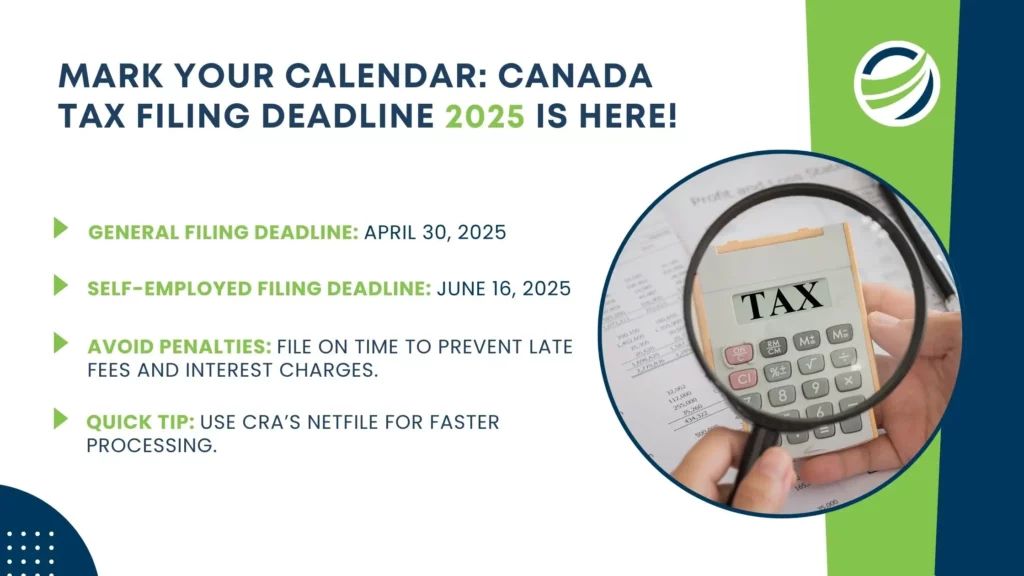
The annual tax deadline for most individuals in Canada is April 30. This is the date by which you must file your personal income tax return and pay any balance owing for the previous year. For the 2025 tax year, the filing and payment deadline is April 30, 2026. Self-employed individuals and their spouses or common-law partners have until June 15, 2026 to file, but any taxes owed are still due by April 30. Meeting these deadlines is crucial to avoid penalties and interest charges and to ensure you receive any benefit payments or refunds you are owed.
Annual Personal Tax Filing Deadlines
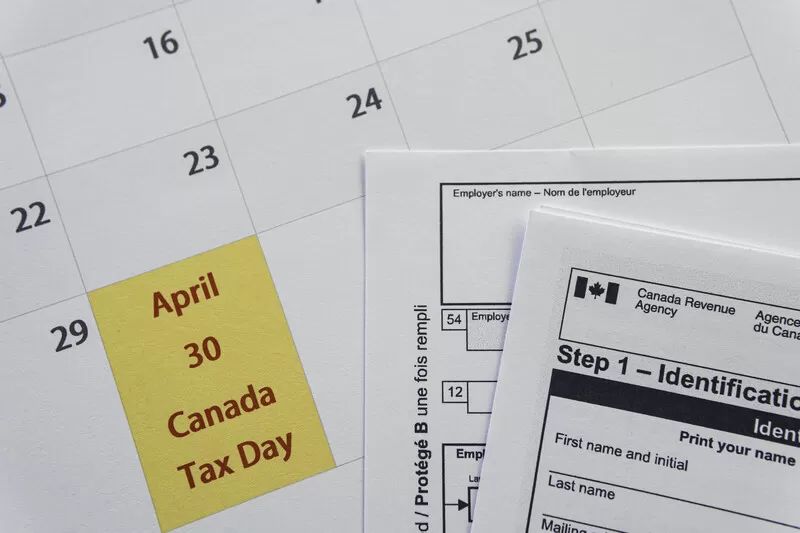
The primary deadline for filing a personal income tax return in Canada is April 30 each year. For the 2025 tax year, this date falls on Wednesday, April 30, 2026. This deadline applies to all individuals who are not self-employed and applies to both the submission of your return and the payment of any taxes you owe to the Canada Revenue Agency. If April 30 falls on a weekend, the CRA extends the deadline to the next business day. Mailed paper returns must be postmarked by the due date, while returns filed electronically through NETFILE must be submitted by midnight local time on April 30. The CRA begins accepting electronically filed returns through its NETFILE service in late February, allowing you to file early.
If you or your spouse or common-law partner carried on a business in 2025, you are granted an extended filing deadline of June 15, 2026. It is critical to understand that this extension applies only to filing the return, not to paying any balance owing. Any taxes owed for the 2025 year are still due by the standard payment deadline of April 30, 2026. Interest will begin to accrue on any unpaid amounts starting May 1, 2026, regardless of the extended filing date. This rule ensures that self-employed individuals have more time to compile their business income information but does not delay the government's requirement for tax revenue.
Special rules apply for the final tax return of a deceased person. If the individual died between January 1 and October 31, 2025, their return is due by April 30, 2026. If the date of death was between November 1 and December 31, 2025, the filing deadline is extended to six months after the date of death. If the deceased or their spouse was self-employed, the June 15, 2026 filing extension may also apply, but again, any taxes owed begin accruing interest from April 30, 2026. The legal representative is responsible for ensuring these filings are completed accurately and on time.
Key Contribution and Instalment Dates
Several important financial deadlines are tied to the tax calendar, affecting contributions to registered plans and required instalment payments. The deadline to make a contribution to a Registered Retirement Savings Plan and have it count toward your deduction for the 2025 tax year is March 2, 2026. Contributions made during the first 60 days of 2026 can be applied to either the 2025 or 2026 tax year, subject to your available contribution room. The annual RRSP contribution limit is based on your earned income from the previous year, and you can find your personal deduction limit on your latest notice of assessment from the CRA.
For individuals required to pay tax by instalments, there are four quarterly due dates throughout the year. These instalments are typically for those whose tax owing at year-end is expected to exceed a certain threshold, such as self-employed individuals or those with significant investment income. The quarterly instalment deadlines are March 15, June 15, September 15, and December 15 of each year. If any of these dates falls on a weekend or a public holiday recognized by the CRA, the payment is due on the next business day. Failing to make required instalment payments can result in interest charges.
Other registered plan deadlines are spread throughout the calendar. The deadline to contribute to a First Home Savings Account for the 2026 tax year is December 31, 2026. Charitable donations must be made by December 31, 2026 to be claimed for that tax year. Contributions to a Registered Education Savings Plan or a Registered Disability Savings Plan must also be made by December 31 to be eligible for the respective government grants for that year. For individuals turning 71, December 31 of that year is the last day you can contribute to your own RRSP and the deadline by which you must convert it to a Registered Retirement Income Fund.
Penalties for Late Filing and Payment
The Canada Revenue Agency imposes significant financial penalties for missing tax deadlines, especially when taxes are owed. If you file your return after the due date and have a balance owing, you will be charged a late-filing penalty. This penalty is five percent of your 2025 balance owing, plus an additional one percent for each full month your return is late, up to a maximum of 12 months. If you have been charged a late-filing penalty in any of the previous three years, the penalty may be higher.
In addition to late-filing penalties, the CRA charges compound daily interest on any balance owing from the filing deadline onward. For the 2025 tax year, interest on any unpaid amount begins to accrue on May 1, 2026. This interest is calculated at the prescribed rate set by the CRA and is compounded daily. It applies regardless of whether you are self-employed and using the June 15 filing extension. If you cannot pay the full amount owed by April 30, it is still imperative to file your return on time to avoid the much larger late-filing penalty. You can then contact the CRA to discuss a payment arrangement for the balance.
Different penalties apply for business-related filings. Employers who fail to deduct the required Canada Pension Plan contributions, Employment Insurance premiums, or income tax from their employees' pay may face a penalty of 10 percent for a first failure, increasing to 20 percent for subsequent failures. Late filing or non-payment penalties for payroll remittances start at three percent and can increase. For corporations, the deadline to file a T2 corporate income tax return is six months after the end of the tax year, and the balance is generally due two months after year-end, with potential interest and penalties for missing either date.
Information Return Deadlines for Businesses and Trusts
Employers and financial institutions have strict deadlines for providing information returns to both recipients and the CRA. For the 2026 calendar year, the deadline to file T4 slips for employee wages and T5 slips for investment income is March 1, 2027. This date reflects the standard rule that the deadline is the last day of February, but because February 28, 2027 is a Sunday, it moves to the next business day. These slips must be distributed to employees and recipients by this date as well. Corporations must file their T2 corporate income tax return no later than six months after their fiscal year-end, and the balance of tax is generally due two months after that year-end.
Trusts have their own filing schedules. For a trust with a December 31, 2026 year-end, the T3 Trust Income Tax and Information Return is generally due by March 31, 2027. Any balance of tax owing is also due within 90 days of the trust's year-end. New enhanced trust reporting rules apply for taxation years ending on or after December 31, 2026. Under these updated rules, certain bare trusts may be required to file a T3 return and Schedule 15 to report beneficial ownership information. Partnerships must file a T5013 Partnership Information Return, with the due date depending on the type of partners involved, and the deadline to issue most T5013 slips is March 31, 2027.
Registered charities must file their annual T3010 information return within six months after the end of their fiscal period. For a charity with a December 31, 2026 year-end, the filing deadline would be June 30, 2027. It is a common rule for CRA deadlines that if the due date falls on a Saturday, Sunday, or a public holiday recognized by the CRA, the return or payment is due the next business day. This applies to most personal, corporate, and information return deadlines administered by the agency.
Essential Documents and Information for Filing
To complete your tax return accurately, you need to gather all relevant financial documents from the previous year. Your Social Insurance Number is required for identification on all tax forms. If you are an employee, you will receive a T4 slip from each employer outlining your total income and the amounts deducted for tax, Canada Pension Plan, and Employment Insurance. If you have investment income, you should receive T5 slips for dividends and interest or T3 slips for trust income. Students will need their T2202 slip for tuition paid, and those who made RRSP contributions need their contribution receipts.
Keeping organized records is especially important if you are claiming deductions or credits. You should retain receipts for medical expenses, childcare costs, charitable donations, and moving expenses. Self-employed individuals must keep detailed business receipts and invoices to report income and claim eligible business deductions. If you are claiming dependants, you will need their basic information, including their SINs and net income amounts. Having your direct deposit information ready allows the CRA to issue any refund or benefit payments to your bank account quickly and securely.
Even if you file electronically through the CRA's NETFILE service or a certified tax software, you are responsible for keeping all your supporting documents. The CRA may request to see these records if your return is selected for review. The list of necessary documents includes proof of residency for claiming certain provincial credits, records of capital gains or losses from the sale of investments, and details of any foreign income. Filing your return with complete and accurate information is the best way to avoid processing delays, reassessments, or audits.

Provincial and Federal Tax Rates for 2026
Canada uses a graduated tax system where higher rates apply to higher portions of your income. The federal government sets its own tax brackets and rates, and each province and territory applies its own set of rates on top of the federal tax. The basic personal amount for 2026 is $16,452. This is the amount of income you can earn before you start paying federal income tax. Individuals with taxable income at or below this amount will owe no federal tax, though provincial tax may still apply depending on provincial brackets and credits.
The federal tax brackets determine the rate applied to each portion of your taxable income. Your total tax payable is the sum of federal and provincial tax calculated on your income. Provincial tax rates vary significantly, with some provinces having a flat tax rate and others using a graduated bracket system similar to the federal model. You must consult the CRA website or your provincial finance ministry for the exact brackets and rates that apply to your 2026 tax year.
Understanding which tax bracket your income falls into is important for estimating your tax liability and planning for instalments or year-end payments. The interaction between federal and provincial taxes means that your combined marginal tax rate can be quite high. Tax credits, like the basic personal amount, are applied to reduce the amount of tax you owe. Other credits, such as those for medical expenses or charitable donations, are calculated as a percentage of the expense and also serve to lower your final tax bill, potentially generating a refund.
Common Filing Mistakes to Avoid
Many Canadians make avoidable errors on their tax returns that can lead to delays, reassessments, or penalties. One of the most common mistakes is missing the payment deadline while using the filing extension. Self-employed individuals must remember that while they have until June 15 to file, any taxes owed are due by April 30. Failing to pay on time results in immediate interest charges. Another frequent error is incorrectly reporting income, such as forgetting to include income from freelance work, tips, or side gigs. All income must be reported, even if you did not receive a formal T4 slip for it.
Incorrectly claiming deductions or credits without proper documentation is another area where filers run into trouble. You can only claim eligible expenses for which you have kept receipts, such as medical costs or work-from-home expenses. Claiming ineligible dependants or overstating charitable donations can trigger a review. Math errors are also common, especially on paper returns, but using certified tax software or the CRA's auto-fill my return service can help minimize these calculation mistakes. Always double-check that your Social Insurance Number and personal information are entered correctly.
Failing to report changes in your marital status or address can delay benefit payments like the GST/HST credit. Not filing a return because you have no income can cause you to miss out on these same benefit payments, as filing is how you apply for them. For those with more complex situations, such as reporting foreign income or capital gains, seeking help from a tax professional may be necessary to ensure compliance. The key is to be thorough, honest, and proactive in gathering your information well before the filing deadline.
Key Tax Dates Checklist for 2026
The deadline for most individuals to file their 2025 personal income tax return and pay any taxes owed is April 30, 2026. If you or your spouse or common-law partner is self-employed, the filing deadline is extended to June 15, 2026. The deadline to contribute to an RRSP for the 2025 tax year is March 2, 2026. Quarterly tax instalment payments are due on March 15, June 15, September 15, and December 15 of each year.
- March 2, 2026: Deadline to contribute to an RRSP, PRPP, or SPP for the 2025 tax year.
- March 15, 2026: First quarterly personal income tax instalment is due.
- March 31, 2026: Deadline to file most trust income tax returns and issue T3 slips.
- April 30, 2026: Deadline for most individuals to file 2025 tax returns and pay any balance owing.
- June 15, 2026: Deadline for self-employed individuals and their spouses to file 2025 tax returns.
- June 30, 2026: Deadline for corporations with a December 31, 2025 year-end to file T2 returns.
- September 15, 2026: Third quarterly personal income tax instalment is due.
- December 15, 2026: Fourth quarterly personal income tax instalment is due.
If a tax deadline falls on a weekend or a public holiday recognized by the Canada Revenue Agency, the deadline is extended to the next business day. For example, the deadline for employers to issue T4 slips for the 2026 calendar year is normally the last day of February. Since February 28, 2027 is a Sunday, the deadline moves to the next business day, Monday, March 1, 2027. This rule applies to filing and payment deadlines.
Documents Required for Your Tax Return
To file your tax return, you need documents that report your income, such as T4 slips from employment and T5 slips for investment income. You should also gather receipts for deductions and credits you plan to claim. Having these documents organized before you start filing makes the process faster and more accurate. The Canada Revenue Agency requires you to report all forms of income.
- T4 Slips: From each employer, showing your employment income and deductions.
- T5 and T3 Slips: For investment income like dividends, interest, or trust distributions.
- RRSP Contribution Receipts: For contributions made from March 2, 2025, to March 2, 2026.
- T2202 Slip: For tuition paid if you were a post-secondary student.
- Receipts for Deductions: Including medical expenses, charitable donations, and moving expenses.
- Business Records: Income and expense receipts if you are self-employed.
- Information for Dependants: Social Insurance Numbers and net income for spouse and children.
- Direct Deposit Details: Your bank account information for receiving refunds and benefits.
You must keep all tax documents, a copy of your filed return, and your notice of assessment for at least six years. The Canada Revenue Agency may request to review these records. Organizing your records by tax year is a recommended practice for efficient filing and record keeping. This includes keeping receipts that support your claims for deductions or credits.
Frequently asked questions
What is the tax deadline in Canada for 2026?
For the 2025 tax year, the deadline for most individuals to file their personal income tax return and pay any balance owing is April 30, 2026. The Canada Revenue Agency expects individual taxpayers to submit returns by this date each year. If April 30 falls on a weekend, the deadline is extended to the next business day. For self employed individuals or those with a self employed spouse or common law partner, the filing deadline is extended to June 15, 2026. However, any taxes owed are still due by April 30, 2026. Electronically filed returns must be submitted by midnight local time on the due date.
What happens if I file my taxes late?
If you file your return late and owe tax, you will be charged a late filing penalty. This penalty is five percent of the balance owing plus an additional one percent for each full month your return is late, up to a maximum of twelve months. The Canada Revenue Agency also charges compound daily interest on all unpaid amounts starting the day after the filing deadline. If you are due a refund or owe no tax, filing late will not result in penalties or interest, but it will delay your refund and any benefit payments.
When is the RRSP contribution deadline for the 2025 tax year?
The deadline to contribute to your Registered Retirement Savings Plan for the 2025 tax year is March 2, 2026. Contributions made by this date can be deducted on your 2025 income tax return, subject to your available RRSP deduction limit. The contribution room is based on your income and can be found on your latest notice of assessment from the Canada Revenue Agency. It is important to check your records before contributing as prior contributions and withdrawals affect your available room.
Do I have to file a tax return if I have no income?
You may still need to file a tax return even with no income. Filing is required to receive certain federal and provincial benefit payments, such as the goods and services tax harmonized sales tax credit and the Canada Carbon Rebate. Filing a return is how you apply for these benefits and access payments you are entitled to. It is also necessary for newcomers to Canada, including international students and temporary foreign workers, to remain compliant and avoid benefit delays.
What is the deadline for paying tax instalments?
If you are required to pay tax by instalments, the quarterly due dates are March 15, June 15, September 15, and December 15 of each year. These instalment payments help avoid a large tax bill at the end of the year. If any due date falls on a Saturday, Sunday, or a Canada Revenue Agency recognized public holiday, the payment is due on the next business day. Instalments are typically for individuals who owe more than a certain threshold of tax at year end.
When do employers have to give out T4 slips?
Employers must issue T4 slips to employees and file them with the Canada Revenue Agency by the last day of February following the tax year. For the 2026 tax year, since February 28, 2027 is a Sunday, the deadline moves to the next business day, which is Monday, March 1, 2027. The T4 slip outlines an employee's total remuneration and source deductions for the year. Employees need this slip to accurately report their income and complete their personal income tax returns.
Sources and further reading
- Tax Deadline 2026: When Is the Last Day to File Taxes? turbotax.intuit.ca
- Benefit payment dates and Canadian tax deadlines. hrblock.ca
- 2027 Canadian Tax Deadlines sterncohen.com
- Tax survival 101: your guide to filing in 2026 | Posts scotiabank.com
- Important tax dates for 2026 scotiawealthmanagement.com
This article explains how things work and is not financial, tax or legal advice. Rules, limits and rates change, so check the current figures with the Canada Revenue Agency, your province or your financial institution before you act.