Rare Canadian toonies are modern two-dollar coins that can be worth significantly more than their face value due to minting errors, low mintage commemorative issues, or historical gold coins from Newfoundland. The most valuable examples include the 2000 'P' Sacrifice mule error and nineteenth-century Newfoundland gold two-dollar pieces, which can sell for thousands of dollars at auction. Modern commemorative toonies with coloured designs or special themes, such as those honouring Inuit Nunangat or Bill Reid, are also sought after by collectors. Understanding what makes a toonie rare helps Canadians identify potentially valuable coins in circulation or in collections.
The History and Design of the Canadian Toonie
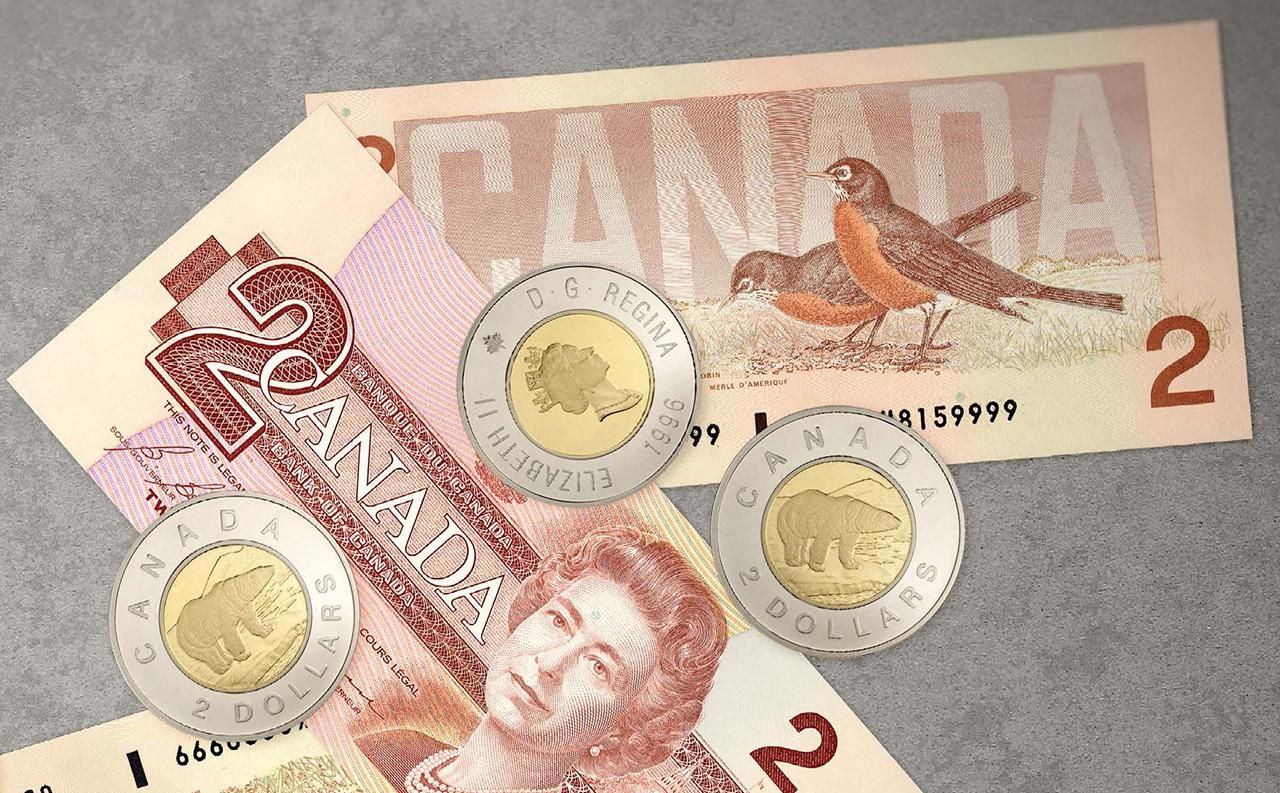
The Canadian two-dollar coin, known as the toonie, entered circulation in 1996 as a cost-saving measure to replace the two-dollar banknote. The design was selected through a public competition, with artist Brent Townsend's image of a polar bear on an ice floe chosen as the winning reverse. A unique feature of the original toonie was its bi-metallic construction, consisting of an outer ring of nickel and an inner core made of an aluminum bronze alloy. This made it lighter and thinner than other bi-metallic coins produced globally at the time. The composition changed in 2012 to a multi-ply plated steel design for both the ring and core to reduce production costs.
While the polar bear design is standard, the Royal Canadian Mint has issued numerous commemorative reverse designs for the toonie to mark special events and anniversaries. The first commemorative was issued in 1999 to celebrate the creation of Nunavut, featuring an Inuit drummer. Since then, over twenty different designs have been used, many incorporating coloured elements on the inner core. The standard obverse has featured portraits of Queen Elizabeth II and, following her passing, King Charles III. The toonie's introduction was part of a broader shift in Canadian currency, following the one-dollar loonie which replaced the paper dollar in 1987.
Valuable Modern Toonies and Mint Errors
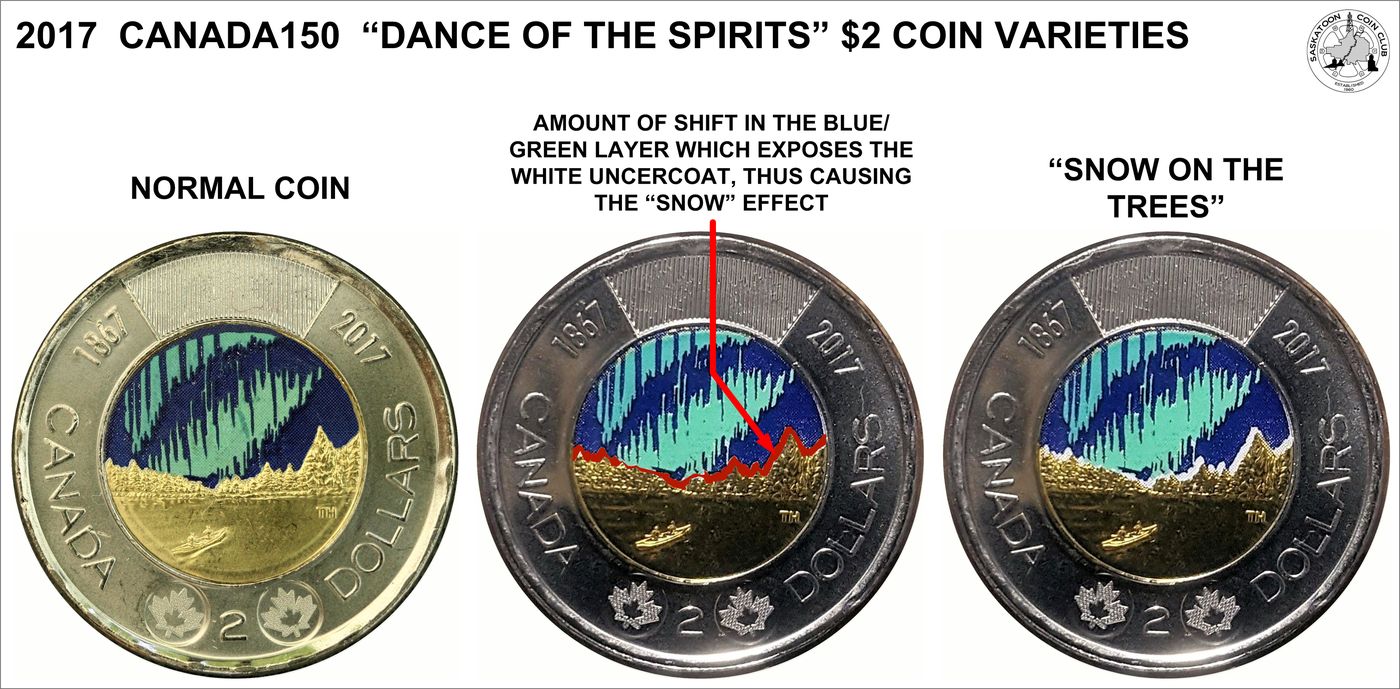
Certain modern toonies can be valuable due to minting errors or very low mintage. The most famous and valuable error is the 2000 'P' Sacrifice coin mule, where the wrong obverse die was used, creating a hybrid coin that collectors highly seek. Other errors include the 1996 toonies struck on German planchets, which are identifiable by lines across the faces and a darker tone. While a circulated 1996 toonie is worth its face value, an uncirculated example of the German planchet variety can be worth between $35 and $540 depending on its condition. The auction record for a 1996 German planchet toonie is $332, set in 2018.
Commemorative circulation toonies with limited mintages are also prime candidates for future collectibility. The Royal Canadian Mint typically produces only three million of each commemorative design, compared to the over eight million standard toonies minted annually. Because of their unique and often coloured designs, the public tends to collect and remove these coins from circulation, making them scarcer over time. Examples include the 2021 Insulin toonie, the 2023 National Indigenous Peoples Day toonie with a green core, and the 2023 Jean Paul Riopelle toonie featuring coloured artwork. While these are currently worth face value, their rarity in circulation may lead to increased collector value.
Historic and Highly Valuable Two-Dollar Coins
Long before the modern toonie, the colony of Newfoundland issued its own gold two-dollar coins. These were struck between 1865 and the late 1880s, primarily at the Royal Mint in London, with some later minted at the Heaton facility in Birmingham. These coins featured a portrait of Queen Victoria on the obverse and were used in Newfoundland and other eastern Canadian provinces. Mintages were low, with the highest being 25,000 coins struck between 1882 and 1888. The colony's banking collapse in 1894 caused the currency to become worthless, and many coins were likely melted down.
These historic gold coins are among the most valuable Canadian two-dollar pieces. Their value is determined by rarity, year, mintmark, and condition. For instance, only four mint-state examples of the 1880 Newfoundland gold two-dollar coin are known to exist. One graded MS62 sold for $7,639 at auction. An 1882 specimen with the 'H' mintmark, graded in near-perfect MS64 condition, fetched $5,520 in 2018. Even circulated examples in lower grades can sell for hundreds of dollars, far exceeding their original face value and gold content.
Key Factors That Determine a Toonie's Value
Several concrete factors determine whether a Canadian toonie is rare and valuable. The primary factor is scarcity, which can be caused by a low original mintage, a significant error during production, or a high rate of removal from circulation by collectors. Condition is equally critical. A coin graded as Mint State (MS) or Proof (PR) with no signs of wear will be worth exponentially more than a heavily circulated example of the same date and type. Professional grading services like the Professional Coin Grading Service (PCGS) and Numismatic Guaranty Corporation (NGC) assign grades that standardize condition assessment for the market. Historical significance and metal content also play roles, with nineteenth-century gold coins valued for their age and composition.
For modern toonies, unique design elements like colour application, commemorative themes, and public appeal drive collector demand. It is important to note that most circulated toonies, even early dates like 1996, are only worth their face value of two dollars unless they possess one of these specific error or rarity attributes. Collector value is based on market demand, not intrinsic metal value for modern coins. The value of a specific coin can be researched through price guides published by grading services, which aggregate data from recent auction sales and dealer listings to provide current market estimates.
Notable Commemorative and Coloured Toonies
The Royal Canadian Mint has released a series of commemorative toonies with limited mintages and often colourful designs. These are officially released into circulation, meaning they can be found in everyday change, but their limited production of three million coins makes them rarer than standard issues. A significant portion of each mintage, typically two million coins, features special colouration. The public's tendency to save these coins further reduces the number in active circulation, increasing their scarcity over time. While these coins are legal tender worth two dollars, their collectible nature and limited availability make them items that Canadians often look for in their change.
- 2024 Inuit Nunangat Toonie: Features a light blue inner core with artwork depicting Nuliajuk and Arctic wildlife.
- 2023 Bill Reid (Iljuwas) Toonie: Inner core features the Haida Grizzly Bear (Xuu.ajii) in traditional red, white, and black.
- 2023 National Indigenous Peoples Day Toonie: Has a green inner core with splashes of red, orange, white, and black.
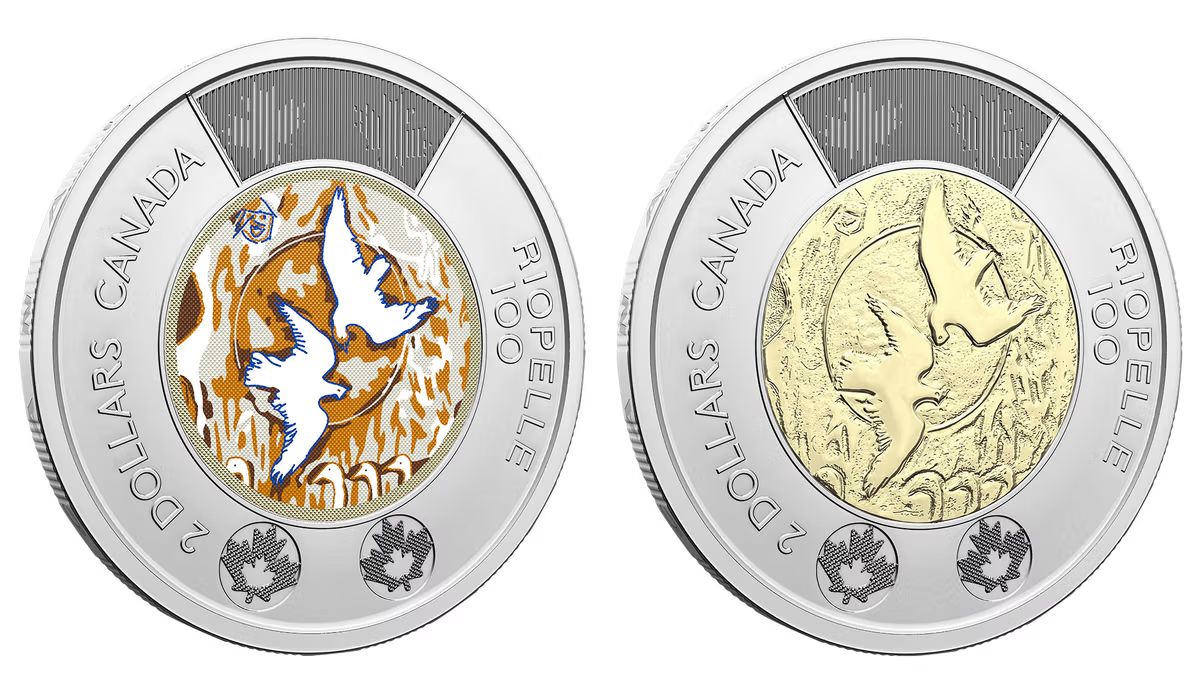
- 2023 Jean Paul Riopelle Toonie: Inner core displays a segment of his painting L'Hommage à Rosa Luxemburg in orange, blue, brown, and white.
- 2021 Insulin Toonie: Commemorates the 100th anniversary of the discovery of insulin in Canada.
- 1999 Nunavut Toonie: The first commemorative, featuring an Inuit drummer to mark the territory's creation.
Their long-term market value will depend on how many remain in collectible condition and ongoing collector interest. Other examples include coins honouring Alexander Graham Bell, Oscar Peterson, and the Supreme Court of Canada. Each of these coins has distinctive designs intended for public circulation and collection. The 2022 Alexander Graham Bell loonie and the 2024 L. M. Montgomery loonie are part of a similar series of commemorative one-dollar coins. Most commemorative circulation coins have a limited mintage of just three million.
How to Identify and Handle Potential Rare Coins
Identifying a rare toonie requires careful examination and knowledge of key details. For modern coins, look for deviations from the standard design, such as missing elements, doubled images, or incorrect metal composition. The 2000 'P' mule error requires comparing the obverse to a known standard coin. Colour is an obvious indicator for commemorative issues. A toonie with a blue, green, or multi-coloured inner core is a commemorative edition. Checking the year and design against Royal Canadian Mint announcement lists can confirm its commemorative status. For older Newfoundland gold coins, identification involves checking the date, which ranges from 1865 to the 1880s, and looking for the portrait of Queen Victoria.
The denomination '2 DOLLARS' is on the reverse of historic coins, and some may bear a small 'H' mintmark indicating the Heaton mint. If you suspect you have a valuable coin, proper handling is essential to preserve its condition. Hold the coin by its edges to avoid transferring oils from your skin to the surface. Store it in a protective holder designed for coin storage, such as a non-PVC plastic flip or a sealed capsule. Avoid cleaning the coin, as even gentle cleaning can cause micro-scratches and significantly reduce its value to collectors. Consulting a reputable coin dealer or a professional grading service can provide an authoritative assessment of the coin's authenticity, grade, and potential market value.
Understanding Auction Records and Market Value
Auction records provide concrete examples of what collectors have paid for rare toonies and historic two-dollar coins. These prices are realized for specific coins in specific conditions and serve as market benchmarks. For the modern 1996 toonie on a German planchet, the auction record is $332. For historic coins, the values are substantially higher. The 1880 Newfoundland gold two-dollar coin holds a record of $7,639 for a mint-state example. An 1882 Newfoundland gold coin graded MS64 sold for $5,520, and an 1881 example in About Uncirculated condition sold for $480. The market value for any coin is not fixed and can fluctuate based on collector demand, economic conditions, and the availability of similar coins for sale.
A difference of a single grade point can mean a large difference in price, especially for rare coins in top condition. Most coin values are published in price guides from services like PCGS or NGC, which aggregate recent auction sales and dealer listings. It is important to remember that an auction record represents a high price paid for an exceptional specimen. A more typical circulated example of the same coin may be worth considerably less. For instance, a circulated 1996 toonie has no premium, while its uncirculated error variety holds significant value.
Frequently asked questions
What is the rarest Canadian toonie?
The rarest and most valuable modern Canadian toonie is widely considered to be the 2000 'P' Sacrifice coin mule error. This coin was created when an incorrect obverse die was used during minting. Among historic two-dollar coins, the 1880 Newfoundland gold two-dollar coin is extremely rare, with only four known examples in mint state. One of these sold at auction for $7,639.
Are coloured toonies worth more than $2?
Coloured commemorative toonies are legal tender with a face value of two dollars. Currently, they are not worth a significant premium on the open market as they were mass-produced for circulation, albeit in limited mintages of three million coins. However, because the public collects them, they are scarcer in circulation. This scarcity could potentially lead to increased collector value in the future, but they are not currently valued like historic errors or gold coins.
What should I do if I find an old Newfoundland gold coin?
If you find a coin that appears to be a Newfoundland gold two-dollar piece from the 1800s, handle it carefully by the edges to preserve its condition. Do not attempt to clean it. Research the date and mintmark, and compare it to images online or in coin catalogues. To determine its potential market value, you would need to have its condition assessed, often by a professional coin grading service. Such coins can be valuable, with auction records ranging from hundreds to thousands of dollars depending on the year and condition.
Is a 1996 toonie worth anything?
A standard circulated 1996 toonie is worth its face value of two dollars. However, specific varieties of the 1996 toonie can have value. Examples struck on German planchets, identifiable by lines on the surface and a darker tone, are collectible. In uncirculated condition, these can be worth between $35 and $540. The auction record for a 1996 German planchet toonie is $332. The value depends entirely on the variety and the coin's preservation state.
How many commemorative toonies are made?
The Royal Canadian Mint typically produces a limited mintage of three million coins for each commemorative circulation toonie design. This is significantly lower than the annual production of standard toonies, which exceeds eight million. Of the three million commemorative coins, usually two million are produced with colour applications or special finishes, while one million are in standard non-coloured metal. This limited production, combined with public hoarding, makes them rarer in circulation over time.
What is a mule error coin?
A mule error coin is created when obverse and reverse dies that were not intended to be paired are used together during the minting process. The most famous Canadian example is the 2000 'P' Sacrifice toonie, where a die meant for another coin was used for the obverse. This results in a hybrid coin that is different from all other coins of that year and denomination. Mule errors are often rare and highly sought after by collectors because they represent a clear mistake in the minting process.
Sources and further reading
- Top 10+ Valuable Canadian 2 Dollar Coin (Rarest List) coinvaluechecker.com
- Top 13 Canadian Coins Worth Money sdbullion.com
- 19 rare Canadian coins you can find in your change, like a ... narcity.com
This article explains how things work and is not financial, tax or legal advice. Rules, limits and rates change, so check the current figures with the Canada Revenue Agency, your province or your financial institution before you act.