The maximum Employment Insurance (EI) payment in Canada is $729 per week, effective January 1, 2026. This weekly cap is based on a maximum insurable earnings amount of $68,900 for the year. To qualify for these benefits, you must have accumulated a specific number of insurable hours, which varies by your region's unemployment rate. Understanding these limits and eligibility rules is crucial for Canadian workers planning for income support during periods of unemployment, sickness, or parental leave.
Understanding Maximum EI Benefit Payments
The core principle of EI regular and sickness benefits is to replace a portion of your lost income. The program pays 55 percent of your insurable earnings, but this calculation is subject to an annual ceiling. For 2026, the maximum amount of earnings that are insured under the program is set at $68,900. This figure is indexed annually and increased from $65,700 in 2025. Consequently, the highest possible weekly benefit any claimant can receive is $729. This maximum is calculated as 55 percent of the maximum weekly insurable earnings derived from the $68,900 annual cap. It is important to note that most claimants receive less than this maximum, as their benefit is based on their actual insurable earnings during the qualifying period. The $729 per week maximum applies to both regular benefits for job loss and sickness benefits for those unable to work due to illness or quarantine.
EI Premium Rates and Annual Contributions
To fund the EI program, employees and employers pay premiums on insurable earnings. The premium rate for employees in 2026 is $1.63 for every $100 of insurable earnings. Employers pay a rate that is 1.4 times the employee rate, which equates to $2.28 per $100. These rates represent a one-cent decrease from the 2025 levels. Because premiums are only paid on earnings up to the maximum insurable amount, the total annual contribution is also capped. For 2026, the maximum annual EI contribution for an employee will be $1,123.07. The maximum employer contribution per employee will be $1,572.30. These maximums are calculated by applying the premium rates to the $68,900 insurable earnings ceiling.
In Quebec, the system operates differently for parental benefits, as the province administers its own Quebec Parental Insurance Plan. Therefore, EI premium rates are lower for Quebec residents, at $1.30 per $100 of insurable earnings for employees in 2026. Employers in Quebec pay $1.82 per $100. This results in a lower maximum annual contribution for Quebec workers, which is set at $895.70 for 2026. The maximum employer contribution per employee in Quebec is $1,253.98. The Premium Reduction Program also provides savings, allowing registered employers who offer qualified wage-loss plans to apply for a reduction in EI premiums. This program is expected to deliver approximately $1.46 billion in premium reductions in 2026, shared between employers and employees.
Qualifying for Employment Insurance Benefits
Eligibility for EI regular benefits is not automatic. It requires meeting specific criteria based on your work history. The exact number of hours you need depends on the unemployment rate in your economic region at the time you apply. The required hours range from a minimum of 420 hours to a maximum of 700 hours. Regions with higher unemployment rates have lower hour requirements, making it slightly easier to qualify. You must also have lost your job through no fault of your own, such as due to a shortage of work, and be ready, willing, and capable of working each day. Furthermore, you must be actively looking for work unless you are claiming under special benefits like sickness or maternity benefits.
Steps to Apply for EI Benefits
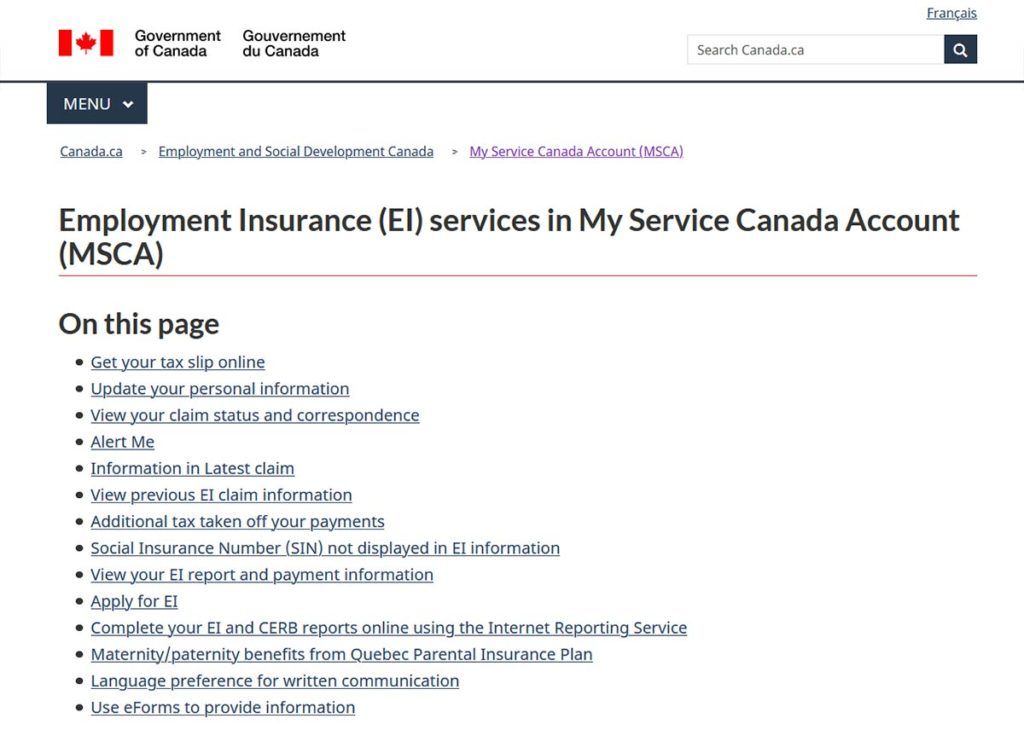
Applying for EI benefits is a process managed through Service Canada. You should also have the reason for your separation from each job and your banking information for direct deposit. The application itself must be submitted online as soon as you stop working. There is a waiting period of one week before benefits begin. After applying, you will need to complete and submit bi-weekly reports to continue receiving payments. These reports confirm that you remain eligible by detailing any earnings, job search activities, and your availability for work. It is critical to report any income you earn during a benefit period, as it will be deducted from your EI payments.
Common mistakes during the application process include delaying the submission of your claim, which can result in lost benefits for the weeks you waited. Another frequent error is providing incomplete or inaccurate information about earnings or job separation details, which can delay processing or lead to an overpayment that must be repaid. Failing to complete the mandatory bi-weekly reports on time will stop your benefit payments. Applicants also sometimes misunderstand the rules around job searches and availability, assuming they do not need to look for work if they expect a recall, which is not always the case. Using the official Employment Insurance Benefits Estimator tool on Canada.ca before applying can help you understand your potential eligibility and benefit amount.
Historical and Projected EI Maximums
The maximum insurable earnings and corresponding benefit amounts are adjusted each year based on indexing formulas and economic forecasts. This annual change impacts both the maximum weekly benefit claimants can receive and the maximum annual premiums paid by workers and employers. The table below shows the recent and upcoming maximums, illustrating the annual increases. These increases are designed to keep benefits aligned with wage growth. The Canada Employment Insurance Commission sets these rates annually using a seven-year break-even forecast to ensure the long-term sustainability of the EI Operating Account.
| Year | Maximum Insurable Earnings | Maximum Weekly Benefit |
|---|---|---|
| 2026 | $68,900 | $729 |
| 2027 | $70,800 |
Special Considerations for Different EI Benefits
While the maximum weekly payment of $729 applies to regular and sickness benefits, other EI special benefits have their own rules. Maternity and parental benefits, including those under the Quebec Parental Insurance Plan, also use the 55 percent calculation and the same annual insurable earnings cap. However, the number of weeks of benefits available and the specific eligibility criteria differ. For instance, the qualifying period for maternity benefits may be different, and parents may share parental benefit weeks. The EI program also includes compassionate care benefits and benefits for parents of critically ill children, which have distinct eligibility conditions. Furthermore, there are temporary measures that the federal government can enact, such as extended rules for EI coverage in response to economic disruptions like international tariffs. These measures can temporarily alter qualification requirements or benefit durations but do not change the fundamental maximum payment amount based on the yearly insurable earnings ceiling.
Frequently asked questions
What is the maximum EI payment I can get per week?
The maximum Employment Insurance payment you can receive per week is $729, effective January 1, 2026. This amount is calculated as 55 percent of the maximum weekly insurable earnings, which is based on an annual cap of $68,900. Most recipients receive less than this maximum, as their benefit is 55 percent of their own insurable earnings. This weekly maximum applies to both regular benefits for job loss and sickness benefits.
How much are EI premiums for 2026?
For 2026, the EI premium rate for employees is $1.63 for every $100 of insurable earnings. Employers pay a rate of $2.28 per $100, which is 1.4 times the employee rate. These rates are a slight decrease from 2025. In Quebec, where the province runs its own parental insurance plan, the employee premium rate is lower at $1.30 per $100 of insurable earnings for 2026.
What is the maximum insurable earnings for EI in 2026?
The maximum amount of earnings insured under the EI program for 2026 is $68,900. This means that EI premiums are only deducted from your income up to this amount, and your benefit calculation is also based on earnings up to this ceiling. This figure is indexed annually and increased from $65,700 in 2025. The corresponding maximum weekly benefit is $729.
How is the EI benefit amount calculated?
Your EI benefit amount is calculated as 55 percent of your average insurable weekly earnings during the qualifying period. This calculation uses your earnings up to the yearly maximum insurable amount, which is $68,900 for 2026. Therefore, the most you can receive is 55 percent of the weekly equivalent of that annual cap, resulting in the $729 per week maximum. You can use the official Employment Insurance Benefits Estimator online for a personalized estimate.
Are EI rules different in Quebec?
Yes, EI rules differ in Quebec specifically for parental benefits, as the province administers the Quebec Parental Insurance Plan. This results in lower EI premium rates for Quebec residents, at $1.30 per $100 of insurable earnings for employees in 2026, compared to $1.63 in the rest of Canada. The maximum annual employee contribution in Quebec for 2026 is $895.70. The basic eligibility rules and benefit calculation rate for other types of EI, like regular benefits, remain the same.
Sources and further reading
- Canada sets 2026 EI premium rate, increases maximum ... hrreporter.com
This article explains how things work and is not financial, tax or legal advice. Rules, limits and rates change, so check the current figures with the Canada Revenue Agency, your province or your financial institution before you act.