International travel health insurance provides coverage for emergency medical expenses incurred while travelling outside a Canadian resident's home province or territory. This coverage is essential because provincial and territorial health plans provide little to no protection for medical costs abroad, where expenses can be financially overwhelming. Canadian travellers should purchase a policy before any trip outside Canada, even for short visits to the United States. Understanding the policy's terms, including coverage for pre-existing conditions and medical evacuation, is a critical step in trip planning.
Why Canadians Need Travel Health Insurance
Provincial and territorial health insurance plans in Canada are designed for care within the country and offer very limited coverage for medical emergencies outside a traveller's home province. When travelling internationally, Canadian residents are responsible for all costs associated with emergency medical treatment, which can reach millions of dollars for serious incidents like accidents or critical illnesses. Travel health insurance acts as a financial safety net, covering eligible expenses such as hospital stays, physician services, surgeries, and emergency prescriptions. Without this coverage, individuals and families face the risk of devastating personal debt. The Government of Canada explicitly advises purchasing trip interruption and travel health insurance before any travel outside the country. Out-of-province emergency medical expenses are not generally covered by your provincial medical plan and these expenses can be financially overwhelming. For millions of Canadians, comprehensive emergency travel coverage has become an essential part of their holiday plans to provide peace of mind.
Key Coverage Elements and Policy Types
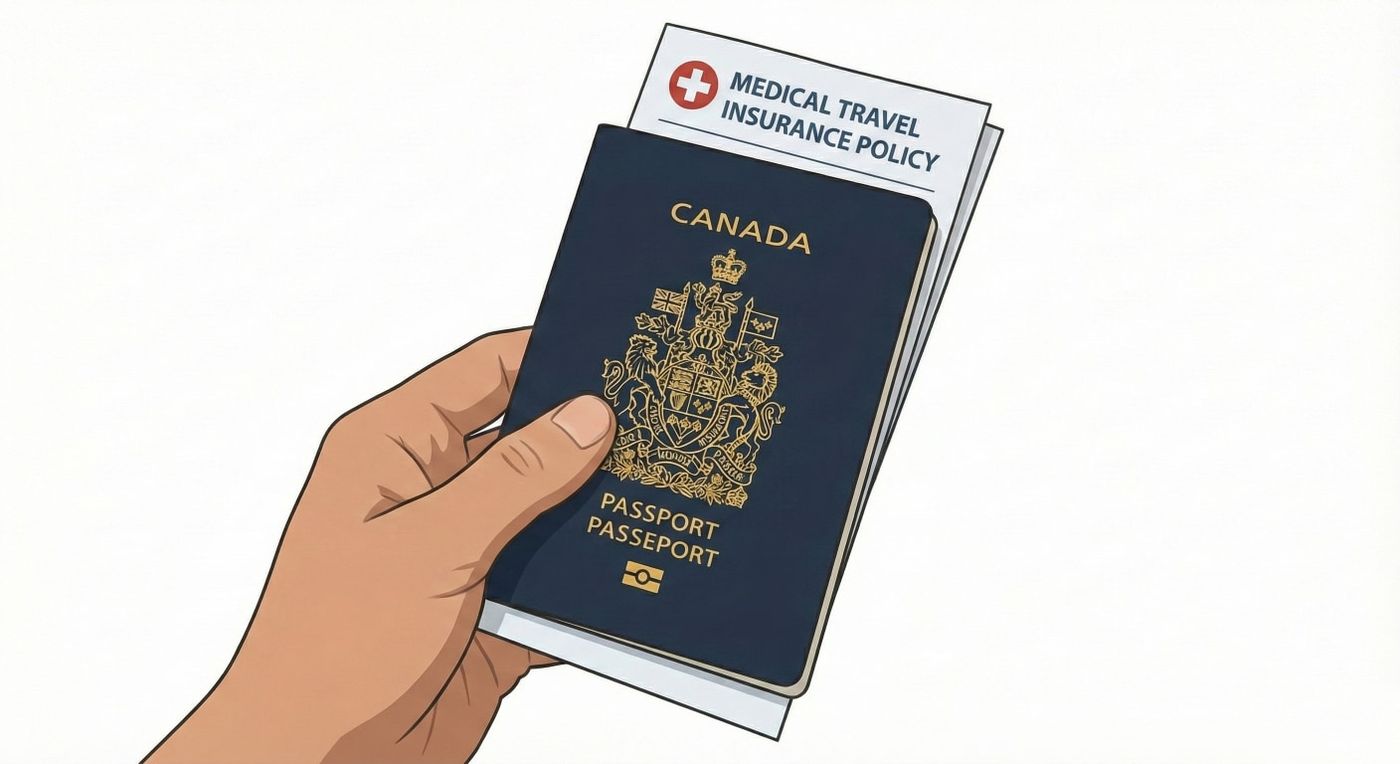
A comprehensive international travel health insurance policy should always cover three core elements: hospital and physician care, medical evacuation to Canada or the nearest suitable facility, and repatriation of remains in the event of death. Many policies also include coverage for emergency dental treatment resulting from accidental injury, diagnostic tests, and paramedical services. Plans are typically offered as single-trip policies for one vacation or multi-trip annual plans for frequent travellers, with options for 9, 16, 30, or 60-day trip durations. Top-up or extension plans allow travellers to add days to an existing trip or increase coverage limits if trip costs change. Some providers offer specialized plans for seniors aged 65 and up, which may have different stability periods for pre-existing conditions. Additional benefits in some premium plans can include in-hospital rehabilitation, private duty nursing, and coverage for bringing a family member to your bedside if hospitalized.
Common travel insurance plan types are designed for different needs. These include single-trip medical plans for travellers taking one trip who only want emergency medical coverage. Multi-trip medical plans are for travellers who take more than one trip a year and want emergency medical coverage for each trip. All-inclusive annual plans are for frequent travellers who want emergency travel medical coverage along with trip cancellation and interruption protection. There are also specific plans for travellers aged 65 and up who need emergency medical coverage for trips outside their home province or territory.
- Single-Trip Medical Plan: For travellers taking one trip who only want emergency travel medical coverage.
- Multi-Trip Medical Plan: For travellers who take more than one trip a year and want emergency medical coverage for each trip, up to a specified number of days per trip.
- Multi-Trip All-Inclusive Plan: For frequent travellers who want emergency travel medical coverage, plus trip cancellation and interruption insurance in one annual plan.
- Trip Cancellation & Interruption Plan: Provides financial protection if an eligible unexpected event causes your trip to be cancelled before departure or interrupted after departure.
- Top-up or Extension Plan: For travellers with existing insurance who need additional days of coverage for a particular trip or higher coverage limits.
Sample insurance policies are available for each plan type to review the full details, limitations, and exclusions before you purchase. For complete coverage details, you should refer to the sample policy document. Some providers offer enhanced plans with exclusive non-medical benefits. These benefits can include emergency relocation support in an environmental disaster. They may also include protection for your claim-free discount even if you have a claim.
Understanding Pre-existing Condition Rules
Coverage for pre-existing medical conditions is a central aspect of travel health insurance and is governed by strict stability clauses. A common requirement is that any pre-existing condition must be stable for a defined period, such as 90 days, before the effective date of the insurance coverage. For travellers aged 60 and older, this stability period may extend to 180 days. Stable typically means there has been no new diagnosis, change in treatment, new symptoms, or hospitalization related to the condition. It is the traveller's responsibility to accurately disclose all relevant medical history when applying. Failure to do so can invalidate a claim. Prospective buyers should ask the insurance provider to explain the specific definitions, limitations, and restrictions related to pre-existing conditions before purchasing a policy. Some insurers categorize applicants based on medical condition through a questionnaire, which can affect the premium rate even though the coverage benefits remain the same across categories. The condition must be stable for the full stability period prior to the coverage effective date to be eligible for coverage under the policy.
Steps to Acquire and Use Coverage
Purchasing international travel health insurance involves several important steps. First, research your needs based on destination, trip length, health status, and activities. Insurance can be bought directly from an insurance company, through a travel agent, or via some financial institutions. Second, obtain a detailed quote and carefully review the sample policy document, paying close attention to coverage limits, exclusions, deductibles, and stability requirements. Third, provide accurate and complete information on the application. Contacting the company for written clarification on any point is recommended. Once purchased, carry your insurance policy details and emergency contact numbers with you during travel. In the event of a medical emergency, contact the insurer's 24/7 assistance line immediately. Always obtain a detailed report and original invoice from the treating doctor or hospital before leaving the country, as these are required for claims. It is also advised to leave a copy of your insurance information with a friend or relative at home. When assessing a plan, you should ask questions about coverage for medical evacuation, the process for direct billing, and what happens if you are hospitalized.
Common Limitations and Exclusions
Travel health insurance policies contain specific limitations and exclusions that travellers must understand. Many policies will not provide coverage if you travel to a destination where the Government of Canada has issued a travel advisory advising to avoid all non-essential travel or avoid all travel. Coverage is typically void if the purpose of travel is to receive medical treatment abroad. High-risk activities like extreme sports may be excluded unless a specific rider is purchased. Furthermore, travel insurance is not intended for individuals who are living outside Canada permanently or for extended periods. Local health insurance may be required for such situations. There is also typically a maximum coverage limit, such as $20,000, if the traveller does not have valid provincial health plan coverage in force for the entire trip duration. Always read the fine print of your policy document. The Government of Canada issues travel advisories based on safety and security conditions, not for the purpose of dictating insurance coverage, and is not responsible for how these advisories affect individual policies.
Special Considerations for Different Travellers
Insurance needs vary significantly among different types of travellers. Snowbirds and seniors often require longer-term coverage and should pay particular attention to age-based stability periods for pre-existing conditions. Families can sometimes access savings through couple or family coverage plans. Students studying abroad should consult their educational institution for specific insurance requirements, as standard travel policies may not suffice. Visitors to Canada, particularly those applying for a Super Visa, must show proof of private medical insurance from a Canadian provider with a minimum of $100,000 in coverage valid for at least one year. Frequent business travellers may find a multi-trip annual plan more economical and convenient than purchasing separate single-trip policies throughout the year. Travellers with pets should note that some premium plans offer unique benefits like coverage for boarding and transport of a pet if the owner is hospitalized.
Key traveller types have specific considerations. Frequent travellers or those taking regular sun destination trips may benefit from an annual multi-trip plan. Snowbirds and seniors often seek plans that cover stable pre-existing conditions, with some requiring conditions to be stable for 180 days before coverage. Families can look for savings available under couple or family coverage for select plans. Travellers with existing insurance may need top-up options for additional days of coverage or for higher trip costs.
- Snowbirds/Seniors: Look for plans with coverage for stable pre-existing conditions, with stability periods often of 180 days for those over 60. Endorsements from associations like the Canadian Snowbird Association can indicate specialized products.
- Families: Some providers offer savings for couple or family coverage under select plans. A sample scenario for a family of four on a 16-day international trip showed a standard rate of $158.00.
- Frequent Travellers: A multi-trip annual plan provides emergency medical coverage for unlimited trips within a year, up to a specified per-trip day limit like 9, 16, 30, or 60 days.
- Visitors to Canada: Must purchase a Canadian insurance plan meeting the Super Visa requirement of $100,000 coverage for one year from a Canadian insurance provider.
- Students Abroad: Need to verify institutional requirements. Standard travel medical insurance may not be adequate for long-term study.
- Travellers within Canada: Emergency medical coverage is also needed for travel outside your home province or territory, as provincial plans have limitations.
Managing Costs and Selecting Deductibles
The cost of international travel health insurance is influenced by factors such as the traveller's age, trip duration, destination, and chosen level of coverage. One way to manage premium costs is by selecting a higher deductible, which is the amount you pay out-of-pocket before the insurance coverage begins. Some providers offer deductible options that can reduce the premium cost by up to 40 percent, with savings of approximately 25 percent available with a $5,000 deductible. Discounts may also be available for new clients, returning clients, or those with a claim-free history. It is important to balance the upfront premium savings against the potential financial burden of a high deductible in the event of a claim. Always compare the total coverage benefits, not just the price, when evaluating policies from different providers. Some insurers offer a preferred rate versus a standard rate based on factors like medical condition, with an example showing a preferred rate of $150.10 versus a standard rate of $158.00 for a family trip. New clients can sometimes save up to 5% with claim-free advantage discounts, while returning clients may save up to 20% with loyalty and claim-free discounts.
The Claims Process and Documentation
Filing a claim for international medical expenses requires meticulous documentation. Immediately upon encountering a medical emergency, contact the insurer's 24/7 assistance line. They can often arrange for direct billing to the medical provider, reducing upfront costs. Before leaving the foreign medical facility, obtain a detailed medical report and an original, itemized invoice that clearly states the services rendered and the amounts charged. These original documents must be submitted to the insurance company to process the claim, and you should keep copies for your records. Prescription receipts from abroad should also be kept and submitted. If you need to pay upfront, ensure you get a formal receipt. The claims process typically involves submitting these documents through an online portal or via mail to the insurance administrator. Trying to obtain proper paperwork from thousands of kilometres away after returning home can be very difficult, so securing documents on-site is crucial. The administrator's contact information is usually found on the policy, with example numbers being a toll-free line for Canada and the U.S. and a collect number for worldwide calls.
Additional Protections and Complementary Insurance
While emergency medical coverage is fundamental, travellers should consider other insurance products for a complete safety net. Trip interruption insurance reimburses the unused portion of your trip if you must return home early after departure due to a covered unforeseen incident. Trip cancellation insurance covers non-refundable costs if you cancel before departure. Baggage and personal effects insurance covers loss, damage, or delay of luggage. If driving abroad, ensure you have appropriate driver and vehicle coverage for accidents. Some credit cards offer travel insurance benefits, which should be verified using tools like a Credit Card Travel Insurance Verification Tool to understand the specific features and limitations. It is your responsibility to know and understand the terms of all insurance policies you hold. The Government of Canada's consular services are limited in the help they can provide during medical emergencies abroad, which underscores the importance of having robust private insurance and registering with the Registration of Canadians Abroad service for emergency notifications.
Frequently asked questions
Does my provincial health plan cover me when I travel outside Canada?
Provincial and territorial health plans provide very little to no coverage for emergency medical expenses incurred outside Canada. They are not designed for international travel and will not cover costs such as hospital stays, ambulance services, or doctor visits abroad. This gap in coverage is the primary reason Canadians need to purchase separate international travel health insurance. Even travel within Canada, outside your home province, may involve significant out-of-pocket costs for emergency care not covered by your home province's plan.
What is the difference between travel medical insurance and trip cancellation insurance?
Travel medical insurance covers eligible emergency health expenses incurred while you are on your trip. Trip cancellation insurance provides reimbursement for non-refundable trip costs if you have to cancel your trip before departure due to a covered reason. Trip interruption insurance, another distinct product, covers the unused portion of your trip if you must return home early after departure. These are often sold separately, though combined all-inclusive annual plans are available.
How does a pre-existing condition affect my travel health insurance?
Most policies require that any pre-existing medical condition be stable for a specified period before your coverage starts, commonly 90 days. For travellers aged 60 and older, this period is often 180 days. Stable means no new symptoms, changes in treatment, or hospitalizations related to the condition. You must disclose these conditions honestly on your application. Coverage for stable conditions is typically available, but unstable conditions are usually excluded. The specific definition of stability is set by the insurer and detailed in the policy document.
What should I do if I have a medical emergency abroad?
Your first step should be to contact the 24/7 emergency assistance number provided by your travel insurance provider. They can guide you to appropriate medical care and, where possible, arrange direct payment to the hospital to minimize your out-of-pocket costs. Always obtain a detailed medical report and original invoice before leaving the treatment facility, as these are required for your insurance claim. Also, inform the assistance line if a situation requires medical evacuation back to Canada or the nearest suitable facility.
What is a multi-trip annual travel medical plan?
A multi-trip annual plan provides emergency medical coverage for an unlimited number of trips within a one-year period. Each trip is subject to a maximum duration, such as 9, 16, 30, or 60 days, depending on the plan you select. This type of plan is cost-effective for frequent travellers, as it eliminates the need to purchase a new policy for every individual trip. Some annual plans are categorized as All-Inclusive, also bundling trip cancellation and interruption coverage.
Will my travel insurance cover me if I travel to a country with a government travel advisory?
Many travel insurance policies will not cover you if you travel to regions where the Government of Canada has issued a travel advisory to avoid all non-essential travel or avoid all travel. It is your responsibility to check the details of any insurance policy you are considering and the travel advice and advisories for your destination before you book your trip and buy insurance. The Government of Canada issues travel advisories when the security or health situation in a country may pose a significant threat to personal safety. These advisories provide information to help you make informed decisions, but they are not issued for the purpose of travel insurance coverage. The government is not responsible for how these advisories may affect travel insurance policies. Therefore, you must verify the terms, conditions, and exclusions of your specific policy before you leave Canada.
Sources and further reading
- Travel Coverage | Canada's #1 Travel Plans bluecross.ca
- Travel Medical Insurance rbcinsurance.com
- Travel Insurance Plans for Canadians tdinsurance.com
- Medipac, Travel Insurance for Canadian Travellers ... medipac.com
- Trip interruption and travel health insurance travel.gc.ca
This article explains how things work and is not financial, tax or legal advice. Rules, limits and rates change, so check the current figures with the Canada Revenue Agency, your province or your financial institution before you act.